Human Rights Watch Launches The Great Unrooting Podcast Series to Explore Global Displacement Crisis
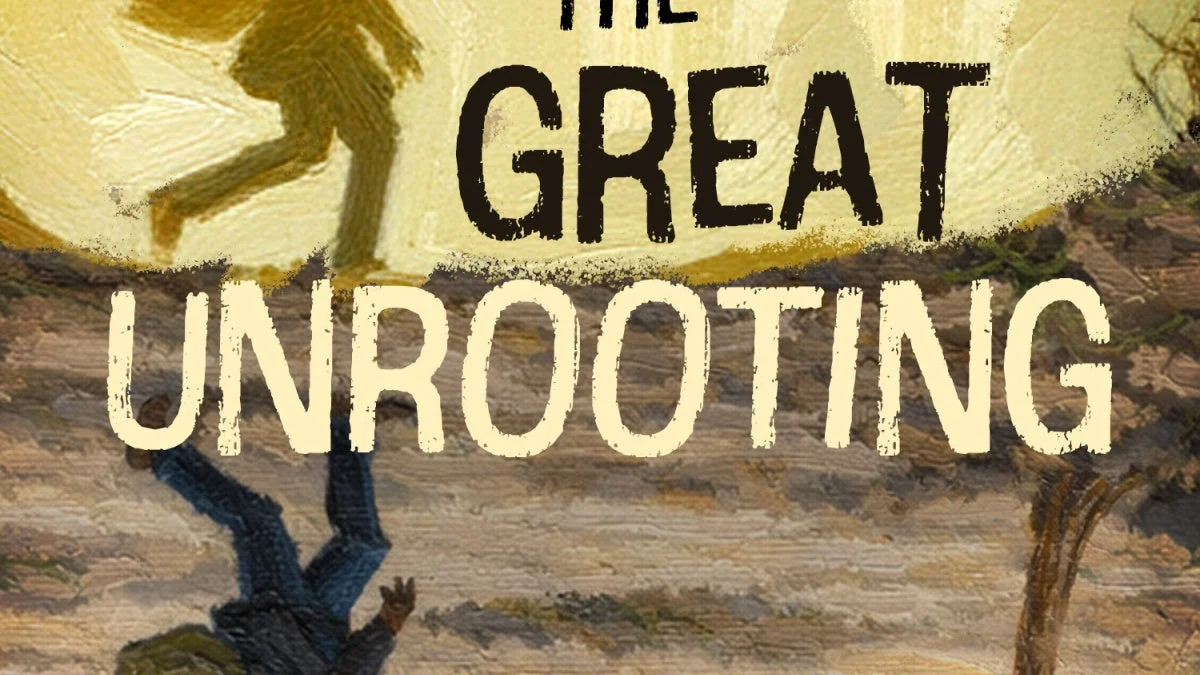
Human Rights Watch has officially announced the launch of a new five-episode narrative podcast series titled "The Great Unrooting," which aims to provide an in-depth exploration of the global displacement crisis through the lens of individual human experience. The series is centered on the life of Maung, a Rohingya refugee currently residing in New York City, whose journey serves as a microcosm for the millions of people worldwide who have been forced to flee their homes due to persecution, conflict, and systemic violence. By tracing Maung’s path from his origins in Myanmar to his eventual resettlement in the United States, the podcast examines the multifaceted challenges of survival, the complexities of international borders, and the arduous process of establishing a new sense of belonging in a foreign society.
The Narrative Core: Maung’s Journey and the Rohingya Crisis
The heart of "The Great Unrooting" lies in the personal testimony of Maung, a member of the Rohingya ethnic minority. To understand Maung’s story, one must look at the historical context of the Rohingya in Myanmar. For decades, the Rohingya have been described by the United Nations as one of the most persecuted minorities in the world. Denied citizenship under Myanmar’s 1982 Citizenship Law, they have lived in a state of institutionalized statelessness, facing severe restrictions on movement, education, and employment.
The podcast follows Maung from the early warning signs of exclusion—the subtle and then overt ways in which a government strips a community of its rights—to the catastrophic moment of flight. This narrative arc mirrors the broader chronology of the 2017 military crackdown in Myanmar’s Rakhine State, which forced more than 700,000 Rohingya to flee into neighboring Bangladesh. Maung’s story provides a granular view of these historical events, moving beyond statistics to the "grueling logistics of survival on the move," as described by the series producers.
Subsequent episodes of the series delve into the "life in limbo" that many refugees face. For the Rohingya, this often means years spent in overcrowded refugee camps in Cox’s Bazar, Bangladesh, where safety is precarious and the future is uncertain. The podcast explores the systems of global migration that dictate who is allowed to move and who remains trapped in a cycle of displacement.
Editorial Leadership and Production Standards
The series is hosted by Ngofeen Mputubwele, a seasoned journalist, attorney, and audio producer. Mputubwele brings a unique interdisciplinary perspective to the project, having previously produced work for The New Yorker and the critically acclaimed podcast series "Fela Kuti: Fear No Man." His background in law and narrative storytelling allows the podcast to navigate the tension between the abstract legalities of immigration policy and the visceral reality of the human lives affected by those policies.
According to Mputubwele, the series seeks to redefine how the public perceives international borders. Rather than viewing them as simple lines on a map, "The Great Unrooting" presents them as "lived systems" consisting of checkpoints, documents, detours, and the psychological realization that a return to one’s homeland may be impossible. Mputubwele emphasizes that "home" is not merely a geographic location but a social fabric where an individual is "known" and "wanted." The podcast investigates the profound trauma that occurs when that fabric is torn.
Supporting Data: The Global Context of Forced Displacement
The release of "The Great Unrooting" comes at a critical juncture in global history. According to the United Nations High Commissioner for Refugees (UNHCR), the number of forcibly displaced people worldwide has reached unprecedented levels. As of late 2023 and early 2024, more than 114 million individuals have been forced to leave their homes due to war, violence, and human rights violations. This figure represents the highest level of displacement recorded since the aftermath of World War II.
The data highlights a worsening trend:
- Total Displacement: The global figure has more than doubled in the last decade.
- Key Drivers: Conflicts in Ukraine, Sudan, Gaza, and Myanmar, alongside long-standing crises in Syria and Afghanistan, continue to drive these numbers upward.
- Host Countries: Contrary to common misconceptions, approximately 75% of the world’s refugees are hosted by low- and middle-income countries, often those neighboring the conflict zones.
Human Rights Watch utilizes this podcast to bridge the gap between these staggering figures and the lived reality of the individuals behind the numbers. By integrating HRW’s rigorous field research and investigations with intimate storytelling, the series provides an evidentiary basis for its narrative claims, highlighting how "safe pathways" for migration are shrinking even as the need for them grows.
Legal Frameworks and Official Responses
A central theme of the podcast is the fragility of international legal protections for displaced persons. The 1951 Refugee Convention and its 1967 Protocol remain the foundational legal documents governing the rights of refugees. Under these treaties, a refugee is defined as someone unable or unwilling to return to their country of origin due to a "well-founded fear of persecution" based on race, religion, nationality, membership in a particular social group, or political opinion.
Bill Frelick, the refugee and migrant rights director at Human Rights Watch, notes that the podcast arrives at a time when "borders are hardening." This refers to the increasing use of physical barriers, surveillance technology, and restrictive asylum policies by governments in the Global North to deter arrivals. Frelick points out that "The Great Unrooting" brings listeners inside the impossible choices people face when their environments become unlivable.
The series also touches upon the principle of non-refoulement, a cornerstone of customary international law that prohibits governments from forcibly returning refugees to a country where they would face threats to their life or freedom. Through Maung’s journey to New York, the podcast examines how these legal principles are applied—or ignored—in practice as individuals navigate the "hidden geography" of the global asylum system.
Analysis of the "Hidden Geography" of Displacement
The term "hidden geography," as used in the podcast, refers to the informal and often perilous routes that displaced people must take when legal channels are closed. This includes the reliance on human smugglers, the navigation of dangerous maritime routes, and the experience of "transit countries" where refugees may spend months or years in a legal gray area.
The podcast analyzes how displacement reshapes families and futures. In many cases, the "unrooting" process leads to the fragmentation of family units, as members are separated during flight or due to differing legal statuses. The series explores the concept of "belonging" in this context—how a refugee maintains their identity while attempting to integrate into a society that may view them with suspicion or indifference.
The analysis provided by Human Rights Watch suggests that the current global approach to migration is increasingly focused on "deterrence" rather than "protection." By highlighting Maung’s success in rebuilding his life in New York, the podcast offers a counter-narrative to the rhetoric of "crisis," suggesting instead that displacement is a manageable human phenomenon if approached with dignity and adherence to human rights standards.
Broader Implications and Societal Impact
"The Great Unrooting" is positioned not just as a piece of journalism, but as an advocacy tool. By humanizing the refugee experience, Human Rights Watch seeks to influence public discourse and policy at a time when migration is a highly polarized political issue. The series aims to move the conversation away from "abstract lines" on a map and toward the "human cost" of border policies.
The implications of the podcast extend to the field of international relations and humanitarian aid. It raises critical questions about the responsibility of the international community to address the root causes of displacement, such as the military coup and subsequent atrocities in Myanmar. It also challenges the notion that the responsibility for refugees should fall solely on neighboring countries, advocating for a more equitable global distribution of resettlement efforts.
As the series concludes, it reflects on the resilience required to start again. Maung’s journey from a persecuted minority in Myanmar to a resident of New York City serves as a testament to the endurance of the human spirit. However, it also serves as a stark reminder of the millions who remain in limbo, "unrooted" and waiting for the world to recognize their right to a home.
Conclusion: Rebuilding in an Age of Dislocation
The launch of "The Great Unrooting" represents a strategic move by Human Rights Watch to utilize digital media to reach a broader audience. By combining the expertise of an attorney like Ngofeen Mputubwele with the first-hand experience of a refugee like Maung, the podcast provides a comprehensive look at one of the most pressing issues of the 21st century.
As listeners follow Maung’s story across five episodes, they are invited to reconsider their understanding of borders, citizenship, and the universal need for safety. In a world where displacement is becoming a permanent reality for an increasing percentage of the population, "The Great Unrooting" offers a necessary exploration of what it means to lose everything and the monumental effort required to find one’s way again. Through this narrative, Human Rights Watch continues its mission of documenting abuses and advocating for the rights of the most vulnerable, ensuring that the stories of the displaced are not lost in the statistics of global crisis.

Related Posts
Human Rights Watch Calls for Investigation into Death of Detainee Following Removal from Najaf Hospital by Iraqi Drug Police
Human Rights Watch Urges UN Security Council to Extend Lebanon Peacekeeping Mission Amid Escalating Conflict and Humanitarian Crisis