
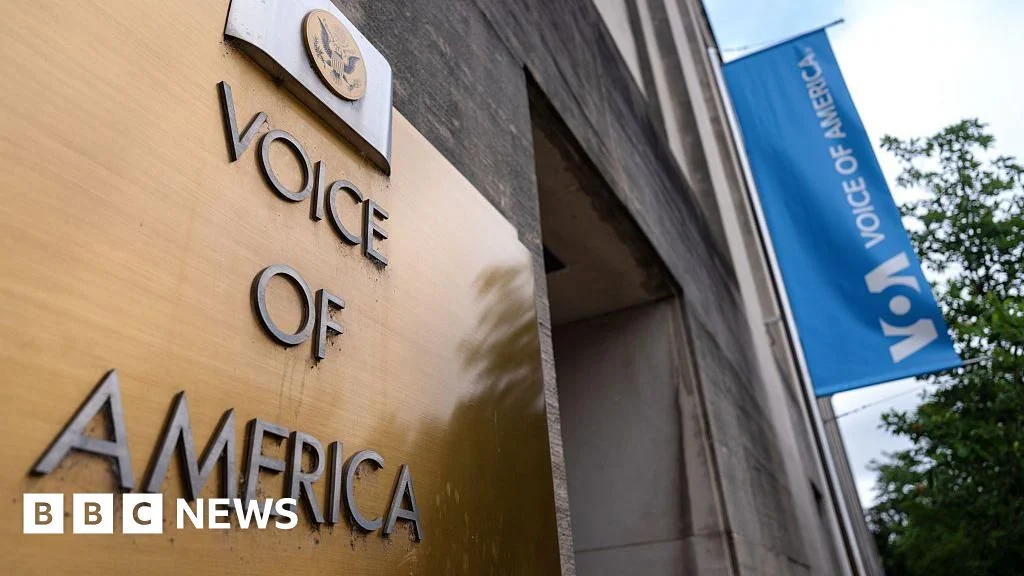
US judge orders Trump administration to reopen Voice of America
A federal judge in the United States has delivered a significant blow to the previous administration’s efforts to curtail the operations of the Voice of America (VOA), ruling that the effective closure of the international broadcaster last year was "illegal" and ordering the reinstatement of hundreds of its journalists. District Court Judge Royce Lamberth issued a directive giving authorities one week to restore the critical news service to its full operational capacity, a decision that underscores the legal protections afforded to federal agencies and the independence of journalistic endeavors, even when government-funded. This landmark ruling marks a pivotal moment for press freedom and the future of America’s global media outreach, overturning actions that had severely hampered VOA’s ability to fulfill its long-standing mission to provide objective news and information to audiences worldwide.
The Court’s Decisive Ruling and Its Immediate Ramifications
Judge Lamberth’s Tuesday ruling was unequivocal, describing the decision to dismiss hundreds of VOA journalists as "arbitrary and capricious." His judgment highlighted that the government had failed to consider the explicit legislative mandate dictating the languages and regions VOA is required to serve, a cornerstone of its operational framework. "Defendants have provided nothing approaching a principled basis for their decision," Lamberth asserted in his written opinion, indicating a profound lack of justification for the sweeping personnel changes. This followed an earlier ruling by Judge Lamberth last week, which found that Kari Lake, appointed to head the US Agency for Global Media (USAGM) – the parent organization overseeing VOA – lacked the authority to order the suspension of the USAGM workforce because her appointment had not been confirmed by the US Senate. This lack of Senate confirmation rendered her actions legally invalid, reinforcing the principle of checks and balances inherent in the U.S. governmental system.
The immediate consequence of this ruling is the directive for authorities to reinstate the affected journalists and restore VOA’s broadcasting capabilities within seven days. This presents a considerable logistical challenge, given the scale of the dismissals, but it sends a powerful message about the judiciary’s role in upholding statutory law against executive overreach. Patsy Widakuswara, one of the three VOA journalists who initiated the lawsuit against the Trump administration, expressed profound gratitude for the judge’s decision. Speaking to the Associated Press, she articulated the broader sentiment within the organization: "We hope the American people will continue to support our mission to produce journalism, not propaganda." Her statement succinctly captures the core ethos of VOA and the fundamental distinction it strives to maintain from state-controlled media.
A Storied History: Voice of America’s Enduring Mission
The Voice of America boasts a rich and critical history, established in 1942 during the tumultuous years of World War Two. Its founding purpose was clear and urgent: to counter the pervasive and insidious propaganda disseminated by Nazi Germany. From its inception, VOA was designed to project American values of truth, democracy, and freedom across the globe, offering an alternative narrative to authoritarian regimes. Its original broadcast began with the promise, "We will tell you the truth."
Throughout the Cold War, VOA played an indispensable role, becoming a vital lifeline of uncensored information for millions living behind the Iron Curtain and in other repressive states. It served as a beacon of hope and a credible source of news, often the only one available, for those deprived of independent media. The VOA Charter, enacted into law in 1976, formally codified its mandate, requiring it to:
- Serve as a consistently reliable and authoritative source of news.
- Present the news accurately, objectively, and comprehensively.
- Clearly and effectively present the policies of the United States.
- Present a balanced and comprehensive projection of significant American thought and institutions.
- Foster a dialogue with the international community.
Before the administrative actions that led to its effective closure, VOA broadcast television, radio, and digital content in nearly 50 languages to an estimated weekly audience of over 280 million people across more than 100 countries. Its extensive network of journalists, many of whom are native speakers of the languages they broadcast in, provided nuanced and culturally relevant reporting, distinguishing it from other international news outlets. This global reach and commitment to diverse linguistic communities underscore its crucial role in public diplomacy and information dissemination, particularly in regions where independent journalism is suppressed or non-existent.
The Trump Administration’s Crackdown on USAGM
The legal battle over VOA’s future stems directly from actions taken by the Trump administration, which initiated a broad campaign against the broadcaster and its sister organizations. Weeks after returning to office, President Donald Trump issued an executive order aimed at overhauling USAGM, the federal agency that oversees VOA, Radio Free Europe/Radio Liberty, Radio Free Asia, the Middle East Broadcasting Networks, and the Office of Cuba Broadcasting. Trump’s officials accused VOA of "left-wing bias" and of failing to adequately promote the administration’s agenda. These criticisms were part of a larger pattern of the former president’s sustained attacks against various segments of the US media, which he frequently labeled "fake news" and "enemies of the people." Studies from various media watchdogs and academic institutions during his presidency often highlighted a perception of highly polarized news consumption within the American public, a landscape Trump frequently capitalized on.
In a move that signaled a dramatic shift in policy, Trump ordered outlets such as Radio Free Europe and Radio Free Asia to be "eliminated to the maximum extent consistent with applicable law." This directive signaled a fundamental challenge to the long-established independence of these broadcasters, which, while federally funded, are statutorily mandated to operate with journalistic integrity free from political interference. To execute this directive, President Trump appointed Kari Lake to head USAGM. Lake’s appointment was controversial from the outset, given her public alignment with the administration’s critical stance towards the agency and her perceived lack of experience in international broadcasting.
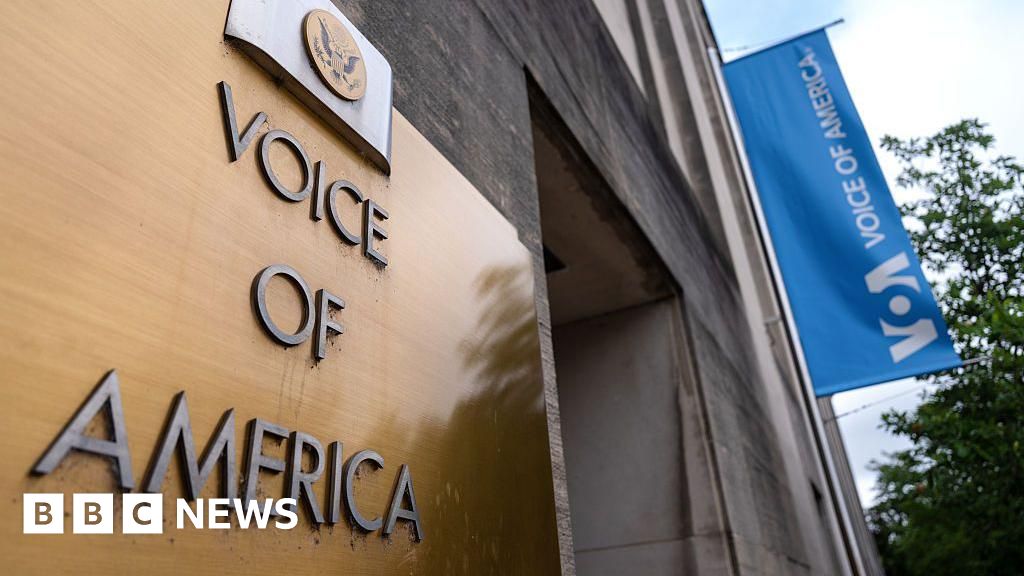
The Purge at USAGM: A Chronology of Disruption
Upon assuming her role, Kari Lake swiftly implemented the administration’s directives, initiating what many within the agency described as a "purge." The scale of the dismissals was unprecedented: Lake proceeded to sack more than 85% of USAGM’s employees, affecting over 1,000 staff members at VOA alone. This left only a handful of employees in their positions, effectively crippling the organization’s ability to produce content and broadcast to its global audience. The majority of these dismissed employees were placed on paid administrative leave, a state of limbo that persisted for many months, creating immense uncertainty and damaging morale within the agency.
The operational disruption caused by these actions was starkly illustrated by specific incidents. For example, Persian Service reporters, who had been among those placed on administrative leave, were abruptly called back to work last June after Israel attacked Iran. This ad-hoc recall highlighted the critical need for VOA’s specialized linguistic and regional expertise, especially during moments of international crisis, and exposed the precarious state to which the agency had been reduced. Such instances underscored the disconnect between the administration’s actions and the geopolitical realities that often necessitate a robust and responsive international broadcasting capability. The mass dismissals and the subsequent legal challenge brought by the three VOA journalists aimed to reverse these sweeping changes, arguing that they undermined the agency’s statutory mission and violated established legal procedures.
Legal Scrutiny and Judicial Intervention
The legal battle unfolded in federal court, with Judge Royce Lamberth presiding over the case. The core of the journalists’ argument centered on the lack of proper authority for Kari Lake’s actions. Lake’s nomination as CEO of USAGM required confirmation by the US Senate, a constitutional check designed to ensure that appointees to high-level federal positions have the necessary qualifications and broad political support. However, Lake’s appointment was never confirmed by the Senate. Despite this, she proceeded to exercise the full powers of the CEO, including the authority to hire and fire personnel.
Judge Lamberth’s initial ruling last week addressed this critical procedural flaw, determining that Lake did not possess the legal authority to order the suspension of the USAGM workforce without Senate confirmation. This ruling alone cast a shadow over all her subsequent executive actions. Tuesday’s ruling further solidified this position, delving into the substance of the dismissals. By deeming the decision to sack journalists as "arbitrary and capricious," the judge found that the administration had acted without a rational basis, ignoring established legal frameworks and the specific legislative mandates governing VOA’s operations. The ruling specifically cited the government’s failure to consider the legislation that determines the languages and regions VOA must serve, effectively stating that the actions taken were not only procedurally flawed but also substantively unreasonable and contrary to law. This judicial intervention serves as a powerful reminder of the judiciary’s role in safeguarding the rule of law and protecting the statutory independence of federal agencies.
The Broader Implications for US International Broadcasting
The federal court’s decision carries profound implications for the future of US international broadcasting and America’s global standing. VOA and its sister organizations are not merely news outlets; they are crucial instruments of American soft power, projecting democratic values, promoting understanding, and countering disinformation in regions where free press is absent. The effective closure and disruption of VOA’s operations under the previous administration sent a troubling message about the United States’ commitment to media freedom and open information exchange.
Restoring VOA’s full operational capacity will be a complex undertaking, involving not only the reinstatement of hundreds of journalists but also the rebuilding of trust and morale within an organization that experienced significant upheaval. The ruling also underscores the importance of proper governance and the confirmation process for federal appointees. The unconfirmed status of Kari Lake’s nominated successor, Sarah Rogers, further complicates the situation, as her appointment also requires Senate confirmation. Until a confirmed leader is in place, USAGM may continue to face legal challenges regarding the authority of its acting leadership.
Furthermore, this case highlights the delicate balance between government oversight and journalistic independence. While VOA is funded by the U.S. government, its charter explicitly mandates objectivity and freedom from political interference. The attempts to steer its content or dismiss staff based on perceived political bias directly challenged this foundational principle, drawing condemnation from media freedom advocates worldwide. The ruling reaffirms the statutory protection of VOA’s independence, providing a legal bulwark against future attempts at political manipulation. The successful lawsuit by VOA journalists could also embolden employees in other government-funded media organizations to challenge politically motivated directives that undermine their journalistic integrity.
The Future of Voice of America and USAGM
The path forward for Voice of America and USAGM involves significant challenges and opportunities. The immediate task is the logistical reinstatement of hundreds of employees, many of whom have been out of active service for an extended period. This will require administrative coordination, financial allocation, and a concerted effort to reintegrate staff and restore a sense of stability. Beyond the practicalities, there is the crucial task of rebuilding institutional trust and morale, which were severely damaged by the mass dismissals and the prolonged period of uncertainty.
The ruling also serves as a critical reinforcement of the VOA Charter and the fundamental principles that guide US international broadcasting. It underscores the importance of upholding journalistic standards, even within government-funded entities, and resisting pressures to turn legitimate news organizations into propaganda arms. The broader debate on the role and funding of government-supported media in a globally polarized information environment will undoubtedly continue. However, Judge Lamberth’s decision firmly reiterates that these organizations operate under specific legal mandates that cannot be arbitrarily disregarded by executive action. The ruling ensures that the Voice of America can continue its vital mission, serving as a trusted source of news and a powerful voice for American values on the international stage, free from undue political influence.

Related Posts
Zambia on Edge: Opposition Leader Arrested Amid Allegations of Insurrection Plot and Election Tensions
Rescuers search for survivors of powerful Indonesia earthquake

