India’s Piped Natural Gas Market Faces Scrutiny Amid Escalating Middle East Tensions and Hormuz Disruptions
The intricate web of India’s energy supply, already navigating the ripples of the "Iran war" on its liquefied petroleum gas (LPG) market, now confronts intensified scrutiny over another vital energy artery: the nation’s burgeoning network of piped natural gas (PNG). This infrastructure, delivering gas directly to homes and businesses, is a cornerstone of India’s energy strategy, yet its increasing reliance on global supply chains exposes it to the volatile geopolitical landscape of the Middle East.
The Rapid Expansion of India’s Natural Gas Footprint
India, a nation with an insatiable appetite for energy to fuel its rapid economic growth, has been aggressively expanding its natural gas infrastructure. Demand for this cleaner-burning fuel emanates from diverse sectors, including critical fertiliser plants, heavy industry, gas-fired power generation, and the rapidly expanding city gas networks. These city gas networks are particularly pivotal, supplying PNG to millions of households for cooking and heating, and compressed natural gas (CNG) to a burgeoning fleet of vehicles.
The growth in household PNG connections has been nothing short of transformative. Driven by policy initiatives aimed at promoting cleaner fuels and easing the burden of traditional LPG cylinders, India now boasts over 15 million PNG connections. This figure is experiencing exponential growth, reflecting a concerted effort by policymakers to transition urban households towards more convenient and environmentally friendly "gas on tap" solutions. The appeal of a continuous, piped supply, free from the logistical hassles of cylinder refills, has resonated deeply with consumers across urban India.
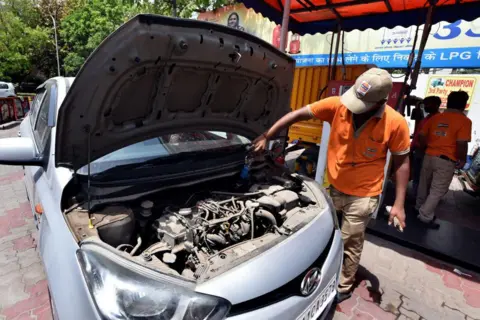
Simultaneously, the adoption of CNG as an automotive fuel has surged, positioning it as India’s second-largest auto fuel, trailing only petrol. This rise is attributed to its cost-effectiveness, lower emissions profile, and the expansion of CNG refuelling stations across major cities and highways. The government’s push for cleaner air in congested urban centres has provided significant impetus to this sector, with incentives for vehicle manufacturers and consumers alike. The combined growth of PNG for domestic use and CNG for transport underscores a strategic shift in India’s energy consumption patterns, moving towards a gas-based economy.
Geopolitical Echoes: The Strait of Hormuz and India’s Supply Chain
The immediate concern echoing through many urban Indian homes, following the earlier tremors felt in the LPG market, is whether their kitchen pipelines could be the next casualty of the escalating tensions in the Middle East. Specifically, if tankers carrying vital energy supplies face difficulties traversing the Strait of Hormuz, the critical maritime choke-point.
While the immediate answer for domestic PNG and CNG users is "probably not – at least not immediately," the underlying vulnerability is undeniable. India’s piped gas supply is a carefully calibrated blend of domestic production and imports of liquefied natural gas (LNG). Approximately half of India’s PNG supply is sourced from indigenous gas fields, both onshore and offshore, operated by national giants like Oil and Natural Gas Corporation (ONGC) and private players such as Reliance Industries. This domestic cushion provides a degree of insulation from global shocks. The remaining balance, however, is met through substantial LNG imports, making India one of the world’s largest buyers of LNG.
Rahul Chopra, managing director for Haryana City Gas Distribution Limited, a prominent countrywide gas company serving around 100,000 domestic consumers and operating 195 CNG fuel stations, affirms the government’s protective stance. "No disruption is expected for homes and vehicles [using piped gas]. The government has given priority to these two sectors," Chopra stated, highlighting the strategic importance of maintaining essential services for its citizens.
Prioritisation in Crisis: Industrial Sacrifices
However, this prioritisation comes at a cost, primarily borne by the industrial and commercial sectors. In scenarios of supply squeeze or price volatility, the Indian government’s established policy dictates that essential sectors like fertiliser plants and households connected to piped gas receive preferential treatment. This means that industrial and power generation units are typically the first to face supply curtailments.
For instance, Chopra revealed that about 2,200 of his industrial and commercial customers are currently contending with a government-mandated 20% supply cut, as gas is diverted to safeguard household and vehicular consumption. Such measures compel factories to switch to alternative, often more polluting or costlier, fuels such as fuel oil, LPG, or even coal. Gas-fired power plants, faced with reduced gas availability or prohibitively high prices, are forced to cut generation, potentially straining the national grid or increasing reliance on other, sometimes less efficient, power sources. This mechanism, while protecting the common consumer, underscores the interconnected vulnerabilities within India’s energy matrix.
The Global Lifeline: India’s LNG Imports and the Qatar Connection
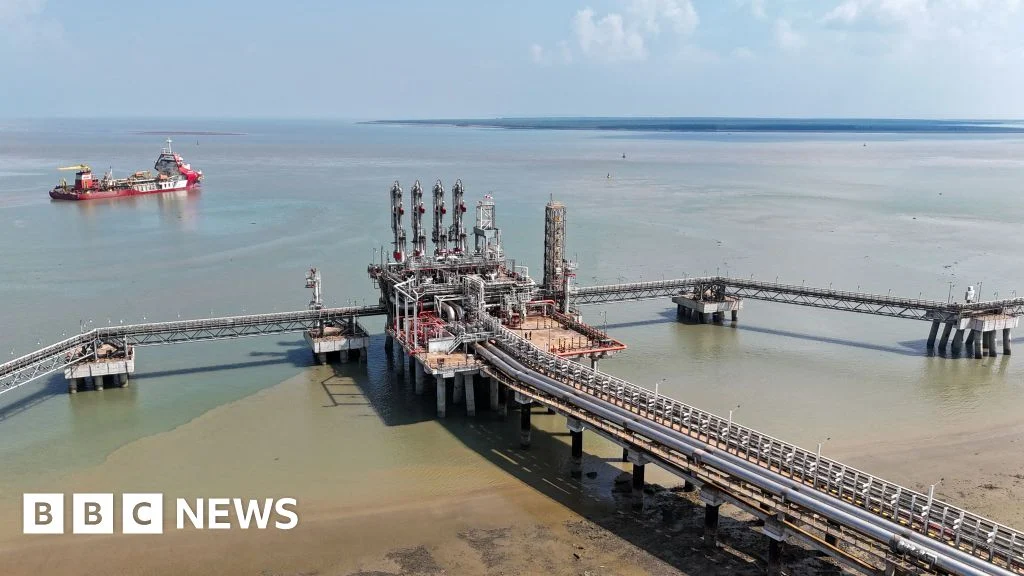
Despite the domestic production buffer, India’s piped gas system remains significantly exposed to global market dynamics and geopolitical risks. In recent years, LNG imports have consistently supplied roughly half of the country’s total gas availability. In 2025, India’s LNG imports are projected to total around 24-25 million tonnes, solidifying its position as one of the world’s preeminent LNG buyers.
A substantial portion of this critical supply chain is anchored to a single, geopolitically sensitive region: Qatar. More than half of India’s LNG imports are secured through long-term contracts with Qatari suppliers, providing a degree of stability but also concentrating risk. Smaller, supplementary volumes arrive from a diversified portfolio of global suppliers, including the United States, Australia, Russia, and various African nations. This diversification, while present, does not fully mitigate the heavy reliance on Qatari volumes.
The crux of the current vulnerability lies in geography. LNG cargoes originating from Qatar and the United Arab Emirates must navigate the Strait of Hormuz, a narrow maritime choke-point nestled between Iran and Oman. This strait, a mere 39 kilometres wide at its narrowest point, is currently at the epicentre of heightened geopolitical tensions following recent retaliatory strikes and escalating rhetoric between various regional and international actors, contributing to what the article terms the "Middle East war" after the US and Israel launched attacks on Iran. Roughly 50-55% of India’s total LNG imports traverse this volatile corridor, making any disruption here a direct threat to India’s energy security.
Timeline of Disruptions and Immediate Outlook
The impact of these escalating tensions on shipping through the Strait of Hormuz has already begun to manifest. While the flow of LNG has not entirely ceased, signs of disruption are emerging. Go Katayama, a principal insight analyst for LNG and natural gas at Kpler Insight, a leading commodity intelligence platform, observed, "Supplies have not been completely disrupted yet. Cargoes that loaded in Qatar before the conflict escalated are still arriving in Asia."
Shipping data compiled by Kpler provides a clearer picture: 13 LNG cargoes loaded between February 10th and 26th are currently en route to India, with deliveries anticipated to continue through March. This provides a temporary reprieve and ensures immediate supply. However, a significant development occurred on March 2nd, when exports from Qatar’s colossal Ras Laffan LNG complex, with an annual capacity of 77 million tonnes, were halted. Katayama warned that these vessels en route to India "could be among the last shipments until safe passage through Hormuz resumes."
This situation does not imply that India will experience an immediate, overnight depletion of its gas supply. The existing cargoes and domestic production offer short-term resilience. However, it vividly highlights a structural vulnerability in India’s energy security framework. Unlike crude oil, for which India maintains strategic reserves to buffer against supply shocks, there are no comparable strategic reserves for LNG. Gas is primarily stored as working inventory at India’s regasification terminals—facilities like Dahej, Hazira, Kochi, and Ennore—which convert imported LNG back into its gaseous state for distribution. These inventories, at best, typically cover only one to two weeks of imports, depending on terminal operations and cargo schedules. This "just-in-time" system is highly efficient under normal circumstances, relying on a steady rhythm of ship arrivals. Any sustained interruption to this rhythm necessitates swift market adjustments.
Economic Implications and Long-Term Strategies
For India’s urban consumers relying on piped gas, the immediate and most tangible risk is not an outright shortage, but rather a significant price increase. Should the disruption at the Strait of Hormuz persist, India’s gas market will inevitably adjust through the classic economic mechanisms: higher prices and a consequent weakening of industrial demand. Households, while largely protected from outright supply cuts, will likely face steeper utility bills. As Chopra succinctly puts it, "There is some price rise expected." Ultimately, both homes and factories will bear the brunt of increased costs, with industry absorbing the deeper supply cuts to safeguard domestic consumers.
The broader economic implications are considerable. Higher energy prices can fuel inflation, impacting household budgets and the cost of goods manufactured using natural gas. This could put pressure on India’s manufacturing sector, potentially dampening industrial output and making Indian exports less competitive globally. The government would face the difficult challenge of balancing consumer protection with economic stability, possibly through subsidies or price caps, which carry their own fiscal implications.
From a long-term strategic perspective, the current crisis serves as a stark reminder of the imperative for enhanced energy security. India has been actively pursuing a multi-pronged approach to diversify its energy mix and reduce import dependence. This includes intensifying domestic exploration and production efforts, investing in renewable energy sources like solar and wind power, and exploring alternative gas supply routes, albeit with their own complex geopolitical challenges (such as the long-stalled Turkmenistan-Afghanistan-Pakistan-India (TAPI) pipeline project). Furthermore, strengthening bilateral energy ties with stable suppliers and investing in strategic infrastructure to expand storage capacity for LNG could become more urgent priorities.
The crisis also underscores India’s delicate diplomatic balancing act in the Middle East, a region critical for its energy security, trade, and diaspora. Maintaining open channels with all regional actors and advocating for de-escalation and freedom of navigation become paramount.
In conclusion, while India’s robust domestic gas production and the government’s prioritisation policies offer immediate resilience to its burgeoning PNG and CNG markets, the escalating tensions in the Middle East and the vulnerability of the Strait of Hormuz expose a significant structural challenge. The current situation highlights the critical need for continued vigilance, strategic diversification, and robust contingency planning to ensure India’s energy security in an increasingly unpredictable global environment. The gas may keep flowing to homes, but the cost, both economic and strategic, is set to rise, underscoring the deep interconnectedness of global geopolitics and local kitchens.

Related Posts

US Imposes Sweeping 50% Tariffs on Canadian Goods, Citing "Unequal Treatment" in Major Trade Escalation

The Silent Threat: How a Tick Bite Led to the World’s First Confirmed Fatal Mammalian Meat Allergy