Missile Strikes from Iran Cause Extensive Damage and Casualties in Central Israel Amid Escalating Conflict
Central Israel bore the brunt of a significant missile attack from Iran in the early hours of March 18, 2026, with Israeli media reporting "extensive property damage" and emergency services responding to multiple impact sites. The city of Kafr Qassem was particularly affected, with at least four locations struck, leading to calls for immediate medical attention for "panic victims." Simultaneously, Al Jazeera reported that the nearby city of Ramat Gan experienced fatalities, with two individuals tragically killed by shrapnel, underscoring the severe human cost of the ongoing "War on Iran." This latest volley marks a dangerous escalation in a conflict that has gripped the Middle East for months, pushing regional stability to its brink and eliciting urgent responses from both sides as well as international observers.
Details of the March 18 Attack
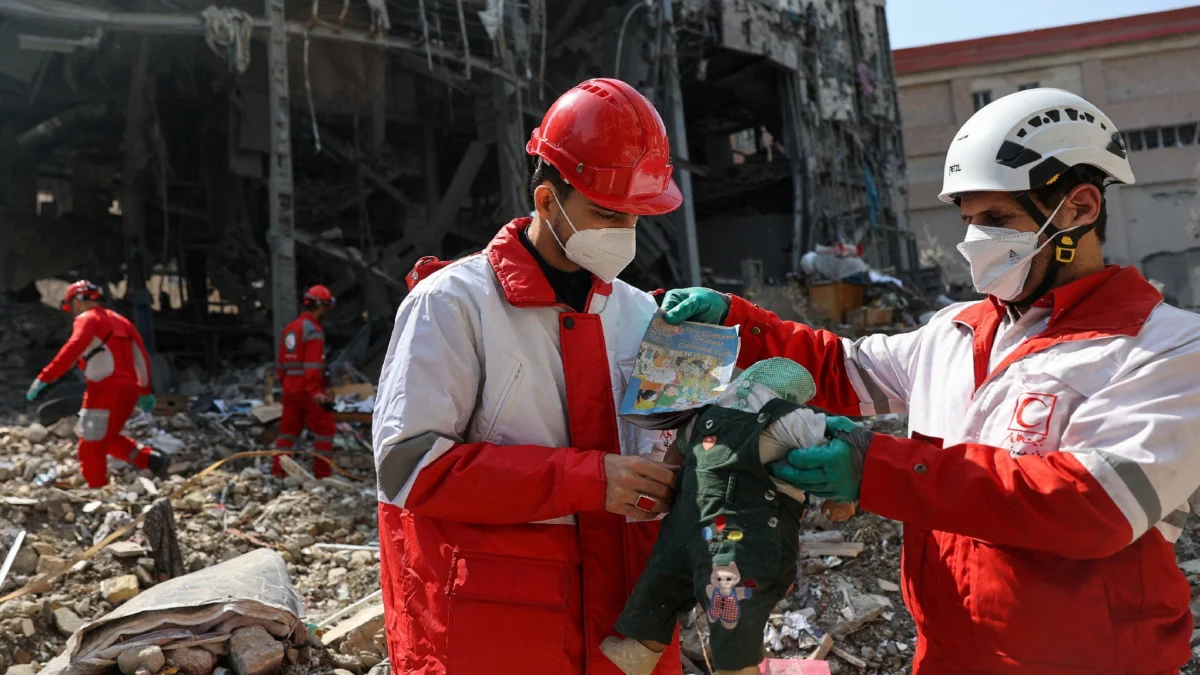
The barrage, which commenced shortly after midnight GMT, saw multiple Iranian-launched projectiles successfully penetrate Israeli airspace, bypassing advanced defense systems in several instances. In Kafr Qassem, a city located approximately 20 kilometers east of Tel Aviv, residents were awakened by the piercing wail of air raid sirens, followed moments later by loud explosions. Channel 12, a prominent Israeli broadcaster, detailed that at least four distinct sites within Kafr Qassem sustained direct hits, resulting in what was described as "extensive property damage." Visual reports, later corroborated by local authorities, indicated significant structural damage to residential buildings, commercial establishments, and public infrastructure. Debris was scattered across wide areas, complicating initial rescue and assessment efforts. Emergency medical teams were dispatched to multiple scenes, primarily treating individuals suffering from shock and anxiety, with at least two "panic victims" requiring immediate attention at one of the impact zones. The psychological toll on the civilian population, accustomed to but never immune from such attacks, was immediately evident.
Concurrently, approximately 15 kilometers to the west, the densely populated urban center of Ramat Gan also faced the impact of the missile assault. Al Jazeera, citing its own sources and initial ground reports, tragically confirmed that two individuals were killed by shrapnel in Ramat Gan. The nature of the shrapnel suggested the deployment of advanced, high-explosive warheads designed to maximize damage upon impact. These fatalities represent a stark reminder of the lethal potential of the ongoing conflict, bringing the human tragedy directly into civilian neighborhoods. Search and rescue operations were initiated swiftly in both Kafr Qassem and Ramat Gan, with Magen David Adom paramedics and firefighters working under challenging conditions to ensure no further casualties were overlooked and to secure damaged sites.
Emergency Response and Immediate Aftermath
Following the initial impacts, a coordinated emergency response was immediately activated across central Israel. Sirens had provided a brief but crucial window for residents to seek shelter, undoubtedly mitigating a higher casualty count. However, the sheer scale and distribution of the impacts presented significant challenges for first responders. In Kafr Qassem, emergency crews focused on structural integrity assessments, evacuating residents from severely damaged buildings, and clearing debris from critical roadways. Police forces cordoned off affected areas to ensure public safety and to facilitate the work of bomb disposal units searching for unexploded ordnance or missile fragments. In Ramat Gan, the focus was primarily on the tragic task of recovering the deceased and providing support to their families, while also addressing widespread property damage. Israeli Home Front Command issued updated guidelines to residents in affected and surrounding areas, urging vigilance and adherence to security instructions, reflecting the ongoing threat.
Background to the Conflict: The War on Iran
The missile attacks of March 18, 2026, are not isolated incidents but rather integral to a broader, deeply entrenched conflict referred to as the "War on Iran." This protracted confrontation, which escalated into direct military engagement in late 2025, represents the culmination of decades of geopolitical tension, proxy warfare, and ideological animosity between Israel and Iran. Rooted in the Iranian Revolution of 1979 and the subsequent establishment of an Islamic Republic overtly hostile to Israel, the rivalry has historically manifested through proxy groups, cyber warfare, and regional power struggles in Syria, Lebanon, and Gaza.
Direct military confrontation began following a series of highly destabilizing incidents. Analysts point to Iran’s accelerated nuclear program, perceived Israeli covert operations targeting Iranian nuclear and military assets, and a significant increase in drone and missile attacks by Iranian-backed militias against Israeli and allied interests as key triggers. The conflict officially entered a new phase when large-scale aerial exchanges began, with both nations openly targeting strategic military sites, infrastructure, and, increasingly, urban centers. The "War on Iran" has since evolved into a complex, multi-front engagement involving sophisticated missile systems, advanced air defense networks, and cyber operations, drawing in regional and international actors who view the conflict with growing alarm. The stated objectives of both sides remain deeply entrenched: Israel aims to neutralize Iran’s nuclear capabilities and its regional military threat, while Iran seeks to challenge Israeli hegemony and support its "Axis of Resistance."
Chronology of Recent Escalations
The March 18 attack follows a pattern of escalating tit-for-tat exchanges that have characterized the conflict in recent weeks.
- Late February 2026: Israeli airstrikes reportedly targeted several key military installations deep within Iranian territory, including missile production facilities and drone command centers, in what Jerusalem described as a preemptive measure against a planned large-scale attack.
- Early March 2026: Tehran retaliated with a wave of ballistic missile and drone attacks aimed at Israeli military bases in the Negev desert and airfields in the north. While most were intercepted by Israel’s multi-layered air defense systems, some impacts were reported, causing minor damage but no casualties.
- March 10, 2026: A significant cyberattack, attributed by Israeli intelligence to Iranian state-sponsored actors, crippled several critical infrastructure systems in Israel, including sections of its railway network and municipal water supply, causing widespread disruption for several hours.
- March 14, 2026: Israel responded to the cyberattack with a series of targeted missile strikes against what it identified as Iranian Revolutionary Guard Corps (IRGC) command centers in Syria, which Jerusalem claimed were orchestrating regional cyber warfare operations. These strikes reportedly resulted in several Iranian and Syrian military fatalities.
- March 16, 2026: Iran’s Supreme Leader issued a stern warning, promising a "crushing response" to what he termed "Zionist aggression" and reiterating Iran’s resolve to defend its sovereignty and regional allies. This public statement set the stage for the subsequent missile launches.
This sequence of events highlights a dangerous cycle of action and reaction, with each strike fueling the next, drawing both nations deeper into a direct and destructive confrontation.
Official Reactions and Statements (Inferred)
While no immediate official statements were released concurrently with the 00:55 GMT update, the nature of the attack and the established patterns of communication in the conflict allow for logical inferences regarding expected reactions.

-
From Israel: Israeli Prime Minister Benjamin Netanyahu and Defense Minister Yoav Gallant are expected to convene an emergency security cabinet meeting. A public statement is anticipated, likely condemning the "barbaric act of aggression" and reaffirming Israel’s "ironclad commitment to defending its citizens and sovereignty." The statement would also likely vow a "decisive and proportionate response" to ensure that such attacks do not go unpunished. Israeli military spokespersons are expected to provide updates on the effectiveness of air defenses, damage assessments, and the ongoing investigation into the launch sites. There will also be a strong emphasis on the civilian nature of the targets, aiming to garner international sympathy and justify future retaliatory actions.
-
From Iran: Tehran is likely to frame the missile strikes as a legitimate and necessary act of self-defense, a "robust response to Zionist provocations and unprovoked aggression" against Iranian interests and personnel in the region. Statements from the IRGC or the Ministry of Foreign Affairs are expected to highlight Iran’s capability to strike deep into Israel and to warn against further Israeli adventurism. They might also emphasize that the targeting was a direct response to recent Israeli attacks on Iranian assets or personnel, seeking to establish a narrative of deterrence and retaliation rather than unprovoked aggression.
-
International Community: The United Nations Secretary-General is expected to issue a statement expressing deep concern over the escalating violence, calling for immediate de-escalation, and urging both parties to exercise maximum restraint to prevent a wider regional conflagration. Major global powers, particularly the United States and European Union, are likely to reiterate calls for a diplomatic resolution. The US, a key Israeli ally, is expected to reaffirm its support for Israel’s security while also privately urging restraint to prevent the conflict from spiraling further out of control. European nations are likely to express concern over civilian casualties and the humanitarian impact, potentially calling for adherence to international humanitarian law. Regional Arab states, many of whom have quietly normalized relations with Israel or share concerns about Iranian influence, will likely express varied reactions, from cautious calls for calm to condemnations of actions threatening regional stability.
Analysis: Impact on Regional Stability and Diplomacy
The March 18 missile strikes carry profound implications for regional stability and the already fragile diplomatic landscape. The targeting of civilian areas, particularly the reported fatalities in Ramat Gan, marks a dangerous threshold in the conflict. Such actions escalate the humanitarian toll and significantly raise the political stakes for both governments. For Israel, the civilian casualties will intensify public pressure on its leadership to demonstrate a strong and decisive response, potentially leading to more aggressive military operations against Iranian targets. This could include deeper strikes into Iranian territory or more extensive campaigns against Iranian proxy forces.
Conversely, Iran’s successful penetration of Israeli air defenses and the resulting damage, even if primarily to property, serves as a significant propaganda victory for Tehran domestically and among its regional allies. It demonstrates Iran’s continued capability to project power and inflict costs on its adversary, despite sustained Israeli military pressure. This could embolden Iran to continue its current trajectory, believing it can withstand Israeli retaliation.
Diplomatically, these events further complicate any prospects for de-escalation or mediation. The "War on Iran" has already strained international relations, and direct civilian casualties make it exceedingly difficult for either side to back down without appearing weak. International efforts to broker a ceasefire or initiate peace talks are likely to face increased hurdles. The attacks also risk drawing in other regional actors, such as Lebanon’s Hezbollah or various Iraqi militias, potentially transforming the bilateral conflict into a wider regional conflagration with devastating consequences for the entire Middle East. Global energy markets, already volatile due to regional instability, are likely to react sharply to these escalations, with potential spikes in oil prices as investors factor in increased supply risks.
Military and Defense Perspectives
From a military perspective, the latest attacks raise questions about the efficacy of Israel’s multi-layered air defense systems, including the Iron Dome, David’s Sling, and Arrow systems. While a significant number of incoming projectiles are routinely intercepted, the fact that "extensive damage" and "fatalities" occurred indicates that some missiles successfully evaded these defenses. This could prompt a review of deployment strategies, sensor networks, or even the development of new counter-measures. For Iran, the successful impacts will be seen as validation of its investment in long-range precision-guided missiles, demonstrating a growing capability to strike strategic targets within Israel despite sophisticated defenses. This could lead to further refinement and deployment of such weapons. Both sides will undoubtedly be analyzing the attack for tactical lessons, which will inform their future offensive and defensive strategies. The continuous evolution of missile technology and air defense systems means that this technological arms race will only intensify.
Humanitarian Concerns and Civilian Impact
Beyond the immediate casualties and property damage, the ongoing "War on Iran" and these latest missile strikes have profound humanitarian implications. Civilian populations on both sides live under constant threat, facing the psychological trauma of repeated alarms, the destruction of their homes, and the loss of loved ones. The disruption to daily life, including school closures, business interruptions, and restrictions on movement, takes a heavy toll on communities. Aid organizations are likely to redouble their calls for unimpeded humanitarian access and for all parties to adhere strictly to international humanitarian law, which prohibits targeting civilians and civilian infrastructure. The long-term effects of this conflict on mental health, economic stability, and social cohesion in both Israel and Iran are a growing concern for international observers.
International Calls for De-escalation
As the conflict intensifies, international calls for de-escalation are expected to grow louder, though their effectiveness remains uncertain. The United States, while a staunch ally of Israel, also has a vested interest in regional stability and preventing a wider war that could destabilize global markets and security. European powers, facing potential refugee crises and economic fallout, will likely join calls for a diplomatic off-ramp. However, with both Israel and Iran deeply entrenched in their respective positions and driven by domestic political pressures and security imperatives, finding common ground for negotiations remains an elusive goal. The international community’s challenge will be to find a credible pathway for dialogue that addresses the core security concerns of both nations while preventing further bloodshed.
The March 18, 2026, missile strikes represent another grim milestone in the escalating "War on Iran," bringing death and destruction directly to civilian centers in Israel. As both sides brace for potential retaliation, the prospects for peace and stability in the Middle East appear increasingly dim, with the region teetering on the precipice of an even more devastating conflict.

Related Posts

Iran’s Araghchi congratulates Khalil al-Hayya as new head of Hamas’ political bureau

Jordan Intercepts Iranian Missiles as Regional Tensions Escalate Amidst War on Iran