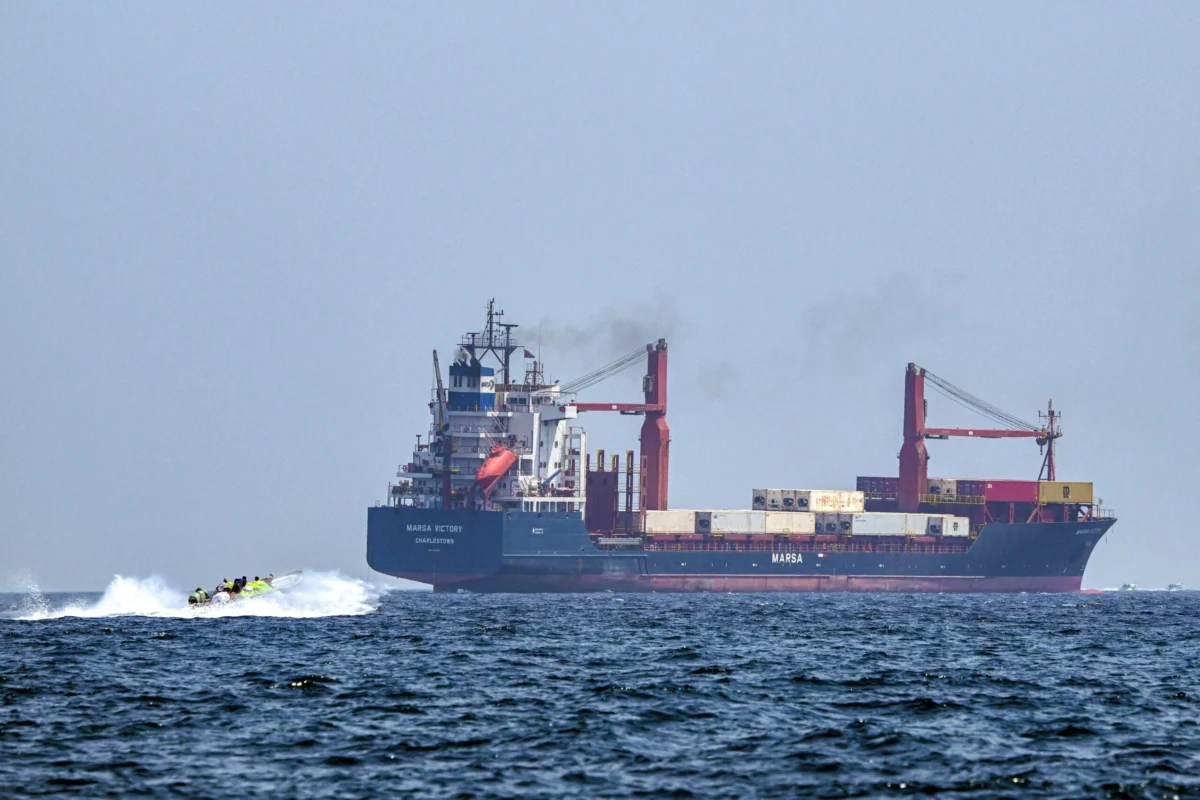
Navigational Chaos and Electronic Warfare Paralyze Vital Shipping Routes in the Strait of Hormuz
The Strait of Hormuz, the world’s most critical maritime chokepoint for global oil transit, has effectively entered a state of operational paralysis following the escalation of the conflict between the United States, Israel, and Iran. Since the commencement of coordinated military strikes on February 28, the region has become a hotbed of electronic warfare, with maritime intelligence firms reporting that over 1,100 vessels have experienced significant disruptions to their Global Positioning System (GPS) and Automatic Identification System (AIS) communications. This surge in electronic interference has transformed one of the world’s busiest waterways into a high-risk zone, where navigation is increasingly defined by uncertainty and the constant threat of collision or miscalculation.
Chronology of Escalation and Electronic Interference
The current crisis follows a period of heightened regional volatility that began in earnest during the summer of 2025. Following the exchange of direct missile fire between Israel and Iran last June, the Strait of Hormuz became the primary theater for localized electronic warfare. However, the intensity of these disturbances has reached an unprecedented scale since February 28, 2026.
According to data compiled by Windward, a maritime intelligence firm, the first 72 hours of the recent conflict saw a sharp, non-linear increase in signal degradation. By March 1, the Joint Maritime Information Center (JMIC) issued an urgent advisory to the global shipping industry, categorizing the navigational environment as "critical." The advisory noted that physical and electronic attacks against commercial vessels are now considered "almost certain," citing the confluence of active military engagement and the degradation of positional integrity as a "risk amplifier" for all maritime traffic.
The Mechanics of Modern Maritime Warfare
The electronic interference plaguing the Gulf is categorized into two distinct, yet equally dangerous, tactics: jamming and spoofing. Jamming involves the broadcasting of high-power signals that overwhelm the frequencies used by satellite navigation, rendering onboard systems incapable of determining a vessel’s location. Spoofing, a more insidious technique, involves broadcasting false data that tricks a ship’s navigation computer into reporting an incorrect position.
Windward’s analysis confirms that these methods have been deployed with tactical precision. In several documented instances, ships currently navigating the Gulf were falsely projected onto maps at inland locations, including commercial airports, residential areas, and, alarmingly, the Barakah Nuclear Power Plant in the United Arab Emirates. Other vessels have been observed manifesting "ghost" patterns, moving in erratic, circular motions on digital trackers, which indicates a complete loss of orientation for the affected crews.
While the majority of the activity identified by intelligence analysts has been identified as jamming—designed to blind navigation systems and disrupt drone or missile targeting—the presence of spoofing signatures suggests a sophisticated effort to manipulate regional situational awareness.
Data-Driven Assessment of Regional Impacts
The scope of the disruption is vast, spanning the territorial waters of Iran, the United Arab Emirates, Qatar, and Oman. Windward has identified 21 distinct "clusters" of intense signal interference that have emerged in the days following the initial strikes. These clusters represent zones where the probability of safe navigation is significantly diminished.
The implications for commercial shipping are profound. AIS, the tracking system that allows ships to see one another and avoid collisions, is the primary victim of these attacks. When AIS data is compromised, the risk of maritime accidents, including hull-breaching collisions and subsequent oil spills, increases exponentially. With at least three tankers confirmed damaged in the initial phases of the conflict, shipping insurance premiums for the region have surged, with many providers now considering the Strait of Hormuz a "high-risk exclusion zone."
Official Responses and Industry Outlook
Maritime authorities and naval coalitions have been forced to adjust their standard operating procedures. The JMIC, in its latest bulletin, emphasized that the lack of reliable positional data, combined with the extreme congestion of the Strait, makes human error almost inevitable. "Under current aerial threat and added navigational challenges, degraded positional integrity acts as a risk amplifier, increasing the probability of navigational incident or miscalculation," the notice stated.
Ami Daniel, CEO of Windward, characterized the current levels of interference as "way above the baseline," noting that the situation is deteriorating as the conflict radius expands. "The bigger the radius of the attacks are, the bigger the jamming, and the bigger the jamming, the more risk there is," Daniel stated.
From the aviation sector, the outlook is similarly grim. Spirent Communications, a firm specializing in navigation strategy, has identified at least six new, distinct spoofing signatures currently active in the Middle East. While the cancellation of most commercial flights has reduced the number of immediate civilian casualties, the spoofing of aircraft navigation systems remains a severe concern for military and logistical support flights still operating in the region.
Broader Economic and Geopolitical Implications
The Strait of Hormuz is the world’s most vital energy conduit, with approximately 20 to 30 percent of the world’s total oil consumption passing through the narrow passage. Any sustained disruption to this route has immediate, global ramifications for energy markets. As tankers hesitate to enter the zone or are forced to take significantly longer, costlier routes around the Arabian Peninsula, the upward pressure on oil prices is expected to intensify.
Beyond the energy sector, the conflict has highlighted the vulnerability of global infrastructure to the "commoditization" of electronic warfare. What was once the domain of state-level military operations is now effectively disrupting the civilian logistics chain that supports the global economy.
Analysts suggest that the use of electronic warfare is not merely a byproduct of the conflict, but a deliberate strategy intended to exert pressure on regional economies without the need for direct, large-scale kinetic attacks. By creating an environment of "navigational anarchy," the belligerents have effectively imposed an unofficial blockade on the region.
Future Risks and Mitigation Challenges
Looking forward, the persistence of these electronic attacks presents a difficult challenge for international naval task forces tasked with maintaining freedom of navigation. Standard navigational equipment is not designed to counter high-output jamming or sophisticated spoofing. Consequently, vessels are being forced to rely on legacy navigation methods—including radar, visual navigation, and manual plotting—which are significantly slower and less efficient than the digital systems they replace.
The international community, led by major maritime powers, faces a complex dilemma: how to neutralize the sources of signal interference without further escalating the kinetic conflict. As the military engagement continues, the "noise" in the region is expected to increase, further clouding the maritime domain.
For the shipping industry, the current reality is one of extreme caution. Many operators have suspended transit altogether until further notice, leading to a bottleneck in supply chains that rely on the Gulf for petroleum and petrochemical exports. Unless there is a significant de-escalation in the military standoff, the "digital fog of war" currently enveloping the Strait of Hormuz is likely to remain, posing a persistent, high-stakes threat to the stability of the global maritime economy. The situation remains fluid, with intelligence agencies monitoring the electronic spectrum for further signs of escalation, as the world waits to see whether the most critical trade route on the planet can be secured against the invisible, but devastating, reach of modern electronic warfare.

Related Posts

The Las Vegas Cybersecurity Summit and the Escalating Threat of Autonomous Digital Exploitation

New York City Council members and privacy advocates launch legislative campaign to ban biometric facial recognition at public entertainment venues