EU faces internal fracture as Trump pressures NATO allies over Strait of Hormuz security
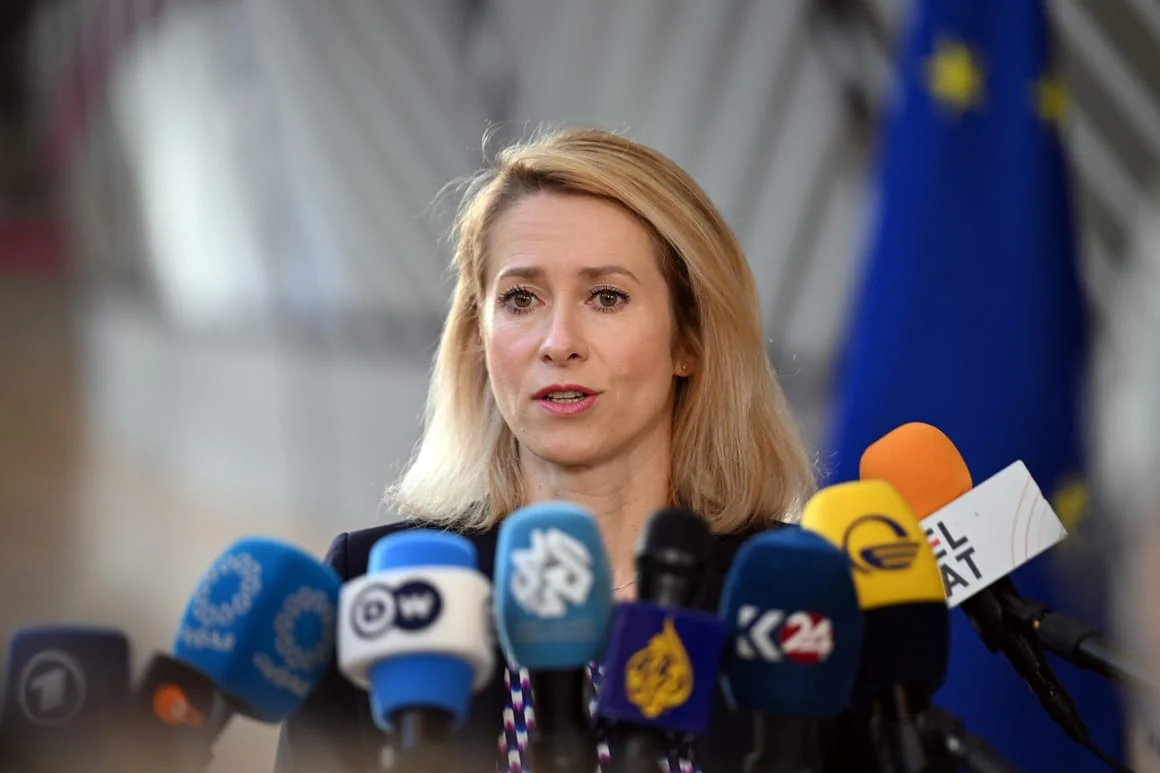
The European Union is currently navigating a precarious geopolitical crossroads as it weighs options to secure the Strait of Hormuz, a critical maritime chokepoint, following an ultimatum from U.S. President Donald Trump that has sparked significant internal dissent. As global oil prices remain volatile—surging beyond $100 per barrel in the wake of intensifying conflict in the Middle East—the pressure from Washington to secure the transit of approximately 20 percent of the world’s daily oil consumption has placed Brussels in a difficult position. Top EU diplomat Kaja Kallas confirmed on Monday that the bloc is exploring potential adjustments to existing naval mandates, yet the prospect of military involvement has met with immediate resistance from member states wary of being drawn into an escalating regional war.
The Strait of Hormuz, a narrow waterway situated between Iran and Oman, serves as the primary artery for the global energy trade. Any sustained closure or threat of closure poses an existential risk to global economic stability. President Trump’s recent comments to the Financial Times, in which he suggested that the failure of European allies to assist in securing the strait could result in a "very bad future" for NATO, have been interpreted in Brussels as a form of diplomatic coercion. This rhetoric has not only strained transatlantic relations but has exposed deep-seated divisions within the EU regarding the bloc’s role in out-of-area military operations.
A Chronology of Escalation
The current tension is the culmination of a rapid deterioration in regional security. Throughout early 2026, the situation in the Middle East intensified, leading to a spike in crude oil prices that severely impacted European markets. By mid-March, the U.S. administration, seeking to stabilize global energy markets, engaged in a controversial move to temporarily lift sanctions on Russian oil giants Rosneft and Lukoil for a 30-day window. This decision, intended to increase global supply, was criticized by Kaja Kallas as a "dangerous precedent" that risked undermining the West’s broader strategic goal of isolating Moscow following its invasion of Ukraine.
Following this policy shift, Washington pivoted its focus to the Strait of Hormuz, demanding that NATO partners provide tangible military support. On March 14, President Trump publicly linked the security of the strait to the future of the Atlantic alliance, framing European participation as a litmus test for NATO’s relevance. By March 16, as EU foreign ministers gathered in Brussels, the debate shifted from theoretical support to the practical application of existing naval assets.
Naval Mandates and the Question of Aspides and Atalanta
The EU currently manages several naval initiatives, most notably Operation Aspides and Operation Atalanta. Operation Aspides, which was originally established to protect commercial shipping from Houthi insurgent attacks in the Red Sea, and Operation Atalanta, a long-standing counter-piracy mission off the coast of Somalia, are currently being evaluated for potential expansion.
However, military experts note that shifting these missions to the Strait of Hormuz is not merely a logistical challenge but a legal and political hurdle. Both missions were designed with specific geographical and operational parameters. "Changing the mandate of these missions requires unanimous consent from the member states," noted one senior diplomat in Brussels. "Beyond that, the rules of engagement for a mission intended to combat piracy or defend against rebel drones are fundamentally different from those required to maintain open navigation in a zone of active state-level conflict."
Kaja Kallas has suggested that if a full-bloc consensus cannot be reached, the EU might pivot toward a "coalition of the willing." This approach would allow interested member states to contribute resources—such as frigates, surveillance aircraft, or mine-sweeping vessels—without requiring the participation of all 27 nations. Yet, even this modular approach faces hurdles, as many smaller EU nations fear the political fallout of a localized conflict.

Domestic Dissent and the Rhetoric of Blackmail
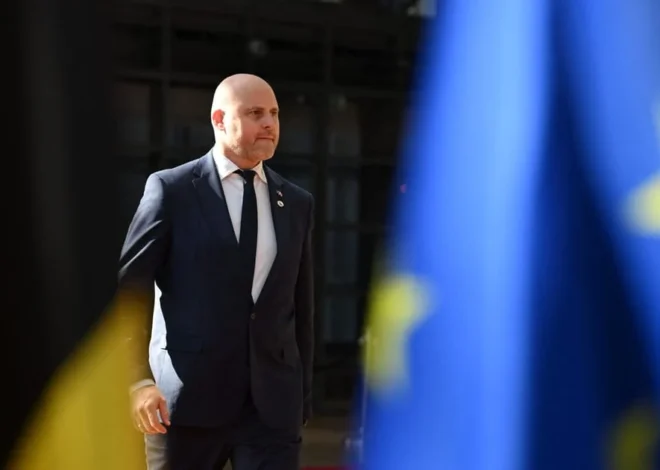
The most vocal opposition to the U.S. demand originated from Luxembourg. Xavier Bettel, the nation’s Deputy Prime Minister and Foreign Minister, utilized stark language during his arrival at the Brussels summit, characterizing the U.S. request as "blackmail."
"With satellites, with communications, we are very happy to be useful. But don’t ask us with troops and with machines," Bettel stated, signaling a firm boundary for his government. His remarks reflect a broader sentiment among several EU capitals that the bloc’s security architecture is intended for defensive purposes and should not be leveraged as an extension of U.S. foreign policy in the Middle East.
Similarly, the Romanian foreign minister expressed skepticism regarding the suitability of NATO as the vehicle for such an operation. The argument is rooted in the foundational treaty of the alliance, which defines NATO as a defensive organization. Critics of the U.S. position argue that the situation in the Strait of Hormuz, while critical to global trade, does not constitute an "Article 5" event—an armed attack against one member that would trigger a collective response.
Economic Stakes and Global Trade Impacts
The economic implications of the standoff are immense. The Strait of Hormuz is not merely an oil pipeline; it is the vital throat through which a vast majority of the liquid natural gas (LNG) from Qatar and the UAE flows to Europe. According to data from the International Energy Agency, a closure of the strait could trigger a global recession, as energy prices would likely double within weeks.
Kallas has proposed a diplomatic-led solution, drawing parallels to the Black Sea Grain Initiative that allowed for the safe export of Ukrainian crops. By coordinating with UN Secretary-General António Guterres, the EU hopes to establish a neutral monitoring framework that could de-escalate the military posture in the region. "It is in our interest to keep the Strait of Hormuz open," Kallas reiterated, emphasizing that while the EU recognizes the necessity of the mission, the mechanism must be sustainable and internationally sanctioned.
Analysis: The Strategic Dilemma for Brussels
The current crisis represents a fundamental stress test for the European Union’s "Strategic Autonomy" agenda. For years, the EU has sought to develop the capacity to act independently on the world stage, yet it remains heavily reliant on U.S. military logistics and intelligence capabilities.
If the EU fails to act, it risks further estrangement from Washington, potentially emboldening the current U.S. administration to reconsider its commitments to European security in other theaters, such as the Baltic region. Conversely, if the EU yields to the pressure and commits naval forces to the Strait of Hormuz, it risks being drawn into an open-ended confrontation with Iran, a scenario that would likely deepen domestic political instability across Europe and place additional strain on already stretched national budgets.
As the situation develops, the EU is forced to balance its role as a global economic actor with the limitations of its defense capacity. The upcoming weeks will prove decisive, as the bloc attempts to craft a response that satisfies the immediate requirements of global energy security while maintaining the political cohesion of its member states. Whether the EU can construct a "coalition of the willing" that satisfies Washington without fracturing the internal unity of the bloc remains the primary question facing European leadership as they enter this volatile chapter of international relations.