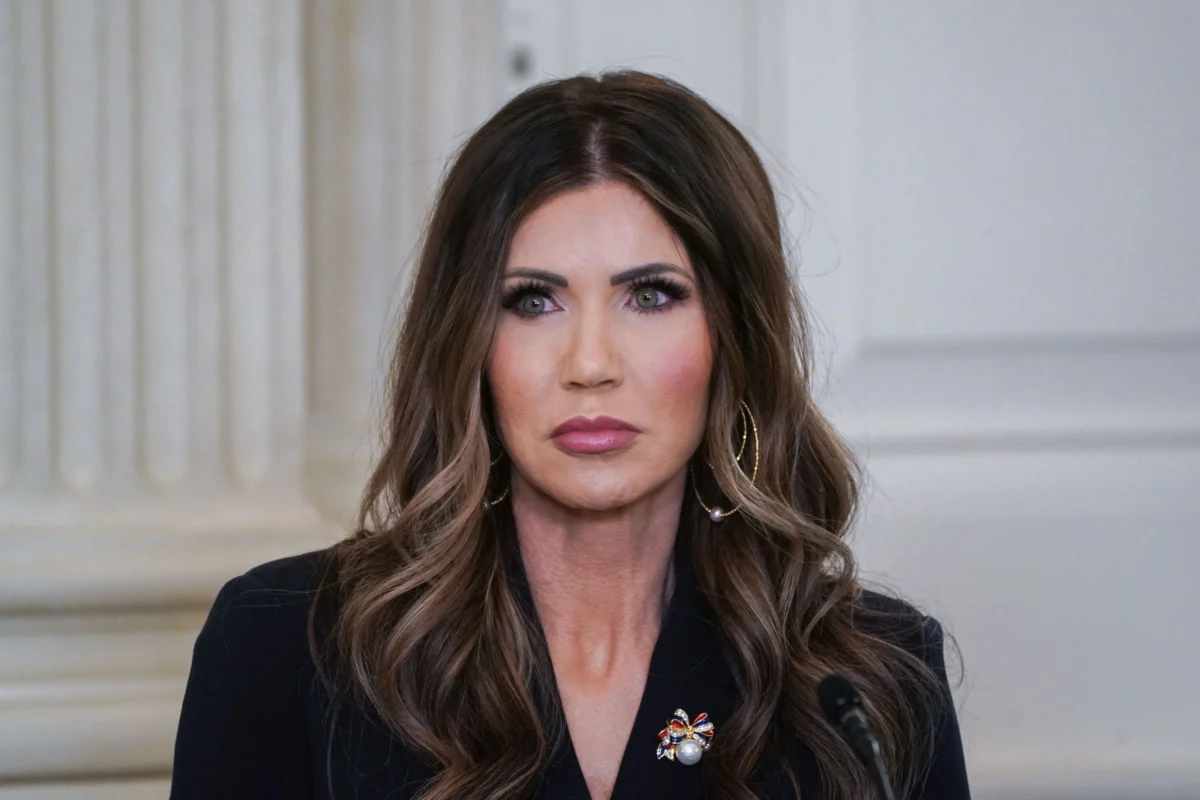
Kristi Noem Out as Secretary of Homeland Security Amidst Congressional Scrutiny and Administrative Turmoil
After a tumultuous tenure defined by aggressive enforcement mandates, internal departmental friction, and a series of high-profile controversies, Kristi Noem has been removed as the Secretary of the Department of Homeland Security. The announcement, delivered by President Donald Trump via a Truth Social post on Thursday, marks the conclusion of a high-pressure week on Capitol Hill that saw bipartisan frustration culminate in calls for the Secretary’s resignation. Senator Markwayne Mullin of Oklahoma, a staunch administration loyalist and vocal proponent of strict immigration enforcement, has been tapped to lead the agency.
The transition, which the White House is framing as a strategic realignment, will see Noem move into a newly created role as Special Envoy for The Shield of the Americas. This initiative, described by the administration as a Western Hemisphere security pact, is slated for a formal unveiling this Saturday in Doral, Florida. While the President praised Noem’s performance, specifically citing her border policy results, her departure follows months of intense scrutiny from lawmakers, civil rights organizations, and internal whistleblowers.
A Timeline of Escalating Friction
The shift in leadership comes after a series of events that strained the relationship between the White House and the Department of Homeland Security (DHS). The friction began in earnest during the summer of 2025, when reports emerged regarding the implementation of a secretive policy directive issued in May. This directive, signed by acting ICE director Todd Lyons, authorized federal agents to conduct warrantless entries into private residences—a policy that drew immediate legal challenges and concerns from constitutional scholars regarding potential Fourth Amendment violations.
By September, the internal culture at DHS had become increasingly fractured. Reports of a "contentious" meeting between Noem, senior adviser Corey Lewandowski, and President Trump highlighted a growing divide over the operational execution of mass deportation efforts. As autumn progressed, the situation was further complicated by public reports of administrative dysfunction, including a widely publicized incident in which Lewandowski allegedly attempted to terminate a pilot’s employment during a flight over a perceived slight regarding the handling of Noem’s personal belongings.
The situation reached a breaking point in early December. Following two days of grueling testimony before Congress—where Noem was questioned on everything from the $200 million DHS advertising campaign centered on her own image to the deaths of civilians during federal operations—support for her leadership evaporated. Senator Thom Tillis, a Republican, publicly called for her resignation during the hearings, citing a "complete collapse of institutional oversight." Shortly thereafter, the President finalized the decision to move her out of the cabinet position.
The Operational Legacy: Enforcement and Controversy
Noem’s tenure was marked by a pivot toward, and an acceleration of, the administration’s most radical immigration policies. Central to this were the aggressive tactics employed by Immigration and Customs Enforcement (ICE) and Customs and Border Protection (CBP).
The most damaging aspect of her tenure involved the fatal shootings of US citizens in Minneapolis, including the deaths of Renee Good and Alex Pretti. Despite immediate efforts by the agency to label the deceased as "domestic terrorists," subsequent investigations—including independent autopsies and the emergence of video evidence—directly contradicted the official narrative provided by DHS. These incidents ignited a firestorm of criticism, as did the broader implementation of the warrantless raid policy. In one documented instance, agents forced their way into the home of a US citizen in Minnesota, removing him at gunpoint in a case of mistaken identity, an event that became a rallying cry for critics of the department’s expanded powers.
Data released by the House Committee on Homeland Security paints a grim picture of the human cost during this period. According to committee findings, a record 53 individuals died while in the custody of ICE or CBP during the last fiscal year. These figures have provided ammunition for oversight committees demanding a full audit of detention protocols and the standard of care provided to those processed by the agency.
Administrative Stagnation at FEMA
The controversy surrounding Noem was not confined to immigration policy. Her centralized management style—specifically a requirement that any department contract or grant exceeding $100,000 receive her personal sign-off—created severe operational bottlenecks within the Federal Emergency Management Agency (FEMA).
A report issued by Senate Democrats on Wednesday detailed the fallout of this policy, finding that more than 1,000 critical contracts, grants, and awards had been frozen in a bureaucratic backlog. FEMA employees have expressed concern that this centralized vetting process has compromised the agency’s agility. In the event of a natural disaster or national security threat, the ability to deploy resources rapidly is paramount; however, the current procurement delays have left many regional offices struggling to maintain readiness. The Senate report concluded that the vetting policy, while intended to ensure total control, has ultimately served to hinder the delivery of disaster assistance to vulnerable populations.
The Path Forward: Markwayne Mullin’s Appointment
The selection of Senator Markwayne Mullin as the next Secretary of Homeland Security signals the administration’s intent to double down on its current trajectory. Mullin, a former plumbing business owner and mixed martial arts fighter, has spent his time in the Senate positioning himself as a "MAGA Warrior." His background as an ardent defender of the President’s domestic and foreign policies suggests that there will be little deviation from the current, hard-line approach to border security.
For the administration, the goal of the transition is to restore a sense of discipline and cohesion to an agency that has become a sprawling, often chaotic, nexus of power. With a budget that has expanded significantly under the current administration, the DHS now oversees an infrastructure that includes everything from cybersecurity (CISA) to mass detention facilities. The $38 billion procurement effort for new detention camps remains a key priority, and observers expect Mullin to oversee the completion of these sites with renewed focus.
Implications for the Future of DHS
The removal of Noem serves as a critical indicator of how the Trump administration manages its cabinet-level personnel. It underscores a preference for loyalty and operational efficiency, even at the cost of public relations. However, the move also leaves several questions unanswered.
First, the legal challenges surrounding the warrantless raid directive remain active. How the new Secretary chooses to navigate these court battles—or whether he seeks to expand or rescind the policy—will be a primary focus for civil rights groups. Second, the backlog at FEMA represents a significant risk. If the next major climate event or emergency finds the agency unable to respond due to procurement delays, the political fallout could be severe.
Finally, the creation of the "Special Envoy for The Shield of the Americas" suggests that the administration intends to project its border policies beyond the US mainland. By moving Noem to this role, the President effectively retains her as a key ally while removing her from the day-to-day management of the domestic agency that was causing the most political friction.
As Senator Mullin prepares to step into the role, the Department of Homeland Security stands at a crossroads. Whether his leadership can rectify the internal dysfunction while maintaining the administration’s aggressive enforcement agenda remains to be seen. What is clear, however, is that the oversight committees in Congress are unlikely to provide the new Secretary with the grace period typically afforded to a new cabinet member. The scrutiny that led to Noem’s exit is expected to continue, with the focus now squarely on the operational decisions of the new administration at the helm of one of the most powerful and controversial departments in the federal government.

Related Posts

The Las Vegas Cybersecurity Summit and the Escalating Threat of Autonomous Digital Exploitation

New York City Council members and privacy advocates launch legislative campaign to ban biometric facial recognition at public entertainment venues