Poland’s Strategic Defense Funding Crisis Deepens Following Presidential Veto Amid Rising Polexit Concerns
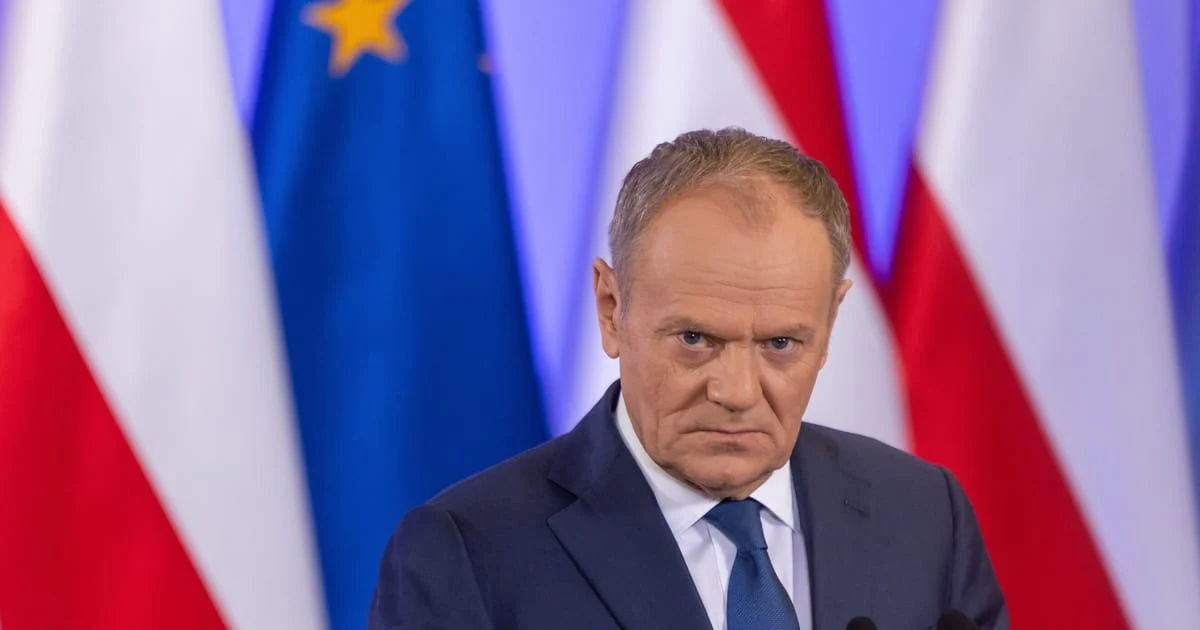
The political landscape in Warsaw has entered a period of profound uncertainty following President Nawrocki’s decision to exercise his veto power against critical legislation intended to secure billions in European Union defense loans. This move has effectively stalled the Polish government’s access to approximately €43.7 billion in low-interest funding, throwing the administration’s ambitious military modernization program into disarray. Prime Minister Donald Tusk, whose coalition government currently lacks the two-thirds parliamentary majority required to override such a presidential veto, has signaled that the blockade could have severe, long-term ramifications for Poland’s geopolitical standing and its security architecture.
The Legislative Impasse: A Breakdown of the Veto
The legislation, which faced rejection on Thursday, was designed to integrate Poland into a broader EU-wide framework for financing military expenditures. As Russia’s ongoing aggression in Ukraine forces European nations to re-evaluate their defense postures, Poland has emerged as the continent’s leader in military spending, with the Ministry of Defense projecting outlays to reach nearly 5 percent of the national gross domestic product (GDP) this year—a figure that exceeds the NATO benchmark of 2 percent by a significant margin.
The presidential veto has created an immediate fiscal bottleneck. Without access to the €43.7 billion in low-interest EU loans, the government must now pivot to domestic borrowing or alternative international credit markets. These options carry higher interest rates, which could potentially crowd out other public investments, including infrastructure projects and social welfare programs. The executive branch has expressed frustration with the veto, framing it as a partisan maneuver that ignores the existential necessity of defense readiness in the face of regional instability.
Chronology of a Growing Divide
The current standoff is not an isolated incident but rather the culmination of months of friction between the Tusk administration and the opposition-aligned presidency.
- Early 2024: The Tusk government initiates negotiations with Brussels to tap into specialized EU defense-funding vehicles, seeking to ease the strain of Poland’s rapid military buildup on the state budget.
- Mid-2024: Legislative drafts are circulated, emphasizing the need for multi-year financing to maintain the procurement of advanced fighter jets, tanks, and missile defense systems.
- November 2024: The legislative bill passes through the lower house of parliament (the Sejm) with a simple majority, reflecting the government’s mandate but highlighting the vulnerability to presidential obstruction.
- Thursday: President Nawrocki formalizes his veto, citing concerns over sovereignty and the oversight mechanisms associated with EU-managed funds.
- Friday: Public discourse shifts rapidly as political commentators and former ministers warn that the move signals a dangerous drift toward isolationism, with comparisons to the early stages of the British Brexit movement.
Economic Implications of the Defense Funding Gap
The scale of Poland’s defense ambition is unprecedented in the post-Cold War era. By aiming for 5 percent of GDP, Poland is setting a pace that few other nations can match. The EU defense loans were intended to provide a buffer, allowing the government to amortize the cost of these acquisitions over several decades.
By rejecting these funds, the presidential office has forced the Ministry of Finance to reconsider its fiscal strategy. Analysts suggest that the cost of servicing debt independently could balloon, potentially complicating the government’s efforts to maintain compliance with EU fiscal rules. Furthermore, the delay in securing these funds could lead to the rescheduling of critical defense contracts. If the government is forced to renegotiate terms with international arms suppliers, the timeline for the delivery of vital hardware—including systems essential for border security and air defense—could be pushed back by months or even years.
The Specter of Polexit: A Changing Political Climate
Perhaps the most significant consequence of the veto is the renewed debate regarding Poland’s relationship with the European Union. Konrad Szymański, a former Europe Minister under the previous Law and Justice (PiS) administration, provided a scathing assessment of the political climate in a recent newspaper commentary. He argued that the nationalist right wing is incrementally drifting toward a trajectory reminiscent of the United Kingdom’s path toward the 2016 Brexit referendum.
Szymański’s warning carries weight due to his background in European affairs and his intimate knowledge of the dynamics within the nationalist camp. He suggests that the rhetoric of "sovereignty above all" is being weaponized to undermine institutional cooperation, even in areas as vital as national security.
While proponents of the current legislative block argue that they are protecting Polish interests from Brussels’ "overreach," critics point to the polling data as evidence of a dangerous trend. Recent surveys indicate a shift in public sentiment. While support for European Union membership remains the baseline for the majority of Poles—who value the economic stability and security guarantees provided by the bloc—the idea of "Polexit" is no longer confined to the fringes.
Current polling ranges from one in 10 to as high as one in four citizens expressing support for an exit process. While this remains a minority position, the fact that it has moved from a negligible percentage to a quarter of the population in some surveys suggests a hardening of skepticism that could be leveraged for future political campaigns.
Official Responses and Diplomatic Fallout
The international reaction to the veto has been one of concern. European officials in Brussels, while remaining cautious about interfering in domestic Polish politics, have expressed dismay that a member state would forgo significant financial assistance for defense at a time when collective security is the bloc’s primary objective.
Within Poland, the government has intensified its messaging. Prime Minister Tusk stated clearly that the veto "weakens Poland’s position inside the EU," suggesting that by choosing to stand outside of the common financial architecture, Warsaw risks becoming a less effective partner in shaping European security policy.
Conversely, supporters of the presidential office maintain that the veto was a necessary exercise of constitutional checks and balances. They argue that the government’s reliance on EU funding creates an unhealthy dependency on institutions that may have different priorities than those of the Polish state. This divide represents a fundamental disagreement on the role of Poland within the European project: should it be a deeply integrated partner using EU tools to leverage its influence, or a sovereign actor maintaining maximum distance from Brussels?
Analytical Outlook: The Path Ahead
The situation remains fluid. Without a path to override the veto, the government must decide whether to seek a compromise—which would likely involve significant concessions on other policy areas—or to proceed with a more expensive, independent financing plan.
The political stakes are exceptionally high. If the military modernization program suffers delays, the government will face pressure from a public that expects both fiscal responsibility and national security. If, however, the government manages to navigate the crisis, it may emerge with a stronger argument for the necessity of deep institutional integration.
The "Polexit" narrative is likely to dominate the discourse in the coming months. As political parties prepare for future electoral cycles, the tension between national sovereignty and international cooperation will remain the central fault line in Polish politics. For now, the veto has done more than just block a loan; it has crystallized a debate about Poland’s future direction, forcing the nation to confront the reality that its security is inextricably linked to its diplomatic and institutional choices within the European Union.
As the government continues to weigh its options, the eyes of the international community remain fixed on Warsaw. The outcome of this impasse will not only dictate the speed of Poland’s military expansion but will also serve as a bellwether for the durability of the European consensus on security in an increasingly fragmented global order.