
Africa’s mineral wealth can make it an architect of a more just energy transition
The Global Scramble for Africa’s Green Wealth
The International Energy Agency (IEA) projects that the demand for critical minerals could increase sixfold by 2040 to reach net-zero goals. Africa holds roughly 30% of the world’s mineral reserves, including over 70% of the world’s cobalt (primarily in the Democratic Republic of Congo), significant lithium deposits in Zimbabwe, Namibia, and Nigeria, and vast reserves of copper and rare earth elements across the southern and eastern regions.

Historically, these minerals have been shipped in their rawest forms to refineries in China, Europe, and North America. This "dig and ship" model captures only a fraction of the value chain. For instance, while a ton of raw lithium ore might fetch a few hundred dollars, the refined battery-grade chemicals and the final battery cells are worth tens of thousands. African policymakers are now increasingly vocal about closing this gap. The mantra of "value addition" or "beneficiation" has moved from the fringes of economic theory to the center of national strategies.
A Chronology of Policy Shifts: From Extraction to Industrialization
The shift toward domestic processing has gained significant momentum over the last five years. In December 2022, Zimbabwe, home to some of the largest lithium deposits in Africa, made international headlines by banning the export of raw lithium. The government mandated that companies must build processing plants within the country to produce lithium concentrate, aiming to transform Zimbabwe into a hub for battery component manufacturing.

Following this lead, Namibia enacted similar restrictions in 2023, banning the export of unprocessed crushed lithium ore, cobalt, manganese, and rare earth elements. In Nigeria, the government has recently tightened its mining regulations, insisting that any new mining licenses for lithium must be accompanied by a plan for domestic processing. This policy was underscored by the 2024 opening of a $250 million lithium processing plant in Kaduna State, a project intended to serve as a blueprint for the nation’s mineral future.
On the continental level, the African Union (AU) has revitalized the "Africa Mining Vision," a framework originally adopted in 2009. The updated focus for 2026 and beyond is the creation of a "Green Minerals Strategy" that prioritizes regional value chains. Instead of each country acting in isolation, the AU envisions a system where minerals from one nation are refined using renewable energy from another, eventually feeding into a continental manufacturing sector.

The Demographic Imperative: Youth, Jobs, and Dignity
The urgency of this industrial shift is driven by demographics. Africa has the youngest population in the world, with over 60% of its people under the age of 25. According to the African Development Bank (AfDB), while 10 to 12 million youth enter the workforce each year, only about 3 million formal jobs are created. This disparity creates a volatile environment of economic exclusion.
For many young Africans, the mining sector has historically meant "artisanal" work—a euphemism for grueling, dangerous, and unregulated labor. In the lithium mines of Nigeria or the cobalt pits of the DRC, it is not uncommon to see teenagers performing backbreaking work for pittance wages. The current policy push aims to replace this precarious existence with "dignified work."

Dignity, in this context, means more than just a paycheck. It involves safety standards, social protections, and the opportunity for skill acquisition. By moving up the value chain into smelting, refining, and precursor manufacturing, African nations can create high-tech jobs that require engineers, chemists, data analysts, and specialized technicians. This shift is essential to prevent a "brain drain" and to give the youth a stake in the global green economy.
Supporting Data: The Value Gap
The economic argument for value addition is supported by stark data. A report by the United Nations Conference on Trade and Development (UNCTAD) highlights that African countries currently receive less than 10% of the total value generated in the global battery and EV supply chain.

- Lithium: The price difference between raw spodumene ore and refined lithium hydroxide can be as high as 40 to 50 times per ton.
- Cobalt: While the DRC produces over 70% of the world’s cobalt, it captures less than 3% of the value of the final batteries used in smartphones and EVs.
- Employment Multiplier: For every one job created in raw extraction, industrial processing and manufacturing can create between seven and ten indirect jobs in logistics, services, and secondary manufacturing.
If Africa were to process just 50% of its critical minerals domestically, the AfDB estimates it could add over $30 billion to the continent’s annual GDP and create millions of formal jobs by 2030.
Geopolitical Tensions and the "Critical Minerals Club"
The push for African value addition is complicated by the intensifying rivalry between the United States and China. China currently dominates the global processing landscape, refining nearly 60% of the world’s lithium and 80% of its cobalt. In response, the U.S. and its allies have formed the Minerals Security Partnership (MSP) and the "Critical Minerals Club" to secure supply chains that bypass Chinese dominance.

African leaders have expressed concern that these global blocs may view the continent merely as a geopolitical chessboard rather than an industrial partner. At the G20 summit and various UN climate talks, representatives from South Africa, Zambia, and the DRC have argued that "friend-shoring" or "de-risking" by Western powers must include investment in African factories, not just African mines.
The U.S. has recently signaled a shift in tone, with the Biden-Harris administration supporting the Lobito Corridor—a massive infrastructure project linking the "Copperbelt" of Zambia and the DRC to the Atlantic coast of Angola. While primarily a logistics project, African stakeholders are pushing for the corridor to include "industrial zones" where processing can occur before the minerals reach the port.

Environmental and Social Governance (ESG) Challenges
The transition to a value-added economy is not without significant hurdles. Industrial processing is energy-intensive and requires a stable power grid—something many African nations struggle with. Furthermore, the environmental impact of refineries can be severe if not properly managed.
There is also the persistent issue of "greenwashing." International companies often pledge to uphold high ESG standards while sourcing from intermediaries who exploit artisanal miners. To ensure "dignity," African governments must formalize the artisanal sector. This involves organizing small-scale miners into cooperatives, providing them with modern equipment, and ensuring they have direct access to legal markets.

In Nigeria, the Ministry of Solid Minerals Development has begun a program to register artisanal miners, offering them training in sustainable techniques. In the DRC, the "Entreprise Générale du Cobalt" (EGC) was established to give the state more control over artisanal production and to improve labor conditions. However, progress remains slow, and reports of child labor and hazardous conditions continue to emerge from remote mining sites.
Analysis of Implications: A Sovereign Future?
The success of Africa’s mineral strategy will depend on three factors: regional integration, infrastructure investment, and educational reform.

- Regional Integration: No single African country has the market size or the resource diversity to build a complete EV battery from scratch. Success requires a "Continental Free Trade Area" (AfCFTA) that works in practice, allowing minerals, capital, and labor to move across borders seamlessly.
- Infrastructure: Value addition requires "Green Energy." Using coal or diesel to power lithium refineries would negate the environmental benefits of the minerals. Countries like Ethiopia, Kenya, and Namibia are leading the way in tapping into geothermal, wind, and green hydrogen to power future industrial parks.
- Education: There is a critical mismatch between current university curricula and the needs of a high-tech mining and processing sector. Policymakers must invest in Vocational Technical Education and Training (TVET) to ensure that when the factories are built, they are staffed by Africans rather than imported foreign labor.
Conclusion: Beyond the Pit
The global hunger for critical minerals provides Africa with a historic opportunity to exit the cycle of poverty and dependency. However, extraction alone is a dead end. The true "wealth" of the continent lies not in the rocks beneath the soil, but in the potential of the millions of young people walking upon it.
African leaders must stand firm in negotiations with global powers, insisting on technology transfer and local ownership. If the transition to clean energy is built on the continued exploitation of African labor, it will be a "green" transition in name only. True progress will be measured by whether the teenage miner in Kaduna or Kolwezi can trade his hammer for a lab coat or a computer, finding a place of dignity in the world’s most important industry. The window of opportunity is narrow, and the decisions made by policymakers today will determine whether Africa’s minerals fuel a global renaissance or merely another century of extraction.

Related Posts
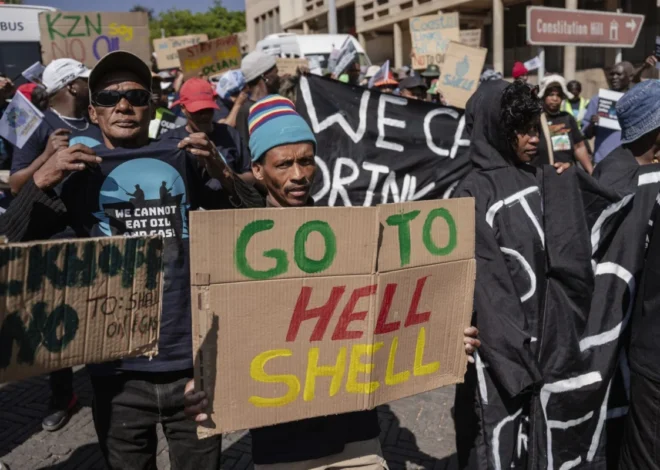
Constitutional Court of South Africa Bars Shell Oil Exploration in Landmark Victory for Environmental and Community Rights
The Battle for Saldanha Bay: South Africa’s Ambitious Ocean Economy Strategy Faces Legal and Environmental Reckoning