Ukraine Launches Global Combat Data Initiative to Accelerate Artificial Intelligence Development for Autonomous Warfare Systems
In a move that signals a paradigm shift in the integration of technology and kinetic conflict, the Ukrainian government has officially authorized a groundbreaking framework to grant international partners and defense contractors access to its vast repositories of real-world combat data. Announced by the Ministry of Defense on Thursday, March 12, 2026, the initiative is designed to train advanced artificial intelligence (AI) models for autonomous drone systems, providing a level of empirical training data that cannot be replicated in simulated or laboratory environments. Officials in Kyiv have characterized the program as the first of its kind in the history of modern warfare, aiming to bridge the gap between algorithmic development and battlefield efficacy.
The resolution, approved earlier this week, establishes a formalized cooperation structure between the Ukrainian state, domestic defense enterprises, and foreign allies. By opening its "digital frontline" to vetted partners, Ukraine seeks to accelerate the deployment of autonomous systems capable of operating in highly contested environments where electronic warfare (EW) often severs the links between human operators and their platforms. Ukrainian Defense Minister Mykhailo Fedorov emphasized that the strategic objective is not merely to increase the quantity of unmanned systems, but to fundamentally alter their cognitive capabilities.
The Evolution of Autonomous Warfare: A Five-Year Chronology
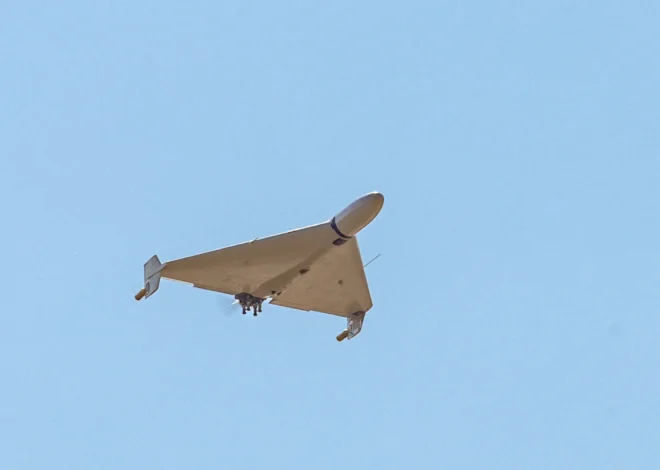
The launch of this data-sharing platform arrives as the full-scale invasion of Ukraine enters its fifth year, a period that has seen the most rapid evolution of unmanned aerial vehicle (UAV) technology in history. Since February 2022, the conflict has transitioned through several distinct technological phases. The initial stage was defined by the use of large, medium-altitude long-endurance (MALE) drones for reconnaissance and precision strikes. However, as Russian integrated air defense systems (IADS) and electronic warfare capabilities matured, the battlefield shifted toward the mass deployment of low-cost First-Person View (FPV) drones and loitering munitions.
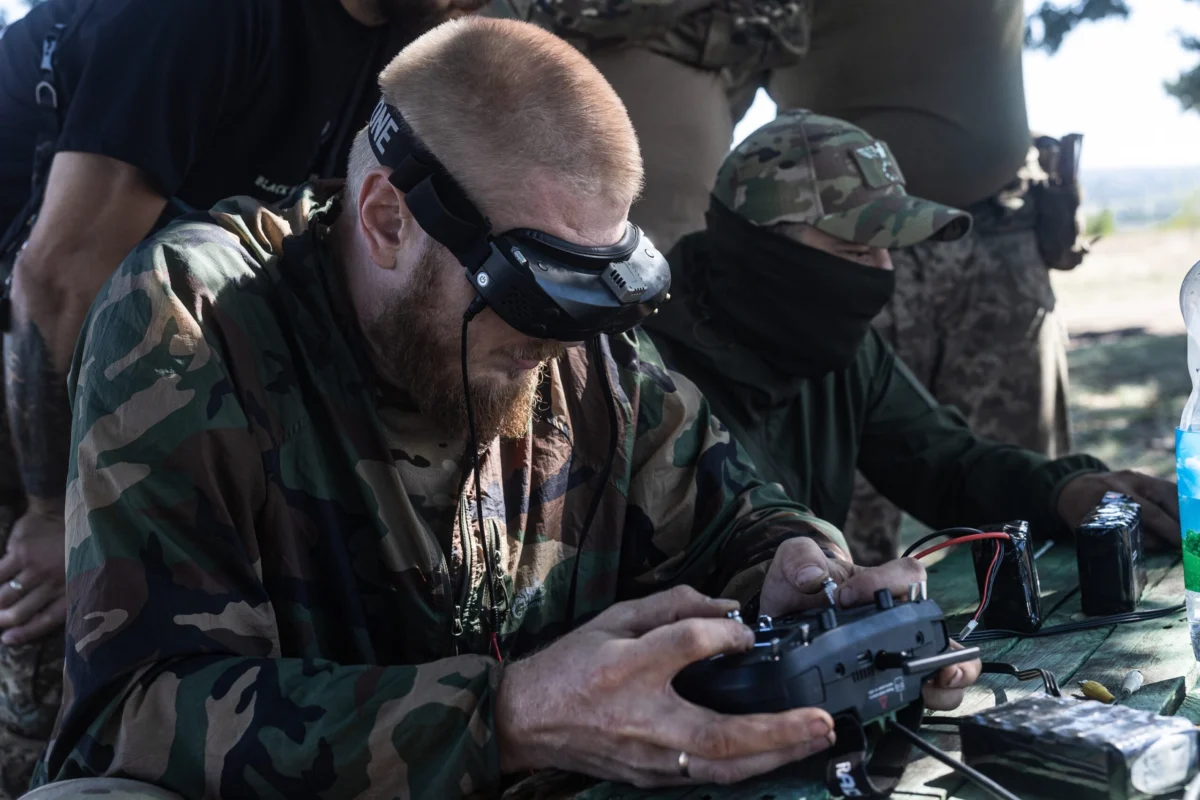
By 2024 and 2025, the proliferation of signal jamming made manual piloting increasingly difficult, necessitating the development of basic terminal guidance AI—algorithms that allow a drone to lock onto a target in its final seconds of flight even if the operator loses the video feed. The newly announced framework represents the next logical step in this progression: full autonomy.
The urgency of this initiative is further underscored by the shifting geopolitical landscape. Recent escalations in the Middle East, including the outbreak of high-intensity conflict involving Iran in late February 2026, have intensified the global demand for autonomous defense solutions. As militaries worldwide observe the limitations of traditional hardware against swarms of intelligent, low-cost systems, the race to achieve "algorithmic superiority" has become the primary focus of defense procurement from Washington to Paris.
Technical Architecture and Security Safeguards
At the heart of Ukraine’s new program is a specialized AI platform hosted within the Ministry of Defense’s Center for Innovation and Development of Defense Technologies. This platform serves as a secure "sandbox" where external developers can interact with combat data without compromising the integrity of Ukraine’s broader military networks.
A critical component of this infrastructure is its relationship with DELTA, Ukraine’s proprietary battlefield management and situational awareness system. DELTA integrates data from various sources—including satellite imagery, drone feeds, and human intelligence—to provide a real-time digital map of the theater. While the new AI platform utilizes data derived from DELTA, it remains architecturally distinct. This separation ensures that foreign partners can train neural networks on validated imagery and sensor data without gaining direct access to sensitive operational databases or the locations of active units.
Deputy Defense Minister Lt. Col. Yuriy Myronenko confirmed that the platform’s security protocols are aligned with the standards set by the American National Institute of Standards and Technology (NIST). To maintain international trust and ensure the highest levels of cybersecurity, the system undergoes annual audits by "Big Four" global consulting firms. This rigorous compliance framework is intended to reassure both domestic stakeholders and international corporations that the sharing of data does not create vulnerabilities that could be exploited by adversarial cyber actors.
The Value of Real-World Combat Datasets
For artificial intelligence, the quality of an output is directly proportional to the quality and volume of the training data. In traditional defense R&D, AI models are often trained on "synthetic" data or footage from training exercises, which frequently fails to account for the chaotic variables of a high-intensity conflict, such as smoke, debris, camouflage, and sophisticated electronic interference.
Ukraine’s dataset offers an unparalleled alternative. The Ministry of Defense reports that it currently holds over 5 million annotated frames of video and photo data. This information is harvested from tens of thousands of combat missions involving hundreds of different weapon systems and unit configurations.
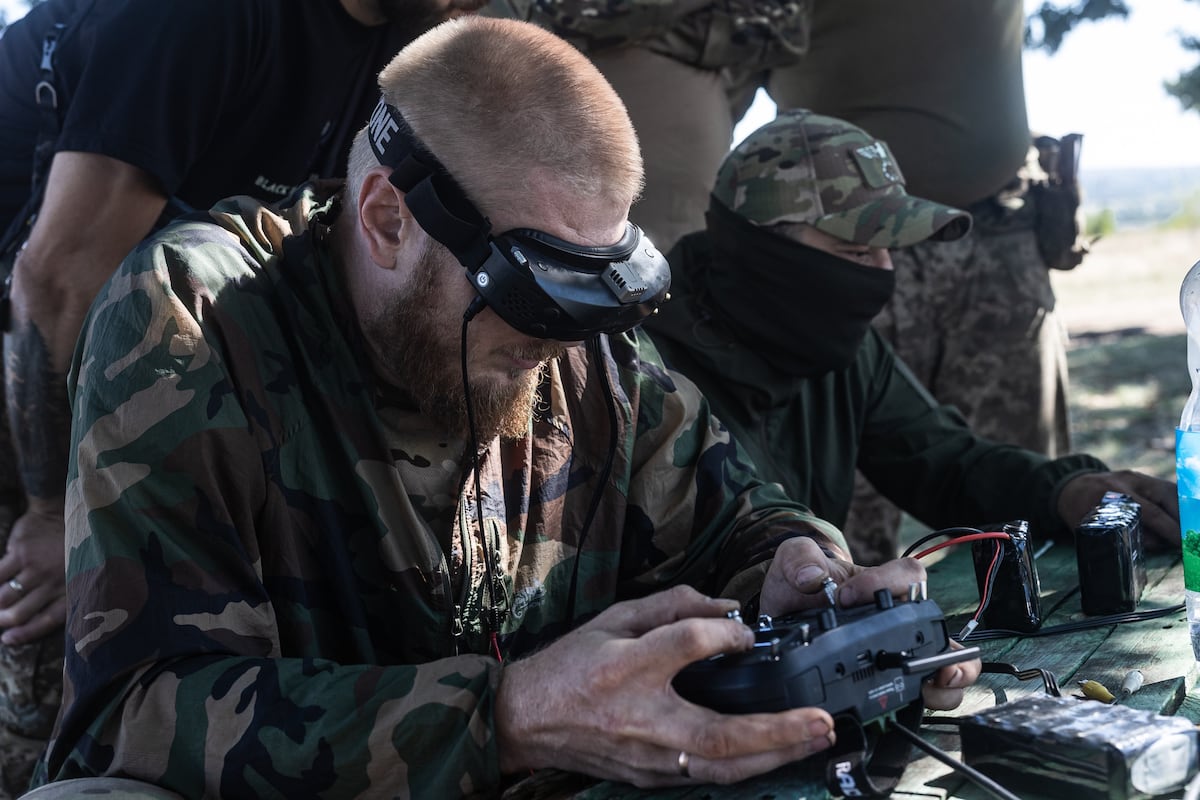
"You can control only with data," Lt. Col. Myronenko stated during a recent briefing. "Otherwise, I don’t even know how you can control such a number of drones, people, front lines, and such a number of resources. And so fast."
The data provided through the platform is "operationally rich," meaning it includes:
- Target Recognition: Labeled imagery of diverse military hardware in various states of damage and under different weather conditions.
- Electronic Warfare Logs: Data on how different drone sensors and communication links react to specific frequencies of jamming.
- Navigation Patterns: Logistical data on how autonomous systems navigate terrain when GPS signals are unavailable.
- Mission Outcomes: Validated results of strikes and reconnaissance missions, allowing AI to learn which maneuvers lead to successful engagements.
By providing this data to partners, Ukraine facilitates a "win-win" scenario. Allied governments and private firms can significantly compress their development timelines for AI-enabled defense systems, while Ukraine receives the immediate benefit of improved technology being cycled back to its front lines.
International Response and Strategic Implications
The international defense community has reacted with significant interest to Kyiv’s announcement. Over a dozen nations currently involved in supporting Ukraine’s defense efforts have already signaled their intent to participate in the framework. This comes at a time when major powers are reassessing their own AI integration strategies.
In the United States, Defense Secretary Pete Hegseth recently issued a directive calling for the "unrestricted" integration of AI across all branches of the military. The Pentagon has been particularly interested in Ukraine’s "interceptor drones"—autonomous systems designed to hunt and destroy other drones. The ability to train these interceptors on real-world flight data from the Ukrainian theater is viewed as a critical advantage for the U.S. Replicator initiative, which seeks to field thousands of autonomous systems by late 2026.
However, the initiative also raises complex questions regarding the future of warfare. The transition toward autonomous systems—often referred to as "killer robots" by critics—remains a subject of intense ethical debate. By providing the data that enables these systems, Ukraine is positioning itself as the epicenter of a new era of "Software-Defined Warfare."
Industry analysts at the Center for Strategic and International Studies (CSIS) note that the primary bottleneck in military AI has never been the algorithms themselves, but the ability to evaluate and validate them against real-world mission outcomes. Ukraine’s program effectively removes this bottleneck, offering a "live-fire" testing environment that is currently unavailable anywhere else on the planet.
Conclusion: The Future of the Digital Frontline
As Russia’s invasion continues and new conflicts emerge globally, the reliance on data-driven decision-making is expected to grow. The Ukrainian Ministry of Defense has indicated that the current platform is only the beginning. Future iterations of the framework may include joint analytics and the co-development of "God Mode" applications—integrated control systems that allow a single operator to manage hundreds of autonomous assets simultaneously through an AI-mediated interface.
The strategic gamble for Ukraine is clear: by sharing its most valuable digital asset—its combat data—it hopes to secure a technological edge that offsets the numerical advantages of its adversaries. As Lt. Col. Myronenko warned, in the modern era of high-speed, high-tech conflict, "the highest risk is the absence of information."
With the launch of this cooperation framework, Ukraine is ensuring that its partners are no longer operating in the dark, effectively turning the data of the present into the autonomous victories of the future. The eyes of the global defense industry are now firmly fixed on Kyiv, as the first models trained on this unprecedented dataset are expected to reach the battlefield by the end of the year.

Related Posts
Pentagon Forges Landmark Seven-Year Agreements with Boeing and RTX to Accelerate Standard Missile-3 Production and Stabilize Defense Supply Chains
Boeing Unveils Ultra Low-Cost Seeker to Enhance Missile Inventory and Combat Cost Challenges in Modern Warfare