Tehran confirms deep military and strategic integration with Moscow and Beijing amid escalating global tensions
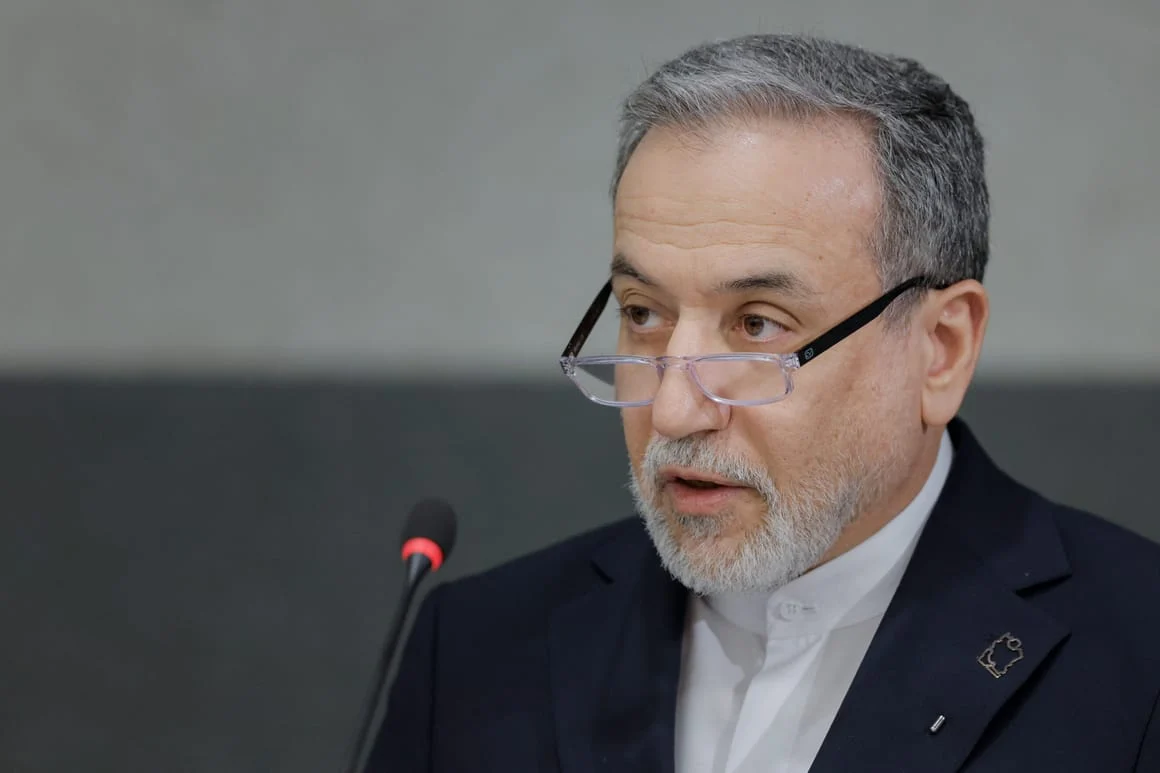
Iranian Foreign Minister Abbas Araghchi has publicly confirmed that Tehran is maintaining robust strategic, economic, and military cooperation with Russia and China, framing the partnership as a vital defensive alliance against what he described as the ongoing hostilities from the United States and Israel. In an interview with broadcaster MS NOW on Saturday, March 15, 2026, Araghchi’s remarks provided an explicit admission of the deepening alignment between these three powers, a development that has long been suspected by Western intelligence agencies but rarely acknowledged with such transparency by high-ranking Iranian officials.
The confirmation comes at a critical juncture in global geopolitics, as the world navigates the consequences of the war in the Middle East and the protracted conflict in Ukraine. The strengthening of this trilateral axis suggests a significant shift in the global order, with Iran serving as a central node in a network of nations actively challenging the post-World War II international security architecture.
A Chronology of Converging Interests
The trajectory of this alliance has been decades in the making, marked by a series of bilateral agreements and shared grievances against Western-led sanctions regimes.
The foundation of the Iran-Russia relationship was solidified during the Syrian Civil War, where both nations provided essential military and political support to the regime of Bashar al-Assad. This intervention not only preserved a key regional ally but also provided a testing ground for Russian-Iranian military coordination.
In 2021, the strategic horizon expanded when Tehran and Beijing signed a 25-year comprehensive cooperation agreement. This landmark deal signaled China’s willingness to bypass U.S.-led economic restrictions by investing billions into Iran’s infrastructure and energy sectors, effectively ensuring a steady supply of Iranian oil to the Chinese market.
Following the outbreak of the war in Ukraine in early 2022, the Iran-Russia partnership moved from a regional coordination effort to a global security issue. Iran became a primary supplier of Shahed-series loitering munitions to the Russian military. By 2025, reports confirmed that Moscow had collaborated with Iranian engineers to establish domestic production facilities within Russia, allowing for the sustained manufacturing of these drones on a scale that has significantly challenged Ukrainian air defenses.
The Strategic Triad: Military and Economic Integration
The "military cooperation" mentioned by Araghchi encompasses more than just the transfer of hardware. Defense analysts note that this relationship likely involves the sharing of intelligence, joint naval exercises in the Gulf of Oman, and the integration of electronic warfare capabilities.
From an economic perspective, the partnership provides a lifeline for the Iranian economy, which has been under intense pressure from decades of U.S. sanctions. China’s role as the primary purchaser of Iranian hydrocarbons allows Tehran to maintain state functions and fund its military-industrial complex. In exchange, Beijing secures a reliable energy source that is not subject to Western maritime oversight or potential disruption from U.S. naval operations.
Official Reactions and International Concerns
The U.S. administration has responded to these revelations with increased scrutiny. On Friday, President Donald Trump remarked that Russian President Vladimir Putin’s assistance to Iran was a calculated move, suggesting a transactional relationship born from mutual antagonism toward the United States. "He probably thinks we’re helping Ukraine, right?" Trump noted, highlighting the tit-for-tat nature of the current global proxy conflicts.

While Washington has repeatedly warned that the deepening ties between Moscow, Beijing, and Tehran pose a direct threat to the stability of the Middle East, the ability of the U.S. to influence this triad has been hampered by competing interests. European powers, meanwhile, have expressed profound concern over the proliferation of Iranian military technology, fearing that the transfer of such capabilities could trigger a wider regional conflagration that would further destabilize global energy markets.
The Strait of Hormuz and Global Energy Security
Perhaps the most volatile aspect of Araghchi’s recent statements concerns the Strait of Hormuz. As one of the world’s most critical maritime chokepoints, the Strait facilitates the transport of approximately 20% of the world’s daily oil consumption.
Araghchi clarified the status of the waterway, stating that it remains open to international shipping with a notable exception: it is effectively closed to tankers and vessels affiliated with the United States, Israel, and their regional allies. "The Strait is not closed," Araghchi told MS NOW. "It is only closed to American and Israeli ships and their partners."
This declaration has immediate, tangible consequences for the global economy. Since the escalation of tensions in the region, the price of crude oil has surged past $100 per barrel. The uncertainty surrounding the safety of transit through the Strait has led to increased insurance premiums for shipping companies and has prompted many vessels to take longer, more expensive routes around the Cape of Good Hope. The resulting disruption is contributing to inflationary pressures in energy-importing nations across Europe and Asia, threatening to derail fragile economic recoveries.
Implications for Global Security
The implications of the Araghchi announcement are far-reaching. By framing their military cooperation as a necessary response to "enemies," the Iranian leadership is signaling that they no longer prioritize the restoration of diplomatic relations with the West. Instead, they are doubling down on an "East-looking" policy.
For the international community, this development presents a multi-layered challenge:
- Proliferation Risks: The transfer of drone technology and potentially ballistic missile components suggests that the "strategic partnership" is actively accelerating the proliferation of advanced weaponry to non-state actors and volatile regimes.
- Erosion of Sanctions: The ability of Russia, China, and Iran to construct a parallel economic infrastructure undermines the efficacy of Western sanctions, which have historically been the primary tool for curbing nuclear and military ambitions.
- Maritime Risk: The politicization of the Strait of Hormuz introduces a new layer of danger for the global supply chain. If the enforcement of these restrictions leads to a kinetic engagement between the U.S. Navy and Iranian forces, the resulting volatility could lead to an unprecedented energy crisis.
Looking Ahead
The coming months will likely see a hardening of positions. As the U.S. continues to provide support to Ukraine and maintain a strong naval presence in the Persian Gulf, the "strategic partners"—Russia, China, and Iran—are expected to increase their coordination.
Observers in international relations suggest that this triad is moving toward a more formal security framework. While a formal NATO-style defense treaty remains unlikely due to the differing interests of Beijing and Moscow, the operational reality on the ground—characterized by shared intelligence, shared markets, and shared military hardware—is creating a de facto bloc.
For the global economy, the stability of the coming year remains tied to the narrow waters of the Persian Gulf and the diplomatic maneuvering between Washington and these three powers. As Araghchi’s comments confirm, the era of regional isolation for Iran has largely concluded, replaced by a strategic integration that fundamentally alters the global balance of power. The international community now faces a world where the traditional mechanisms of containment are being challenged by a coalition that is increasingly willing to act in concert, both militarily and economically.