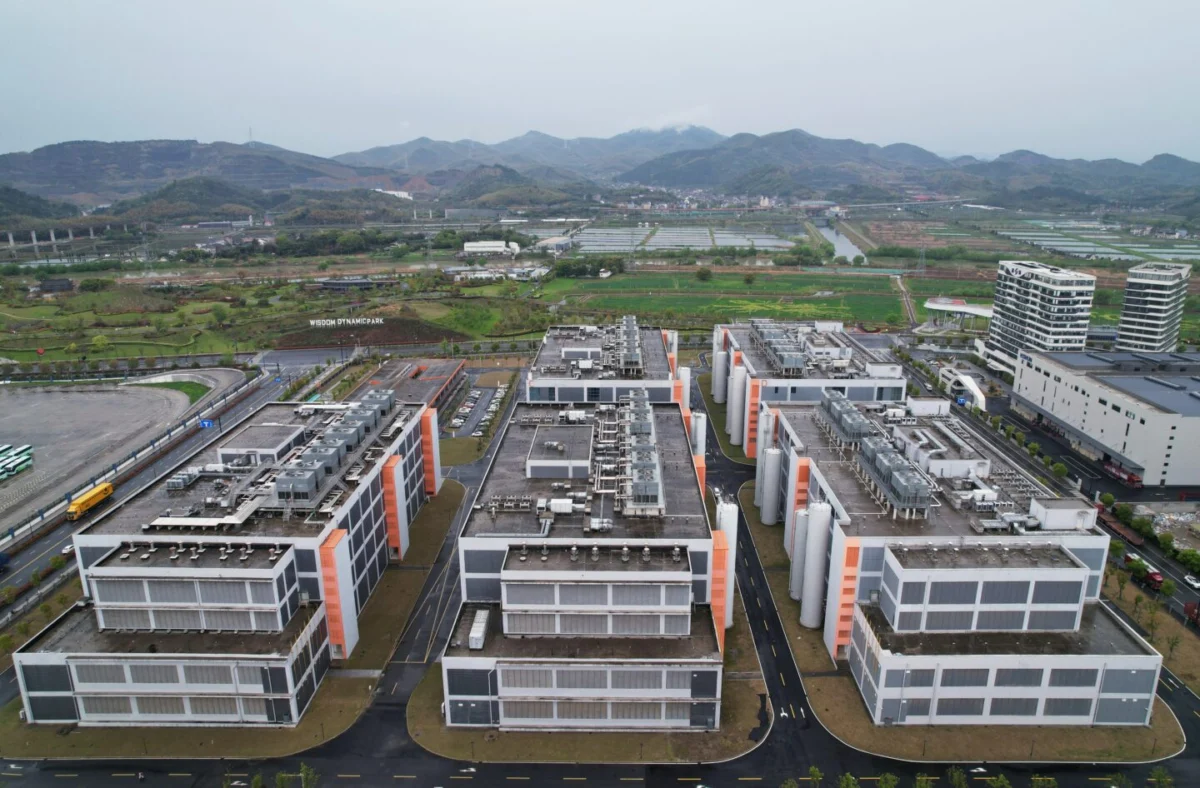
Explainer: Will AI data centres make or break the energy transition?
The global energy landscape has reached a critical inflection point in the first quarter of 2026, as the insatiable appetite of artificial intelligence (AI) data centers pushes national power grids to their absolute limits. From the tech hubs of Northern Virginia to the industrial corridors of Dublin and the burgeoning digital districts of Southeast Asia, utility providers are issuing stark warnings: the existing infrastructure cannot sustain the "AI gold rush" without massive, immediate investment. As a result, a high-stakes financial and ethical battle has emerged, with regulators and the public demanding that "Big Tech"—led by titans such as Amazon, Google, Microsoft, and Meta—shoulder the multi-billion-dollar burden of upgrading power supplies and hardening the grids they are increasingly straining.

This crisis is not merely one of capacity, but of composition. As tech companies scramble to secure 24/7 "baseload" power to keep their Large Language Models (LLMs) running, they are being forced into a paradoxical position. While these corporations remain publicly committed to aggressive decarbonization goals, the immediate reality of grid scarcity is driving a resurgence in fossil fuel reliance, even as the industry pivots toward a controversial "nuclear renaissance."
The Scale of the AI Energy Surge
The transformation of the energy sector over the past three years has been unprecedented. In 2023, data centers accounted for approximately 1% to 1.5% of global electricity use. By March 2026, analysts at the International Energy Agency (IEA) estimate that figure has nearly tripled in key markets. In the United States, data center power demand is projected to reach 35 gigawatts (GW) by the end of the year, up from 15 GW in 2022.

The physical reality of AI is significantly more energy-intensive than the digital era that preceded it. A single generative AI query, such as those processed by advanced versions of ChatGPT or Google’s Gemini, requires roughly ten times the electricity of a traditional keyword search. When scaled across billions of users and integrated into every facet of enterprise software, the cumulative load is staggering. In regions like the PJM Interconnection—the largest grid operator in the U.S., covering 13 states—the queue for new data center connections has become so backlogged that some projects are facing delays of up to eight years.
A Chronology of the Grid Crisis (2023–2026)
The current tension is the result of a rapid series of escalations in energy demand and regulatory shifts:

- Early 2024: Major tech firms began signing "Power Purchase Agreements" (PPAs) at record rates, effectively "buying out" future renewable energy production and leaving utilities struggling to find green power for residential customers.
- Late 2024: The "Nuclear Pivot" began in earnest. Microsoft announced a landmark deal to help restart a reactor at the Three Mile Island facility in Pennsylvania, signaling that wind and solar alone would not suffice for AI’s 24/7 needs.
- 2025: Several U.S. states, including Maryland and Illinois, saw "ratepayer revolts" where consumer advocacy groups sued utilities to prevent the cost of data center transmission upgrades from being passed on to households.
- January 2026: The Federal Energy Regulatory Commission (FERC) in the U.S. and the European Union’s Energy Directorate issued new guidelines suggesting that large-scale "hyperscalers" must contribute directly to the "First-In-Line" infrastructure costs, rather than relying on socialized grid costs.
The Financial Tug-of-War: Who Pays?
The central conflict of 2026 revolves around "impact fees" and infrastructure financing. Historically, when a new factory or housing development was built, the cost of extending the grid was often shared among all ratepayers, under the logic that industrial growth benefits the entire economy. However, the sheer scale of data center requirements has broken this model.
Utility executives argue that the upgrades required for a single data center campus—often requiring new high-voltage transmission lines and dedicated substations—can cost hundreds of millions of dollars. "We cannot ask a grandmother on a fixed income to subsidize the power lines for a trillion-dollar tech company’s AI farm," noted a spokesperson for the Edison Electric Institute during a recent congressional hearing.

In response, Big Tech companies have begun to experiment with "behind-the-meter" solutions. Amazon Web Services (AWS) and Google are increasingly looking to co-locate their data centers directly at power plants, bypassing the public grid entirely. While this solves the transmission issue, it creates a "resource drain," taking existing power off the public market and driving up prices for everyone else.
The Dirty vs. Clean Dilemma
The most contentious aspect of the AI boom is its impact on global climate goals. For a decade, Big Tech was the largest corporate buyer of renewable energy, helping to de-risk wind and solar projects worldwide. But wind and solar are intermittent; they do not blow or shine 24/7. AI requires "five-nines" reliability (99.999% uptime).

To bridge this gap, the industry is moving in two divergent directions:
1. The Nuclear Renaissance
As evidenced by China’s recent pledge to triple its nuclear capacity—adding more than the rest of the world combined over the last 15 years—nuclear energy is once again the "clean" darling of the industrial world. In the West, tech companies are investing heavily in Small Modular Reactors (SMRs). These factory-built nuclear plants are designed to be deployed directly on-site at data centers. However, SMR technology is still in its infancy, with commercial viability not expected until the late 2020s or early 2030s.

2. The Fossil Fuel "Bridge"
In the interim, the reality is far "dirtier." In Virginia’s "Data Center Alley," utilities have been forced to delay the retirement of coal-fired power plants and accelerate the construction of new natural gas "peaker" plants to prevent rolling blackouts. Environmental groups have criticized this "AI-induced carbon rebound," noting that the tech industry’s emissions are trending upward for the first time in years, despite their "Net Zero" branding.
International Reactions and Geopolitical Implications
The struggle for power is not limited to the United States. In Ireland, where data centers now consume more than 20% of the nation’s total electricity, the government has placed a de facto moratorium on new connections in the Dublin area. This has led to a "digital migration," with tech firms seeking locations in Nordic countries or France, where low-carbon nuclear or hydroelectric power is more abundant.

In the Global South, the situation is even more precarious. Countries like Brazil and South Africa are eager to host the data centers that will power their own digital economies, but they face a "triple threat": aging grids, lack of capital for upgrades, and the need to prioritize basic energy access for their citizens. Experts suggest that without significant "climate finance" from the tech giants, these nations may be forced to choose between digital advancement and their Paris Agreement commitments.
Broader Impact and Future Implications
The current crisis is forcing a fundamental rethink of how we value and distribute electricity. Several potential scenarios are emerging for the remainder of 2026 and beyond:

- The "Sovereign Tech Grid": Large tech companies may eventually operate as de facto utilities, owning their own generation, transmission, and distribution networks, completely decoupled from the public sector.
- Mandatory Efficiency Standards: Regulators are considering "Energy-per-FLOP" (Floating Point Operations) mandates, forcing AI developers to optimize their algorithms for energy efficiency rather than just raw power.
- Grid-Interactive Data Centers: New technologies are being tested that allow data centers to act as "giant batteries," feeding power back into the grid during peak demand or throttled-down AI training during periods of low supply.
The "AI-Power Paradox" remains the defining challenge of the mid-2020s. While AI is touted as a tool to solve the climate crisis—through optimized logistics, better battery chemistry, and weather modeling—its current physical footprint is contributing to the very problem it seeks to solve.
As March 2026 progresses, the pressure on Big Tech is no longer just about privacy or antitrust; it is about the literal light and heat in people’s homes. Whether the industry chooses to pay for a clean energy transition or simply outbids the public for a dwindling supply of "dirty" power will determine the trajectory of the global climate for decades to come. The era of "free" grid infrastructure for the digital economy is officially over.

Related Posts

Constitutional Court of South Africa Bars Shell Oil Exploration in Landmark Victory for Environmental and Community Rights

The Battle for Saldanha Bay: South Africa’s Ambitious Ocean Economy Strategy Faces Legal and Environmental Reckoning