Arctic Nations Test FPV Drones in NATO’s Cold Response 2026 Exercise
In the frozen expanse of Setermoen, Norway, approximately 240 kilometers north of the Arctic Circle, the traditional silence of the High North is increasingly being interrupted by the high-pitched hum of electric motors. As NATO’s Cold Response 2026 exercise unfolds across the rugged Scandinavian terrain, a fundamental shift in modern infantry tactics is taking place. Arctic nations, spurred by the transformative lessons of the conflict in Ukraine, are aggressively integrating first-person-view (FPV) drones into their cold-weather combat doctrines. These small, agile, and often low-cost systems are being tested to determine if they can survive and thrive in one of the most unforgiving environments on Earth.
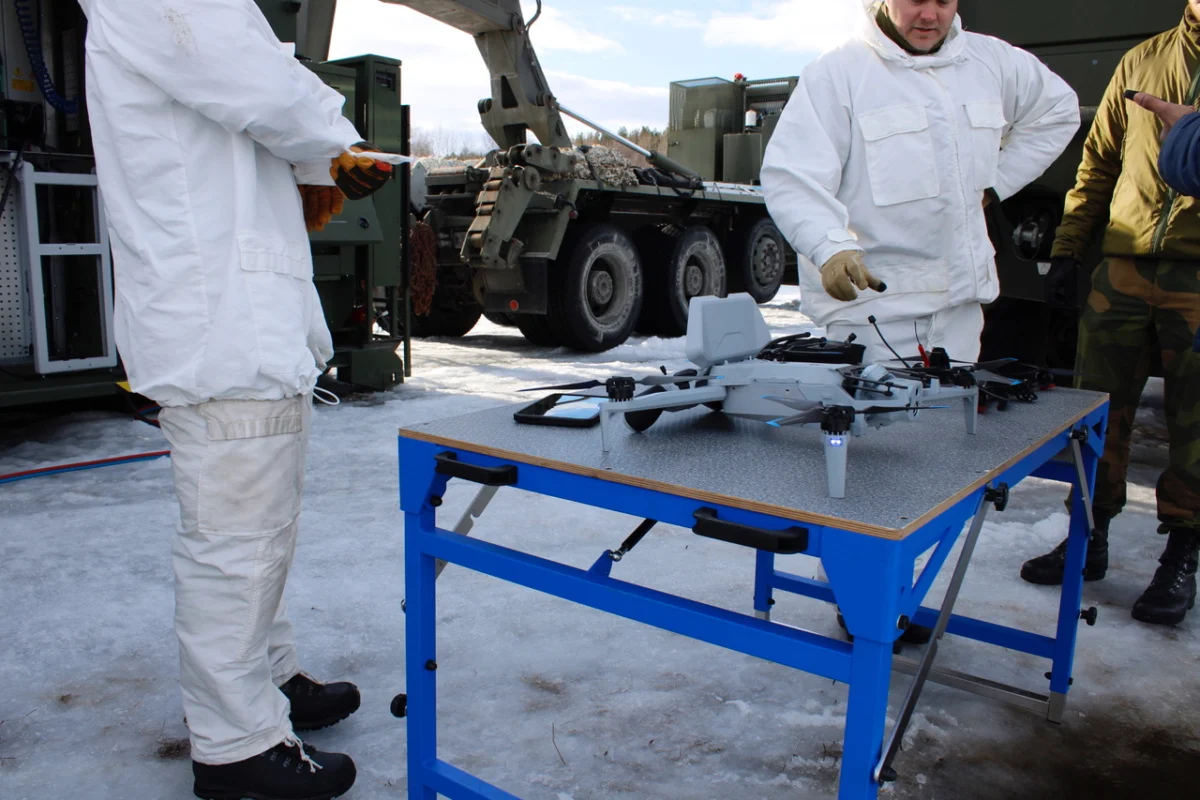
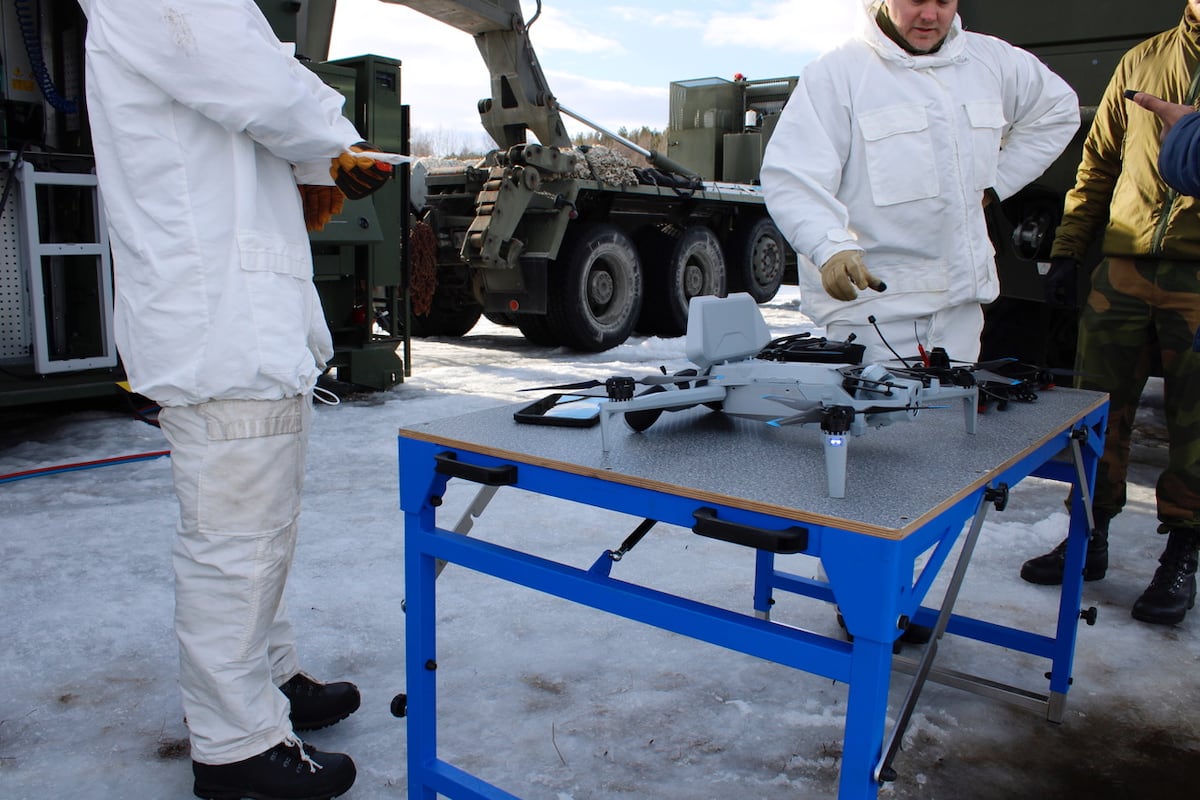
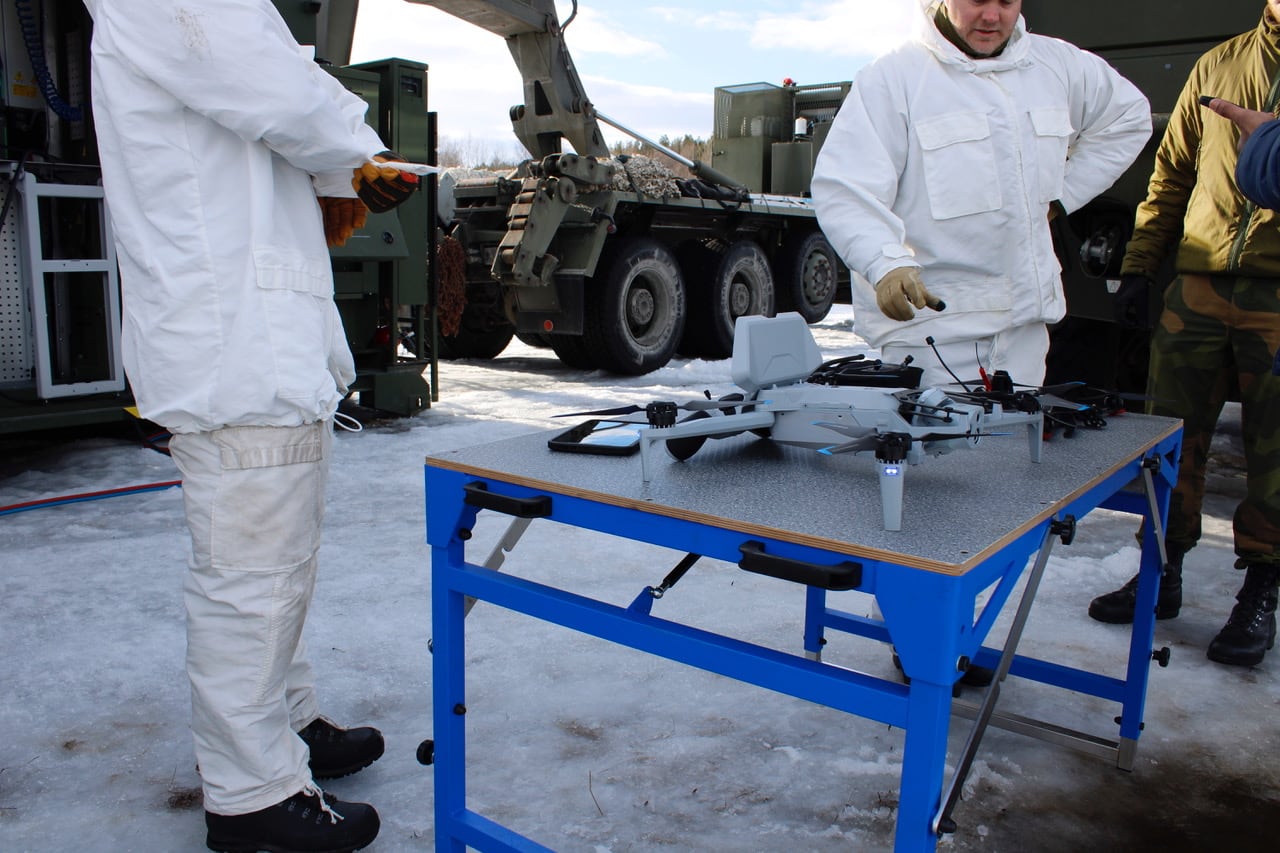
The exercise, which runs from March 9 to March 19, 2026, serves as a critical proving ground for the next generation of unmanned aerial systems (UAS). Amidst the deep snow and dense evergreen forests, soldiers from the Norwegian Armed Forces’ long-range reconnaissance units have been operating with a level of stealth that makes them nearly invisible to the naked eye. Dressed in all-white winter camouflage, their presence is betrayed only by the occasional deployment of small, grey quadcopters. Among the most prominent systems in use is the American-made Skydio X10D, a platform that has already seen extensive service with Ukrainian forces and is now being tailored for the unique demands of the Arctic.
The Strategic Shift: From Surveillance to Attrition
The integration of FPV drones represents more than just a technological upgrade; it signifies a change in the philosophy of engagement. Historically, drones in the Arctic were large, expensive, and primarily used for high-level intelligence, surveillance, and reconnaissance (ISR). However, the war in Ukraine has demonstrated the efficacy of "attrition-based" aerial warfare, where low-cost FPV drones are used as precision-guided munitions to disable armored vehicles and disrupt enemy positions.
In July 2024, the Norwegian Ministry of Defense signaled its commitment to this new reality by awarding a $9.4 million contract to Skydio. This investment was not merely for the hardware itself but for the development of a tactical ecosystem where every small unit can possess its own "air force." A Norwegian officer, speaking on the condition of anonymity due to the sensitive nature of his unit’s operations, noted that the primary objective is to adapt the rapid-fire lessons of the Ukrainian battlefield to the specific environmental constraints of the High North.
"We are trying our best in Norway to implement lessons from Ukraine," the officer stated. "For us, it’s all about increasingly using FPV and intelligence-gathering ones but adapting them to our environment."
This adaptation involves more than just cold-weather lubricants. It requires a rethink of how high-value target operations are conducted. The Norwegian military has begun incorporating FPV training into its curriculum, starting with simulator-based instruction before moving to the live-fire scenarios seen during Cold Response 2026. While still in the early stages of formal integration, the goal is clear: to make the FPV drone as standard a tool for the infantryman as the rifle or the radio.
Technical Challenges: The Physics of the Arctic
The primary adversary for drone operators in the Arctic is not always the enemy, but the climate itself. During the exercise, members of the Norwegian Army Land Warfare Centre—the body responsible for testing and developing new weapon systems—reported that while the Skydio X10D has performed admirably, it is not immune to the laws of thermodynamics.
The most significant hurdle is battery degradation. Lithium-ion batteries, the standard power source for most UAS, suffer from a precipitous drop in efficiency when temperatures fall below freezing. In the sub-zero conditions of Setermoen, internal resistance within the batteries increases, leading to shorter flight times and unpredictable power drops. For a reconnaissance unit operating deep behind simulated enemy lines, a drone that loses power prematurely is more than a technical failure; it is a compromise of the mission.
Furthermore, the Norwegian military is experimenting with the "expendable" model of drone warfare. During the exercise, units deployed self-built FPV drones constructed from cheaply procured off-the-shelf parts. These "one-way attack" drones are designed to carry explosives directly into a target. By using low-cost components, the military can afford to lose hundreds of units in a high-intensity conflict, mirroring the mass-production strategies currently employed by both sides in the Russo-Ukrainian War.
International Collaboration and Experimental Technology
The United States has also brought a suite of experimental technologies to the Arctic theater. U.S. Marines participating in Cold Response 2026 have been testing a unique FPV variant developed in collaboration with Johns Hopkins University. This drone is distinguished by a protective "cage" or exoskeleton designed to prevent damage during crashes.
In the high-stress environment of force-on-force training—where friendly units engage live adversaries in simulated combat—crashes are frequent, especially when pilots are attempting high-speed maneuvers through dense forest canopies. The caged design allows operators to push the limits of the aircraft without the risk of total system loss. If a collision occurs, the cage absorbs the impact, and repairs can often be made in the field with minimal tools.
Master Sgt. Patrick Harrington, director of the unmanned systems center of excellence at the 2nd Marine Division, emphasized that the exercise is as much about human learning as it is about hardware testing. "We’ve been able to exchange with our allies here also," Harrington said. "There’s interest in how each country uses them, what they fly, and how they fly it."
The U.S. Marines are focusing heavily on "pilot survivability." By using FPV drones to scout and strike, the human operator remains in a concealed, protected position, significantly reducing the risk of casualties during the initial phases of an engagement. This "stand-off" capability is particularly vital in the Arctic, where the terrain offers little natural cover and movement is often slow and arduous.
Chronology of Development: A Three-Year Acceleration
The rapid deployment of these systems can be traced through a clear timeline of escalating interest and investment:
- February 2022: The full-scale invasion of Ukraine begins, showcasing the first mass-scale use of FPV drones in modern history.
- March 2024: Norway and other NATO allies observe the "Nordic Response" exercises, identifying gaps in small-scale UAS capabilities for Arctic environments.
- July 2024: Norway signs a $9.4 million contract with Skydio to procure the X10D, prioritizing its AI-driven flight capabilities and sensor suites.
- Early 2025: The Norwegian Army Land Warfare Centre begins formal testing of "one-way" attack drones and develops specialized cold-weather kits for existing UAS.
- March 2026: Cold Response 2026 serves as the first major NATO exercise where FPV drones are integrated at the squad level across multiple participating nations.
Broader Implications and Geopolitical Context
The push to master drone warfare in the Arctic is inextricably linked to the broader geopolitical tension surrounding the "Northern Flank." As climate change makes the Arctic more accessible, the strategic importance of the region has surged. Russia has consistently expanded its military footprint in the High North, reopening Soviet-era bases and deploying specialized Arctic motorized rifle brigades.
For NATO, the ability to counter Russian numbers with technological precision is a cornerstone of its deterrence strategy. The use of FPV drones provides a "force multiplier" effect. A small reconnaissance team, equipped with a handful of $500 drones, can theoretically disable a multi-million-dollar main battle tank or disrupt a supply convoy, leveling the playing field in a region where logistics are a constant nightmare.
Moreover, the data gathered during Cold Response 2026 will likely influence future procurement cycles across the alliance. If the "caged" drones from Johns Hopkins or the Skydio X10D prove they can handle the -30°C temperatures of a Norwegian winter, they could become the standard for all NATO forces operating in sub-arctic climates, including those in the Baltic states and Canada.
Conclusion: The Future of the Arctic Battlefield
As Cold Response 2026 nears its conclusion, the results from the woods of Setermoen suggest that the era of the "unmanned infantry" is arriving. The challenges of battery life and signal interference in the magnetic north remain significant, but they are viewed as engineering problems to be solved rather than barriers to entry.
The lessons from Ukraine have been heard clearly in the halls of Oslo and Washington: the next war will be won by those who can best navigate the "mosquito fleet" of the skies. In the Arctic, this means merging the ancient skills of winter survival with the cutting-edge requirements of digital warfare. As the Norwegian and American forces pack up their gear and analyze the flight logs of their FPV systems, one thing is certain: the next time a conflict arises in the High North, the first shot fired may not be from a rifle, but from a propeller.

Related Posts
Pentagon Forges Landmark Seven-Year Agreements with Boeing and RTX to Accelerate Standard Missile-3 Production and Stabilize Defense Supply Chains
Boeing Unveils Ultra Low-Cost Seeker to Enhance Missile Inventory and Combat Cost Challenges in Modern Warfare