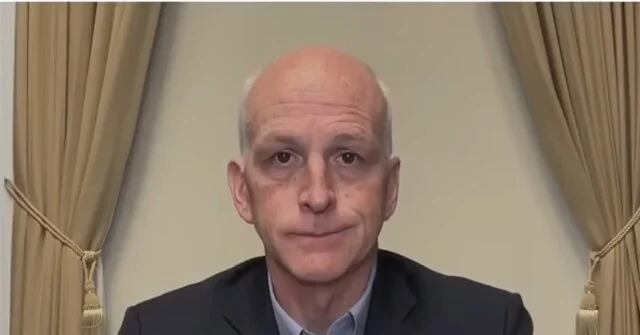
Rep. Adam Smith Denounces Proposed Iran Supplemental, Citing Escalating Middle East War and Presidential Power Concerns
Representative Adam Smith (D-WA), the Ranking Member of the House Armed Services Committee, delivered a stark refusal to support any proposed supplemental appropriation bill for Iran during a recent appearance on MSNBC’s "All In." Speaking with host Chris Hayes, Smith unequivocally stated his opposition, asserting that such funding would "perpetuate the war" and would be ill-advised given former President Donald Trump’s "proven record of abusing that power." Smith’s forceful declaration underscored deep congressional anxieties regarding the ongoing escalation of conflicts across the Middle East and the delicate balance of executive and legislative authority in foreign policy and military engagements.
The Core Stance: A "Hell No" on Funding
During the interview, prompted by Hayes’ query regarding a potential supplemental war appropriations bill for Iran, Representative Smith’s response was definitive: "I’m a hell no, because I’m not in favor of this war, and I’m sure as hell not in favor of continuing to fund it." His primary rationale hinged on the belief that providing additional financial resources would only serve to prolong and deepen the existing hostilities. Smith advocated for a strategy focused on de-escalation, urging policymakers to "get that under control, stop the war, and figure it out." This position reflects a growing sentiment among certain congressional factions to reassess the efficacy and wisdom of continuous military interventions and financial commitments in volatile regions without a clear, defined end-game.
Beyond the immediate concern of war perpetuation, Smith articulated a significant apprehension about the potential recipient of such funds. He voiced strong reservations about "giving Trump more money with his proven record of abusing that power," explicitly stating, "not good." This concern taps into a broader debate about presidential authority, congressional oversight, and the allocation of defense funds. Throughout his presidency, Trump faced criticism and legal challenges over his use of executive power, particularly in areas like redirecting congressionally appropriated funds for projects such as the border wall, and making unilateral foreign policy decisions without extensive consultation with Congress. Smith’s statement suggests a deep-seated distrust in the executive’s responsible stewardship of additional war appropriations, particularly when viewed through the lens of past actions perceived as circumventing legislative intent.
Escalation in the Middle East: Smith’s Dire Warning
Smith did not mince words when describing the current regional landscape, characterizing it as a "full-scale Middle East war now, alright. This is even a wider war than Iraq was." This assessment paints a grim picture, suggesting that the interconnected conflicts have metastasized beyond previous regional engagements, drawing in a multitude of state and non-state actors. He likened the situation to "Trump is basically a bull who has stumbled into the world’s largest, most densely-packed china shop, and it is spreading and causing an enormous amount of pain, death, casualties, economic pain." This powerful analogy highlights the chaotic, unpredictable, and destructive nature of the current geopolitical environment, implying that US actions, particularly under the previous administration, exacerbated an already fragile situation.
- Regional Flashpoints and Interconnected Conflicts:
- Israel-Lebanon Tensions: Smith specifically pointed to a "full-scale" war between Israel and Lebanon, primarily referring to the escalating cross-border exchanges between Israel and Hezbollah, the powerful Iran-backed Shiite militant group and political party in Lebanon. Since the October 7, 2023, attacks by Hamas on Israel, Hezbollah has significantly increased its rocket and drone attacks on northern Israel, prompting retaliatory strikes from the Israel Defense Forces. This tit-for-tat violence has displaced tens of thousands on both sides of the border and raised fears of a full-blown war, reminiscent of the 2006 conflict. The deep historical animosity, coupled with Hezbollah’s formidable arsenal and Iran’s strategic support, makes this front a critical and dangerous component of the wider regional conflagration.
- Iraq and Syria: The landscape in Iraq and Syria remains highly volatile, with various armed groups, including Iran-backed militias, targeting US and coalition forces. Smith’s mention of a "French servicemember killed" and "five others injured in an attack in Erbil" underscores the persistent threat faced by international forces stationed in the region. While specific details of the incident he referenced might require precise verification, numerous attacks on US and coalition bases in Iraq and Syria have occurred, resulting in casualties among American and allied personnel. For example, a drone attack in March 2023 on a US base in northeastern Syria killed an American contractor and injured US service members. Such incidents are frequent reminders of the ongoing proxy conflicts and the direct threats posed by groups seeking to expel foreign forces from the region.
- Yemen and the Red Sea: The Houthi rebels in Yemen, also supported by Iran, have emerged as a significant destabilizing force, particularly since late 2023. Their attacks on international shipping in the Red Sea, ostensibly in solidarity with Palestinians in Gaza, have disrupted global trade routes, forced commercial vessels to reroute around Africa, and prompted retaliatory strikes from a US-led international coalition. These naval engagements represent another active front in the "wider war," demonstrating how localized conflicts can have profound global economic and security implications.
- The Kurds: The Kurdish communities in northern Iraq and Syria are critical, albeit complex, players in the regional dynamics. They have been key US allies in the fight against ISIS but also face threats from Turkey, which views some Kurdish groups as terrorist entities. The Kurds are frequently caught between competing interests of regional powers and global actors, and their territories are often battlegrounds or targets in the broader proxy wars.
- Broader Regional Involvement: Smith’s assertion that "14 different countries have been dragged into this war" highlights the intricate web of alliances, rivalries, and interventions defining the current Middle East. This includes direct involvement from the US, Iran, Israel, Saudi Arabia, Turkey, and various European nations, as well as the engagement of numerous non-state actors and proxy groups. The interconnectedness means that an incident in one area can quickly ripple across the entire region, making de-escalation incredibly challenging.
Background and Chronology of US-Iran Tensions
The current state of heightened US-Iran tensions and the broader Middle East conflict cannot be understood without examining a critical timeline of events, particularly since the mid-2010s.
- The Iran Nuclear Deal (JCPOA): In 2015, under the Obama administration, the Joint Comprehensive Plan of Action (JCPOA) was forged between Iran and the P5+1 group (China, France, Germany, Russia, the United Kingdom, and the United States), plus the European Union. This landmark agreement aimed to limit Iran’s nuclear program in exchange for sanctions relief. It was seen as a diplomatic triumph by proponents, preventing Iran from developing nuclear weapons, and a concession to a hostile regime by critics.
- US Withdrawal under Trump: In May 2018, President Donald Trump announced the US withdrawal from the JCPOA, arguing it was a "terrible deal" that failed to address Iran’s ballistic missile program or its destabilizing regional activities. This decision marked a significant turning point, leading to the reimposition of stringent US sanctions on Iran, crippling its economy, particularly its oil exports.
- Post-JCPOA Escalation: The period following the US withdrawal saw a rapid deterioration of relations and an increase in regional incidents:
- 2019: Attacks on oil tankers in the Gulf of Oman, drone and missile attacks on Saudi Aramco oil facilities (attributed to Iran by the US), and the downing of a US drone by Iran. These events pushed the region to the brink of direct conflict.
- January 2020: The US assassination of Iranian Major General Qasem Soleimani, commander of the Quds Force, in Baghdad, Iraq. Iran retaliated with missile strikes on US bases in Iraq, injuring dozens of American troops. This was a significant escalation, demonstrating Iran’s willingness to directly target US forces.
- Ongoing Proxy Conflicts: Throughout this period, Iran continued its support for regional proxies—Hezbollah in Lebanon, Hamas and Palestinian Islamic Jihad in Gaza, various Shiite militias in Iraq and Syria, and the Houthis in Yemen—who frequently engaged in actions perceived as destabilizing by the US and its allies. These groups served as a vital part of Iran’s regional strategy, allowing it to project power and influence without direct conventional confrontation.
- October 7th and Aftermath: The Hamas attacks on Israel on October 7, 2023, and Israel’s subsequent military response in Gaza, served as a catalyst, igniting and intensifying pre-existing regional tensions. This event unleashed a cascade of retaliatory actions and expanded conflicts, including the aforementioned Red Sea attacks, increased cross-border violence between Israel and Hezbollah, and a surge in attacks by Iran-backed militias on US bases in Iraq and Syria. This period unequivocally confirmed Smith’s assertion of a "wider war."
The Debate Over Supplemental Appropriations
The discussion around an "Iran supplemental" appropriation bill is multifaceted, touching upon military readiness, strategic objectives, and the delicate balance of power between the executive and legislative branches.
- Purpose of Supplemental Funding: Supplemental appropriations are typically emergency funding measures requested by the executive branch to cover unforeseen expenses or military operations not accounted for in the regular annual budget. An "Iran supplemental" would likely be intended to fund enhanced military deployments, defensive measures for US personnel and assets in the Middle East, intelligence operations, increased aid to regional allies, or even humanitarian relief efforts in conflict zones. The specific line items would dictate its precise impact.
- Congressional Dynamics:
- Arguments for: Proponents of such funding, often referred to as "hawks" or those emphasizing robust defense, argue that supplemental appropriations are essential to protect US interests, deter further aggression from Iran and its proxies, and ensure the safety of American service members. They might contend that failing to fund these operations would embolden adversaries and undermine regional stability, potentially leading to even larger conflicts. Some might also argue that providing aid to allies under threat is a crucial component of US foreign policy.
- Arguments against (beyond Smith): Opponents, including Smith, often raise concerns about mission creep, the lack of a clear strategy or exit plan, and the immense financial burden of continuous military engagement. Fiscal conservatives might object to the added cost to the Treasury, while those concerned with constitutional checks and balances might argue that such appropriations enable the executive branch to wage undeclared wars without proper congressional authorization, undermining the War Powers Act. There are also arguments that military solutions alone are insufficient and that diplomatic and economic strategies should be prioritized.
- Executive Power and Oversight: Representative Smith’s specific concern about a president "abusing power" is central to the broader debate about executive authority in foreign policy. Congress holds the power of the purse and the power to declare war. Supplemental appropriations bills are a key mechanism through which Congress can exert oversight over military operations. Smith’s stance reflects a desire to ensure that any funds provided are used strictly for their intended purpose and do not grant the executive branch carte blanche for military action that lacks a clear congressional mandate or oversight. This tension between presidential prerogatives in foreign policy and congressional oversight is a recurring theme in American governance, particularly during periods of international crisis.
Economic and Human Costs of Conflict
The escalating conflicts in the Middle East, as described by Smith, carry immense human and economic costs, far outweighing any perceived benefits.
- Financial Burden: The cost of previous US military engagements in the Middle East provides a sobering backdrop. According to studies by Brown University’s Costs of War Project, the post-9/11 wars in Iraq, Afghanistan, Syria, and Yemen have cost the US Treasury trillions of dollars. These costs include direct military spending, veterans’ care, interest on war debt, and homeland security expenses. A "full-scale Middle East war" as Smith described, would undoubtedly add significantly to this already staggering bill, potentially impacting domestic spending priorities, increasing the national debt, and diverting resources from other critical areas. The economic pain extends globally, with disruptions to shipping lanes (like the Red Sea), volatility in oil markets, and the destabilization of key trading partners impacting global supply chains and consumer prices.
- Humanitarian Crisis: The human toll of prolonged conflict is catastrophic. Smith’s reference to "pain, death, casualties" is not hyperbole. Millions of people have been displaced, creating massive refugee crises that strain humanitarian resources globally. Civilian casualties, infrastructure destruction, food insecurity, and the breakdown of healthcare systems are pervasive in conflict zones. The psychological trauma inflicted on populations, particularly children, can have intergenerational consequences, perpetuating cycles of violence and instability. The current situation in Gaza, the ongoing civil war in Syria, and the humanitarian crisis in Yemen are stark examples of this immense suffering.
Implications for US Foreign Policy and Regional Stability
Rep. Smith’s strong position and dire warnings carry significant implications for the future of US foreign policy and the trajectory of regional stability in the Middle East.
- Shifting Alliances and Rivalries: The widening conflict reshapes existing alliances and solidifies new rivalries. The US finds itself navigating complex relationships with traditional allies like Saudi Arabia and Israel, while simultaneously contending with the growing influence of adversaries like Iran, often backed by global powers such as Russia and China. The regional conflicts test the cohesion of international coalitions and force nations to reconsider their strategic alignments.
- Future of US Engagement: Smith’s "hell no" vote is indicative of a broader debate within the US about the appropriate level and nature of its engagement in the Middle East. There is a palpable tension between proponents of continued interventionism, who argue for maintaining a robust presence to protect US interests and allies, and those advocating for a more restrained, even isolationist, approach, who believe past interventions have often exacerbated problems. The outcome of this debate will determine the future scope of US military presence, diplomatic efforts, and resource allocation in the region.
- Global Repercussions: A "full-scale Middle East war" would not only affect the region but would have profound global repercussions. Beyond economic impacts on energy markets and trade, such a conflict could divert international attention and resources from other critical global challenges, such as climate change, pandemics, and great power competition. It could also fuel radicalization and terrorism, leading to further instability beyond the immediate conflict zones. The potential for a regional war to draw in major global powers or trigger a broader international crisis remains a significant concern.
In conclusion, Representative Adam Smith’s firm opposition to an Iran supplemental appropriation bill is a powerful reflection of deep-seated concerns within the US Congress regarding the escalating Middle East conflicts. His warning of a "full-scale Middle East war" wider than previous engagements, coupled with his reservations about presidential power, highlights the complex challenges facing US policymakers. The debate over such funding is not merely about financial allocation but about the strategic direction of US foreign policy, the balance of power within its government, and the immense human and economic costs of continued military engagement in a region teetering on the brink of wider conflagration. As the conflicts persist, the calls for a clear, de-escalatory strategy, coupled with robust congressional oversight, are likely to grow louder.

Related Posts
Democratic Candidates Must Moderate to Win General Elections, Says Rep. Greg Stanton
Lisa Demuth Secures Republican Gubernatorial Nomination in Minnesota, Defeating Trump-Endorsed Mike Lindell