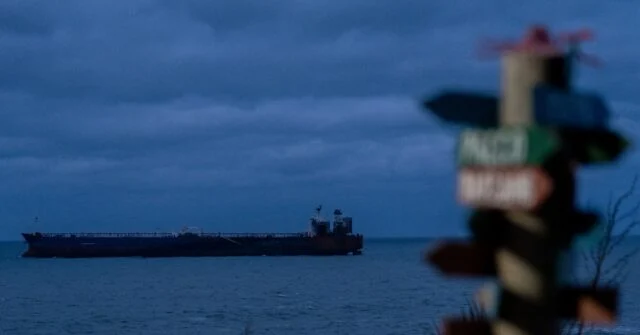
Greek-Flagged Tanker Damaged in Suspected Drone Attack Near Russian Port, Escalating Black Sea Maritime Risks and Sparking Diplomatic Fallout
ATHENS, Greece – A Greek-flagged oil tanker, the Maran Homer, sustained material damage in a suspected drone attack in the Black Sea on Saturday, November 2nd, 2024, while approaching the Russian port of Novorossiysk. The incident, which left all 24 crew members unharmed and did not compromise the vessel’s seaworthiness, marks a significant escalation in the ongoing maritime security crisis plaguing the strategic Black Sea region since the intensification of the conflict in Ukraine. The Greek government has announced its intention to lodge a strong complaint, with Maritime Affairs Minister Vassilis Kikilias pointing towards Ukraine as a frequent actor in Black Sea attacks and deeming the targeting of Greek shipping interests "unacceptable and extremely dangerous."
Details of the Incident: The Maran Homer Under Attack
The Maran Homer, a Very Large Crude Carrier (VLCC) with a deadweight tonnage typically exceeding 200,000 tonnes, was en route from Thessaloniki, Greece, to the Black Sea port of Novorossiysk. The vessel, chartered by the U.S. oil giant Chevron, was reportedly due to load Kazakh oil at the Russian terminal before proceeding to Istanbul, Turkey. According to statements from Greece’s shipping ministry and the vessel’s Greek operating company, the attack occurred in the early hours of Saturday, causing structural damage to the tanker. While the precise nature of the weapon – whether a missile or an unmanned aerial vehicle (UAV) – is still under investigation, authorities are leaning towards a drone strike, a method frequently employed in the Black Sea theatre. The crew’s swift response and the robust construction of the vessel are credited with preventing a more catastrophic outcome, ensuring the tanker remained stable and able to proceed.
The attack on the Maran Homer underscores the increasingly perilous environment for commercial shipping in the Black Sea. Since the full-scale invasion of Ukraine in February 2022, the waters have become a hotbed of military activity, with both belligerents employing naval drones, missiles, and other armaments. Shipping routes, once bustling with international trade, are now navigated under the constant shadow of potential conflict, leading to heightened insurance premiums, rerouting, and a general reluctance among some operators to enter the zone.
The Black Sea Context: A Theater of Unconventional Warfare
The Black Sea has transformed into a critical front in the ongoing conflict, witnessing a series of attacks on both military and commercial vessels. Russia’s Black Sea Fleet, headquartered in Sevastopol, has been a primary target for Ukrainian drone and missile strikes, leading to significant losses for Moscow. In response, Russia has also targeted Ukrainian port infrastructure and grain export facilities. The strategic importance of the Black Sea for both nations cannot be overstated: for Russia, it provides crucial access to the Mediterranean and beyond, and for Ukraine, it is vital for its agricultural exports and economic survival.
The collapse of the Black Sea Grain Initiative in July 2023, which had allowed for the safe passage of agricultural products from Ukrainian ports, further destabilized the region. Following its termination, Russia declared that it would consider all vessels heading to Ukrainian ports as potentially carrying military cargo, effectively imposing a de facto blockade. Ukraine, in turn, established a temporary humanitarian corridor and increased its own attacks on Russian naval assets and port infrastructure, including Novorossiysk. This tit-for-tat dynamic has inadvertently drawn neutral commercial shipping into the crossfire, raising serious concerns for maritime law and the safety of international trade.
Novorossiysk itself is a key Russian port, not only for oil exports but also for grain and other commodities. It serves as a major hub for the Caspian Pipeline Consortium (CPC), which transports oil from Kazakhstan and Russia to the Black Sea for export. Its strategic value makes it a legitimate target in the eyes of Ukraine, which seeks to disrupt Russia’s war economy and logistics. However, the targeting of a neutral-flagged commercial vessel, even one approaching a military-sensitive port, represents a significant escalation that carries substantial diplomatic and economic ramifications. Reports indicate that Ukrainian naval drones have successfully struck targets in and around Novorossiysk on multiple occasions since the conflict began, demonstrating a growing capability to project force deep into Russian-controlled waters.
Greek Shipping’s Predicament: Caught in the Crosshairs
Greece boasts the largest merchant fleet in the world by deadweight tonnage and number of vessels, controlling approximately 20% of global shipping capacity. This immense industry, comprising over 5,000 vessels, is a cornerstone of the Greek economy, contributing significantly to its GDP and employment. Greek shipowners operate a diverse fleet, including a substantial number of oil tankers, which play a crucial role in global energy supply chains. Consequently, Greek vessels are often found traversing volatile regions, navigating geopolitical complexities that others might avoid.
Minister Kikilias’ strong condemnation reflects the deep concern within Athens regarding the vulnerability of its vast shipping interests. "I consider the targeting of vessels flying the Greek flag – as well as those with Greek sailors and Greek shipping interests – to be unacceptable and extremely dangerous," Kikilias stated, highlighting the dual threat to national assets and personnel. The incident involving the Maran Homer is not isolated; the Greek shipping industry has faced challenges across multiple conflict zones. The minister explicitly referenced dozens of Greek-flagged or Greek-owned vessels currently stranded in the Persian Gulf, a situation likely exacerbated by the ongoing tensions and attacks in the Red Sea and Gulf of Aden, often attributed to Houthi rebels backed by Iran. These simultaneous crises demonstrate the precarious position of global shipping, particularly for a maritime nation like Greece, which has significant stakes in maintaining open and secure sea lanes.
The economic implications for Greek shipping are considerable. Increased insurance premiums for vessels operating in high-risk zones, delays due to rerouting, and the potential for direct damage or seizure all contribute to rising operational costs and reduced profitability. For example, war risk premiums for Black Sea voyages have surged by hundreds of percentage points since 2022, adding millions of dollars to operating expenses for a single voyage. Moreover, the safety and well-being of Greek seafarers remain a paramount concern for the government and shipowners alike, often prompting demands for higher wages and improved security protocols when operating in perilous waters.
Official Reactions and Diplomatic Fallout
Following the attack, Greek Maritime Affairs Minister Vassilis Kikilias confirmed Athens would lodge a "strong complaint" with the country deemed responsible. While initially refraining from naming the perpetrator, he later identified Ukraine as being responsible for "frequent attacks in the Black Sea." This direct accusation from a NATO member state against Ukraine, a nation receiving extensive Western support, is diplomatically sensitive and could strain relations. Greece, while a staunch supporter of Ukraine’s sovereignty, also maintains significant economic ties through its shipping industry, which has continued to transport Russian oil within the parameters of international sanctions.
Ukraine has not yet issued an official statement specifically regarding the Maran Homer incident. However, Kyiv has consistently defended its right to target Russian naval and logistical assets in the Black Sea, asserting these actions are necessary for its defense and to break Russia’s blockade. In past incidents involving commercial shipping near Russian ports, Ukrainian officials have implied that vessels supporting Russia’s war effort, even indirectly, could be considered legitimate targets. This stance, while understandable from a military perspective, creates significant ambiguity and risk for neutral commercial operators, blurring the lines between military and economic targets.
Russia, for its part, is expected to condemn any attack on commercial shipping in international waters, especially near its own ports. Moscow has repeatedly accused Ukraine of engaging in "terrorist acts" against its infrastructure and shipping. The incident will likely be used by Russia to highlight what it perceives as reckless behavior by Ukraine and to call for greater international oversight or condemnation of Kyiv’s maritime operations, potentially seeking to undermine Western support for Ukraine.
Chevron, as the charterer of the Maran Homer, is likely closely monitoring the situation. While the company’s immediate concern would be the safety of the crew and the integrity of its supply chain, such incidents contribute to an environment of uncertainty that can impact global energy markets and trading decisions. International maritime organizations, such as the International Maritime Organization (IMO) and the International Chamber of Shipping (ICS), are also likely to express deep concern over the escalating risks to seafarers and freedom of navigation, reiterating calls for all parties to respect international maritime law and protect innocent passage.
The Shifting Sands of Energy Sanctions and Trade Routes
Minister Kikilias also suggested a possible link between the attack and a recent U.S. decision to temporarily ease some sanctions on Russian oil shipments. This context is critical. Following Russia’s full-scale invasion of Ukraine, numerous international sanctions were imposed on Russian energy exports, including a price cap mechanism introduced by the G7, EU, and Australia. However, the U.S. and its allies have had to carefully balance punitive measures with the need to prevent global energy market instability. Periods of high oil price volatility, often triggered by geopolitical events, can lead to adjustments in sanction enforcement or temporary waivers for certain transactions to ensure stable supply.
The minister’s reference to "volatility caused by the Iran war" should be understood in the broader context of regional instability in the Middle East, particularly the Red Sea and Gulf of Aden. Attacks by Houthi rebels on commercial shipping in these vital waterways, ostensibly in solidarity with Palestinians in Gaza, have severely disrupted global trade, forcing many vessels to reroute around the Cape of Good Hope. This extended journey adds significant time and cost to shipping, impacting global supply chains and putting upward pressure on oil prices. In such a volatile market, any measures that could ease supply constraints, even temporarily from sanctioned sources like Russia, might be considered by major powers seeking to mitigate economic shocks. The potential for such adjustments in U.S. policy, driven by global market pressures stemming from Middle Eastern conflicts, could be seen by Ukraine as a weakening of resolve or an indirect lifeline to Russia’s war economy, potentially motivating more aggressive targeting.
If indeed the attack on the Maran Homer was linked to a perception of the vessel facilitating Russian oil trade (even if it was due to load Kazakh oil via a Russian terminal, which is still handled by Russian port infrastructure), it signals a potentially dangerous broadening of targeting criteria in the Black Sea. This could place any vessel involved in commodity trade through Russian ports at increased risk, irrespective of its flag state or cargo’s ultimate origin. Such a development would significantly complicate international trade dynamics and risk assessments for shipowners.
Economic and Geopolitical Implications
The attack on the Maran Homer has several far-reaching implications:
- Increased Insurance Costs and Freight Rates: Maritime insurance premiums for the Black Sea region, already significantly elevated, are expected to surge further. This directly translates into higher operational costs for shippers, which are then passed on to consumers in the form of higher commodity prices, contributing to global inflation. The incident reinforces the Black Sea’s classification as a "war risk zone."
- Disruption to Energy Markets: While the Maran Homer was damaged, not destroyed, and its seaworthiness was not compromised, the incident creates uncertainty for oil traders and charterers. Any prolonged disruption to shipping in the Black Sea, a critical artery for Russian and Kazakh oil exports, could impact global energy supplies and prices. Even temporary delays or rerouting efforts can lead to market volatility.
- Escalation of Conflict and Scope of Targets: The targeting of a neutral-flagged commercial vessel, especially one chartered by a major Western company, represents a dangerous escalation. It signals a willingness by one or both sides to broaden the scope of their maritime operations beyond purely military targets, increasing the risk of miscalculation or unintended consequences that could draw other nations into the conflict.
- Diplomatic Tensions within Alliances: Greece’s strong complaint and direct accusation against Ukraine could create diplomatic friction within NATO and the broader Western alliance. Managing these tensions while maintaining a united front against Russian aggression will be a delicate challenge, especially given Greece’s historical ties to Russia and its economic reliance on shipping.
- Impact on Global Supply Chains: The Black Sea is not only important for oil but also for grain and other commodities. Increased risks in this region, coupled with disruptions in the Red Sea, strain an already fragile global supply chain network, leading to potential shortages and price inflation for essential goods worldwide.
- Precedent for Targeting and International Law: The incident could set a dangerous precedent, blurring the lines between military and commercial targets in conflict zones. This poses a fundamental threat to the principles of freedom of navigation and the protection of neutral shipping under international law, potentially leading to a more permissive environment for attacks on civilian vessels globally.
Safety of Seafarers and Future Outlook
At the heart of every maritime incident is the safety of the seafarers. The fact that the 24 crew members of the Maran Homer emerged unharmed is a testament to their training, the vessel’s safety protocols, and a degree of luck, but it does not diminish the psychological toll and inherent danger of operating in such a volatile environment. International maritime labor organizations and unions are likely to redouble their calls for enhanced safety measures and guarantees for crews operating in war zones, including hazard pay and the right to refuse to sail into dangerous areas.
The Black Sea remains a region of intense geopolitical contestation, and the recent attack on the Maran Homer underscores the persistent and growing risks for commercial shipping. As long as the conflict in Ukraine continues, and as long as both sides maintain an active maritime strategy, neutral vessels will continue to face the threat of becoming collateral damage or even deliberate targets. The international community faces a pressing challenge to uphold maritime law, protect global trade, and ensure the safety of seafarers in increasingly dangerous waters. The incident serves as a stark reminder of the global interconnectedness of conflict, economics, and human safety, highlighting the urgent need for diplomatic solutions to de-escalate maritime tensions.

Related Posts

Democratic Candidates Must Moderate to Win General Elections, Says Rep. Greg Stanton

Lisa Demuth Secures Republican Gubernatorial Nomination in Minnesota, Defeating Trump-Endorsed Mike Lindell