Trump Orders Massive Military Strike on Iran’s Kharg Island Following Threats to Block Strait of Hormuz and Global Energy Supply
President Donald Trump on Friday evening announced the most aggressive U.S. military action to date against the Islamic Republic of Iran, aimed at neutralizing threats to global energy security and restoring the flow of commerce through the critical Strait of Hormuz. In a statement released via Truth Social, the President confirmed that U.S. Central Command (CENTCOM) executed what he described as "one of the most powerful bombing raids in the History of the Middle East," targeting military installations on Kharg Island, a primary hub for Iran’s oil export infrastructure.
The strike marks a significant escalation in the regional conflict, shifting from defensive maritime posturing to direct kinetic action against Iranian territory. According to the President, the operation "totally obliterated every MILITARY target" on the island. While the primary oil-loading terminals and infrastructure were spared in this initial wave, President Trump issued a stern ultimatum to Tehran, stating that should Iran or any other entity continue to interfere with the "Free and Safe Passage of Ships" through the Strait of Hormuz, he would "immediately reconsider" the decision to leave the energy infrastructure intact.
The Strategic Significance of Kharg Island and the Strait of Hormuz
Kharg Island, located in the northeastern Persian Gulf, serves as Iran’s "crown jewel" of energy production and export. The island handles roughly 90% of Iran’s crude oil exports, making it the most vital economic artery for the Islamic Republic. By targeting military assets on the island—which include air defense batteries, radar installations, and Islamic Revolutionary Guard Corps (IRGC) facilities—the U.S. military has effectively stripped the island of its defensive capabilities while holding the nation’s primary source of revenue hostage to future behavior.
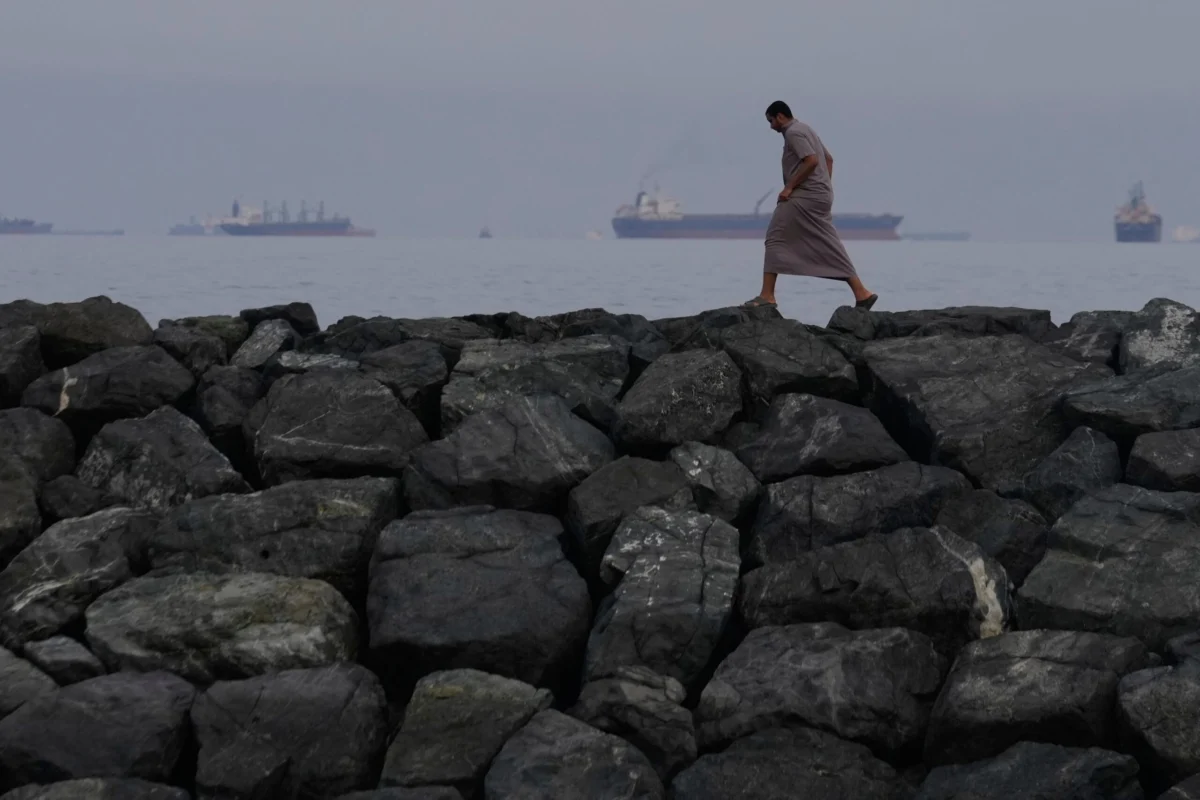
The Strait of Hormuz remains the world’s most important oil transit chokepoint. According to data from the U.S. Energy Information Administration (EIA), the strait sees the passage of approximately 21 million barrels of oil per day, representing roughly 20% of global petroleum liquids consumption. Additionally, more than 20% of the world’s liquefied natural gas (LNG) trade passes through this narrow waterway. Any sustained blockage of the strait has the potential to trigger a global energy crisis, a reality that has driven Brent crude oil prices to surge past $100 a barrel, up from a pre-conflict baseline of approximately $70.
A Timeline of Escalation: From Succession to Strike
The current crisis was precipitated by a series of political and military shifts within the Iranian leadership following the death of Ayatollah Ali Khamenei on February 28. The subsequent rise of his son, Mojtaba Khamenei, as the new Supreme Leader has been marked by a return to hardline rhetoric and aggressive maritime tactics.
February 28: Ayatollah Ali Khamenei is killed, leading to an immediate power vacuum and the rapid elevation of Mojtaba Khamenei.
Early March: Mojtaba Khamenei issues a defiant written statement, read on state television, ordering the IRGC to use the Strait of Hormuz as a "lever" against adversaries. He remains unseen in public, fueling speculation regarding the stability of the new regime.
Mid-March: The IRGC declares that any vessel attempting to transit the strait without authorization will be targeted. Reports emerge of more than a dozen commercial ships being harassed or attacked in the Persian Gulf.
Late March: Global oil markets react to the instability, with Brent crude futures climbing steadily toward the $100 mark as insurance premiums for maritime shipping skyrocket.
Friday, April (Current): Following continued IRGC ambushes on neutral shipping, President Trump authorizes the CENTCOM raid on Kharg Island military targets.
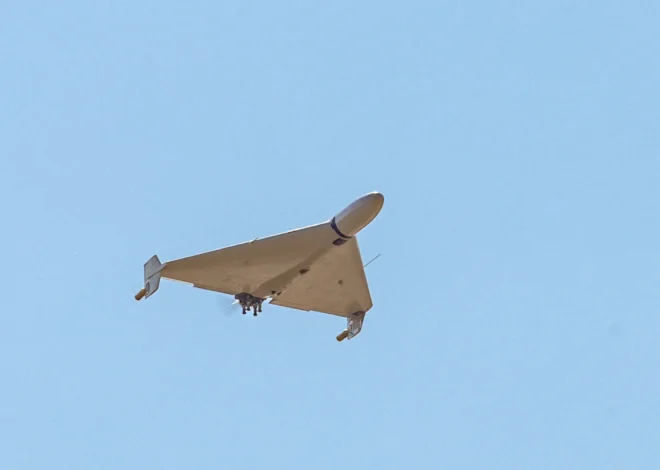
The Islamic Republic’s strategy has focused on "asymmetric naval warfare," utilizing a combination of fast-attack boats, unmanned aerial vehicles (UAVs), and an extensive arsenal of naval mines to disrupt commercial traffic. This approach allows Iran to exert pressure on global markets without engaging in a traditional ship-to-ship naval battle against the superior firepower of the U.S. Navy’s 5th Fleet.
Military Capabilities and the Threat of Naval Mines
The Pentagon and maritime intelligence agencies have expressed specific concern regarding Iran’s mining capabilities. According to a 2025 Congressional Research Service (CRS) report, the Islamic Republic possesses an arsenal of between 5,000 and 6,000 naval mines. These include:
- Limpet Mines: Magnetically attached to a ship’s hull by divers or special forces, designed to disable vessels without necessarily sinking them.
- Moored Mines: Floating beneath the surface and tethered to the seafloor, these detonate upon contact with a hull.
- Bottom Mines: High-tech sensors resting on the seafloor that detonate based on the acoustic, magnetic, or pressure signature of a passing ship.
Ret. Navy Capt. Bill Hamblet, editor-in-chief of the U.S. Naval Institute’s "Proceedings," characterized the situation as a "multidimensional threat." Hamblet noted that while the U.S. possesses sophisticated mine-clearing technology, the process is "slow, methodical, and mechanical." The challenge is compounded by the need to protect mine-sweeping vessels from Iran’s "swarm" tactics, involving fast-attack craft capable of reaching speeds of up to 50 knots.
"You need to be able to defend against those threats while clearing mines or escorting merchant ships," Hamblet explained. "It’s not just about the mines; it’s about the drones, the shore-based missile batteries, and the nimble attack craft armed with machine guns or small missiles."
Economic Ramifications and Market Volatility
The disruption in the Persian Gulf has sent shockwaves through the global economy. For the first time since the height of the 2022 energy crisis, oil prices have reached triple digits. Scarlett Suarez, a senior intelligence analyst at Dryad Global, emphasized that the Iranian strategy is designed to create "indiscriminate" fear.
"These strikes target commercial vessels regardless of flag or ownership," Suarez stated. "By fueling widespread uncertainty, Iran achieves disruption through asymmetric attacks that affect neutral third-party ships and regional neighbors alike."
The economic "lever" described by Mojtaba Khamenei is aimed at forcing Western powers to the negotiating table or compelling a withdrawal of U.S. assets from the region. However, the Trump administration’s response suggests a different calculus: a "maximum pressure" military variant intended to prove that the cost of blocking the strait will be borne entirely by Iran’s own infrastructure and economy.
Official Responses and Historical Context
In a Friday briefing at the Pentagon, Secretary of Defense Pete Hegseth sought to project a sense of calm and resolve, despite the scale of the bombing raid. Hegseth told reporters that while the U.S. is monitoring the situation closely, there is "no clear evidence" yet that Iran has deployed new mines in the shipping lanes since the strike.
"As the world is seeing, they are exercising sheer desperation in the Strait of Hormuz," Hegseth said. "Something we’re dealing with, we have been dealing with it. Don’t need to worry about it."
The current conflict draws inevitable comparisons to the 1980s "Tanker War" during the Iran-Iraq conflict. During that era, Iran similarly mined international waters, leading to the 1988 incident where the USS Samuel B. Roberts was severely damaged by an Iranian mine. That event triggered "Operation Praying Mantis," a massive U.S. retaliatory strike that destroyed several Iranian warships and two oil platforms. The strike on Kharg Island appears to be a modern, more intensive iteration of the Praying Mantis doctrine—a direct response to interference with the freedom of navigation.
Broader Geopolitical Implications
The decision to target Kharg Island military assets sends a clear signal to both Tehran and the international community. For Iran, the message is that its primary economic engine is now within the crosshairs of U.S. precision munitions. For global markets, the message is an assurance that the U.S. will use all necessary force to keep the Strait of Hormuz open.
However, analysts warn that the situation remains highly volatile. The transition of power to Mojtaba Khamenei remains opaque, and the internal politics of the Islamic Republic may favor further escalation to consolidate the new leader’s domestic authority. Furthermore, the IRGC operates with a degree of autonomy that could lead to "rogue" actions in the Gulf, even if the central government in Tehran seeks to de-escalate.
The international community remains divided on the approach. While many energy-importing nations in Europe and Asia are desperate for the stabilization of oil prices, there are concerns that a direct strike on Iranian soil could broaden the conflict into a regional war involving other actors.
As of Saturday morning, U.S. naval assets in the region remain on high alert. The effectiveness of the Kharg Island raid will ultimately be measured by whether shipping traffic resumes its normal cadence or if Iran retaliates using its remaining asymmetric assets. For now, the "crown jewel" of Iran’s economy stands defenseless, and the world waits to see if the new Supreme Leader will heed the President’s ultimatum or risk the total destruction of his nation’s oil industry.

Related Posts
Pentagon Forges Landmark Seven-Year Agreements with Boeing and RTX to Accelerate Standard Missile-3 Production and Stabilize Defense Supply Chains
Boeing Unveils Ultra Low-Cost Seeker to Enhance Missile Inventory and Combat Cost Challenges in Modern Warfare