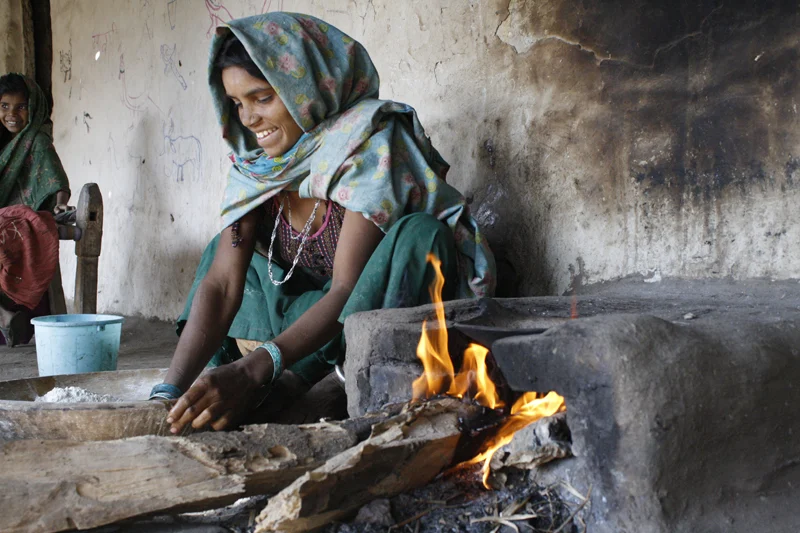
Climate Envoy and TotalEnergies Discuss Carbon Credits to Scale LPG Cookstoves Across Africa
The pursuit of sustainable energy solutions in sub-Saharan Africa has reached a critical juncture as high-level negotiations between national climate envoys and global energy giants focus on the integration of carbon markets into the clean cooking transition. In a series of meetings held this week, the country’s top climate envoy engaged in detailed discussions with TotalEnergies regarding the deployment of Liquefied Petroleum Gas (LPG) cookstoves, a move intended to mitigate the devastating health and environmental impacts of traditional biomass burning. This initiative seeks to leverage carbon credits to bridge the financing gap for clean energy infrastructure, potentially transforming the domestic lives of millions while contributing to national emissions reduction targets under the Paris Agreement.

The core of the discussion centers on a transition from "dirty" fuels—such as wood, charcoal, and animal dung—to LPG, which is a byproduct of oil and gas refining. While some environmental advocates push for a direct leap to electric or solar cooking, many African governments and energy providers argue that LPG represents the most viable, scalable, and immediate solution to the continent’s cooking crisis. TotalEnergies, which has been aggressively expanding its footprint in African retail energy markets, aims to use the revenue generated from carbon credit sales to subsidize the cost of LPG canisters and stoves, making them affordable for low-income households.
The Public Health and Environmental Crisis of Traditional Cooking
The urgency of these discussions is underscored by a sobering reality: nearly 900 million people in sub-Saharan Africa lack access to clean cooking solutions. For decades, the reliance on open fires and inefficient stoves has created a silent epidemic of respiratory illness. According to data from the World Health Organization (WHO), household air pollution is responsible for approximately 3.2 million premature deaths annually, with a disproportionate impact on women and children who spend the most time near the hearth.

Beyond the human toll, the environmental degradation caused by biomass harvesting is profound. The demand for charcoal and firewood is a primary driver of deforestation across the African continent, leading to loss of biodiversity and the degradation of critical carbon sinks. When wood is burned inefficiently, it releases not only carbon dioxide but also black carbon—a potent short-lived climate pollutant that accelerates regional warming and glacier melt. By transitioning to LPG, proponents argue that the "avoided deforestation" and reduced black carbon emissions can be quantified and sold as carbon credits on international voluntary and compliance markets.
The Role of Carbon Credits in Financing the Transition
The primary barrier to clean cooking has long been economic rather than technical. While an LPG stove is significantly more efficient than a three-stone fire, the upfront cost of the equipment and the recurring cost of fuel refills are prohibitive for families living on less than $2 a day. This is where carbon credits enter the equation.

Under the proposed framework discussed with TotalEnergies, the "emissions avoided" by switching a household from charcoal to LPG are calculated using rigorous methodologies. Each ton of carbon dioxide equivalent (CO2e) prevented from entering the atmosphere generates one carbon credit. These credits are then purchased by corporations in the Global North seeking to offset their own unavoidable emissions or by governments meeting their Nationally Determined Contributions (NDCs).
The revenue from these sales is funneled back into the project to lower the price of LPG for the end-user. TotalEnergies has indicated that by securing long-term carbon purchase agreements, it can de-risk its investments in LPG bottling plants and distribution networks in remote regions. However, the climate envoy emphasized that for this system to work, there must be absolute transparency and "additionality"—proof that the carbon reduction would not have happened without the specific intervention of the project.

A Chronology of the Clean Cooking Movement
The current dialogue is the result of a multi-year diplomatic push to elevate clean cooking from a "niche" development issue to a central pillar of global climate policy.
- 2021-2022: The United Nations and the International Energy Agency (IEA) begin highlighting clean cooking as the "forgotten" component of the energy transition. African leaders at COP26 and COP27 call for $4 billion in annual investment to achieve universal access by 2030.
- May 2024: The landmark Summit on Clean Cooking in Africa, held in Paris, sees over $2.20 billion pledged by governments and the private sector. TotalEnergies is among the lead private sector participants, committing to invest $400 million in LPG development.
- 2025: Several African nations, including Kenya and Tanzania, launch national clean cooking strategies that specifically incorporate carbon market mechanisms. The African Carbon Markets Initiative (ACMI) begins drafting standardized protocols for cookstove credits to prevent the "greenwashing" scandals that plagued earlier voluntary market projects.
- March 2026: The current negotiations take place, focusing on the operationalization of these pledges. The discussion shifts from "whether" to use LPG to "how" to ensure the carbon credits generated are of high integrity and that the benefits reach the poorest households.
Supporting Data and Economic Projections
The economic implications of a successful LPG rollout are vast. A report by the IEA suggests that achieving universal access to clean cooking in Africa would require an investment of roughly $4 billion per year through 2030. While this sounds substantial, it is a fraction of the $2.8 trillion invested globally in energy each year.

Furthermore, the "cost of inaction" is estimated at $2.4 trillion annually, factoring in the healthcare costs associated with respiratory disease, the lost productivity of women who spend hours gathering fuel, and the environmental damage from deforestation. Carbon credits are viewed as a catalytic tool; even at a modest price of $15 to $20 per ton of CO2, the volume of credits generated by 100 million African households switching to LPG could provide billions of dollars in annual subsidies, effectively making the transition self-financing over time.
TotalEnergies has reported that in pilot programs, households using LPG saved an average of 15 to 20 hours per week previously spent on fuel collection. This "time poverty" reduction has a direct correlation with increased school attendance for girls and greater participation in the labor force for women.

Stakeholder Reactions and the "LPG vs. Renewables" Debate
The push for LPG is not without its detractors. Environmental NGOs and some climate scientists argue that subsidizing a fossil fuel—even one that burns cleaner than wood—is a step backward in the fight against climate change. They advocate for a "leapfrog" strategy, moving directly to electric pressure cookers (EPCs) powered by mini-grids or solar home systems.
"We cannot solve a climate crisis by locking African nations into new fossil fuel infrastructure," stated a representative from a leading pan-African environmental alliance. "The carbon credits generated by LPG projects are often based on inflated baselines of wood use, and they prolong the life of the oil and gas industry at a time when we should be phasing it out."

In response, the climate envoy and representatives from TotalEnergies argue that the infrastructure for electric cooking is currently insufficient in rural Africa. Grid stability is a major issue, and the cost of electric appliances remains high. They view LPG as a "bridge fuel" that can save lives today while the renewable grid is built out over the next two decades.
TotalEnergies’ CEO has previously stated that the company’s expansion into LPG is part of its broader "multi-energy" strategy, which includes significant investments in solar and wind. However, for the immediate future of the African kitchen, the company maintains that gas is the most pragmatic solution.

Broader Impact and Global Implications
The outcome of these talks will have significant repercussions for the global carbon market. After several years of volatility and criticism regarding the quality of "nature-based" offsets, the market is looking for high-impact "social" credits. Cookstove projects are highly attractive to corporate buyers because they provide clear, measurable benefits to human health and gender equality, in addition to carbon sequestration.
Moreover, this initiative is unfolding against a backdrop of shifting global energy dynamics. As China and Brazil join pledges to triple global nuclear energy capacity and Colombia leads a summit to revive talks on a fossil fuel transition, Africa is asserting its right to a "just transition." This means using available resources—including natural gas—to meet basic development needs while the Global North takes the lead in deep decarbonization.

The negotiations also intersect with Africa’s broader economic ambitions regarding critical minerals. As the world demands more lithium, cobalt, and copper for the green transition, African nations are increasingly demanding that the "climate debt" owed by industrialized nations be paid through technology transfer and innovative financing for projects like clean cooking.
Analysis: The Path Forward for Article 6
As the 2026 climate calendar progresses, the integration of these LPG projects into the Paris Agreement’s Article 6 framework will be crucial. Article 6 allows countries to cooperate to reach their climate targets, including through the international transfer of carbon credits. If the climate envoy can successfully negotiate a deal that aligns TotalEnergies’ LPG rollout with the host country’s NDC, it could serve as a blueprint for other developing nations.

The success of this partnership hinges on three factors:
- Verification: Ensuring that every LPG cylinder distributed actually replaces biomass use, rather than being used as a secondary fuel source ("stove stacking").
- Equity: Guaranteeing that the financial windfall from carbon credits isn’t entirely absorbed by corporate middlemen but is reflected in lower fuel prices for the consumer.
- Sustainability: Creating a long-term plan to transition from fossil-derived LPG to "bio-LPG" or electric cooking as technology and infrastructure improve.
The discussions between the climate envoy and TotalEnergies represent more than just a business deal; they are a test case for whether the global financial architecture can truly address the needs of the world’s most vulnerable populations. While the debate over LPG’s status as a fossil fuel will continue, the immediate priority remains the 3.2 million people who will otherwise die this year from the simple act of preparing a meal. For the envoy and the energy giant, the goal is to ensure that by the time the next global climate summit arrives, the smoke in millions of African homes has finally begun to clear.

Related Posts
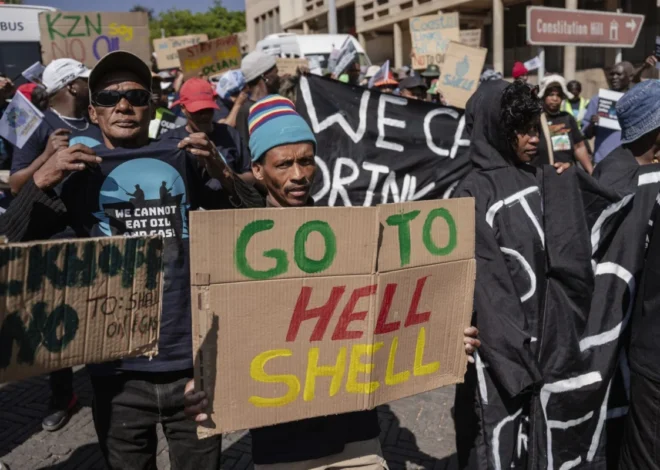
Constitutional Court of South Africa Bars Shell Oil Exploration in Landmark Victory for Environmental and Community Rights
The Battle for Saldanha Bay: South Africa’s Ambitious Ocean Economy Strategy Faces Legal and Environmental Reckoning