The Sino-Indian Relationship: Poised to Redefine Global Geopolitics in the Latter Half of the 21st Century
By the second half of the 21st century, the Sino-Indian relationship is projected to ascend as the world’s most consequential geopolitical dynamic, potentially supplanting even the intricate and multifaceted China-United States cooperative rivalry. This forecast, underpinned by evolving economic trajectories and demographic shifts, suggests a profound recalibration of global power structures. By 2050, the world’s three largest economies are anticipated to be a combination of China, India, and the United States. A prominent analysis by PricewaterhouseCoopers, for instance, posits this specific order, noting that while the United States may retain the highest per capita income, its demographic scale will be surpassed by both China and India. This economic ascendancy of these two Asian giants is not merely a statistical prediction but a reflection of deep-seated complementarities and shared interests that are increasingly shaping international affairs.
Economic Synergies and Demographic Dividends
The theoretical complementarity between China and India presents a compelling case for their escalating geopolitical significance. China, a global powerhouse in advanced manufacturing, possesses a sophisticated industrial base and extensive supply chains. In contrast, India has strategically cultivated its position as a premier global service hub, particularly excelling in software development, digital services, and high-end professional outsourcing. This division of labor, where one nation leads in tangible goods production and the other in intangible services and human capital, creates a natural synergy that can fuel mutual growth and interdependence.
Furthermore, demographic trends offer a stark contrast and a potential area of collaboration. China, grappling with an aging population and a declining birth rate, is actively implementing policies to invest in its human capital and mitigate the economic consequences of demographic shifts. This strategic pivot, often described as "investing in people," aims to sustain its growth engine. India, on the other hand, is experiencing a significant "demographic dividend." With a youthful and rapidly growing population, India is poised to become the world’s largest exporter of young, educated, and capable workers. This influx of human capital can fill labor demands, drive innovation, and contribute to economic dynamism in both domestic and international markets. The potential for China to leverage India’s demographic surplus, while India benefits from China’s manufacturing prowess, represents a powerful engine for regional and global economic development.
A Shifting Global Order and Shared Interests
Crucially, both China and India stand to be co-beneficiaries and potential co-architects of a new global order that is less susceptible to unilateral dominance by any single power. Their shared participation in multilateral forums such as BRICS (Brazil, Russia, India, China, and South Africa, with recent expansions) and the Shanghai Cooperation Organisation (SCO) underscores a mutual desire for geopolitical realignment. Both nations have consistently advocated for a move away from the post-Cold War order, which they perceive as predominantly Western-led. While their specific models of governance differ significantly, their peoples share a profound sense of civilizational continuity, with millennia of shared history, cultural heritage, and philosophical traditions providing a deep wellspring of common ground. This civilizational kinship, coupled with converging geopolitical interests, forms a solid foundation for their growing influence on the world stage.
Hong Kong’s Role as a Bridge
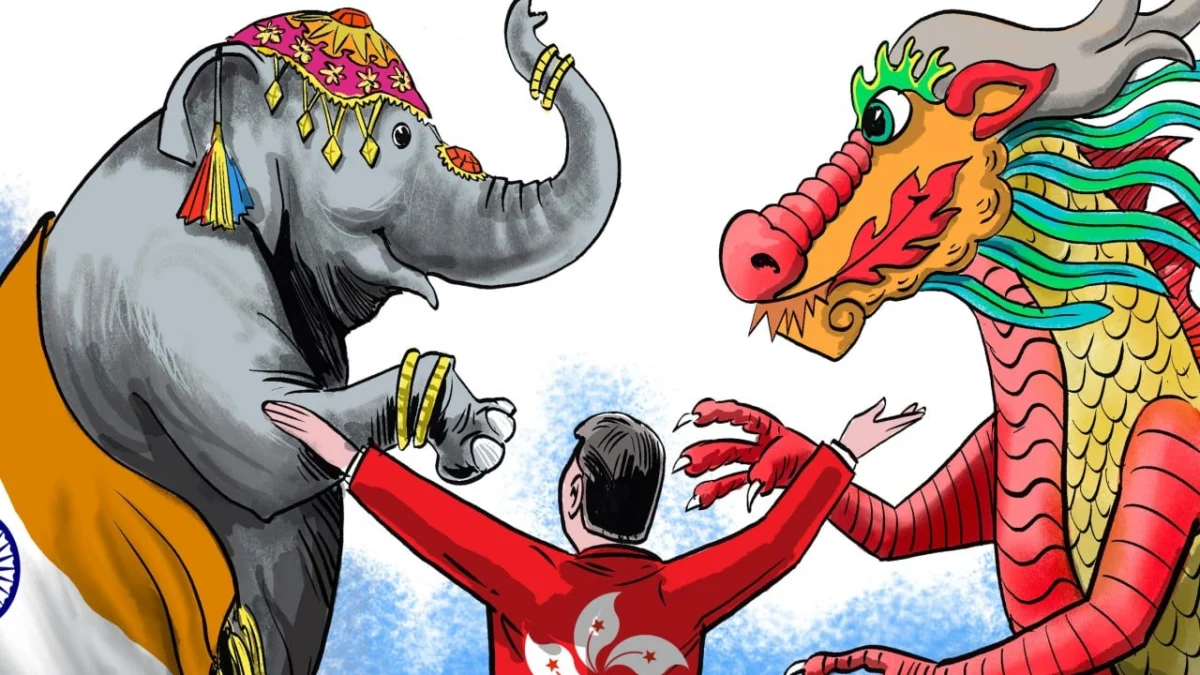
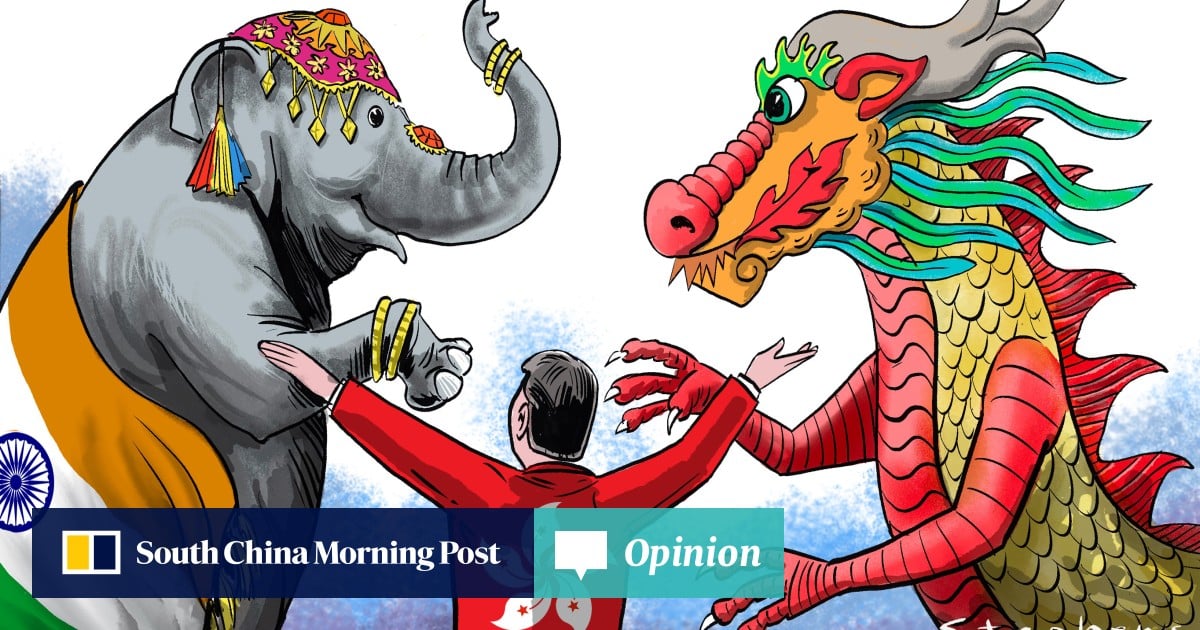
The strategic importance of the Sino-Indian relationship is increasingly being recognized in key international hubs, including Hong Kong. The recent visit of India’s Ambassador to China, Pradeep Kumar Rawat, to Hong Kong and Macau, where he participated in the unveiling of a Mahatma Gandhi statue and met with local officials, signals a positive diplomatic engagement. These interactions suggest a favorable view from senior Indian diplomats regarding the potential for deeper engagement with China’s Special Administrative Regions. For Hong Kong, aspiring to maintain its reputation as China’s most international and outward-looking city, leveraging its unique assets to foster the Sino-Indian partnership presents a significant opportunity.
Indeed, strengthening this bilateral relationship should be a cornerstone of Hong Kong’s forthcoming five-year plan. The city possesses inherent advantages that make it ideally suited to act as a conduit. Its common law system, a legacy of its colonial past, and its entrenched bilingualism (Cantonese and English) create a highly compatible economic environment for both Indian and Chinese businesses. While direct flights between mainland China and India were suspended for an extended period, from 2020 to 2025, due to the COVID-19 pandemic and border tensions, Hong Kong remained a vital connection point. The city’s continued accessibility served as a crucial lifeline, facilitating essential travel and trade for individuals and businesses when direct routes were disrupted. This historical role underscores Hong Kong’s potential to bridge any diplomatic or logistical gaps that may arise between the two Asian giants.
The human element is paramount in fostering this connection. Historically, the Indian community in Hong Kong has played a pivotal role in the city’s development. Figures from the Indian diaspora were instrumental in the establishment of key institutions, including the University of Hong Kong, the iconic Star Ferry, and the Ruttonjee Hospital. Today, the Indian diaspora, numbering approximately 44,000 residents, continues to make substantial contributions across diverse sectors. Their expertise is vital in finance, logistics, hospitality, tourism, and supply chain management, underscoring the deep-rooted and multifaceted ties between India and Hong Kong.
A Historical Perspective on India-China Dynamics
The trajectory of the Sino-Indian relationship is not without its complexities and historical antecedents. The period following India’s independence in 1947 and the establishment of the People’s Republic of China in 1949 initially saw a period of cautious engagement, often characterized by the slogan "Hindi-Chini Bhai-Bhai" (Indians and Chinese are brothers). This era was marked by a shared anti-colonial sentiment and a desire to forge a new path for developing nations. However, this camaraderie was shattered by the Sino-Indian War of 1962, a conflict that profoundly altered the bilateral relationship and left a lasting legacy of mistrust and territorial disputes.
The war, stemming from unresolved border issues in the Himalayas, resulted in significant military losses for India and a deep strategic setback. The aftermath saw a protracted period of diplomatic freeze and heightened suspicion. For decades, the relationship remained primarily defined by these unresolved territorial claims and a pervasive sense of strategic competition. Trade was minimal, and political engagement was limited.
However, the late 20th and early 21st centuries witnessed a gradual thaw. As both nations embarked on significant economic reforms and experienced rapid growth, pragmatic considerations began to outweigh historical animosities. The late 1990s and early 2000s saw a concerted effort to rebuild trade and diplomatic ties. In 2003, then-Prime Minister Atal Bihari Vajpayee’s visit to China marked a significant step, leading to the establishment of a "strategic cooperative partnership." This period also saw the resumption of high-level dialogues and a focus on managing differences while exploring areas of mutual interest.
The economic dimension of the relationship grew exponentially. Bilateral trade, which was negligible in the 1990s, surged, making China India’s largest trading partner. However, this growth was not without its imbalances, with India often running substantial trade deficits. The border disputes, though managed through various confidence-building measures and military-level talks, remained a persistent underlying tension, periodically flaring up, as seen in incidents in Ladakh and other sectors.
Geopolitical Realignment and the Future Outlook
The current geopolitical landscape is characterized by a growing multipolarity. The rise of China and the resurgence of India as major global players are fundamentally altering the international power balance. This shift is creating opportunities for new alliances and partnerships, while also intensifying existing rivalries. The Sino-Indian relationship, therefore, is not occurring in a vacuum but is intricately linked to broader global trends, including the evolving dynamics between the US and China, the role of regional powers, and the challenges of global governance.
The forecast for the second half of the 21st century suggests that the Sino-Indian axis will become increasingly central to global geopolitics. This is due to several factors:
- Economic Dominance: As projected economic powerhouses, their combined economic weight will influence global trade, investment, and financial flows. Their decisions on trade policies, currency valuations, and infrastructure development will have far-reaching consequences.
- Demographic Power: India’s young population and China’s vast human capital, despite its aging trend, represent a significant demographic advantage. This will translate into labor markets, innovation potential, and consumer demand, shaping global economic growth patterns.
- Strategic Autonomy: Both nations are increasingly seeking strategic autonomy, aiming to chart their own foreign policy course, independent of external pressures. This shared aspiration for self-determination will drive their cooperation on issues of global governance and international norms.
- Multilateral Engagement: Their active participation and influence within organizations like BRICS and the SCO highlight their commitment to reshaping global institutions and creating alternative platforms for international cooperation. They are advocating for a more inclusive and representative global order.
- Civilizational Resonance: The deep historical and cultural connections between India and China, despite periods of conflict, provide a unique basis for understanding and cooperation. This shared civilizational heritage can foster greater empathy and a long-term perspective in their bilateral interactions.
Implications for Global Governance and Regional Stability
The evolving Sino-Indian relationship carries profound implications for the future of global governance and regional stability. As these two Asian giants increasingly assert their influence, the existing international order, largely shaped by Western powers in the post-World War II era, will face significant challenges.
- Reform of International Institutions: The demand for greater representation and reform within institutions like the United Nations Security Council, the International Monetary Fund, and the World Bank is likely to intensify. India, in particular, has long sought a permanent seat on the UNSC, and its growing economic and political stature makes this a more pressing issue. China’s increasing influence within these bodies is also a key factor.
- Alternative Multilateral Frameworks: The strengthening of organizations like BRICS and the SCO can be seen as a parallel development to the existing Western-dominated institutions. These frameworks may offer alternative approaches to global economic governance, security cooperation, and development initiatives, potentially leading to a more fragmented but diverse global governance landscape.
- Regional Dynamics in Asia: The relationship between India and China will be a primary determinant of stability and cooperation across Asia. While their economic interdependence is growing, the unresolved border disputes and strategic competition will continue to be significant factors. The potential for a stable and cooperative Sino-Indian relationship could usher in an era of unprecedented regional economic integration and peace. Conversely, escalating tensions could lead to increased military postures and regional instability, impacting neighboring countries and global supply chains.
- The Future of the US-China Dynamic: The rise of the Sino-Indian relationship as a dominant geopolitical force could also influence the complex China-US dynamic. A more robust Sino-Indian partnership might alter the strategic calculations of both the US and China, potentially creating new alignments or intensifying existing rivalries. The US, in particular, has historically sought to balance China’s rise, and the growing influence of India as a counterweight or independent power will be a critical factor in its geopolitical strategy.
Navigating Challenges and Embracing Opportunities
The path forward for the Sino-Indian relationship is not without its hurdles. The unresolved border disputes remain a significant impediment, requiring continued diplomatic efforts and confidence-building measures. Trade imbalances, intellectual property rights, and market access are also areas that necessitate careful management and negotiation. Furthermore, the differing political systems and strategic interests of the two nations will continue to shape their interactions.
However, the overarching trend points towards a deepening interdependence and a shared interest in shaping a more multipolar and equitable global order. The potential for economic synergy, demographic complementarity, and shared aspirations for greater international influence provides a strong foundation for a constructive and consequential bilateral relationship. As Ambassador Rawat’s engagement in Hong Kong suggests, the strategic cultivation of these ties, leveraging historical connections and urban centers like Hong Kong as bridges, will be crucial. The coming decades will undoubtedly witness the Sino-Indian relationship becoming a defining feature of the global geopolitical landscape, influencing economic trends, international diplomacy, and the very architecture of global power.