Israel army says Hezbollah fired 200 rockets Wednesday night
The Israeli military confirmed on Thursday that the Lebanese armed group Hezbollah had executed its most substantial attack since the outbreak of the current conflict, unleashing an unprecedented barrage of around 200 rockets and approximately 20 unmanned aerial vehicles (UAVs) across northern Israel. This large-scale assault, described by military officials as Hezbollah’s "biggest barrage" to date, was strategically timed to coincide with a direct and simultaneous attack from Iran, which involved ballistic missiles and drones targeting various locations within Israel. The synchronized nature of these attacks underscores a critical and alarming development in the escalating regional tensions, indicating a coordinated effort between Tehran and its primary proxy in Lebanon.
Lieutenant Colonel Nadav Shoshani, a spokesperson for the Israeli military, provided details in a briefing to journalists, stating, "Last night, Hezbollah timed a simultaneous attack with Iran, firing rockets and drones at towns and communities across Israel. The numbers (are) about approximately 200 rockets, approximately 20 UAVs (drones) and combine those with ballistic missiles that were being fired from Iran in the same time." He emphasized the scale of the cross-border aggression, noting, "This was Hezbollah’s biggest barrage" since the commencement of hostilities. Despite the intensity and volume of the assault, Lt. Col. Shoshani reported a robust and effective Israeli aerial defense response, which resulted in "minimal casualties, only two or three direct hits… and a few civilians that were lightly injured." This assessment highlighted the efficacy of Israel’s multi-layered air defense systems, including the Iron Dome, David’s Sling, and Arrow systems, in mitigating the potential for widespread damage and casualties from such a comprehensive aerial assault.
Chronology of a Coordinated Assault
The events unfolded rapidly on Wednesday night, beginning with intelligence reports of an imminent threat from both Lebanon and Iran. Shortly after, sirens blared across numerous Israeli communities, from the northern border towns to areas further south, signaling incoming rocket and drone threats. The synchronized nature of the attacks was a defining characteristic, with Hezbollah’s barrages from Lebanon commencing around the same time as the launch of ballistic missiles and drones from Iranian territory.
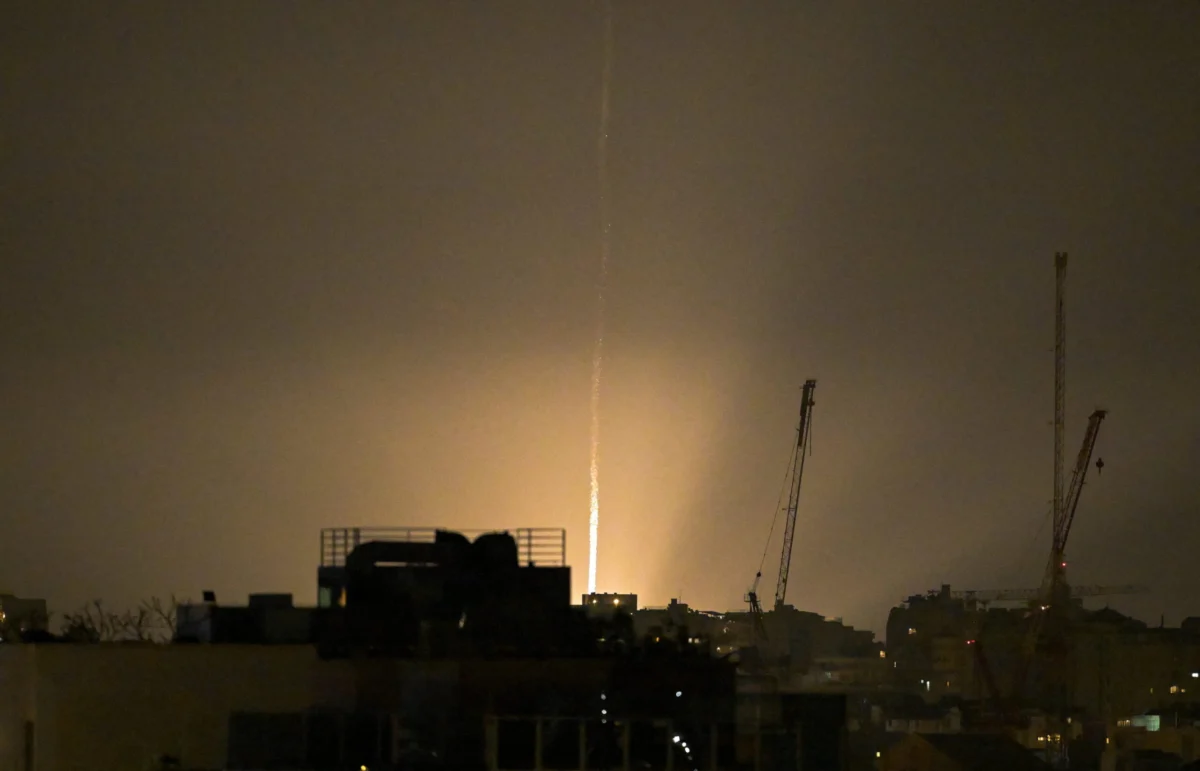
The initial waves from Lebanon consisted primarily of Katyusha-style rockets and a variety of drones, targeting civilian infrastructure and military installations across the Galilee and Golan Heights. Simultaneously, Iranian-launched munitions traversed hundreds of kilometers before entering Israeli airspace. Israeli air defense systems were immediately activated, engaging and intercepting a significant percentage of the incoming threats. Eyewitness accounts and official reports described a sky illuminated by interceptor missiles, particularly over central and northern Israel, as the defensive systems worked to neutralize the threats. The operation continued for several hours into early Thursday morning, with follow-up assessments conducted to ascertain the full extent of the damage and to clear any unexploded ordnance.
The Broader Context: Israel-Hezbollah Front
The recent escalation on the northern border is not an isolated incident but rather a significant intensification of the ongoing, low-to-medium intensity conflict that has plagued the region since the Hamas attacks on October 7th. Following the eruption of the Gaza War, Hezbollah, a heavily armed and politically influential Shiite Islamist political party and militant group in Lebanon, began launching daily, albeit often smaller, attacks on Israeli towns and military posts. These actions, which Hezbollah frames as support for Hamas and the Palestinian cause, have primarily targeted military sites and civilian communities near the border, leading to the displacement of tens of thousands of Israeli residents from their homes in the Galilee.
Hezbollah’s arsenal is estimated to include over 150,000 rockets, missiles, and drones, making it one of the most potent non-state military actors globally. Its capabilities range from short-range unguided rockets to precision-guided missiles capable of striking deep within Israel. The group’s actions are closely monitored and often directed by Iran, which provides substantial financial, military, and logistical support, viewing Hezbollah as a crucial component of its "axis of resistance" against Israel and Western influence in the Middle East.
Prior to this "biggest barrage," Hezbollah’s attacks had generally been calibrated to avoid a full-scale war, operating within a delicate balance of deterrence and limited engagement. However, the synchronized attack with Iran signals a potential shift in this calculus, raising concerns about a possible broader regional conflagration. Previous major confrontations, such as the 2006 Lebanon War, resulted in extensive destruction and casualties on both sides, underscoring the severe risks associated with a renewed, large-scale conflict.
The Iranian Dimension: A Coordinated Assault
The direct involvement of Iran in a synchronized attack with Hezbollah represents a critical turning point. While Iran has long supported proxy groups like Hezbollah, Hamas, and various militias in Iraq, Syria, and Yemen, direct missile and drone attacks on Israeli territory have been relatively rare, typically limited to retaliatory strikes for specific events. The decision by Tehran to launch ballistic missiles and UAVs concurrently with Hezbollah’s barrage indicates a higher level of strategic coordination and a more overt display of its military capabilities against Israel.
This coordinated action follows a period of heightened tensions between Israel and Iran, fueled by a series of alleged Israeli strikes against Iranian targets and personnel in Syria and Lebanon, as well as ongoing Iranian nuclear ambitions. Iran has repeatedly vowed "severe revenge" for such actions, particularly after recent incidents that resulted in the deaths of high-ranking Iranian military advisors. The synchronized attack could be interpreted as Iran making good on those threats, utilizing its proxies and direct military assets in a unified show of force.
Analysts suggest that the timing and nature of the attack convey several messages. Firstly, it demonstrates Iran’s ability to coordinate complex, multi-directional attacks involving both its own forces and its proxies. Secondly, it tests Israel’s multi-layered air defense capabilities under a high-stress, high-volume scenario. Thirdly, it serves as a stark warning to Israel about the potential consequences of further escalation, particularly concerning Iran’s strategic assets.
Israel’s Defensive Response and Minimal Casualties
Despite the unprecedented scale and coordination of the attacks, Israel’s sophisticated aerial defense array proved largely effective. The country’s multi-tier defense system, comprising the Iron Dome for short-range rockets, David’s Sling for medium-range threats, and the Arrow system for long-range ballistic missiles, was fully activated. These systems, combined with early warning networks and robust command and control capabilities, allowed for rapid detection, tracking, and interception of the incoming munitions.
The Israeli military’s swift and precise response successfully neutralized the vast majority of threats, particularly the more destructive ballistic missiles and armed drones. Lt. Col. Shoshani’s report of "minimal casualties" and only "two or three direct hits" underscores the effectiveness of these defensive measures. The few reported injuries were light, primarily sustained by civilians in areas where rocket debris fell or due to minor impacts. The economic damage was also contained, limited to localized structural damage and disruptions caused by emergency protocols.
The success of the defense operation is a testament to years of investment in advanced military technology and training. However, it also highlights the immense strain placed on these systems and the constant need for readiness in the face of evolving threats. The sheer volume of projectiles launched by Hezbollah, combined with the more advanced capabilities of Iranian ballistic missiles, presented a significant challenge that required the simultaneous engagement of multiple defensive layers.

Statements and International Reactions
Following the attacks, Israeli officials swiftly condemned the aggression. Prime Minister Benjamin Netanyahu convened an emergency security cabinet meeting to assess the situation and formulate a response. While official statements on a potential retaliation were initially guarded, Israeli Defense Minister Yoav Gallant reiterated Israel’s commitment to defending its citizens and vowed a decisive response to any attacks on its sovereignty. He emphasized that Israel would not tolerate such coordinated aggression and that those responsible would pay a heavy price.
Hezbollah, through its official media channels, acknowledged responsibility for several of the barrages, portraying them as legitimate acts of resistance and retaliation for recent Israeli strikes in Lebanon and Syria. The group framed its actions as part of the broader "axis of resistance" against Israeli occupation and aggression, aligning its narrative with Iran’s stated objectives.
The international community reacted with alarm to the escalating situation. The United Nations Secretary-General António Guterres called for an immediate de-escalation from all parties, expressing grave concern over the potential for a full-scale regional conflict. The United States, a key ally of Israel, reiterated its unwavering support for Israel’s right to self-defense. U.S. officials also urged restraint from all actors, emphasizing the critical need to prevent a wider war that could destabilize the entire Middle East. European Union leaders and several Arab nations also issued statements expressing concern, calling for diplomatic efforts to defuse the crisis and prevent further loss of life. These international responses reflect the widespread apprehension regarding the unpredictable trajectory of the multi-front conflict.
Analysis: Implications for Regional Stability
The synchronized attacks by Hezbollah and Iran represent a dangerous escalation that carries profound implications for regional stability. This shift from proxy-only engagements to a coordinated assault involving Iran’s direct military capabilities marks a significant qualitative change in the conflict dynamics.
Risk of Full-Scale War: The most immediate implication is the dramatically increased risk of a full-scale war between Israel and Hezbollah, potentially drawing in Iran directly. Israel has repeatedly stated that it will not tolerate a persistent threat from Hezbollah on its northern border and has warned of severe consequences should the group continue its attacks. A full-blown conflict could devastate Lebanon, which is already grappling with a severe economic crisis and political instability, and would undoubtedly lead to extensive civilian casualties on both sides.
Testing Israel’s Deterrence and Defense: The coordinated nature of the attack was a clear attempt to overwhelm Israel’s air defense systems and test its strategic deterrence. While the defenses largely held, the sheer volume of projectiles underscores the challenges faced by Israel in a multi-front conflict scenario. It also forces Israel to consider the limits of its defensive capabilities against a sustained, high-intensity assault from multiple directions.
Shifting Regional Power Dynamics: This incident could reshape regional power dynamics. It demonstrates Iran’s willingness and capability to project power directly against Israel, albeit in coordination with its proxies. This might embolden Iran’s allies while further entrenching the adversarial relationship with Israel and its Western partners. The incident also highlights the complexities of proxy warfare, where non-state actors can play a critical role in triggering broader regional conflicts.
Humanitarian Crisis: A large-scale escalation would inevitably exacerbate the humanitarian crisis in the region. Already, tens of thousands of Israelis have been displaced from their homes near the northern border, and a war in Lebanon would lead to massive displacement within Lebanon itself, straining international aid efforts and potentially creating new refugee flows.
Humanitarian and Civilian Impact
Beyond the immediate military engagement, the ongoing conflict on the northern border, culminating in this major barrage, has had a profound humanitarian impact. For months, communities along Israel’s northern frontier have been under constant threat, forcing approximately 60,000 to 80,000 residents to evacuate their homes and relocate to safer areas further south. These displaced citizens face significant challenges, including uncertainty about their return, disruption to education and livelihoods, and psychological trauma.
Similarly, in southern Lebanon, Israeli retaliatory strikes have led to the displacement of tens of thousands of Lebanese civilians. Hospitals and emergency services on both sides of the border are operating under heightened alert, preparing for potential mass casualty events. Infrastructure, including homes, agricultural lands, and public facilities, has suffered damage from rocket impacts and military operations. The economic toll on both border regions is substantial, impacting local businesses, tourism, and agricultural sectors. The psychological strain on populations living under the constant threat of war is immeasurable, leading to increased anxiety, stress, and long-term mental health challenges.
Looking Ahead: The Escalation Calculus
The synchronized attacks represent a dangerous new chapter in the Israel-Iran shadow war and the Israel-Hezbollah conflict. The immediate aftermath will likely involve intense diplomatic efforts to de-escalate the situation, coupled with strategic considerations by all parties regarding their next moves.
For Israel, the primary challenge will be to restore deterrence and ensure the safety of its northern communities, while carefully weighing the risks of a broader confrontation. Any Israeli response will need to be calibrated to punish the aggressors without inadvertently triggering a full-scale regional war that neither side ostensibly desires but that current dynamics make increasingly plausible.
For Hezbollah, the attack serves to demonstrate its capabilities and solidarity with Iran, but it also exposes Lebanon to the severe consequences of an Israeli retaliation. The group’s leadership will face pressure to balance its ideological commitments with the practical realities of avoiding national catastrophe.
For Iran, the coordinated assault signifies a more direct and assertive posture in its regional rivalry with Israel. However, it also risks drawing the international community’s stronger condemnation and potential further isolation. The trajectory of this conflict remains highly unpredictable, with the potential for miscalculation or unintended escalation looming large over the entire Middle East. The world watches anxiously as regional actors navigate this perilous and increasingly volatile landscape.

Related Posts
Over 150 Israeli Settlers Storm Al-Aqsa Compound and Perform Prayers, Violating Status Quo Under Police Protection.
UN Report Highlights Over 900 Obstacles Hampering West Bank Aid Amid Escalating Humanitarian Crisis