Sunshine 100 China Holdings Vows to Fight Winding-Up Petition Amid Deepening Property Sector Crisis
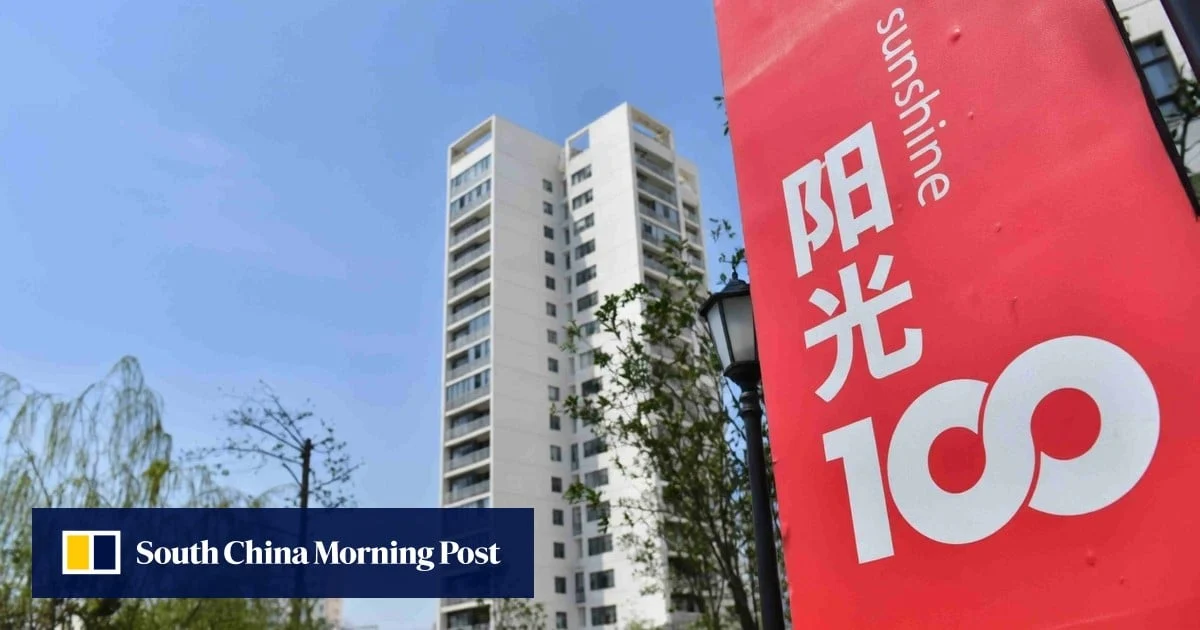
Sunshine 100 China Holdings, a prominent mainland Chinese property developer grappling with significant debt amidst a prolonged downturn in China’s real estate sector, announced on Thursday its intention to vigorously oppose a winding-up petition filed against it in Hong Kong. The move underscores the escalating financial pressures faced by developers and the broader systemic risks emerging from the ongoing property market turmoil in the world’s second-largest economy.
Petition Filed Over Substantial Redemption Default
The winding-up petition was lodged at the High Court of Hong Kong by HTI Financial Solutions and Haitong International Financial Products. The core of the legal challenge stems from Sunshine 100’s failure to meet a redemption sum of approximately US$205 million. This amount, which includes accrued interest, was contractually due on March 19, 2025, according to a filing made by Sunshine 100 with the Hong Kong stock exchange. The filing detailed the company’s receipt of the petition on Tuesday, with a scheduled hearing before the High Court on May 20.
Developer’s Stance: Protecting Stakeholder Interests
In its official statement, Sunshine 100 China Holdings articulated a firm resolve to contest the petition. "The company will seek legal advice and take all necessary actions to protect its legal rights," the filing read. Crucially, the developer emphasized its board’s perspective: "Furthermore, the company will oppose the petition, as the board is of the view that the petition does not represent the interests of other stakeholders and may impair the value of the company." This statement signals a strategic attempt to frame the legal battle not just as a dispute over a single debt, but as a broader concern for the welfare of its creditors, shareholders, and other parties involved.
Seeking a Validation Order to Maintain Operations
Adding another layer to its defense strategy, Sunshine 100 indicated its intention to explore the possibility of applying for a validation order from the court. Such an order would empower the company to continue its normal trading activities and business operations, even while the winding-up petition remains pending. This is a critical measure for a company seeking to navigate a liquidity crisis, as it allows for the potential restructuring of its debts and continued engagement with its market without the immediate threat of operational paralysis.
However, the company was candid about the uncertainty surrounding this legal maneuver. "There is no guarantee that the validation order will be granted by the High Court," Sunshine 100 cautioned in its filing. The implications of not securing this order are significant. If the validation order is denied and the winding-up order is neither dismissed nor permanently stayed, any share transfers conducted on or after the commencement date of the petition would be rendered void. This provision is designed to prevent the dissipation of assets and to maintain the status quo for the benefit of all parties involved in a winding-up process.
A History of Redemption Defaults and Sector-Wide Woes
The current legal challenge is not an isolated incident for Sunshine 100. The developer, which primarily focuses on building block complexes, shared-service flats, and large-scale mixed-use communities, has a documented history of defaulting on multiple redemption obligations since 2021. This pattern of non-payment reflects the severe financial strain that has engulfed many of China’s real estate firms.
The Broader Context: China’s Property Sector Downturn
Sunshine 100’s predicament is intrinsically linked to the wider crisis in China’s property market, which has been a significant engine of economic growth but is now facing a severe reckoning. Factors contributing to this downturn include:
- Regulatory Crackdowns: In recent years, Beijing has implemented a series of stringent regulations aimed at curbing excessive borrowing by developers and curbing speculative real estate activity. Policies like the "three red lines" introduced in 2020 imposed caps on developer debt ratios, forcing companies to deleverage rapidly.
- Developer Defaults: The tightening credit environment and cooling demand led to a wave of defaults among major property developers, most notably China Evergrande Group, whose financial troubles have cast a long shadow over the sector. Other prominent developers like Country Garden have also faced significant liquidity challenges.
- Slumping Property Sales and Prices: Declining consumer confidence, coupled with economic uncertainties and concerns about developer solvency, has led to a sustained drop in property sales and, in many regions, a decline in property prices. This erodes developer revenues and makes it harder to meet financial obligations.
- Impact on Local Government Finances: Property sales and land auctions have historically been a crucial source of revenue for local governments. The downturn has put a strain on their finances, potentially impacting public services and infrastructure investment.
- Investor Confidence: The ongoing turmoil has severely damaged investor confidence in Chinese real estate assets, leading to a sharp decline in stock prices of property developers and a reluctance to invest in new projects.
Timeline of Events and Legal Proceedings
- Prior to 2021: Sunshine 100 China Holdings operates as a significant developer in China, focusing on large-scale residential and mixed-use projects.
- 2021 onwards: The company begins to experience difficulties in meeting redemption obligations, signaling the onset of financial strain exacerbated by the evolving property market landscape.
- March 19, 2025: The specific redemption sum of approximately US$205 million, including accrued interest, becomes due, marking a critical deadline for Sunshine 100.
- Tuesday (prior to Thursday’s announcement): Sunshine 100 receives the winding-up petition filed by HTI Financial Solutions and Haitong International Financial Products.
- Thursday: Sunshine 100 publicly announces its intention to oppose the winding-up petition and explore the possibility of a validation order.
- May 20: The High Court of Hong Kong is scheduled to hear the winding-up petition.
Supporting Data and Market Impact
The financial distress of Sunshine 100 and similar developers highlights the systemic risks inherent in China’s property market. According to data from the National Bureau of Statistics of China, property investment in the country has seen a notable decline. For instance, in the first few months of 2024, year-on-year growth in property development investment has remained in negative territory, reflecting a contraction in the sector.
Furthermore, property sales volume has also been under pressure. While specific figures fluctuate, the general trend has been one of subdued demand and reduced transaction activity compared to the peak years. This directly impacts the cash flow of developers, making it difficult to service existing debt and fund new projects.
The implications of a successful winding-up of a developer like Sunshine 100 extend beyond the immediate creditors. It can lead to:
- Job Losses: Construction projects are often halted, leading to unemployment for thousands of workers.
- Impact on Suppliers: Unpaid bills can ripple through the supply chain, affecting material providers and contractors.
- Homebuyer Concerns: If projects are left unfinished, it can create significant hardship for individuals who have already paid for their homes.
- Financial System Contagion: While regulators have worked to contain the fallout, a widespread collapse of developers could strain the financial system, particularly if banks have significant exposure to the sector.
Official Responses and Regulatory Scrutiny
Chinese authorities have been actively attempting to manage the property sector crisis, balancing the need to deleverage the market with the imperative to prevent a hard landing that could destabilize the broader economy. Measures have included:
- Easing Credit Restrictions: In some instances, regulators have relaxed certain lending restrictions for developers and provided targeted support to ensure the completion of pre-sold housing projects.
- Support for Homebuyers: Policies have been introduced to boost demand, such as lower mortgage rates and relaxed purchase restrictions in some cities.
- Restructuring Efforts: The government has encouraged financial institutions to work with struggling developers on debt restructuring plans.
However, the legal battles in Hong Kong, a major international financial center, underscore the complexities of resolving these debt issues, especially when offshore creditors are involved. The actions of HTI Financial Solutions and Haitong International Financial Products represent the assertion of contractual rights by international financial entities facing non-payment.
The stance taken by Sunshine 100 to oppose the petition and seek a validation order is a common tactic employed by distressed companies to gain breathing room. The outcome of the May 20 hearing will be closely watched, not only for Sunshine 100 but as another indicator of the evolving legal and financial landscape surrounding China’s embattled property sector. The developer’s argument that the petition may "impair the value of the company" suggests an awareness of the delicate balance required to manage its liabilities while attempting to preserve some value for its stakeholders, a challenging endeavor in the current market climate.