Kyiv Seeks Concrete US Security Guarantees Amidst Trump’s Pressure for Truce and EU Funding Impasse
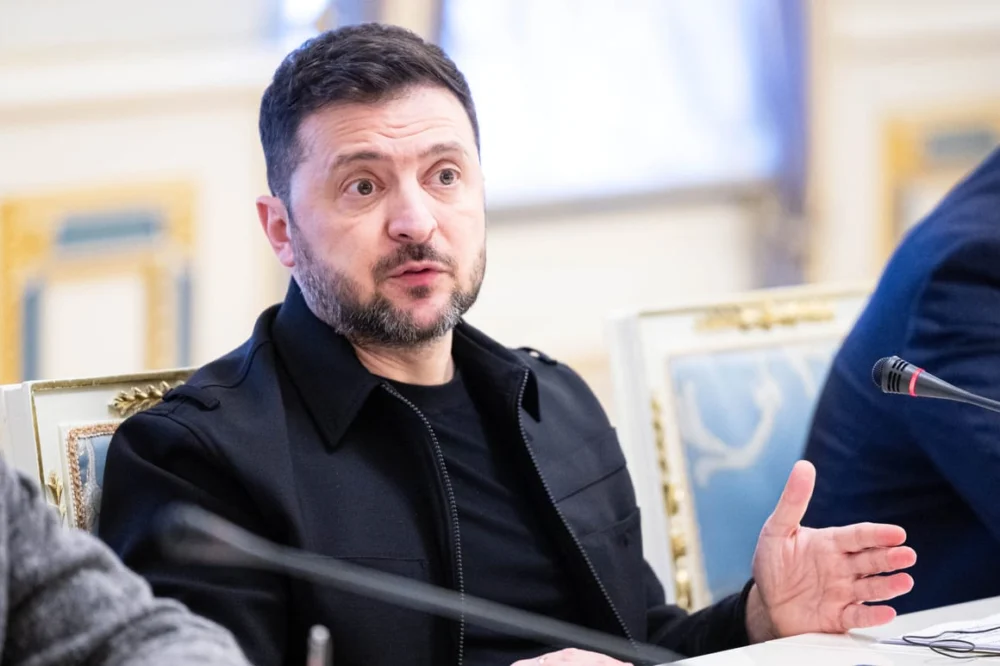
Ukrainian President Volodymyr Zelenskyy has issued a stark call for greater clarity from the United States regarding its commitment to guarantee any future peace settlement with Russia, urging Washington to exert more pressure on Moscow rather than on Kyiv. In an exclusive interview conducted in Kyiv on March 11, 2026, with Gordon Repinski for POLITICO and Welt, Zelenskyy articulated the profound fatigue among his populace after more than four years of war, yet reaffirmed their unwavering resolve against conceding territory to Russia. This appeal comes at a critical juncture for Ukraine, grappling with sustained military aggression, the complexities of international diplomatic support, and an impending financial crunch exacerbated by internal European Union disagreements.
Zelenskyy’s Plea for Clearer US Stance and Pressure on Russia
President Zelenskyy’s primary concern revolves around the ambiguous nature of potential security guarantees from the United States, which he views as crucial for any durable peace agreement. Discussions with envoys from the Trump administration in December 2025 had hinted at the U.S. willingness to provide such guarantees, yet, according to Zelenskyy, the specifics remain elusive. "Be honest. For us, it’s very important, but we don’t have a clear answer," he stated. This uncertainty creates a vacuum that could undermine Ukraine’s long-term stability and its ability to rebuild and deter future aggression. The Ukrainian leader emphasized the necessity of these guarantees being robust and enduring, questioning their longevity beyond individual presidential terms. "President Trump told me, ‘Do you trust that our security guarantees can be stronger than NATO?’ I said, ‘Yes, it depends on you for today. It depends on you, Mr. president. God bless if we will have stronger security guarantees than NATO. But what will be after you? And what will be after me?’" This underscores a critical apprehension in Kyiv: the potential for a future U.S. administration to withdraw or dilute security commitments, mirroring historical patterns of shifting geopolitical alliances and priorities. For such guarantees to be truly effective, Zelenskyy insisted, they must secure the bipartisan approval of the U.S. Congress and national parliaments, ensuring their resilience against future political changes.
Zelenskyy’s remarks also directly address the perceived shift in pressure dynamics from Washington. He explicitly called for increased international pressure on Russia, not on Ukraine, to facilitate negotiations. This statement directly contradicts recent sentiments from former U.S. President Donald Trump, who, since his return to the White House in January 2025, has publicly expressed frustration with Zelenskyy. Just a week prior to Zelenskyy’s interview, Trump reportedly told POLITICO that Ukraine’s leader needed to "get on the ball" and pursue a deal, suggesting a greater willingness on Putin’s part to negotiate a truce. This rhetoric, coupled with Trump’s past criticisms—including labeling Zelenskyy a "dictator" and blaming him for instigating the conflict despite Russia’s unprovoked invasion in February 2022—has created significant unease in Kyiv and among European allies.
Chronology of Escalating Tensions and Shifting Dynamics
The current geopolitical landscape has been shaped by a series of pivotal events:
- February 24, 2022: Russia launches its full-scale invasion of Ukraine, marking the beginning of the most significant conflict in Europe since World War II.
- Throughout 2022-2024: Ukraine receives substantial military and financial aid from Western allies, including the U.S. and EU, but often battles delays and debates over the scale and type of assistance.
- January 2025: Donald Trump assumes the U.S. presidency for a second term, immediately signaling a potential shift in U.S. foreign policy, particularly concerning military engagements and international alliances. His "America First" doctrine emphasizes domestic priorities and a reevaluation of existing commitments.
- December 2025: Talks between Ukrainian officials and Trump’s envoys suggest the possibility of U.S. security guarantees, but without concrete details on their scope or enforcement mechanisms.
- March 5, 2026: President Trump publicly urges Zelenskyy to "get on the ball" regarding peace negotiations, expressing greater confidence in Putin’s readiness for a truce.
- Early March 2026: The U.S. initiates sustained military action against Iran in the Gulf region, diverting significant military resources and attention.
- March 11, 2026: President Zelenskyy, in an interview with POLITICO and Welt, calls for clearer U.S. security guarantees, more pressure on Russia, and a "Plan B" for EU funding, while also confirming Ukraine’s offer of drone warfare expertise to U.S. allies in the Gulf.
This timeline illustrates a growing divergence in strategic priorities between Ukraine and its key allies, particularly the U.S., and highlights the mounting pressure on Kyiv to navigate a complex web of military, diplomatic, and financial challenges.
The EU Funding Crisis and Hungary’s "Blackmail"
Compounding the uncertainties surrounding U.S. security guarantees is a severe financial crisis brewing within the European Union’s support for Ukraine. President Zelenskyy has urged European leaders to devise a "Plan B" to secure Ukraine’s long-term funding, circumventing what he described as the "blackmail" of Hungarian Prime Minister Viktor Orbán. Orbán has consistently used his veto power to obstruct a promised EU loan of €90 billion, a critical lifeline for Ukraine’s economy and defense industry. This obstruction threatens to leave Ukraine critically short of cash within weeks, potentially jeopardizing its ability to sustain its war effort and maintain essential state functions.
The €90 billion loan, intended as a multi-year financial package, represents a significant portion of Ukraine’s anticipated external financing needs. Its blockage by Hungary, often citing concerns over the misuse of funds or demands for the unfreezing of EU funds earmarked for Hungary, has become a recurring diplomatic headache for Brussels. The unanimity rule within the EU on certain foreign policy and financial decisions grants disproportionate power to individual member states, enabling tactics like Orbán’s.
POLITICO reported on Wednesday that some Baltic and Nordic countries are actively developing a contingency plan. This "Plan B" aims to provide Ukraine with sufficient funds to remain afloat through the first half of this year, even if Orbán maintains his veto. This initiative underscores the deep concern among a subset of EU members about Ukraine’s stability and the broader implications for European security. However, such piecemeal solutions, while critical in the short term, do not address the systemic vulnerability created by Hungary’s consistent obstructionism or provide the long-term financial predictability Ukraine desperately needs.
Geopolitical Intersections: Iran and Military Aid Dilemmas

A new and complex layer has been added to the international support landscape for Ukraine by the U.S. decision to launch sustained military action against Iran. This development, while seemingly unrelated, has created both potential opportunities and significant anxieties for Kyiv.
Zelenskyy confirmed that Ukraine is offering to send teams of drone warfare specialists to the Gulf region to assist America’s allies in defending against Iranian bombardments, particularly with the uncrewed Shahed drones. These Iranian-designed drones have been extensively used by Russia against Ukraine for the past four years, giving Ukrainian forces invaluable operational experience in countering them. This offer represents a strategic overture, potentially allowing Ukraine to leverage its combat experience for diplomatic gain.
In return for this assistance, Zelenskyy hopes to secure a supply of top-of-the-range, American-made PAC-3 missiles for Patriot air defense systems. Patriot systems are crucial for Ukraine’s air defense, especially against ballistic and cruise missiles, and have proven highly effective in protecting Ukrainian cities and infrastructure. However, the increased U.S. military engagement in the Gulf immediately raises concerns about the availability of these critical assets. Zelenskyy voiced worries that the U.S. military’s own use of PAC-3 missiles to defend its interests and allies in the Gulf could lead to shortages for Ukraine. This highlights the precarious nature of military aid, which is often subject to evolving geopolitical priorities and the finite production capacities of defense industries.
No final deals have been agreed upon, and any negotiation is likely to be delicate, involving a careful balance of interests and capabilities. The situation underscores the interconnectedness of global conflicts and the challenges in maintaining consistent military support when resources are finite and demands are escalating across multiple theaters.
Ukrainian Resolve and the Human Cost of War
Despite the mounting external pressures and internal challenges, President Zelenskyy reiterated the unwavering spirit of the Ukrainian people. He acknowledged that his people were "tired" after more than four years of brutal conflict. The human toll of the war has been immense, with tens of thousands of casualties, millions displaced, and vast swathes of the country devastated. The economic impact has been catastrophic, with GDP shrinking significantly and critical infrastructure heavily damaged. Yet, he stressed that morale remained high, and Ukrainians were not prepared to accept Russia’s ultimatums, particularly the demand to cede vast tracts of land in the east. This resolute stance reflects a deep-seated commitment to national sovereignty and territorial integrity, forged in the crucible of war.
Zelenskyy’s personal animosity towards Russian President Vladimir Putin was also confirmed, echoing a sentiment often attributed to him by Trump. "Of course, I think we hate each other," Zelenskyy stated, adding, "In this he [Trump] is right. Not in everything." This raw emotion underscores the profound personal and national stakes involved in the conflict, transcending mere political differences.
Broader Implications for International Security and Alliances
The confluence of these issues carries significant implications for international security and the future of alliances. The ambiguity surrounding U.S. security guarantees, especially from a Trump administration that has often questioned the value of multilateral institutions like NATO, creates uncertainty for all U.S. allies. If Ukraine, a key partner facing direct aggression, cannot secure clear and binding commitments, it raises questions about the reliability of U.S. assurances more broadly.
The EU’s struggle to provide consistent financial aid due to the actions of a single member state also exposes a fundamental weakness in its collective security and foreign policy mechanisms. The ability of countries like Hungary to hold critical aid hostage undermines the EU’s credibility as a united front and its capacity to respond effectively to crises on its doorstep. Should "Plan B" scenarios become the norm, it could fragment EU efforts and create a less cohesive approach to supporting Ukraine.
Furthermore, the diversion of U.S. military assets and attention to the Gulf highlights the challenges of managing multiple global crises simultaneously. Resources, particularly advanced military hardware like Patriot missiles, are not limitless. Decisions made in one theater can have direct, tangible consequences for ongoing conflicts elsewhere, forcing difficult choices upon policymakers and potentially impacting the outcomes of vital struggles like Ukraine’s defense.
The current situation represents a critical test for the international community’s resolve and capacity to support a nation under existential threat. Ukraine’s ability to withstand Russian aggression and negotiate a durable peace hinges not only on its own resilience but also on the clarity, consistency, and depth of its allies’ commitments—commitments that appear increasingly subject to political fluctuations and competing global priorities. The coming months will be pivotal in determining whether these challenges can be overcome, or if Ukraine will face an even more arduous path forward.