French Government Considers Temporary Margin Controls on Distributors Amidst Escalating Oil Prices Driven by Iranian Conflict, Rules Out Tax Cuts
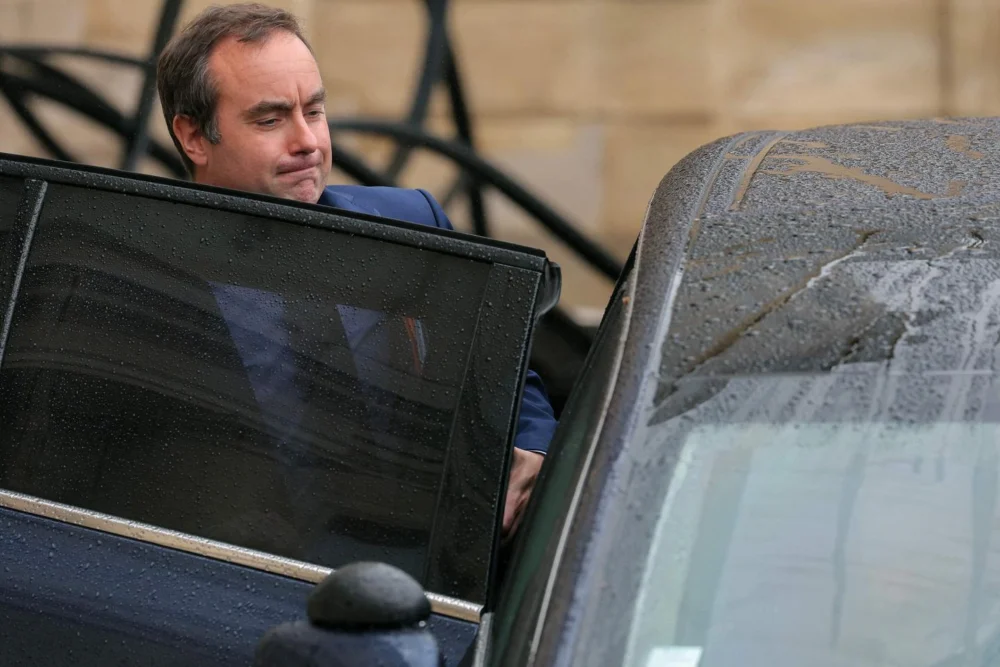
Facing intense pressure from across the political spectrum to shield consumers from a potential oil price shock exacerbated by the unfolding conflict in Iran, Prime Minister Sébastien Lecornu unveiled a preliminary action plan on Wednesday, March 11, 2026. The measures, discussed during a cabinet meeting, are designed to stabilize the volatile market without imposing additional burdens on state finances, notably including a temporary cap on service station margins. The government, while acting decisively, maintains hope for a swift resolution to the international crisis, thereby obviating the need for more fiscally demanding interventions.
Escalating Geopolitical Tensions and the Global Oil Market
The decision comes against a backdrop of rapidly escalating geopolitical tensions in the Middle East, specifically the burgeoning conflict in Iran that began in late February 2026. What started as localized skirmishes quickly broadened into a regional confrontation, disrupting oil production and transit routes in the Persian Gulf, a vital artery for global energy supplies. The Strait of Hormuz, through which a significant portion of the world’s seaborne oil passes, has seen increased naval activity and threats, leading to an immediate and dramatic surge in crude oil prices. Within days of the initial escalation, benchmark Brent crude futures soared by over 20%, breaching the critical $90 per barrel mark and demonstrating extreme volatility. This sudden spike has triggered widespread alarm among importing nations, particularly in Europe, which remains heavily reliant on global oil markets. Analysts at major financial institutions, including the International Energy Agency (IEA) and the Organisation for Economic Co-operation and Development (OECD), had warned that sustained conflict could push prices well above $120 per barrel, threatening to ignite a global inflationary spiral and potentially trigger a recession. The specter of a full-blown energy crisis, reminiscent of the 1970s, loomed large over international markets and national economies alike.
France’s Proactive Stance Amidst Domestic Pressure
In France, the ripple effects of these global dynamics were felt almost immediately at the pump, with petrol and diesel prices reaching record highs. Consumer purchasing power, already strained by persistent inflation, faced an unprecedented threat. This situation galvanized opposition parties, environmental groups, and consumer associations, all calling for urgent government intervention. The Socialist Party proposed a blanket reduction in fuel taxes, while the far-right National Rally advocated for a nationalization of energy distribution. The Green Party, meanwhile, pushed for accelerated investment in renewable energy and public transport to reduce dependency on fossil fuels.
Prime Minister Lecornu’s administration, however, has been steadfast in its commitment to fiscal prudence. Finance Minister Bruno Le Maire had repeatedly emphasized the need to avoid measures that would further inflate the national debt, which had already swelled significantly in the wake of the post-pandemic recovery efforts. The government’s strategy, therefore, focused on targeted interventions that would directly address market distortions without incurring substantial public expenditure. The proposed temporary capping of distributor margins emerged as a central pillar of this approach, aiming to absorb some of the price shock before it fully reaches the consumer.
The Mechanism of Margin Control: A Historical Parallel
The concept of temporarily capping distributor margins is not new to French economic policy. Prime Minister Lecornu explicitly referenced the precedent set by Michel Rocard’s government in 1990 during the first Gulf War. At that time, facing a similar surge in oil prices following Iraq’s invasion of Kuwait, Rocard’s administration implemented a temporary freeze on retail fuel prices to prevent speculative price gouging and stabilize the domestic market. The measure, while controversial among distributors, was credited with mitigating the immediate impact on household budgets during a period of significant uncertainty.
Under the current proposal, the government would establish a maximum profit margin that service stations and fuel distributors could apply to their wholesale acquisition costs. This cap would be temporary, with its duration tied to the volatility of global crude prices and the resolution of the Iranian conflict. The Ministry of Economy and Finance, in coordination with the Directorate General for Competition, Consumer Affairs and Fraud Control (DGCCRF), would be responsible for monitoring compliance and imposing penalties for violations. The government argues that this targeted intervention prevents excessive profiteering during a crisis, ensuring that the burden of rising international prices is not unfairly passed on to consumers by domestic intermediaries. Critics, however, warn that such a measure could disincentivize investment in the distribution sector, potentially leading to supply shortages or reduced service quality in the long run, particularly for independent operators with tighter margins. Industry representatives from the Union Française des Industries Pétrolières (UFIP) expressed "serious concerns" about market distortion and the potential for a "black market" if price controls become too stringent, urging the government to engage in thorough consultation before implementation.
Rejection of Tax Cuts: A Matter of Fiscal Responsibility

While considering margin controls, the French government has firmly ruled out any reduction in fuel taxes, a common demand from opposition parties and a measure often employed in other European countries. Prime Minister Lecornu reiterated the government’s stance that tax cuts, while offering immediate relief, are fiscally unsustainable and ultimately counterproductive. "Reducing fuel taxes would cost the state billions of euros, directly impacting our ability to fund essential public services like healthcare, education, and national defense," he stated during a press conference following the cabinet meeting. "Moreover, such a measure offers only temporary respite and risks sending the wrong signal regarding our long-term commitment to energy transition and fiscal responsibility."
The government’s position is underpinned by several considerations. Firstly, the substantial revenue generated from fuel taxes plays a crucial role in balancing the national budget. Diverting these funds would necessitate either increased borrowing or cuts in other vital areas. Secondly, there is an argument that tax cuts could inadvertently stimulate demand for fossil fuels, undermining France’s ambitious climate targets and its strategy for reducing reliance on carbon-intensive energy sources. Thirdly, experience from past crises has shown that tax reductions are often slow to translate into lower pump prices, with distributors sometimes absorbing the difference, thereby negating the intended benefit for consumers. Instead, the government prefers targeted support mechanisms for the most vulnerable households, such as energy vouchers or specific transport aid, which it deems more efficient and less distortive than broad tax cuts.
International Coordination and Strategic Reserves Release
Complementing France’s domestic initiatives, the first phase of the action plan also involves a significant coordinated international effort to stabilize the global oil market. The member countries of the International Energy Agency (IEA), including France, collectively decided on Wednesday to progressively release 400 million barrels of crude oil from their strategic reserves onto the market. This unprecedented volume marks the largest coordinated release since the IEA’s inception in 1974, underscoring the severity of the current crisis.
The IEA, established in response to the 1973 oil crisis, serves as a watchdog for global energy security and facilitates collective action during supply disruptions. Its 31 member countries hold emergency oil stocks equivalent to at least 90 days of net oil imports. The decision to tap into these reserves was made after emergency consultations, with major contributors expected to include the United States, Japan, Germany, and South Korea, alongside France. The aim is to inject additional supply into the market, thereby easing upward price pressure and signaling to producers that consuming nations are prepared to act decisively to ensure energy security. However, despite the announcement of this massive destocking, crude oil prices remained stubbornly high on Wednesday afternoon, with Brent crude hovering above $90 per barrel. This suggests that while the measure provides a temporary buffer, market participants remain deeply concerned about the long-term supply outlook given the ongoing geopolitical uncertainties and the potential for further escalation in the Middle East. Analysts caution that while the release offers some relief, it addresses symptoms rather than the root cause of the crisis, which is the perceived threat to future supply.
Chronology of Escalation and Response (February – March 2026)
- Late February 2026: Initial reports of border skirmishes and growing tensions between Iran and regional adversaries. Oil prices begin to edge up.
- Early March 2026: Conflict in Iran escalates rapidly, with major military engagements reported. Concerns about disruption to global oil supplies intensify. Brent crude surpasses $80/barrel.
- March 4, 2026: G7 leaders hold emergency virtual summit to discuss the geopolitical situation and its economic fallout. Calls for coordinated action on energy markets begin.
- March 7, 2026: Retail fuel prices in France reach new highs. Opposition parties intensify calls for government intervention, including tax cuts.
- March 9, 2026: IEA convenes an emergency meeting of its governing board to discuss strategic oil reserves. Rumors of a coordinated release begin to circulate.
- March 10, 2026: French Prime Minister Lecornu holds high-level consultations with economic ministers and industry representatives to explore policy options.
- March 11, 2026:
- Morning: Cabinet meeting in Paris where Prime Minister Lecornu outlines the government’s preliminary action plan.
- Afternoon: IEA formally announces the coordinated release of 400 million barrels from strategic reserves.
- Late Afternoon: Prime Minister Lecornu holds a press conference to detail France’s participation and domestic measures, including the consideration of temporary margin controls for distributors. Brent crude remains above $90/barrel despite the announcements.
Broader Economic and Political Implications
The French government’s cautious yet firm approach underscores the delicate balance between protecting consumers and maintaining fiscal discipline during a period of global economic instability. The decision to consider margin controls reflects a willingness to intervene in market mechanisms, albeit temporarily, when deemed necessary to prevent undue hardship. This move could potentially set a precedent for future crises, signaling a shift towards more direct regulatory interventions rather than relying solely on market forces or broad fiscal stimuli.
Economically, the success of these measures will depend on their effectiveness in curbing domestic price inflation without disrupting supply chains or deterring necessary investment. Should the conflict in Iran persist or intensify, the government may be forced to reconsider its "no cost to the state" directive, potentially leading to more substantial subsidies or targeted aid programs. The political implications for the Lecornu government are also significant. By taking a visible stand against potential profiteering and engaging in international cooperation, the administration aims to project an image of decisive leadership. However, the efficacy of these measures will be closely scrutinized by a public already weary of economic uncertainty, and any perceived failure to stabilize prices could fuel public discontent and empower opposition movements.
The coming weeks will be crucial as the geopolitical situation evolves and the impact of these initial interventions becomes clearer. The government’s hope for a swift resolution to the international crisis remains fervent, as a prolonged period of high energy prices would undoubtedly necessitate a far more comprehensive and potentially painful set of economic decisions for France and indeed, for the global economy.