US Marine Corps Advances Next-Generation Amphibious Combat Power with Successful Water Testing of Advanced Reconnaissance Vehicle Prototypes
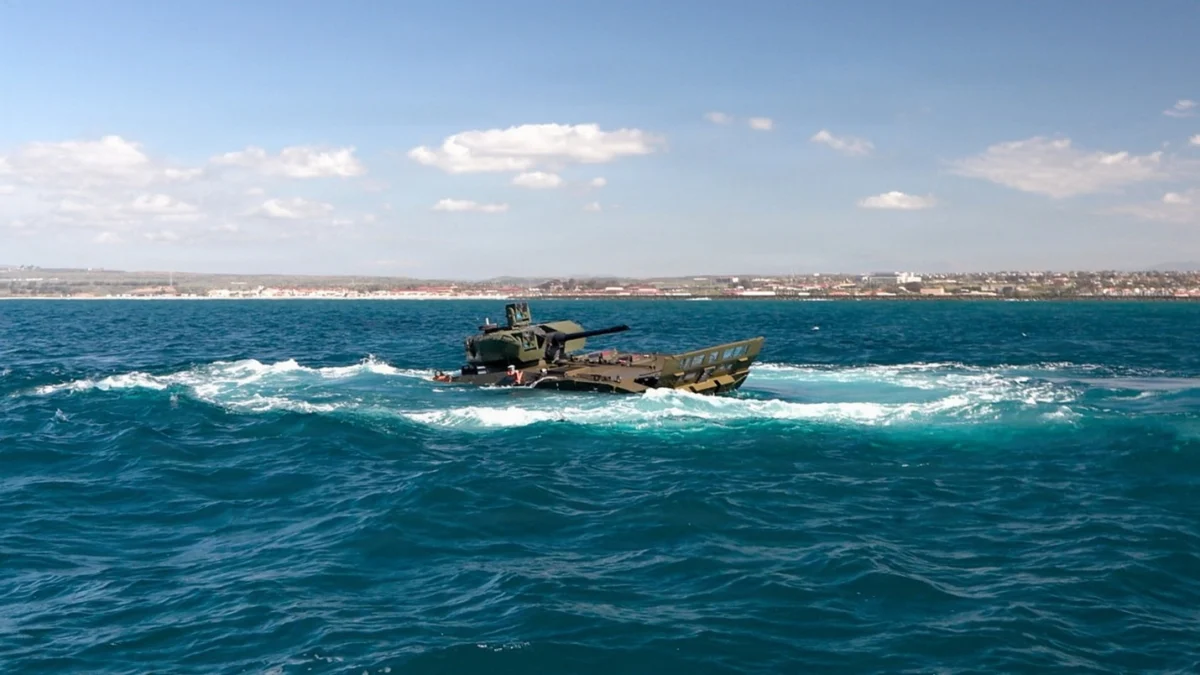
The United States Marine Corps has achieved a significant milestone in its multi-decade effort to modernize its ground reconnaissance capabilities, as the next-generation vehicles designed to replace the aging Light Armored Vehicle (LAV) fleet successfully completed their inaugural water-based performance trials. Conducted throughout January and February at Camp Pendleton, California, these rigorous tests focused on the Advanced Reconnaissance Vehicle (ARV) variant equipped with a 30mm autocannon, known as the ARV-30. The trials represented a critical hurdle for the two primary competitors in the program—Textron Systems and General Dynamics Land Systems (GDLS)—as they move toward a final down-select process expected to conclude by 2030. These evaluations demonstrated not only the amphibious viability of the prototypes across varying sea states but also introduced sophisticated automation features intended to reduce the cognitive burden on operators during high-stakes maritime maneuvers.
The Evolution of Marine Corps Reconnaissance: From LAV to ARV
For more than forty years, the Light Armored Vehicle (LAV-25) has served as the tip of the spear for Marine Corps divisional reconnaissance. Originally fielded in the early 1980s, the LAV-25 was designed for a different era of warfare, emphasizing speed and light armor for land-based scouting missions. However, as the Marine Corps shifts its strategic focus toward the Indo-Pacific and the concept of Expeditionary Advanced Base Operations (EABO), the limitations of the legacy LAV fleet have become increasingly apparent. The modern battlefield demands greater survivability, advanced electronic warfare capabilities, and, most importantly, superior amphibious performance to navigate the complex littoral environments of the Pacific "First Island Chain."
The ARV program is a central pillar of the Marine Corps’ "Force Design 2030" initiative. This modernization strategy seeks to transform the Corps into a more agile, technologically advanced force capable of operating within the reach of an adversary’s long-range precision fires. The ARV is envisioned as a "battlefield quarterback," a platform that does more than just scout; it is intended to serve as a mobile sensor and communications hub, integrating unmanned aerial systems (UAS) and advanced digital networking to provide real-time intelligence to the wider joint force.
High-Stakes Testing at Camp Pendleton: Water Entry and Maneuverability
The recent testing phase at Camp Pendleton was designed to push the ARV prototypes to their limits in the transition from land to sea. A critical component of these trials involved high-speed water entry, a maneuver that tests the structural integrity and hydrodynamic stability of the vehicle. During these sessions, the ARV-30 entered the water at speeds reaching 25 miles per hour. Phil Skuta, GDLS’s Director of Strategy and Business Development for the Marine Corps and Navy, noted that these entries created massive water plumes, yet the vehicles maintained stability—a vital requirement for ensuring that the crew and internal electronics remain protected during rapid deployments from ship to shore.
Once in the water, the prototypes were subjected to a five-kilometer swim course. This portion of the test evaluated the vehicles’ ability to maintain a steady course and execute tight maneuvers in a maritime environment. The ability to pivot and turn within a small radius is essential for river crossings and navigating cluttered coastal waters where obstacles or enemy fire may necessitate sudden changes in direction. Furthermore, the crews practiced turret manipulation while afloat. Rotating a heavy 30mm autocannon turret significantly shifts the vehicle’s center of gravity; the testing confirmed that the ARV could maintain its balance and target stabilization even as the sea state fluctuated.
Innovations in Automation: The GDLS "Autotrim" Function
One of the most notable technological advancements revealed during the GDLS interview was the introduction of an "autotrim" function. In traditional amphibious vehicles, maintaining a straight heading in the water can be an exhausting task for the driver, who must constantly fight currents, wind, and waves using a manual joystick. The GDLS prototype aims to automate this process. Similar to an aircraft’s autopilot or a modern car’s lane-keeping assist, the autotrim feature allows the crew to set a specific azimuth or course. The vehicle’s onboard computers then handle the minute adjustments required to stay on that heading.
According to Skuta, this automation is not merely a matter of convenience; it is a tactical necessity. By outsourcing the mechanical task of driving to the vehicle’s software, the crew can redirect their focus toward the mission at hand—monitoring sensor feeds, coordinating with unmanned systems, and scanning the horizon for enemy threats. This "reduced cognitive load" is a recurring theme in modern military procurement, as the complexity of multi-domain operations threatens to overwhelm human operators. The autotrim function is viewed as a foundational step toward fully robotic or semi-autonomous amphibious operations in the future.
Safety Protocols and the Legacy of the 2020 AAV Tragedy
The shadow of past failures looms large over the ARV program. In July 2020, a tragic accident involving an Assault Amphibious Vehicle (AAV) off the coast of San Clemente Island resulted in the deaths of eight Marines and one sailor. Investigations later revealed that a malfunctioning bilge pump and inadequate safety training contributed to the sinking. Consequently, water safety and emergency redundancy have become paramount in the development of the ARV.
During the Pendleton trials, GDLS demonstrated a robust bilge pump system designed to handle catastrophic flooding. In a controlled "shoreside" demonstration, the ARV-30 was intentionally flooded to trigger safety sensors. The system responded by automatically pumping water out at high pressure—a visual display intended to reassure Marine Corps leadership of the vehicle’s resilience. These safety features are integrated into the vehicle’s core architecture, ensuring that even if the primary systems are compromised, the crew has a significantly higher chance of survival compared to legacy platforms.
A Tale of Two Designs: Textron’s Cottonmouth vs. GDLS’s 8-Wheeler
The competition for the ARV contract features two distinct design philosophies. Textron Systems has put forward the "Cottonmouth," a 6×6 vehicle specifically engineered for the Marine Corps’ requirements. The 6-wheel configuration is often praised for its lighter weight and potential for greater agility in certain terrains. In contrast, the GDLS entry utilizes an 8×8 configuration, similar to the existing Stryker family of vehicles but heavily modified for amphibious use. The 8-wheel design typically offers better weight distribution, higher payload capacity, and improved stability in the water, though often at the cost of a larger physical footprint.
Both companies are vying to provide the Marine Corps with three distinct variants of the ARV:
- ARV-30: The lethality variant, featuring a 30mm autocannon for direct fire support and self-defense.
- C4/UAS: A Command, Control, Communications, and Computers variant that acts as a hub for Unmanned Aircraft Systems, focusing on electronic warfare and reconnaissance.
- Logistics Variant: Designed for resupply missions, ensuring that distributed units can remain operational in contested environments.
Timeline and Future Procurement
The road to the final selection is structured to ensure that the chosen platform is fully matured before mass production begins. Following the successful completion of these initial water tests, both Textron and GDLS are expected to receive contracts within the current fiscal quarter for the production of 16 additional prototypes each. These 32 vehicles will undergo several years of "force-on-force" testing, durability trials, and integration with the Marine Corps’ digital architecture.
The final "down-select," where one company is chosen as the primary contractor, is slated for approximately 2030. This long lead time reflects the complexity of the ARV’s mission. The Marine Corps is not just buying a vehicle; it is buying a sophisticated nodes-based system that must remain relevant for the next 30 to 40 years.
Strategic Implications: Redefining Littoral Combat
The success of the ARV testing signals a shift in how the Marine Corps intends to fight in the coming decades. By combining the speed of a ground vehicle with the buoyancy of a boat and the intelligence of a mobile command center, the ARV addresses a critical gap in the U.S. military’s ability to operate in "contested littorals."
The ability to conduct high-speed water entries and fire accurately while afloat allows Marines to transition seamlessly from ship-to-shore and across island chains without waiting for heavy engineering assets to build bridges or landing docks. This unpredictability is a core component of the Marine Corps’ strategy to complicate an adversary’s defensive planning. Furthermore, the inclusion of 30mm autocannons provides a level of organic firepower that far exceeds the machine guns typically found on reconnaissance vehicles, allowing ARV units to suppress enemy positions while waiting for heavier reinforcements.
Conclusion
As the Marine Corps continues to refine its role in a period of great power competition, the Advanced Reconnaissance Vehicle stands as a symbol of the service’s technological evolution. The recent tests at Camp Pendleton have provided a glimpse into a future where Marine units are more autonomous, more lethal, and safer than ever before. While the 2030 production goal remains years away, the "thumbs up" from the Marines observing the Pendleton trials suggests that the ARV is on the right track to becoming the cornerstone of 21st-century amphibious reconnaissance. Through a combination of rigorous safety standards, innovative automation, and a commitment to multi-domain connectivity, the ARV program is poised to ensure that the Marine Corps remains the world’s premier crisis-response force.

Related Posts
Pentagon Forges Landmark Seven-Year Agreements with Boeing and RTX to Accelerate Standard Missile-3 Production and Stabilize Defense Supply Chains
Boeing Unveils Ultra Low-Cost Seeker to Enhance Missile Inventory and Combat Cost Challenges in Modern Warfare