Epstein Scandal: UK Ambassador Peter Mandelson Failed Security Vetting
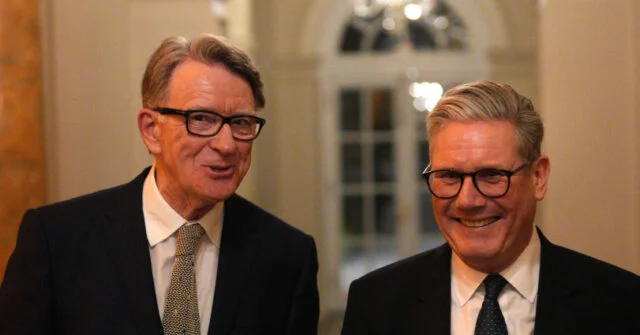
British Prime Minister Sir Keir Starmer is facing intense pressure to resign following revelations that his appointee for British Ambassador to the United States, Peter Mandelson, was initially refused security clearance by intelligence agencies, a decision subsequently overruled by the Foreign Office. This unfolding political crisis, described by opposition parties as the most serious scandal of the current government’s term, has led to urgent demands for Starmer’s departure, with accusations that he "blatantly lied" to Parliament and the public about the vetting process.
A Scandal Unfolds: Mandelson’s Appointment Under Scrutiny
The controversy centres on the appointment of Peter Mandelson, a veteran Labour grandee with a long and often contentious political career, to one of the UK’s most crucial diplomatic posts. Mandelson, whose name has resurfaced in connection with the late financier Jeffrey Epstein, was announced as Ambassador to Washington in 2025. However, a recent investigation by The Guardian, published on April 16, 2026, revealed a critical oversight in the official narrative: the vetting process, which concluded on January 28, 2025, had resulted in a rejection of Mandelson’s clearance. This decision, described as highly unusual and politically charged, was then reportedly overruled by the Foreign Office, paving the way for his appointment despite the security concerns.
The implications of this revelation are profound. Starmer had previously assured Parliament in February 2026, following fresh disclosures of Jeffrey Epstein’s emails, that Mandelson had undergone and received "clearance" from independent security services for the ambassadorial role. These statements are now being directly challenged by the documented failure of Mandelson’s vetting, prompting accusations that the Prime Minister deliberately misled the House of Commons.
Peter Mandelson: A History of Controversy
To understand the gravity of the current scandal, it is essential to contextualise Peter Mandelson’s background. Often dubbed the "Prince of Darkness" during his time in Tony Blair’s New Labour government, Mandelson is a figure synonymous with political strategy and controversy. His career has been marked by a series of high-profile resignations from ministerial posts, predominantly over issues of financial propriety and transparency.
In 1998, he resigned as Secretary of State for Trade and Industry after it emerged he had received an undeclared home loan of £373,000 from Geoffrey Robinson, a fellow minister and millionaire businessman, which he had failed to disclose. He returned to government but resigned again in 2001 from his position as Secretary of State for Northern Ireland following allegations, which he denied, that he had helped an Indian businessman, Srichand Hinduja, obtain a British passport in exchange for donations to the Millennium Dome project. Despite being cleared of any wrongdoing by an inquiry, the perception of impropriety lingered. Mandelson later served as European Commissioner for Trade and then returned to the UK government under Gordon Brown as First Secretary of State and Secretary of State for Business, Innovation and Skills, demonstrating a remarkable ability to navigate political storms. His appointment to such a sensitive diplomatic role, given this history, was already viewed by some as a calculated risk.
The Shadow of Jeffrey Epstein
Adding another layer of complexity and public concern to Mandelson’s appointment is his documented association with the convicted sex offender Jeffrey Epstein. While Mandelson’s links to Epstein have been publicly acknowledged for some time, the release of fresh tranches of Epstein’s emails earlier this year (2026) appeared to show a relationship that was "deeper and longer-lasting than previously publicly known." More critically, these emails also "appeared to display that lies had been told" regarding the extent and nature of their interactions.
The Epstein scandal, which exposed a vast network of powerful individuals connected to the financier’s illicit activities, has had global repercussions. For any public figure, a close association with Epstein raises significant questions about judgment, ethics, and potential vulnerabilities. In Mandelson’s case, the situation has escalated to a police investigation into alleged charges of misconduct in public office. The core allegation is that Mandelson emailed confidential British government documents to Epstein while serving as a government minister under Prime Minister Gordon Brown. If proven, this would constitute a severe breach of national security and public trust, making the security services’ initial rejection of his clearance entirely comprehensible.
Chronology of a Crisis:
- 2025 (Date not specified): Prime Minister Sir Keir Starmer announces Peter Mandelson’s appointment as British Ambassador to the United States.
- January 28, 2025: The security vetting process for Mandelson concludes, resulting in a rejection of his clearance.
- Post-January 28, 2025: The Foreign Office overrules the security services’ rejection, and Mandelson’s appointment proceeds.
- Early 2026 ("Earlier this year"): Fresh tranches of Jeffrey Epstein emails are released, heavily featuring Mandelson’s name and suggesting a deeper relationship and potential misrepresentations.
- February 2026: In response to questions about the Epstein emails and Mandelson’s suitability, Prime Minister Starmer publicly states that Mandelson underwent "security vetting carried out independently by the security services, which is an intensive exercise that gave him clearance for the role." He reiterates that "you have to go through that before you take up the post."
- April 16, 2026: The Guardian newspaper reveals, citing "multiple sources," that Mandelson’s security clearance was rejected but subsequently overruled by the Foreign Office.
- April 16, 2026 onwards: Opposition parties demand Starmer’s resignation, accusing him of misleading Parliament. A police investigation into Mandelson for misconduct in public office is confirmed.
The Security Vetting Process: A Pillar of National Security
The security vetting process in the UK is a critical component of national security, designed to assess the loyalty, trustworthiness, and reliability of individuals holding sensitive positions or with access to classified information. For high-level appointments such as an ambassador, the process typically involves comprehensive checks conducted by intelligence agencies like MI5. These checks delve into an individual’s background, financial affairs, personal relationships, foreign contacts, and any potential vulnerabilities that could be exploited by hostile actors.
There are different levels of clearance, from Counter-Terrorist Check (CTC) to Security Check (SC) and Developed Vetting (DV), with ambassadorial roles usually requiring the highest level of DV due to the extensive access to sensitive information and foreign interactions involved. A rejection at this level is exceedingly rare and signifies significant concerns about an individual’s suitability. While technically permissible for a political appointee’s vetting decision to be overruled by a minister, such an action is almost unprecedented for a position of this strategic importance and carries immense risk. It suggests that political expediency was prioritised over the independent judgment of security professionals, raising serious questions about the integrity of the process and the safeguarding of national secrets.
Political Fallout and Demands for Resignation
The revelations have ignited a political firestorm, with leaders from across the political spectrum uniting in their condemnation of Prime Minister Starmer. Nigel Farage, the Brexit pioneer and leader of the country’s top-polling political party, was among the first to call for Starmer’s resignation. Farage stated, "Keir Starmer said in February that the security services had given Mandelson ‘clearance for the role’. Now we discover that he has blatantly lied, the Prime Minister should resign."
Conservative leader Kemi Badenoch echoed these sentiments, asserting that it is now "known" that Starmer misled Parliament and must accordingly take "responsibility" for his actions. The hard-left Green Party also joined the chorus, issuing a strong statement: "Keir Starmer has lied and lied again over his decision to appoint Peter Mandelson and he must resign. Starmer told parliament ‘due process’ had been followed. This report makes clear that was untrue. He has tried to blame the vetting process, when in fact it is reported that a decision was taken to ignore a failed vetting. We need answers on what and when Starmer and David Lammy knew about this decision to overrule the vetting report." The Greens also pressed for the specific reasons behind Mandelson’s vetting failure to be disclosed, hinting that his Epstein connections might not be the "only skeleton in the closet."
Starmer’s Accountability Dilemma
Sir Keir Starmer ascended to power after the last UK General Election on a platform explicitly promising probity, thoroughness, and a "buck stops here" model of accountability. His political brand was meticulously crafted around restoring trust in public office after years of scandals under previous administrations. Critically, as leader of the opposition, Starmer had unequivocally stated his belief that a Prime Minister who misleads the House of Commons should resign. This historical stance now places him in an acutely precarious position, directly accused of the very conduct he once condemned.
The government’s initial defence, that Starmer was ignorant of the security services’ rejection and the subsequent overruling, appears increasingly untenable. The resignation of his chief of staff, Morgan McSweeney, a censorious anti-Breitbart News activist, earlier in the year is now being re-evaluated. McSweeney’s departure, at the time framed as a bid to "draw fire away from his boss," suggests an awareness within Downing Street of the escalating controversy and the need for a scapegoat. The question of what Starmer and Foreign Secretary David Lammy knew, and when they knew it, is now paramount. It strains credulity for a Prime Minister to claim ignorance of such a significant decision regarding a high-profile political appointee to a critical diplomatic role.
Broader Implications for Governance and Trust
The Mandelson scandal strikes at the heart of British governance and public trust. If a Prime Minister can overrule the independent judgment of security services for political convenience, it sets a dangerous precedent, potentially compromising national security and undermining the impartiality of the civil service. It also raises concerns about cronyism and the perception that rules do not apply to the politically well-connected.
For the UK’s international standing, particularly with the United States, the appointment of an ambassador with such a compromised security background and active police investigation could be problematic. It risks signaling a lack of seriousness or a disregard for established protocols, potentially impacting diplomatic relations.
The police investigation into Mandelson for misconduct in public office, specifically concerning the alleged sharing of confidential government documents with Jeffrey Epstein, runs parallel to the political crisis. The findings of this investigation could have far-reaching legal and political consequences, irrespective of Starmer’s fate.
Ultimately, the future of Sir Keir Starmer’s premiership now hinges on his ability to provide a convincing account of what transpired. The country awaits transparent answers regarding the rationale behind overruling a security rejection, the full extent of Mandelson’s association with Epstein, and crucially, what the Prime Minister himself knew. The current situation represents a profound test of the accountability and integrity that Starmer promised to restore to British politics. Without a credible explanation, the calls for his resignation are only set to intensify.

Related Posts
Democratic Candidates Must Moderate to Win General Elections, Says Rep. Greg Stanton
Lisa Demuth Secures Republican Gubernatorial Nomination in Minnesota, Defeating Trump-Endorsed Mike Lindell