
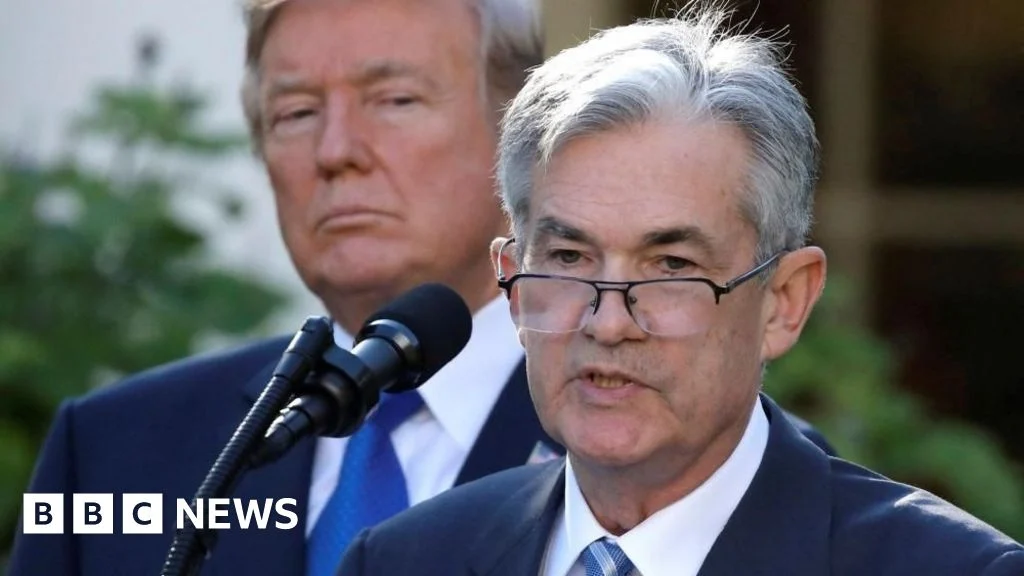
US justice department drops probe into Fed chairman Jerome Powell
The U.S. Justice Department has officially ceased its criminal investigation into Federal Reserve Chairman Jerome Powell regarding alleged building cost overruns, a move that comes amidst intense political pressure from the Trump administration and a looming Senate confirmation vote for Powell’s potential successor. Instead of a federal criminal inquiry, U.S. Attorney Jeanine Pirro announced that the matter would be transferred to an internal investigation spearheaded by the central bank’s own inspector general, effectively defusing a highly contentious dispute that had cast a shadow over the independence of the nation’s monetary authority. This decision marks a significant development in a long-standing and often acrimonious feud between President Donald Trump and Chairman Powell, culminating just as Powell’s term nears its conclusion and the Senate prepares to consider Trump’s nominee, Kevin Warsh, for the pivotal role.
The Dropped Investigation and Its Immediate Aftermath
The announcement by U.S. Attorney Jeanine Pirro, disseminated via her social media platform on X, confirmed the cessation of the criminal probe. While the Justice Department is stepping back, Pirro issued a caveat, stating she would not "hesitate to restart a criminal investigation should the facts warrant doing so." This conditional withdrawal suggests a tactical shift rather than a complete exoneration, maintaining a degree of oversight while removing the immediate threat of federal indictment. The Federal Reserve, adhering to its typical protocol regarding ongoing matters, declined to comment on the development.
The controversy centered on the multi-year, multi-million dollar renovation projects at the Federal Reserve’s two primary Washington D.C. facilities: the Marriner S. Eccles Building, which houses the Board of Governors, and the 1951 Constitution Avenue building. These ambitious "overhaul and modernization" efforts represent the first comprehensive upgrades since the buildings were originally constructed in the 1930s. The projects are extensive, reportedly involving critical infrastructure repairs, system modernizations, and the essential removal of hazardous materials such as asbestos and lead contamination, aiming to ensure the structural integrity and operational efficiency of these historic federal properties for decades to come. President Trump had publicly criticized these costs as exorbitant, framing them as a testament to alleged "fiscal mismanagement" within the Fed, a narrative that resonated with his broader critiques of Powell’s leadership.
A Political Stalemate Resolved? The Warsh Nomination and Senator Tillis
The timing of the Justice Department’s decision is particularly noteworthy given the current political climate surrounding the Federal Reserve. Chairman Powell’s term is set to expire on May 15, and President Trump has already put forward his preferred successor, Kevin Warsh, a former Federal Reserve governor with a background in economic policy and financial markets. Warsh’s nomination, however, had encountered a significant hurdle in the form of Senator Thom Tillis, a key Republican lawmaker whose support is crucial for securing a smooth confirmation in a closely divided Senate.
Senator Tillis had publicly withheld his support for Warsh, making it clear that his endorsement was contingent upon the Trump administration dropping its investigation into Powell. This highly unusual public demand by a senator highlighted the politicization of the Fed chairmanship and the Justice Department’s actions. Tillis’s stance effectively created a political impasse, linking the fate of the criminal investigation directly to the confirmation process for the next head of the nation’s central bank. With the Justice Department now backing down, the path for Warsh’s confirmation appears significantly clearer, suggesting a calculated concession by the administration to secure its preferred candidate.
White House spokesman Kush Desai issued a statement following the announcement, emphasizing the administration’s perspective. "American taxpayers deserve answers about the Federal Reserve’s fiscal mismanagement, and the Office of the Inspector General’s more powerful authorities best position it to get to the bottom of the matter," Desai stated. He continued, expressing unwavering confidence: "The White House remains as confident as before that the Senate will swiftly confirm Kevin Warsh as the next Federal Reserve Chairman to finally restore competence and confidence in Fed decision-making." This statement underscores the administration’s consistent narrative that the internal investigation is a more appropriate and effective mechanism for addressing its concerns about the Fed’s spending, while simultaneously reiterating its eagerness to install new leadership at the central bank.
Origins of the Feud: A Deep Dive into Trump-Powell Tensions
The Justice Department’s investigation, now suspended, was the latest flashpoint in a prolonged and often hostile relationship between President Trump and Chairman Powell. Despite Trump nominating Powell to the Fed chair in 2017 during his first term, their relationship quickly deteriorated over fundamental disagreements on monetary policy.
A Chronology of Conflict:
- 2017: Donald Trump nominates Jerome Powell, then a Fed governor, to replace Janet Yellen as Chair of the Federal Reserve. Powell is seen as a moderate Republican and a consensus choice.
- 2018-2019: The Fed, under Powell, continues a policy of gradual interest rate hikes, citing a strong economy and the need to preempt inflation. Trump vociferously objects, arguing that higher rates are stifling economic growth and undermining his administration’s policies. He publicly criticizes Powell, calling the Fed his "biggest threat."
- Mid-2019: As global economic headwinds emerge, the Fed reverses course and begins cutting rates. Despite this, Trump’s attacks intensify, with the president reportedly exploring ways to fire Powell, a move widely considered illegal and an unprecedented assault on central bank independence. He labels Powell a "knucklehead" and accuses him of "doing a lousy job."
- November 2020 – January 2021: Trump loses re-election but continues his rhetoric against Powell.
- January 2025: After returning to office, Trump immediately renews his calls for the Fed to lower interest rates, linking monetary policy directly to his economic agenda. He also reportedly revives discussions about replacing or even attempting to fire Powell.
- January 2026: In an extraordinary public move, Chairman Powell releases a video statement disclosing that the Justice Department had served the Fed with subpoenas and threatened a criminal indictment related to his Senate testimony concerning the building renovations. Powell explicitly calls the investigation "unprecedented" and attributes it to Trump’s anger over the Fed’s refusal to cut interest rates. He frames the investigation as a direct attack on the central bank’s independence.
- February – April 2026: The investigation continues, creating political uncertainty. Senator Thom Tillis links his support for Kevin Warsh’s nomination to the dropping of the Powell investigation.
- April 24, 2026: The Justice Department announces it is dropping the criminal probe, shifting the matter to the Fed’s internal inspector general.
Throughout this period, Trump, a former property developer, consistently advocated for a low interest rate environment, believing it stimulates borrowing, investment, and economic growth. He viewed the Fed’s rate hikes as counterproductive and a direct challenge to his administration’s efforts to boost the economy. Powell, on the other hand, consistently maintained that the Fed’s decisions were driven solely by economic data and the central bank’s dual mandate to achieve maximum employment and stable prices, free from political influence.
The Fed’s Independence Under Scrutiny
Powell’s January 2026 video, in which he publicly pushed back against the Justice Department’s investigation, marked a rare and significant moment in U.S. financial history. Central bank leaders typically avoid direct confrontations with sitting presidents, but Powell’s statements underscored the gravity of the situation. He warned that the very independence of the U.S. central bank was at stake.
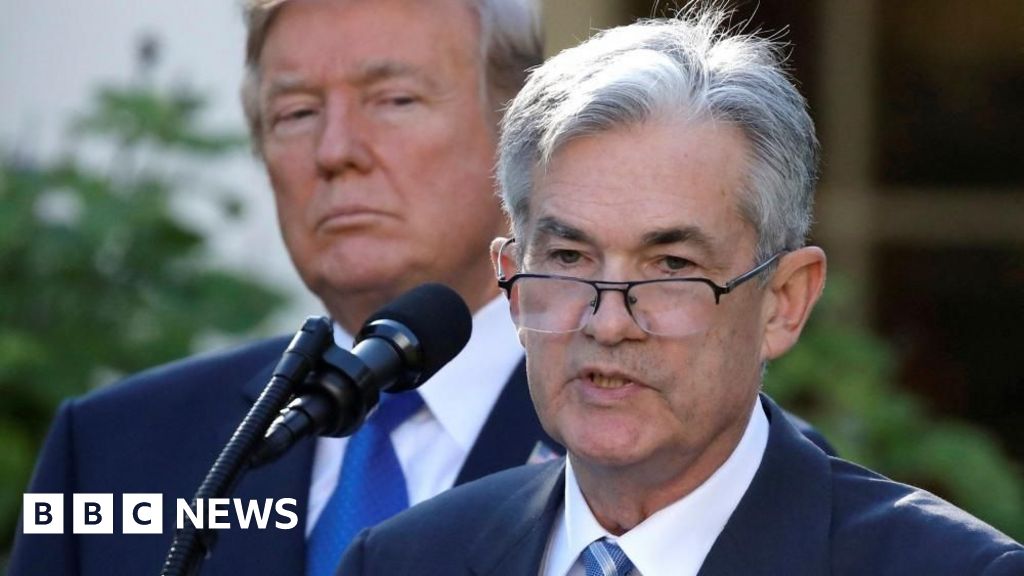
"This is about whether the Fed will be able to continue to set interest rates based on evidence and economic conditions, or whether instead monetary policy will be directed by political pressure or intimidation," Powell declared. This statement resonated deeply within financial markets and among economists, who view the Fed’s independence as sacrosanct for maintaining economic stability and investor confidence. The ability of the Fed to make tough, sometimes unpopular, decisions about interest rates without fear of political reprisal is considered a cornerstone of sound monetary policy. Lower interest rates generally make it cheaper for businesses and consumers to borrow, stimulating economic activity, while higher rates tend to cool an overheated economy and keep inflation in check. Political interference could lead to short-sighted policy decisions, potentially destabilizing the economy for electoral gain.
The Federal Reserve’s Dual Mandate and Renovation Projects
The Federal Reserve operates with a "dual mandate" from Congress: to achieve maximum employment and stable prices. To fulfill this, it employs monetary policy tools, primarily setting the federal funds rate, which influences borrowing costs throughout the economy. Beyond monetary policy, the Fed also plays a critical role in supervising banks, maintaining the stability of the financial system, and providing financial services to depository institutions and the U.S. government.
The buildings at the center of the dispute—the Eccles Building and the 1951 Constitution Avenue property—are integral to the Fed’s operations. The renovation projects, described as comprehensive "overhaul and modernisation," are not merely cosmetic. They are designed to address decades of wear and tear, bring facilities up to modern safety and environmental standards, and upgrade critical infrastructure that supports the Fed’s complex data systems and secure communications. The removal of hazardous materials like asbestos and lead contamination, for instance, is a non-negotiable requirement for ensuring the health and safety of hundreds of employees and visitors. While the specific budget figures for these multi-phase projects are not publicly detailed in granular form, such extensive renovations of historic, high-security federal buildings in a prime urban location are inherently costly, often running into hundreds of millions of dollars over several years. Accusations of "overruns" would typically require detailed auditing to substantiate, focusing on whether costs exceeded approved budgets or industry benchmarks for similar projects.
The Role of the Justice Department and Inspector General
The initial decision by the Justice Department to open a criminal investigation into the sitting Fed Chair was highly unusual, if not unprecedented, in modern U.S. history. Such probes typically involve allegations of serious misconduct or criminal activity. The subsequent decision to transfer the matter to the Federal Reserve’s Office of the Inspector General (OIG) shifts the nature of the inquiry significantly.
The Justice Department, led by the Attorney General, has broad authority to investigate and prosecute federal crimes. A criminal probe carries the weight of potential indictments and severe legal consequences. In contrast, the OIG is an independent oversight body within the Federal Reserve System. Inspectors General are tasked with promoting efficiency and effectiveness within their agencies and detecting and preventing waste, fraud, and abuse. They have substantial investigative powers, including the ability to subpoena documents and testimony, but their findings typically lead to recommendations for administrative action, policy changes, or, in cases of severe wrongdoing, referrals back to the Justice Department for criminal prosecution.
The White House’s assertion that the OIG possesses "more powerful authorities" in this context is debatable. While an OIG is adept at uncovering financial mismanagement and systemic issues, a criminal investigation by the Justice Department inherently carries greater prosecutorial power and the ability to bring charges against individuals. The shift thus appears to de-escalate the immediate legal threat to Chairman Powell while still allowing for an official review of the building costs, albeit one that is internal to the Fed and less likely to result in criminal charges unless egregious fraud is uncovered.
Implications for Monetary Policy and Future Leadership
The dropping of the criminal investigation has immediate and far-reaching implications. For Kevin Warsh, President Trump’s nominee, the path to confirmation is now considerably smoother. Senator Tillis’s condition has been met, likely ensuring his vote and potentially swaying other undecided Republicans. Warsh’s confirmation would usher in a new era at the Federal Reserve, one that is widely anticipated to be more aligned with the Trump administration’s preference for lower interest rates. This could lead to a more accommodative monetary policy stance, potentially aimed at stimulating economic growth, but also raising concerns among some economists about the long-term risk of inflation.
More broadly, this episode has sparked a critical debate about the sanctity of central bank independence. While the criminal probe has been dropped, the very act of initiating it, coupled with the explicit political pressure from the White House, has left an indelible mark. Financial markets generally value the Fed’s autonomy, viewing it as essential for predictable and evidence-based monetary policy. Any perception that the Fed’s decisions are subject to political coercion can introduce uncertainty, potentially impacting investor confidence and the stability of financial markets.
Broader Ramifications for Governance
This saga also highlights broader questions about the separation of powers and the extent of executive influence over independent government agencies. The President’s direct and public attacks on the Fed Chair, followed by a Justice Department investigation into a matter seemingly unrelated to monetary policy but strategically timed with policy disagreements, raises concerns about the weaponization of government agencies for political ends. While the Justice Department has maintained its independence in its decision-making, the timing and context of the investigation’s initiation and subsequent withdrawal are unlikely to be viewed in isolation by political observers and future historians.
Looking Ahead
Jerome Powell’s term as Federal Reserve Chairman concludes on May 15. He has indicated his intention to remain in post until his successor is confirmed by the Senate, ensuring a smooth transition. The focus will now shift to Kevin Warsh’s Senate confirmation hearings, where lawmakers will scrutinize his economic philosophy, views on Fed independence, and approach to monetary policy.
The internal investigation by the Fed’s Office of the Inspector General will proceed, with its findings likely to be made public in due course. While it may not carry the same dramatic weight as a criminal probe, it will still provide an official assessment of the renovation costs and management practices. For the Federal Reserve, the challenge will be to reaffirm its commitment to independence and transparency in the wake of such intense political scrutiny. For the U.S. political landscape, this episode serves as a stark reminder of the persistent tension between presidential power and the autonomy of critical institutions, a dynamic that will undoubtedly continue to shape governance in the years to come.

Related Posts
Zambia on Edge: Opposition Leader Arrested Amid Allegations of Insurrection Plot and Election Tensions

Rescuers search for survivors of powerful Indonesia earthquake

