Fragile Ceasefire Holds in Southern Lebanon Amidst Hopes for Lasting Peace as Khiam Remains Inaccessible
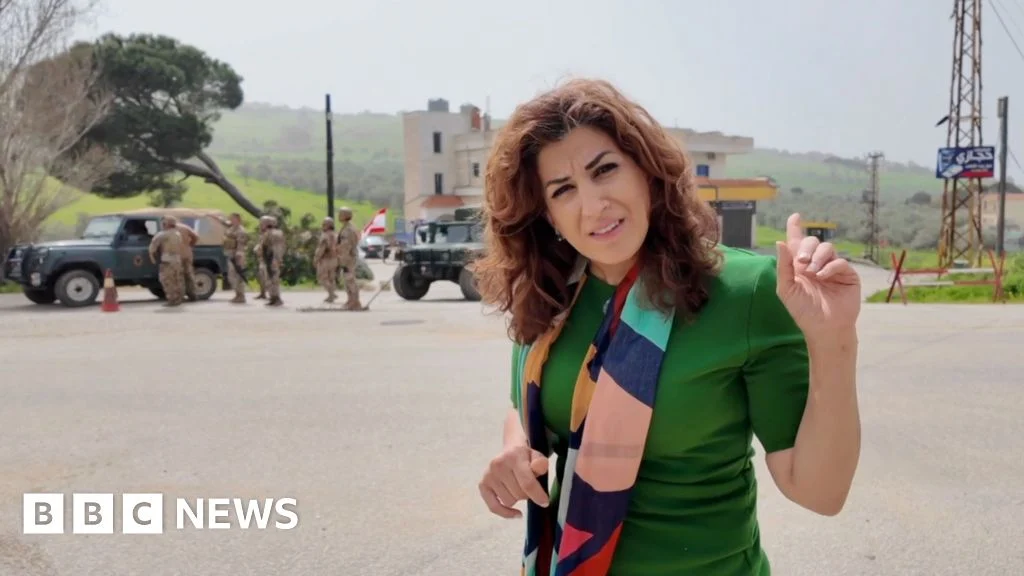
BBC Arabic’s correspondent Carine Torbey reports from the border town of Khiam, observing the delicate equilibrium as the ceasefire between Israel and Hezbollah in southern Lebanon enters its second day. The air, though quieter than the preceding weeks, still carries the heavy weight of recent conflict and an uncertain future. A palpable tension permeates the landscape, even as the immediate hostilities have ceased. The Lebanese army has established a robust barrier on the main arteries leading into Khiam, effectively preventing residents from returning to their homes. This proactive measure is a direct response to persistent reports of loud explosions continuing to be heard in towns that remain partly under Israeli occupation, raising significant concerns about unexploded ordnance, lingering skirmishes, or controlled detonations in sensitive zones. The civilian population, eager to assess the damage to their properties and retrieve essential belongings, is forced to wait, caught between the immediate cessation of violence and the long, arduous path to true safety and normalcy.
The Immediate Aftermath: A Town in Limbo
Khiam, a strategic town in the Marjeyoun District, has historically been a focal point of conflict and occupation. Its proximity to the Israeli border makes it inherently vulnerable to cross-border hostilities. During the recent escalation, which saw intense artillery exchanges, aerial bombardments, and sporadic ground incursions, Khiam bore the brunt of significant damage. Infrastructure, including homes, roads, and utilities, has been severely impacted. Residents, many of whom were displaced to safer areas further north, are now confronting the harsh reality of their town’s state. The Lebanese army’s cordon, while frustrating for those wishing to return, underscores the severe security risks that persist. Military spokespersons have indicated that the measure is temporary, pending comprehensive de-mining operations and a full security assessment of the area, particularly in light of the reported explosions from the adjacent occupied territories. These blasts, whose exact nature remains unconfirmed by independent observers, fuel anxieties about the stability of the ceasefire and the potential for residual dangers. Humanitarian organizations are on standby, coordinating with Lebanese authorities to gain access for needs assessments and initial aid distribution once the area is deemed sufficiently safe.
A New Phase: From Truce to Lasting Accord
On Friday, Lebanese President Joseph Aoun addressed the nation, declaring that his country was entering a "new phase" following the ceasefire. His optimistic pronouncement, broadcast from the Baabda Palace, suggested a vision that could transform the current temporary cessation of hostilities into a permanent peace settlement. This ambitious declaration reflects the profound desire within Lebanon for an end to the cyclical violence that has plagued its southern border for decades. President Aoun emphasized the need for comprehensive international guarantees and the full implementation of relevant United Nations resolutions to solidify any future agreement. He highlighted the devastating human and economic toll of the recent conflict, which displaced an estimated 120,000 people from southern Lebanon, inflicted damage estimated at hundreds of millions of dollars, and resulted in dozens of civilian casualties on both sides of the border. His call for a permanent peace settlement, while widely welcomed, also implicitly acknowledges the deep-seated complexities and the formidable diplomatic challenges that lie ahead.
Historical Roots of the Conflict: A Decades-Long Struggle
The conflict between Israel and Hezbollah is deeply entrenched in the geopolitical landscape of the Middle East, tracing its origins back to the 1982 Israeli invasion of Lebanon and the subsequent withdrawal in 2000. Hezbollah, meaning "Party of God," emerged in the early 1980s as a resistance movement against the Israeli occupation of southern Lebanon. Over the decades, it evolved into a powerful political party and a formidable armed group, wielding significant influence within Lebanon’s confessional political system. Its military wing, heavily supported by Iran, has developed a substantial arsenal, including rockets and anti-tank missiles, which it views as essential for defending Lebanese sovereignty against Israeli aggression.
The most significant direct confrontation prior to the recent escalation was the 2006 Lebanon War. That 34-day conflict resulted in over 1,000 Lebanese and 160 Israeli deaths, widespread destruction in southern Lebanon and parts of Beirut, and significant damage to northern Israeli towns. United Nations Security Council Resolution 1701, which ended the 2006 war, called for a full cessation of hostilities, a withdrawal of Israeli forces from Lebanon, and the deployment of the Lebanese Armed Forces and an expanded United Nations Interim Force in Lebanon (UNIFIL) in the south. It also mandated the establishment of a zone free of any armed personnel, assets, and weapons other than those of the Lebanese armed forces and UNIFIL. However, the full implementation of Resolution 1701 has remained contentious, with ongoing disputes over border demarcation, the presence of Hezbollah’s military infrastructure south of the Litani River, and Israeli overflights of Lebanese airspace. These unresolved issues have consistently fueled cross-border tensions, leading to periodic flare-ups and the latest round of intense fighting.
Chronology of Escalation and De-escalation
The recent conflict began approximately three weeks prior to the current ceasefire, triggered by a series of escalating incidents along the Blue Line, the demarcation line between Lebanon and Israel.
- Day 1-3 (Initial Escalation): A border incident, possibly involving a cross-border infiltration attempt or an exchange of fire over disputed territory, rapidly escalated. Hezbollah launched a volley of rockets towards northern Israel, prompting retaliatory Israeli airstrikes and artillery fire targeting Hezbollah positions and infrastructure in southern Lebanon.
- Day 4-10 (Intensification): Both sides significantly increased the intensity of their attacks. Israeli warplanes struck deeper into Lebanese territory, while Hezbollah expanded its rocket range and utilized anti-tank guided missiles against Israeli targets. Civilian areas on both sides began to experience significant impact, leading to initial waves of displacement.
- Day 11-18 (Peak Conflict and Diplomatic Efforts): The conflict reached its peak, with daily exchanges of hundreds of projectiles. International concern mounted, leading to urgent diplomatic efforts spearheaded by the United Nations, the United States, and France. Envoys traveled between Beirut, Tel Aviv, and regional capitals, attempting to broker a de-escalation. Calls for an immediate ceasefire intensified from various world leaders and humanitarian organizations.
- Day 19-20 (Ceasefire Agreement): Following intense, round-the-clock negotiations, often conducted through indirect channels, a fragile ceasefire agreement was reached. The terms included a mutual cessation of hostilities, an agreement for UNIFIL to monitor compliance, and provisions for humanitarian access. Crucially, discussions regarding the longer-term implementation of Resolution 1701 and broader border security were deferred to a subsequent diplomatic track.
- Day 21 (Ceasefire Day 1): The ceasefire officially went into effect at dawn. While the immediate barrage of fire ceased, isolated incidents and reports of residual explosions in occupied territories raised initial concerns about its durability. Humanitarian convoys began initial assessments in less volatile areas.
- Day 22 (Ceasefire Day 2 – Present): The ceasefire largely held, though the situation in areas like Khiam remained complex due to security concerns. The Lebanese army maintained its cordon, and UNIFIL patrols were observed increasing their presence along the Blue Line. President Aoun’s statement on a "new phase" injected a cautious optimism into the tense atmosphere.
Statements and Reactions from Related Parties
The ceasefire has elicited a range of responses from the key actors and international observers, each reflecting their respective interests and objectives.
- Lebanese President Joseph Aoun: Beyond his declaration of a "new phase," President Aoun has consistently reiterated Lebanon’s commitment to international law and UN resolutions. He has called for robust international support for Lebanon’s sovereignty and territorial integrity, and for assistance in rebuilding the devastated south. He stressed that a lasting peace must address the root causes of the conflict, including Israel’s continued occupation of Lebanese territories and the full implementation of border demarcation.
- Lebanese Army Command: The military leadership has emphasized its primary role in protecting Lebanese civilians and securing the nation’s borders. Their decision to prevent returns to Khiam and other high-risk zones is presented as a necessary safety precaution. They have called for increased resources and international training to enhance their capacity to control the southern border effectively, particularly in the vacuum created by any potential future disarmament of non-state actors.
- Hezbollah: Through its media channels and spokespersons, Hezbollah has framed the ceasefire as a "victory for the Lebanese resistance," asserting that its actions deterred further Israeli aggression and protected Lebanese sovereignty. They have stated their commitment to adhering to the terms of the ceasefire, provided Israel does the same. However, they have also maintained their right to "defend Lebanon" and have not indicated any immediate plans to disarm, viewing their military capability as a crucial deterrent. Their rhetoric often highlights the "liberation" of southern Lebanon from Israeli occupation as a foundational goal.
- Israeli Government: Officials in Tel Aviv have stated that the ceasefire was agreed upon to restore security to Israel’s northern communities, which faced significant disruption and displacement during the conflict. They have warned against any violations by Hezbollah and stressed their readiness to respond forcefully to any threats to Israeli citizens. Israeli spokespersons have called for the full implementation of Resolution 1701, specifically demanding the removal of Hezbollah’s military presence from southern Lebanon and stricter enforcement by UNIFIL and the Lebanese army. They have also emphasized the need for international action to curb Iran’s support for Hezbollah.
- United Nations and UNIFIL: The UN Secretary-General has welcomed the ceasefire as a critical step towards de-escalation, urging all parties to exercise maximum restraint and fully abide by their commitments. UNIFIL, whose mandate includes monitoring the Blue Line and supporting the Lebanese Armed Forces, has increased its patrols and liaison activities. UN officials have underscored the need for unimpeded humanitarian access and have called for renewed diplomatic efforts to achieve a comprehensive, long-term solution based on existing Security Council resolutions.
- International Mediators (e.g., US, France): The United States and France, key facilitators in the ceasefire negotiations, have expressed cautious optimism. They have pledged continued diplomatic engagement to help transform the truce into a more durable peace. Their statements have focused on the importance of respecting sovereignty, preventing further escalation, and supporting Lebanon’s stability and recovery. They have also signaled a willingness to explore mechanisms for long-term border security and economic assistance for Lebanon.
- Local Residents and Humanitarian Organizations: Displaced residents express a mixture of relief at the cessation of hostilities and profound anxiety about their future. Many are eager to return but fear the dangers of unexploded ordnance and the potential for renewed conflict. Humanitarian organizations are documenting extensive needs for shelter, food, water, and medical aid, particularly for those whose homes have been destroyed or damaged. They are also highlighting the psychological trauma inflicted on communities and advocating for robust international support for recovery and rehabilitation efforts.
Broader Impact and Implications: A Path Fraught with Challenges
The current ceasefire, while providing immediate relief, opens a complex chapter for Lebanon, the region, and the international community. Its implications stretch across security, political, humanitarian, and economic spheres.
Security Implications: The immediate challenge is to sustain the ceasefire and prevent any breaches. The continued presence of "loud explosions" near Khiam, whether from unexploded ordnance or other sources, highlights the fragility. The long-term security hinges on the effective implementation of UN Resolution 1701, particularly the establishment of a zone free of unauthorized armed groups in southern Lebanon. This would require significant political will from all parties, as well as a robust and well-resourced UNIFIL and Lebanese Armed Forces presence. The question of Hezbollah’s disarmament remains central and highly contentious, as it touches upon fundamental questions of Lebanese sovereignty and national defense strategy. Any lasting peace framework must address the security concerns of both Israel and Lebanon, potentially through enhanced border monitoring mechanisms, clear rules of engagement, and internationally supervised demilitarization zones.
Political Implications: Internally, the ceasefire and the prospect of a "new phase" will test Lebanon’s already fragile political system. President Aoun’s vision for permanent peace will require broad consensus among Lebanon’s diverse political factions, including Hezbollah. The process could either strengthen national unity in pursuit of a common goal or exacerbate existing divisions over the country’s foreign policy and defense strategy. Regionally, the conflict’s resolution (or lack thereof) will have ripple effects, particularly concerning Iran’s influence in Lebanon and the broader Levant. The role of international mediators, especially the United States and France, will be crucial in navigating these complex political currents. The potential for a permanent peace settlement could also influence future negotiations between Israel and other Arab states, depending on its scope and success.
Humanitarian and Socio-Economic Implications: The human cost of the recent conflict is immense. Tens of thousands remain displaced, and reconstruction efforts will require substantial international aid. Beyond physical damage, the psychological trauma on communities, particularly children, is profound and will necessitate long-term support. Economically, southern Lebanon, an agricultural region, has suffered severe losses, impacting livelihoods and exacerbating poverty. The broader Lebanese economy, already grappling with a severe financial crisis, can ill afford further instability. A durable peace would unlock opportunities for investment, reconstruction, and the revitalization of key sectors like tourism and agriculture, offering a lifeline to a nation in desperate need of economic recovery. Conversely, a return to conflict would plunge Lebanon deeper into crisis, potentially triggering another wave of migration and further destabilizing the country.
The Road Ahead: Challenges and Opportunities
President Aoun’s declaration of a "new phase" offers a glimpse of hope, but the path to a permanent peace settlement is fraught with immense challenges. It will require not just a cessation of hostilities, but also a fundamental shift in trust and approach from all parties. Issues such as the full and verifiable withdrawal of Israeli forces from all disputed Lebanese territories, the demarcation of the Blue Line, the future of Hezbollah’s military wing, and robust security guarantees for both sides will need to be meticulously negotiated. The international community, through the United Nations and key member states, will play an indispensable role in facilitating these talks, monitoring compliance, and providing the necessary resources for reconstruction and confidence-building measures. The ongoing military cordon in Khiam serves as a stark reminder that while the guns may be silent for now, the echoes of conflict and the longing for enduring peace continue to resonate deeply across southern Lebanon.

Related Posts
US Imposes Sweeping 50% Tariffs on Canadian Goods, Citing "Unequal Treatment" in Major Trade Escalation

The Silent Threat: How a Tick Bite Led to the World’s First Confirmed Fatal Mammalian Meat Allergy