Climate Change and the Erosion of Cultural Identity: Small Island Nations Fight to Preserve Ancient Heritage Against Rising Seas
The farmers and fishermen of the Maldives have, for more than a millennium, navigated the unpredictable waters of the Indian Ocean by looking toward the heavens, relying on an ancient sidereal calendar known as the Nakaiy to dictate the rhythm of their lives. This intricate system, which divides the year into 27 distinct periods based on the positions of specific stars and constellations, has historically provided a reliable blueprint for predicting weather patterns, tidal shifts, navigational hazards, and the movement of fish. However, as the global climate crisis intensifies, this ancestral repository of knowledge is beginning to fail. In the Maldives and other small island developing states (SIDS) across the globe, the breakdown of traditional environmental indicators is not merely a logistical inconvenience; it represents a profound and potentially irreversible erosion of cultural heritage.
For generations, the Nakaiy system was passed down through oral tradition and meticulous observation, serving as an essential tool for survival in one of the world’s most geographically vulnerable nations. Each period, or "Nakaiy," typically lasts between 13 and 14 days, offering specific guidance. For instance, the Assidha Nakaiy traditionally signals the beginning of the southwest monsoon, while the Mula Nakaiy warns of turbulent seas and strong winds. Today, however, the reliability of these celestial markers is evaporating. Aishath Reesha Suhail, a programme officer within the Maldives’ Ministry of Tourism and Environment, notes that the disconnect between tradition and reality is a frequent topic of concern among the nation’s elders. In community consultations, the prevailing sentiment is that the weather no longer follows the calendar, creating a sense of disorientation for those whose livelihoods depend on the sea.
The Systematic Threat to Intangible Heritage
The struggle in the Maldives mirrors a broader global trend identified by international bodies. UNESCO has recently categorized climate change as a systemic and growing threat to cultural heritage, emphasizing that the risks extend far beyond the physical destruction of monuments. The organization defines the loss of cultural heritage as the erosion of traditional knowledge systems, craftsmanship, social practices, and identity. This is particularly acute in regions where communities face displacement or the disruption of traditional livelihoods.

In the Maldives, the Nakaiy system is the backbone of intangible heritage. When the weather patterns shift so drastically that an ancient calendar becomes obsolete, the social fabric tied to that knowledge begins to unravel. The risk is that the Nakaiy may eventually be abandoned entirely, leading to a permanent loss of Maldivian identity. This "slow-onset" loss of heritage is now being documented across remote oceanic regions, where the environment and culture are so inextricably linked that the degradation of one inevitably leads to the decline of the other.
A Chronology of Vulnerability: From Ancient Sites to Modern Erosion
The physical manifestations of this crisis are equally alarming. The Maldives is home to sites of immense historical significance that are now standing on the front lines of sea-level rise. One of the most prominent examples is the Koagannu Cemetery, a 900-year-old resting place located on the country’s southernmost atoll. The site is famous for its intricate coral gravestones, which represent a unique form of Islamic funerary art adapted to the island’s natural resources. Situated a mere 50 meters from the shoreline, the cemetery is being actively encroached upon by the Indian Ocean.
The timeline of the threat to Koagannu and similar sites has accelerated over the last two decades. As sea levels rise at an average rate of 3 to 4 millimeters per year globally—and often faster in localized tropical corridors—the frequency of tidal flooding has increased. The Maldivian government and local communities have been forced into a reactive stance, implementing emergency measures such as:
- Sandbagging and Concrete Reinforcement: Temporary barriers installed to break the force of incoming waves.
- Biological Seawalls: The planting of large numbers of palm trees to stabilize the coastline and provide a natural buffer.
- Beach Nourishment: A costly and labor-intensive process where sand is dredged from the seabed or transported from other islands to replace land lost to coastal erosion.
While these measures have provided a temporary reprieve for the Koagannu Cemetery, they are often seen as "band-aid" solutions to a systemic problem. Another site at risk is the Isdhoo Havitha, an ancient Buddhist monastery that predates the Maldives’ conversion to Islam. Located within a short distance of the encroaching surf, its preservation is a race against time and tide.

The Pacific Parallel: Palau’s Cultural Resilience
The crisis is not unique to the Indian Ocean. Approximately 4,000 miles away in the western Pacific, the nation of Palau is grappling with nearly identical challenges. Despite the vast distance, the shared geography of scattered, low-lying islands creates a common vulnerability. Toni Soalablai, representing the Palau Office of Climate Change, highlights that Palauan heritage is deeply rooted in the land, the coastlines, and traditional food systems.
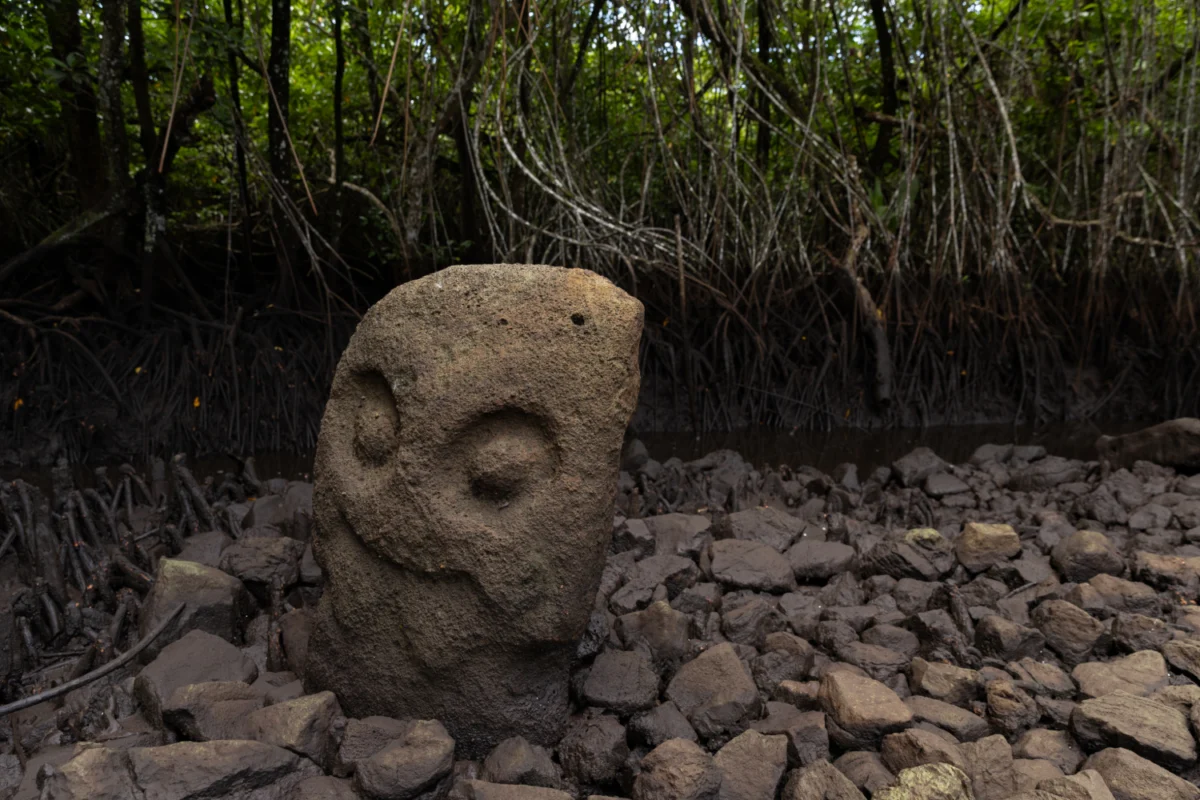
One of Palau’s most significant cultural landmarks is Ngerutechei village, believed to be the oldest settlement in the nation. The village contains ancient stone paths, carvings, and monoliths that provide a window into the social structures and values of the early Palauan people. Like the sites in the Maldives, Ngerutechei is increasingly exposed to the dual threats of erosion and saltwater intrusion.
In response, Palau has integrated cultural preservation into its National Adaptation Plan (NAP). The government has moved beyond simple infrastructure projects, working with local leaders to revitalize traditional land and food practices as a form of "cultural adaptation." A key example is the return to taro cultivation. Taro, a starch-rich tuber, has been a staple of the Palauan diet for centuries. Traditional taro patches also serve a secondary function: they act as sophisticated water management systems that support soil health and food security. By strengthening these systems, Palau is using its ancestral knowledge to build modern resilience, ensuring that cultural practices do not fade even as the environment changes.
Data and Economic Implications: The Fisheries Crisis
The intersection of culture and climate is perhaps most evident in the Maldives’ fisheries sector. Fishing is more than an industry; it is the core of the country’s identity, employing thousands and providing the primary protein source for the population. Tuna accounts for roughly 98% of the total fish catch in the Maldives, yet this resource is under severe pressure.

Data from the Maldives’ first Biennial Transparency Report to the UN indicates that rising ocean temperatures are altering the migratory patterns of tuna. As surface waters warm, tuna are moving into deeper, colder waters or migrating to higher latitudes, making them harder for traditional pole-and-line fishermen to reach. This shift threatens the "one-by-one" fishing method, which is recognized globally for its sustainability and is a source of immense national pride.
To mitigate this, the government is exploring several high-tech and traditional strategies:
- Real-time Tracking: Utilizing satellite data to help fishermen locate schools of fish more efficiently, reducing fuel consumption and time at sea.
- Infrastructure Investment: Expanding canneries and cold storage facilities to stabilize the market during periods of fluctuating catch.
- Mariculture Diversification: Encouraging marine farming of other species to reduce the absolute dependency on migratory tuna.
Global Policy and the Finance Gap
On the international stage, the plight of island nations has led to significant shifts in climate policy. The 2015 Paris Agreement laid the groundwork by establishing the Global Goal on Adaptation (GGA). However, it took several years of intense negotiation to move from a general goal to a concrete framework. At the COP26 summit in Glasgow, and more recently at COP30 in Belém, the international community finalized a set of indicators to measure progress in adaptation.
Cultural heritage was officially recognized as one of the seven key themes of the GGA framework. This marks a milestone in climate diplomacy, as it acknowledges that the impacts of climate change extend beyond economic loss to include the destruction of human history and identity. Emilie Beauchamp, an adaptation specialist at the International Institute for Sustainable Development (IISD), notes that the inclusion of heritage indicators—such as the preservation of traditional knowledge systems—is a victory for vulnerable nations.

Despite this recognition, a massive "finance gap" remains. A recent report from the United Nations Environment Programme (UNEP) found that developing nations will need approximately US$310 billion per year by 2035 to implement necessary adaptation measures. Currently, public international financing for adaptation stands at only about US$26 billion. The Belém text, while establishing indicators, explicitly stated that these do not create new financial obligations or compensation mechanisms. This leaves nations like the Maldives and Palau in a precarious position: they have the framework and the local knowledge to adapt, but they lack the capital to protect their heritage at scale.
Analysis: The Future of Island Identity
The struggle of the Maldives and Palau serves as a litmus test for the rest of the world. As sea levels continue to rise, the challenge of cultural heritage will become more acute. Communities are being forced to make agonizing decisions about what to save and what to let go. When an island is abandoned due to habitability issues, the cultural connection to that specific piece of land is severed.
The loss of the Nakaiy calendar or the submergence of 900-year-old gravestones are not just local tragedies; they are a depletion of the global human story. The value of cultural assets is measured by their continuity across generations. Without sustained human intervention and significant international financial support, the rapid onset of climate change threatens to turn living cultures into archaeological footnotes. For the people of the Maldives and Palau, the stars may still shine in the night sky, but the ancient maps they provided are being rewritten by a warming world. The survival of their heritage now depends on whether the global community can match its policy rhetoric with the financial and technical resources required to hold back the tide.

Related Posts
Constitutional Court of South Africa Bars Shell Oil Exploration in Landmark Victory for Environmental and Community Rights

The Battle for Saldanha Bay: South Africa’s Ambitious Ocean Economy Strategy Faces Legal and Environmental Reckoning