Live Blog Update: Escalation in the War on Iran – Lebanon Reports Over 2,100 Killed as Gaza Mourns Al-Shati Strike Victims
As of April 15, 2026, 19:06 BST, the broader regional conflict, ominously dubbed the "War on Iran," continues to exact a devastating human toll, with Lebanon’s health ministry reporting at least 2,167 fatalities and 7,061 wounded since Israel resumed intensified attacks across the country on March 2. Concurrently, the Gaza Strip remains a focal point of suffering, with fresh reports of an Israeli strike on the densely populated Al-Shati refugee camp leading to widespread mourning in Gaza City as victims were laid to rest today. The confluence of these events underscores a rapidly deteriorating security and humanitarian situation across the Middle East, signaling a profound escalation of hostilities that began earlier in the year.
The figures from Lebanon paint a grim picture of widespread destruction and human loss. According to detailed reports from the Lebanese Ministry of Public Health, the vast majority of casualties have been civilians, caught in the crossfire of what both sides describe as strategic engagements. The updated death toll of 2,167 and the injury count of 7,061 reflect a significant escalation since the March 2 resumption of what Israel terms "pre-emptive and defensive" operations against alleged Iranian-backed proxies within Lebanon. Medical facilities across Lebanon, particularly in the south and parts of the Beqaa Valley, are reportedly overwhelmed, struggling with severe shortages of medical supplies, personnel, and functional infrastructure, many of which have been directly or indirectly impacted by the ongoing bombardments.
A Nation Under Siege: Lebanon’s Battle for Survival
The resumption of Israeli attacks on March 2 followed a brief, tense period of de-escalation attempts that ultimately failed to hold. Intelligence assessments from various international agencies suggest that both Israel and its adversaries, primarily Hezbollah, had used the interim period to regroup and reinforce positions, setting the stage for the renewed and more intense phase of conflict. Eyewitness accounts from residents of Southern Lebanon describe daily bombardments, with residential areas, agricultural lands, and critical infrastructure, including power stations and water treatment plants, bearing the brunt of the assaults. The Lebanese government has repeatedly condemned these actions as gross violations of its sovereignty and international law, appealing to the United Nations and other international bodies for immediate intervention and a comprehensive ceasefire.
The economic impact on Lebanon, already reeling from a protracted financial crisis, has been catastrophic. Essential supply chains have been disrupted, vital ports have seen reduced activity due to security concerns, and the agricultural sector, a cornerstone of the Lebanese economy, has been severely hampered. Estimates from the World Bank suggest that the current wave of conflict could push an additional 30% of the Lebanese population below the poverty line, further exacerbating an already dire humanitarian situation. Displacement figures have soared, with the International Organization for Migration (IOM) reporting over 800,000 internally displaced persons (IDPs) in Lebanon since early March, many of whom are seeking refuge in overcrowded shelters or with relatives in safer regions, facing acute shortages of food, water, and sanitation.
Gaza Grapples with Renewed Devastation: Al-Shati Mourns Its Dead
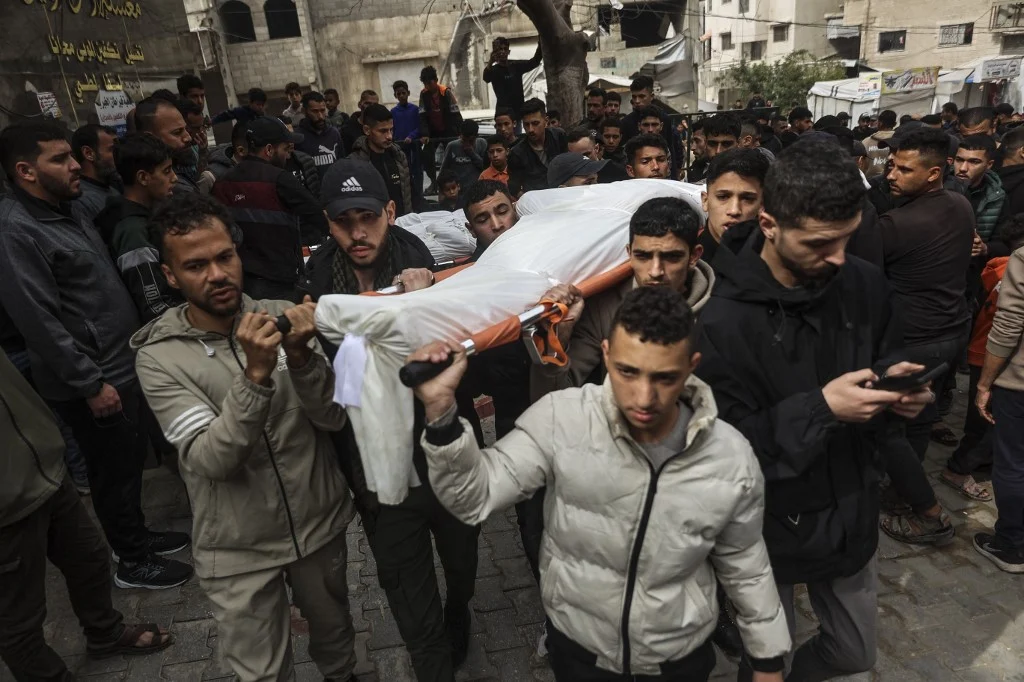
Meanwhile, the Gaza Strip continues to endure unimaginable hardship, with today’s events underscoring the relentless cycle of violence. Mourners gathered in Gaza City on April 15, 2026, to carry the bodies of Palestinians reportedly killed in an Israeli strike on the Al-Shati refugee camp. The scenes of grief, captured by international media, depict families weeping over shrouded bodies, a stark reminder of the human cost of the conflict. Al-Shati, one of Gaza’s most densely populated areas, housing tens of thousands of refugees in a confined space, has been repeatedly targeted in past conflicts, making any strike on the camp a source of profound international concern due to the high risk of civilian casualties.
Palestinian health officials in Gaza have decried the strike, stating it further strains an already collapsed healthcare system. Hospitals, many of which operate with minimal resources due to years of blockade and recent intensified bombardments, are ill-equipped to handle mass casualty events. Reports from medical personnel indicate critical shortages of blood, surgical supplies, and essential medicines. The United Nations Relief and Works Agency for Palestine Refugees in the Near East (UNRWA) has condemned the targeting of refugee camps, emphasizing the imperative to protect civilians and civilian infrastructure under international humanitarian law. UNRWA noted that its operations in Gaza are severely constrained by security risks and access restrictions, making it increasingly difficult to deliver vital aid to those in desperate need.
Chronology of a Widening Conflict: The "War on Iran" Unfolds
The current crisis, often referred to by analysts as the "War on Iran," represents a significant escalation of long-standing regional tensions. While the specific trigger for the designation "War on Iran" is complex and multi-faceted, it generally refers to a phase of direct and indirect confrontations that intensified in late 2025 and early 2026. This period saw a dramatic increase in tit-for-tat attacks between Israel and Iranian-backed groups across the Levant, alongside heightened cyber warfare and covert operations targeting critical infrastructure in both Iran and its regional adversaries.

Late 2025: Initial reports emerge of increased naval skirmishes in the Persian Gulf and Red Sea, attributed to proxies and state actors. Rhetoric between Tehran and Tel Aviv reaches unprecedented levels of hostility.
January 2026: A series of unexplained explosions hit strategic sites in Iran, widely attributed to sabotage. Simultaneously, drone attacks targeting Israeli assets in the region intensify.
February 2026: Significant missile exchanges occur between Israel and Hezbollah across the Lebanese border, leading to initial casualties and displacement. Diplomatic efforts by the UN and major powers fail to secure a lasting de-escalation.
March 2, 2026: Following what Israel describes as a major cross-border infiltration attempt by Hezbollah operatives and a subsequent rocket barrage targeting northern Israeli towns, Israel launches "Operation Iron Wall," a broad campaign of airstrikes and artillery fire across Lebanon. This marks the "resumption" of attacks and the sharp increase in casualties now being reported by the Lebanese Health Ministry.
March 15-30, 2026: The conflict expands, with increased Israeli operations in the Gaza Strip targeting Hamas infrastructure, which Israel claims is coordinated with Iranian directives. This period sees a significant uptick in Palestinian casualties.
April 1-14, 2026: International calls for a ceasefire intensify, but ongoing skirmishes and targeted strikes persist. Humanitarian corridors remain largely inaccessible or dangerous.
April 15, 2026: The Lebanese Health Ministry releases its updated casualty figures. Simultaneously, the strike on Al-Shati refugee camp in Gaza is reported, leading to widespread condemnation and renewed calls for investigations into civilian protection.
International Reactions and Diplomatic Stalemate
The international community remains deeply divided and largely ineffective in stemming the tide of violence. The United Nations Secretary-General, António Guterres, issued a strong statement today, reiterating his grave concern over the escalating hostilities in Lebanon and Gaza, calling for an immediate cessation of violence and adherence to international humanitarian law. He emphasized the urgent need for unimpeded humanitarian access to all affected areas and urged all parties to exercise maximum restraint.
Official Responses:
- Lebanese Government: Prime Minister Hassan Diab condemned the "barbaric aggression" and called for an emergency session of the UN Security Council to address Israel’s violations of Lebanese sovereignty. He appealed for international aid to cope with the burgeoning humanitarian crisis.
- Israeli Officials: A spokesperson for the Israeli Defense Forces (IDF) stated that operations in Lebanon and Gaza are precise and aimed solely at dismantling "terrorist infrastructure" and preventing future attacks on Israeli civilians. They reiterated Israel’s right to self-defense and blamed Iran and its proxies for regional instability.
- Palestinian Factions: Hamas issued a statement denouncing the "massacre" in Al-Shati and vowed that such acts would not go unpunished. Islamic Jihad called for unified resistance against the "Zionist aggression."
- United States: The U.S. State Department expressed concern over the rising civilian casualties and called for de-escalation from all sides. While reaffirming Israel’s right to self-defense, a spokesperson also urged Israel to take all necessary precautions to protect civilian lives and facilitate humanitarian aid. The Biden administration is reportedly engaged in behind-the-scenes diplomatic efforts to de-escalate the broader "War on Iran" and prevent a full-scale regional conflagration.
- European Union: The EU High Representative for Foreign Affairs and Security Policy, Josep Borrell, condemned the violence and called for a durable humanitarian ceasefire. He announced increased EU humanitarian aid to the region but stressed that a political solution was paramount.
- Russia and China: Both permanent members of the UN Security Council have called for restraint and emphasized the importance of upholding international law. Russia has criticized what it perceives as Western bias in the conflict, while China has focused on the need for a comprehensive political settlement and respect for national sovereignty.
Broader Implications and Future Outlook
The current escalation poses grave implications for regional stability and global security. The "War on Iran" has transformed into a multi-front conflict, drawing in various state and non-state actors, each with their own objectives and alliances. The risk of miscalculation remains exceptionally high, potentially triggering a wider regional war that could have catastrophic global consequences, particularly concerning energy supplies and international trade routes.
Regional Stability on the Brink: The conflict threatens to unravel decades of delicate diplomatic efforts and further destabilize an already volatile region. The involvement of powerful regional and international players complicates any potential resolution, with proxy conflicts fueling a cycle of violence.
The Shadow of International Law: The extensive civilian casualties and damage to civilian infrastructure raise serious questions about adherence to international humanitarian law and the principles of proportionality and distinction. Calls for independent investigations into alleged war crimes are growing louder from human rights organizations and international legal bodies.
Humanitarian Aid in Peril: The humanitarian crisis is rapidly deepening. Aid agencies face immense challenges in delivering assistance due to ongoing hostilities, damaged infrastructure, and bureaucratic hurdles. Millions are at risk of displacement, food insecurity, and disease. The long-term recovery and reconstruction efforts will require unprecedented international cooperation and funding, a prospect made uncertain by the ongoing conflict.
As the "War on Iran" continues its devastating trajectory, the urgent need for a comprehensive and lasting ceasefire in Lebanon, Gaza, and across the broader region becomes ever more apparent. The international community’s ability to exert meaningful influence and facilitate a diplomatic solution will be critically tested in the coming days and weeks, as the human cost of this escalating conflict continues to mount. The tragic events of April 15, 2026, in both Lebanon and Gaza, serve as a stark and painful reminder of the profound suffering inflicted by this protracted and widening conflict.

Related Posts
Over 150 Israeli Settlers Storm Al-Aqsa Compound and Perform Prayers, Violating Status Quo Under Police Protection.
UN Report Highlights Over 900 Obstacles Hampering West Bank Aid Amid Escalating Humanitarian Crisis