China Sentences Human Rights Lawyer Xie Yang to Five Years Following Years of Pretrial Detention and Allegations of Procedural Violations
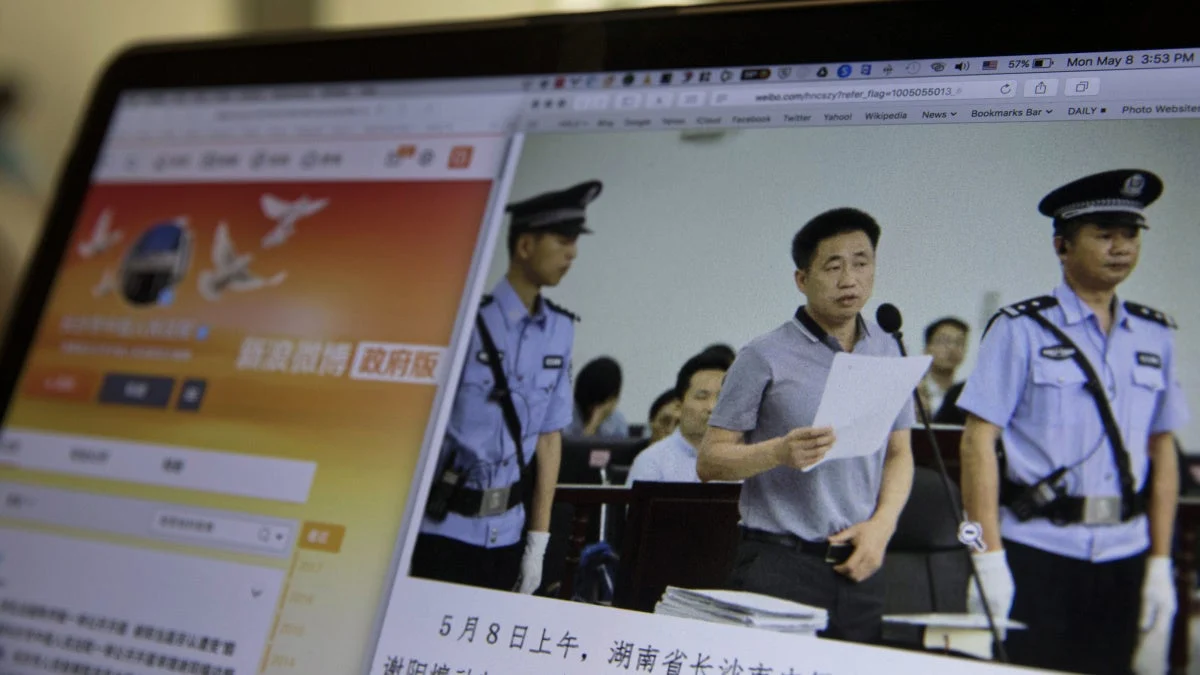
The Changsha Intermediate People’s Court in Hunan province sentenced prominent human rights attorney Xie Yang to five years in prison on March 23, 2026, marking a significant development in a case that has drawn widespread international condemnation. Xie, a veteran legal advocate known for representing activists and victims of state abuses, was convicted on charges of "inciting subversion of state power." Human Rights Watch and other international monitoring groups have characterized the prosecution as politically motivated, citing years of harassment, torture, and systemic procedural failures that they argue undermine the legitimacy of the verdict.
The court’s decision included not only the five-year custodial sentence but also the confiscation of 100,000 yuan (approximately US$14,500). According to social media updates from Xie’s former wife, Chen Guiqiu, the prosecution’s case rested largely on a series of posts Xie had made on the messaging platform WeChat. These posts were interpreted by the state as an attempt to undermine the authority of the Communist Party and the socialist system. Given the time Xie has already spent in pretrial detention, his sentence is expected to conclude in January 2027.
A Legacy of Advocacy and State Retaliation
Xie Yang’s legal career, which began in 2011, has been defined by his willingness to take on "sensitive" cases that many other Chinese lawyers avoid due to the risk of professional and personal repercussions. Based in Changsha, he specialized in defending victims of religious persecution, individuals involved in land rights disputes against local governments, and political activists. His work positioned him as a central figure in China’s "weiquan" or rights-defense movement, a loose network of lawyers and activists who seek to use existing Chinese laws to protect citizens from state overreach.
This advocacy has made Xie a frequent target of the security apparatus. He first gained international notoriety during the "709 Crackdown," a nationwide sweep that began on July 9, 2015, during which the Chinese government detained, interrogated, or disappeared more than 300 human rights lawyers and activists. During that period, Xie was subjected to "enforced disappearance" and "residential surveillance at a designated location" (RSDL), a form of secret detention where suspects are held without access to legal counsel or family.
In 2017, following accounts of severe torture—including sleep deprivation, long interrogations while strapped to a "tiger chair," and threats against his family—Xie was convicted of inciting subversion but was initially exempted from criminal punishment after a televised "confession" that supporters claim was coerced. Despite his release, he remained under heavy surveillance and was eventually disbarred, stripping him of his legal credentials but not his commitment to advocacy.
The 2022 Re-arrest and the Li Tiantian Case
The current proceedings against Xie stem from his arrest in January 2022. The catalyst for his detention was his vocal support for Li Tiantian, a young pregnant schoolteacher in Hunan province. Li had been forcibly committed to a psychiatric facility by local authorities after she expressed sympathy for a fellow teacher who questioned the official death toll of the 1937 Nanjing Massacre.
Xie Yang traveled to Li’s hometown to investigate her situation and demand her release, documenting his efforts on social media. Shortly thereafter, police raided Xie’s home, confiscated his electronic devices, and took him into custody. He was initially held on suspicion of "inciting subversion of state power" and "picking quarrels and provoking trouble"—a vaguely defined charge frequently used to silence dissent in China.
For over four years, Xie remained in pretrial detention, a period marked by what legal experts describe as a total breakdown of due process. His former wife, Chen Guiqiu, who now resides in the United States, reported that the authorities extended his pretrial detention 13 times. Furthermore, Xie was denied access to lawyers of his choice, and his family was kept in the dark regarding the status of his case for years.
Procedural Violations and International Legal Standards
Human Rights Watch and the United Nations have highlighted numerous violations of both Chinese and international law throughout Xie’s prosecution. The October 2025 trial was conducted in secret, with the court failing to notify his family or the public until after the proceedings had concluded. This secrecy directly contradicts Article 188 of China’s Criminal Procedural Law, which mandates that trials should generally be open to the public, especially in cases where the defendant’s rights are at stake.
Moreover, the exclusion of Xie’s legal team from hearings violated Articles 33 through 35 of the same law, which guarantee a defendant’s right to a defense. International legal bodies have been equally critical. The United Nations Working Group on Arbitrary Detention issued a formal opinion (No. 73/2025) recognizing Xie’s detention as arbitrary and a violation of the Universal Declaration of Human Rights. The group called for his immediate and unconditional release, noting that his detention appeared to be a direct result of his exercise of the right to freedom of expression and the right to take part in the conduct of public affairs.
"The Chinese authorities’ prosecution of Xie Yang and the court’s harsh sentence reflects Beijing’s utter contempt for the rule of law," said Maya Wang, deputy Asia director at Human Rights Watch. "This case not only aimed to persecute a brave human rights lawyer like Xie, but to intimidate all lawyers seeking to protect Chinese people’s rights."
Chronology of the Xie Yang Case (2011–2026)
- 2011: Xie Yang begins his legal practice in Changsha, Hunan, focusing on human rights and civil liberties.
- July 2015: Xie is swept up in the "709 Crackdown." He is held in secret detention and allegedly tortured.
- May 2017: Xie is convicted of "inciting subversion" but released after a coerced confession. He remains under state surveillance.
- 2020: Xie’s legal license is officially revoked by the Department of Justice, though he continues to advocate for human rights as a private citizen.
- December 2021: Xie begins advocating for Li Tiantian, a teacher forcibly sent to a psychiatric hospital.
- January 11, 2022: Xie is detained by Changsha police; his home is raided.
- 2022–2025: Xie is held in pretrial detention. Authorities extend the detention period 13 times, citing the complexity of the "national security" case.
- October 2025: A secret trial is held without the presence of Xie’s chosen legal counsel or family members.
- March 23, 2026: The Changsha Intermediate People’s Court sentences Xie to five years in prison and a 100,000 yuan fine.
Data and Context: The Shrinking Space for Legal Defense
The sentencing of Xie Yang is part of a broader trend in China characterized by the systematic dismantling of the independent legal profession. Since 2015, the Chinese government under President Xi Jinping has increasingly framed human rights advocacy as a threat to national security. According to data from the Chinese Human Rights Defenders (CHRD), dozens of lawyers have been disbarred, imprisoned, or "disappeared" over the last decade for taking on cases related to freedom of speech, assembly, or religion.
The use of "inciting subversion of state power" (Article 105 of the Criminal Law) has become a primary tool for the state to criminalize peaceful expression. Legal analysts note that the definition of "subversion" has expanded to include social media posts, interviews with foreign media, and even the act of providing legal counsel to other activists. In Xie’s case, the use of WeChat posts as the primary evidence underscores the high level of digital surveillance and the lack of protection for private communication within the country.
The financial penalty imposed on Xie—100,000 yuan—is also seen by observers as a tactic to further marginalize dissidents and their families. For a disbarred lawyer whose family has been forced to flee abroad, such a fine represents a significant punitive measure intended to deplete any remaining resources.
Broader Implications and International Reaction
The international community has reacted with alarm to the verdict. Diplomats from several Western nations, including the United States and members of the European Union, have previously called for Xie’s release and for China to adhere to its own constitutional promises regarding the rule of law.
Human rights organizations argue that the treatment of Xie Yang serves as a "chilling message" to the remaining members of the legal community in China. By targeting a high-profile figure who had already survived the 709 Crackdown, the authorities are demonstrating that no amount of international attention or previous "leniency" will protect those who continue to challenge the state’s narrative.
"Foreign governments should continue to speak out for human rights lawyers like Xie Yang because this kind of support is most important when the circumstances are so dire," Maya Wang of Human Rights Watch emphasized. "Vocal international support could improve Xie’s treatment and, crucially, help give him and others in China the strength to persevere."
As China continues to assert its influence on the global stage, the case of Xie Yang remains a point of contention in bilateral human rights dialogues. Critics argue that the gap between China’s rhetoric on the "rule of law" and the procedural reality faced by defendants like Xie continues to widen. With his release not expected until early 2027, Xie’s health and treatment in custody remain a primary concern for his supporters, given his previous history of being tortured while in the hands of the state.
The verdict stands as a stark reminder of the risks faced by those who attempt to navigate the intersection of law and politics in China. For Xie Yang, a decade of advocacy has resulted in multiple imprisonments, the loss of his career, and separation from his family, yet his case continues to galvanize the international human rights community in their call for fundamental legal reforms in the world’s most populous nation.

Related Posts

Human Rights Watch Calls for Investigation into Death of Detainee Following Removal from Najaf Hospital by Iraqi Drug Police

Human Rights Watch Urges UN Security Council to Extend Lebanon Peacekeeping Mission Amid Escalating Conflict and Humanitarian Crisis