Human Rights Watch Warns of Potential War Crimes as Israeli Forces Expand Lebanon Ground Operations and Enforce Mass Displacement
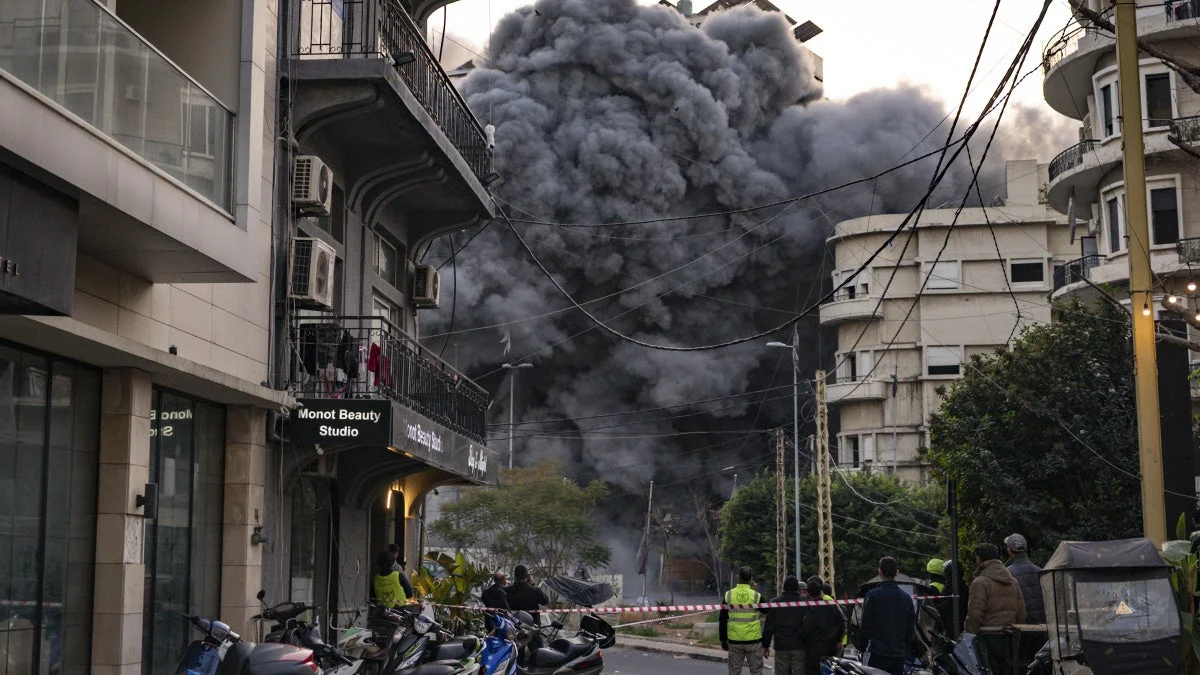
Human Rights Watch (HRW) issued a stark warning on March 23, 2026, stating that the recent expansion of Israeli ground operations in southern Lebanon, coupled with explicit threats of house demolitions and the forced displacement of civilian populations, may constitute a series of war crimes. The international human rights organization highlighted a shift in the Israeli government’s rhetoric and military strategy, suggesting a policy of "wanton destruction" and the potential targeting of civilians based on their proximity to political or military infrastructure. As the conflict intensifies, HRW is calling on the international community, particularly major arms suppliers like the United States, the United Kingdom, and Germany, to suspend military aid to Israel to avoid complicity in these alleged violations of international humanitarian law.
The Escalation of Military Policy and the Gaza Model
The current crisis reached a new threshold on March 22, 2026, when Israeli Defense Minister Israel Katz issued a formal statement indicating a significant hardening of military objectives. According to the statement, Katz and Prime Minister Benjamin Netanyahu have ordered the "acceleration of the demolition of Lebanese houses in the border villages." The stated goal of this policy is to neutralize potential threats to Israeli communities in the north. Crucially, the Defense Minister explicitly referenced the "Beit Hanoun and Rafah models," referring to neighborhoods in the Gaza Strip that saw near-total destruction during previous military campaigns.
Legal analysts and human rights researchers argue that the adoption of these models in Lebanon signals a move toward the systematic leveling of civilian infrastructure. Under the laws of war, the destruction of civilian property is strictly prohibited unless it is an absolute military necessity. HRW notes that the mere possibility that a structure might be used by an armed group in the future does not justify the preemptive and wide-scale destruction of entire border villages.
Further compounding these concerns are statements regarding the return of displaced residents. On March 16, Katz suggested that hundreds of thousands of residents from southern Lebanon—specifically mentioning the Shiite population—would be barred from returning to their homes south of the Litani River until the security of Israel’s northern border is "guaranteed" by an undefined standard. This indicates an intent for indefinite displacement, which, if carried out without a clear and urgent military necessity for the safety of those specific civilians, qualifies as the war crime of forced displacement.
Humanitarian Impact and Casualty Data
The human cost of the escalation since March 2, 2026, has been severe. Data provided by Lebanon’s Ministry of Public Health indicates that at least 1,029 people have been killed in Lebanon within a three-week window. This toll includes 118 children and 40 medical workers, highlighting the impact on non-combatants and essential services. The Ministry reported that the intensity of the strikes has overwhelmed local healthcare facilities, many of which are already struggling under Lebanon’s long-standing economic crisis.
On the other side of the border, the Israeli military reports that Hezbollah has maintained a high volume of fire, averaging approximately 150 rockets per day directed at northern and central Israel. While the Israeli military claims to have intercepted a significant portion of these barrages, Israeli media reports indicate that at least 15 people have been injured within Israel, with several buildings in border towns like Kiryat Shmona sustaining direct hits.
The displacement crisis in Lebanon has reached staggering proportions. Current estimates suggest that over one million people have been forced to flee their homes. This represents nearly one-fifth of the country’s population. Many of these individuals are living in overcrowded schools, public parks, or makeshift shelters, often with limited access to clean water, food, or medical care.
Chronology of the 2026 Escalation
To understand the current gravity of the situation, it is necessary to look at the timeline of events that led to the present expansion of ground operations:
- March 2, 2026: A major escalation in hostilities begins between Israeli forces and Hezbollah, characterized by a significant increase in airstrikes and rocket fire.
- March 4–5, 2026: The Israeli military issues sweeping displacement orders for the entire population of Lebanon south of the Litani River. Simultaneously, orders are issued for residents of Beirut’s southern suburbs (Dahieh) to evacuate.
- March 5, 2026: Finance Minister and security cabinet member Bezalel Smotrich records a video from the border, stating that the southern suburbs of Beirut would soon "look like Khan Younis," a reference to the extensive destruction seen in the Gaza city.
- March 11–15, 2026: The Israeli military spokesperson for Arabic media issues five specific displacement orders for seven neighborhoods in Beirut. The language of these orders shifts, stating that the military "will not hesitate to target anyone" near Hezbollah members or facilities, rather than simply warning of the risks of proximity.
- March 12, 2026: The evacuation zone is expanded north of the Zahrani River, moving the "red line" 15 kilometers further north of the Litani River and 40 kilometers from the border.
- March 18, 2026: The Israeli military announces it will target bridges over the Litani River to prevent the movement of reinforcements. Over the following days, at least four major bridges are destroyed, effectively cutting off southern Lebanon from the rest of the country.
- March 22, 2026: Defense Minister Katz confirms the order to accelerate house demolitions in border villages, formalizing the "Gaza Model" for the Lebanese theater.
Legal and Ethical Implications of Displacement Orders
Human Rights Watch has raised specific concerns regarding the wording and nature of the Israeli military’s displacement orders. Unlike standard warnings intended to protect civilians, the recent directives have been described as overly broad and punitive. Ramzi Kaiss, a Lebanon researcher at HRW, stated that "atrocities flourish when there is impunity." He argued that the international community has effectively "buried its head in the sand" while violations of international law occur in both Gaza and Lebanon.
The singling out of "Shiite residents" by high-ranking officials is particularly concerning to legal experts. Targeting or displacing a population based on religious or sectarian identity is a violation of fundamental human rights and suggests that the displacement is not motivated solely by immediate security concerns. Furthermore, international humanitarian law stipulates that even if a civilian fails to evacuate after an order is given, they do not lose their protected status. They cannot be targeted simply for their presence in a conflict zone.
The Israeli military’s statement that it will "not hesitate to target anyone" near Hezbollah assets is seen as a potential abandonment of the principle of distinction. This principle requires warring parties to distinguish at all times between combatants and civilians. Proximity to a military objective does not strip a civilian of their legal protections, and any attack that fails to distinguish between the two is considered indiscriminate.
International Complicity and Calls for Arms Embargoes
The HRW report places a significant portion of the responsibility on Israel’s Western allies. The United States, the United Kingdom, and Germany are cited as the primary providers of military aid and weaponry used in the conflict. HRW has documented several instances where US-made weapons were used in strikes that resulted in the deaths of journalists, medics, and aid workers—actions that have been characterized as apparent war crimes.
The organization argues that by continuing to supply munitions and logistical support, these nations risk becoming legally complicit in serious violations of the laws of war. There is growing pressure on these governments to:
- Suspend Military Assistance: Halt the transfer of arms and tactical support until a thorough investigation into the use of these weapons is conducted.
- Impose Targeted Sanctions: Apply financial and travel restrictions on officials credibly linked to the orders for wanton destruction and forced displacement.
- Pressure for Return Rights: Use diplomatic channels to ensure that Israel permits the return of all displaced civilians to their homes as soon as active hostilities cease.
Broader Regional Impact and Long-term Consequences
The expansion of the "buffer zone" and the destruction of border villages have long-term implications for the stability of the Middle East. If southern Lebanon is rendered uninhabitable through the systematic demolition of homes and infrastructure, it could lead to a permanent shift in the region’s demographics and a protracted humanitarian crisis.
Furthermore, the destruction of critical infrastructure, such as the bridges over the Litani River, complicates the delivery of humanitarian aid. Civilians who have remained in the south—often the elderly, the disabled, or those too poor to flee—are now at extreme risk of starvation and lack of medical care. The isolation of these communities makes it nearly impossible for international NGOs to provide life-saving assistance.
Lebanon’s judicial authorities are being urged to initiate domestic investigations into these events. HRW also recommends that the Lebanese government formally accede to the Rome Statute of the International Criminal Court (ICC) to allow for international oversight of the conflict.
As the military campaign enters this more aggressive phase, the international community faces a critical choice. The precedent being set in Lebanon—the application of urban destruction models from one conflict to another—threatens to erode the global norms established by the Geneva Conventions. Without immediate intervention and a demand for accountability, the cycle of displacement and destruction appears set to expand, leaving a trail of humanitarian catastrophe in its wake.

Related Posts
Bangladesh: First Enforced Disappearance Case Since July 2024 Uprising

Crackdown on Artistic Dissent in Morocco: The Arrest of Mehdi Black Wind and the Shrinking Space for Freedom of Expression