Yemen Government Forces Accused of Excessive Force and Arbitrary Detentions Amid Southern Protests
Human Rights Watch issued a comprehensive report today detailing allegations that Yemeni government-aligned security forces utilized excessive and lethal force against protesters throughout February 2026. The findings, based on on-the-ground investigations and digital forensic analysis, suggest that authorities also engaged in the arbitrary detention of demonstrators in the governorates of Aden, Shabwa, and Hadramout. These incidents occurred against a backdrop of heightened political instability following a 90-day nationwide state of emergency and a shifting landscape of territorial control between the central government and the Southern Transitional Council (STC).
According to the report, government-aligned forces were responsible for the deaths of at least six individuals and the injury of dozens more during clashes in Aden and Shabwa. In Hadramout, while no fatalities were confirmed, dozens of individuals were reportedly detained under conditions that human rights observers describe as a violation of due process. Niku Jafarnia, a Yemen and Bahrain researcher at Human Rights Watch, criticized the government’s disparity between its public commitment to democratic values and its tactical response to civil unrest. Jafarnia noted that while the Yemeni government purports to uphold free expression, its recent actions indicate a systemic failure to respect the fundamental rights of its citizens during a critical transitional period.
Historical and Political Context
The unrest in early 2026 is rooted in the long-standing tensions between the Yemeni central government and the Southern Transitional Council, a political and military organization seeking either greater autonomy or full independence for southern Yemen. The region was a separate state, the People’s Democratic Republic of Yemen, from 1967 until its unification with the north in 1990.
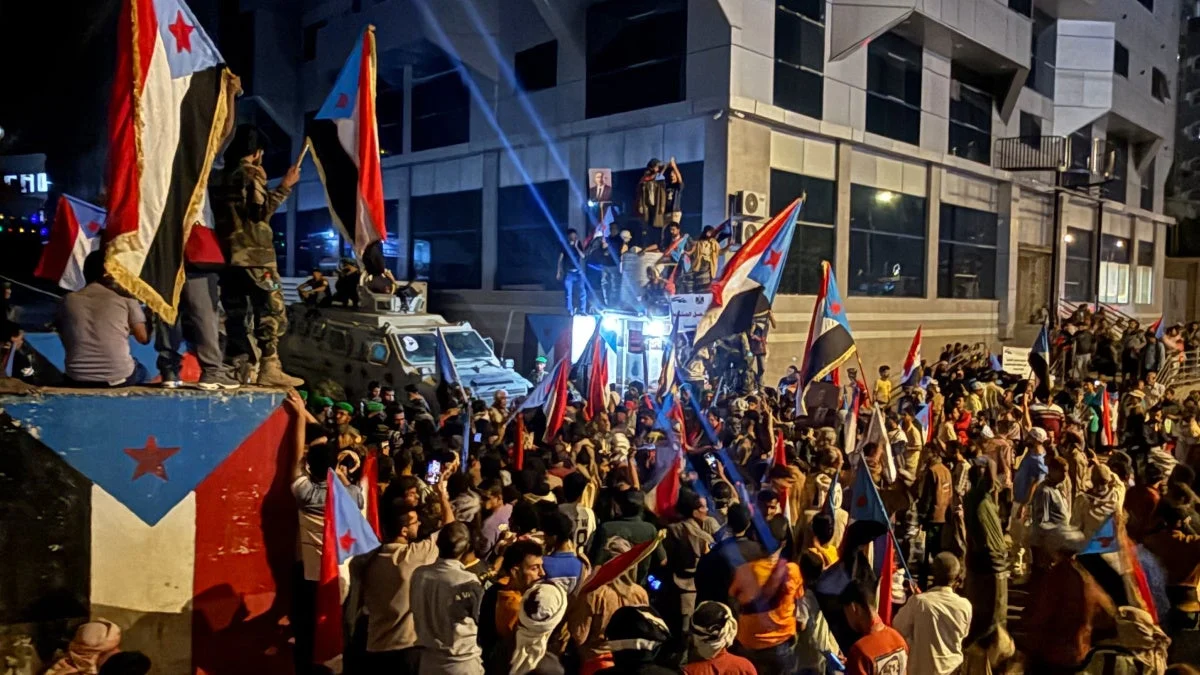
The immediate catalyst for the February protests was a series of rapid political shifts beginning in late 2025. On December 30, 2025, Rashad al-Alimi, the head of Yemen’s Presidential Leadership Council (PLC), declared a nationwide state of emergency following the STC’s seizure of key administrative areas in the Hadramout governorate. This was followed by a counter-offensive in early January 2026, where Saudi-led coalition forces and government troops successfully pushed STC-aligned units out of newly occupied territories. By February, the STC had announced its formal dissolution, a move that prompted its supporters to take to the streets across southern Yemen to demonstrate their continued loyalty to the southern cause and protest the central government’s reassertion of authority.
Chronology of February Unrest
The violence documented by Human Rights Watch unfolded across three major southern hubs, each characterized by specific triggers and varying levels of state response.
Hadramout: The Airport Standoff (February 6)
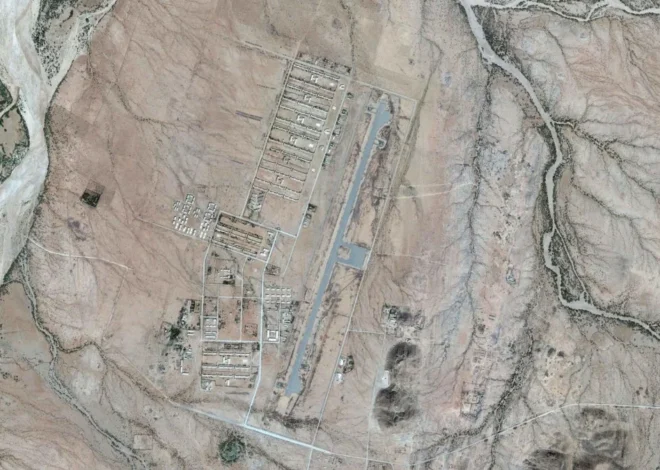
In Seiyun, the capital of the Hadramout governorate, demonstrations began peacefully on February 6. Protesters marched through the city demanding the removal of the Yemeni national flag and portraits of the Saudi monarch, replacing them with the flag of the former South Yemen. The situation escalated when a group of demonstrators initiated a sit-in at the Seiyun airport.
Human Rights Watch verified accounts that the National Shield Forces—a government-aligned unit—opened fire during the airport protest. While some investigators suggested a "third party" may have fired first from nearby palm groves, the government’s response was described by witnesses as "hysterical" and indiscriminate. Following the dispersal of the crowd, approximately 35 people were arrested. Many were held at the airport, which serves as an unofficial detention site, where they were reportedly forced to sleep on floors and denied access to basic sanitation for extended periods.
Shabwa: Escalation in Ataq (February 11)
The most lethal incidents occurred in Ataq, the capital of Shabwa, on February 11. Following a call to action by STC leader Aidarous al-Zubaidi, thousands of supporters gathered to march toward the governorate’s main administrative building. Local reports indicate that the night before the protest, security forces destroyed the stages and audio equipment prepared by organizers.
As the march approached the city center, government-aligned Special Forces and security personnel allegedly used live ammunition to halt the crowd’s progress. While some reports indicated the presence of armed elements among the protesters—identified by some as members of the STC-aligned Second Shabwa Defense Forces Brigade—Human Rights Watch noted that the government’s use of heavy weaponry, including machine guns mounted on armored vehicles, resulted in significant casualties. Data from the Shabwah General Hospital Authority confirmed five deaths and 39 injuries. On March 6, the Interior Ministry issued an arrest warrant for local STC leader Sheikh Lahmer Ali Laswad, accusing him of inciting attacks on state institutions.
Aden: The Presidential Palace Breach (February 19)
In the temporary capital of Aden, protesters attempted to storm the Ma’ashiq Presidential Palace on February 19. Video evidence reviewed by Human Rights Watch showed hundreds of individuals peacefully protesting behind a barrier two kilometers from the palace before a smaller group breached the perimeter. Security forces responded with gunfire, killing one person and injuring at least 25 others, including children.
The government-run Saba News Agency defended the actions, stating that forces exercised "maximum restraint" against "acts of incitement" and "armed mobilization." However, digital verification of the scene showed armored vehicles speeding toward crowds and security personnel firing automatic weapons. In the aftermath, 28 people were detained and held for over two weeks without formal charges or access to legal counsel, a practice that constitutes arbitrary detention under international law.
Documentation and Methodology
The findings presented by Human Rights Watch are the result of a rigorous investigative process conducted between February 10 and March 6, 2026. Researchers interviewed 13 individuals, including former detainees, eyewitnesses, and STC representatives. The organization also conducted a technical analysis of satellite imagery and social media footage, geolocating videos to confirm the presence of military hardware and the nature of the clashes.
A key component of the investigation involved the verification of medical records and photographs of the injured. In Aden, footage from Aboud Hospital showed 12 injured protesters, including two elderly men and a child. Despite formal inquiries sent to the Yemeni government on March 12 requesting a response to these findings, Human Rights Watch reported that no official explanation or rebuttal has been provided by the authorities.
Legal Framework and Human Rights Violations
The actions of the Yemeni government forces are evaluated against both domestic and international legal standards. Yemen is a signatory to the International Covenant on Civil and Political Rights (ICCPR), which guarantees the rights to freedom of expression and peaceful assembly. While the ICCPR allows for limited restrictions on these rights during a state of emergency, such restrictions must be strictly necessary, proportionate, and non-discriminatory.
The United Nations Human Rights Committee has established that public safety concerns do not grant authorities a "blank check" to use lethal force. Law enforcement must demonstrate a "real and significant risk to life" before resorting to firearms. Human Rights Watch argues that the evidence in Aden and Hadramout suggests that force was used against individuals who did not pose an immediate lethal threat. Furthermore, the detention of protesters for weeks without charge violates Article 42 of the Yemeni Constitution, which protects political participation and free speech, as well as international protections against arbitrary imprisonment.
Analysis of Broader Implications
The February 2026 crackdown highlights a deepening fracture within the anti-Houthi coalition. The Yemeni government and the STC, while nominally allies against Houthi rebels in the north, have repeatedly clashed over the future of the southern governorates. The use of excessive force by the government suggests a growing reliance on militarized policing to maintain territorial integrity, a tactic that may further alienate the southern population and bolster the STC’s independence narrative.
Furthermore, the cycle of violations documented throughout Yemen’s 11-year conflict remains a primary obstacle to peace. Human rights advocates emphasize that accountability is essential for any long-term stability. If the government fails to investigate the conduct of its security forces in Aden, Shabwa, and Hadramout, it risks delegitimizing the Presidential Leadership Council’s authority in the eyes of both the local population and the international community.
The release of several detainees in early March, following a directive from Rashad al-Alimi, was a positive step toward de-escalation. However, the lack of a formal investigation into the fatalities in Shabwa and Aden remains a point of contention. As power continues to shift in southern Yemen, international observers warn that unless the warring parties prioritize the protection of civil liberties, the region will remain trapped in a self-perpetuating cycle of protest, repression, and violence. The Yemeni government is now under increased pressure to ensure that its security apparatus operates within the bounds of international law, providing justice for victims of unlawful force and ensuring that the right to peaceful dissent is not permanently extinguished by the exigencies of war.

Related Posts
Bangladesh: First Enforced Disappearance Case Since July 2024 Uprising

Crackdown on Artistic Dissent in Morocco: The Arrest of Mehdi Black Wind and the Shrinking Space for Freedom of Expression