Hungarian Prime Minister Viktor Orbán Accused of Disloyalty and Blackmail After Blocking €90 Billion Ukraine Loan
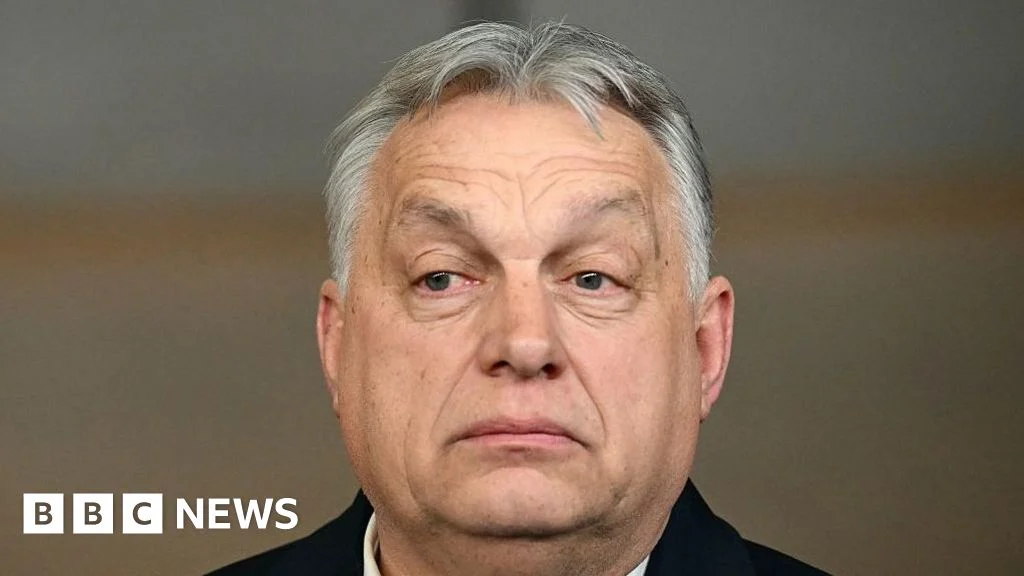
Brussels, Belgium – European Union leaders have strongly condemned Hungarian Prime Minister Viktor Orbán, accusing him of disloyalty and blackmail following his veto of a critical €90 billion (£77 billion) financial aid package for Ukraine. The contentious decision, made during a late-night summit in Brussels, has ignited a fresh crisis within the bloc, exposing deep divisions and raising serious questions about the future of EU unanimity in foreign policy decisions.
The dramatic conclusion to Thursday’s summit saw leaders vent their frustration at Orbán’s intransigence. German Chancellor Friedrich Merz did not mince words, calling Orbán’s actions "a gross act of disloyalty" that would leave "deep marks" on EU relations. European Council President António Costa echoed this sentiment, describing the move as "completely unacceptable" and tantamount to "blackmail," a term also used by Merz. French President Emmanuel Macron labeled the outcome "unprecedented" and stressed that the loan’s release must be "implemented without delay," signaling a determined effort to circumvent the Hungarian veto.
The Pipeline Predicament: "No Oil = No Money"
At the heart of Orbán’s blockade lies a dispute over the Druzhba pipeline, a Soviet-era conduit vital for transporting Russian oil to landlocked Hungary and Slovakia via Ukraine. Orbán articulated his stance succinctly in a post on X (formerly Twitter) after the summit: "No oil = no money." He alleges that Ukraine is deliberately disrupting these energy supplies by failing to repair a damaged section of the pipeline.
Ukraine, however, paints a different picture. Kyiv asserts that the pipeline was struck and damaged by Russian air raids in January, making repairs a weeks-long endeavor. Furthermore, Ukrainian officials argue that restoring the flow of oil through the pipeline, especially under current circumstances, would be equivalent to lifting sanctions on Moscow, thereby undermining the collective EU effort to economically pressure Russia over its full-scale invasion. This standoff places Hungary in a precarious position, heavily reliant on Russian energy, while Ukraine faces the strategic dilemma of facilitating energy transfers that could indirectly benefit its aggressor.
A Pattern of Obstruction: Hungary’s Maverick Stance
Viktor Orbán has long cultivated close ties with Russia, a stance that has become increasingly conspicuous and contentious since Moscow launched its full-scale invasion of Ukraine in February 2022. Hungary’s unique position within the EU, often described as an "illiberal democracy," frequently pits Budapest against the prevailing consensus in Brussels, particularly on issues related to rule of law, migration, and, increasingly, foreign policy towards Russia and Ukraine.
This is not the first time Orbán has used his country’s veto power to obstruct EU initiatives aimed at supporting Ukraine or sanctioning Russia. Over the past two years, Hungary has repeatedly stalled successive rounds of sanctions against Russia, often extracting concessions from its EU partners in exchange for its cooperation. These have included exemptions from certain energy embargoes or delays in the implementation of restrictive measures. The current blockage of the €90 billion loan facility represents a significant escalation, however, as it directly impacts Ukraine’s ability to sustain its government functions and war effort.
Chronology of EU Aid and Hungarian Obstruction
- February 2022: Russia launches full-scale invasion of Ukraine. EU swiftly mobilizes support, including sanctions on Russia and financial aid for Ukraine.
- March-May 2022: EU debates and implements several rounds of sanctions. Hungary frequently expresses reservations, particularly on energy-related measures, citing its dependence on Russian oil and gas.
- December 2022: Hungary initially blocks an €18 billion aid package for Ukraine, eventually relenting after securing concessions related to its own EU funds, which had been frozen over rule-of-law concerns.
- 2023: Throughout the year, Hungary continues to voice dissent on various EU proposals concerning Ukraine, including military aid and further sanctions, though often not to the point of a full veto on major packages.
- January 2024: Ukraine reports damage to the Druzhba pipeline due to Russian air strikes, impacting oil flow to Hungary and Slovakia.
- February 2024: Amid mounting pressure for a new, substantial long-term aid package for Ukraine, Orbán reiterates his demands regarding energy security and the pipeline.
- Thursday’s Summit (Current Event): Orbán formally blocks the €90 billion loan package, linking it directly to the Druzhba pipeline dispute, leading to widespread condemnation from other EU leaders.
The Critical Need: Ukraine’s Financial Lifeline
For Ukraine, the €90 billion aid package is not merely supplementary funding; it is a critical lifeline. President Volodymyr Zelenskyy had issued an urgent plea for the funds ahead of the summit, underscoring their vital importance. "For the third month now, the most important financial security guarantee for Ukraine from Europe is not working – the €90 billion support package for this year and the next," he told EU leaders during the summit. "This is critical for us. It is a resource to protect lives."
This financial assistance is crucial for Kyiv to maintain essential state functions, including paying civil servants, teachers, and pensions, as well as providing social services and supporting critical infrastructure. Without predictable and substantial external funding, Ukraine’s economy, already ravaged by war, risks collapse, which would severely undermine its ability to resist Russian aggression. The total financial needs for Ukraine for 2024 are estimated to be in the tens of billions of dollars, with EU aid forming a significant portion of this. The delay in disbursement creates immense uncertainty and pressure on Kyiv’s treasury.
Broader Implications: EU Unity and Geopolitical Ramifications
The Hungarian veto carries significant implications for the European Union’s cohesion and its standing on the global stage. The principle of unanimity, which requires all 27 member states to agree on certain foreign policy and financial decisions, has long been a source of both strength and vulnerability for the bloc. While it ensures every member state has a voice, it also grants disproportionate leverage to smaller nations willing to exercise their veto power, potentially paralyzing collective action.
German Chancellor Merz highlighted the damage to intra-EU trust, stating, "Colleagues who have been members of the European Council far longer than I have were deeply angered by what happened today. It is a gross act of disloyalty within the European Union." This sentiment reflects a growing exasperation with Hungary’s consistent obstructionism.
The "blackmail" accusation, voiced by European Council head Costa, points to the perceived abuse of this veto power. The argument is that Orbán is leveraging Ukraine’s existential need for financial assistance to secure unrelated concessions pertaining to Hungary’s energy security or potentially even its own frozen EU funds.
Beyond the internal dynamics, the veto sends a troubling message to Kyiv and Moscow alike. For Ukraine, it signals a potential weakening of European resolve and a fragmented support system, creating uncertainty at a time when unwavering backing is paramount. For Russia, it could be perceived as a crack in the Western alliance, potentially emboldening further aggression and undermining the impact of collective sanctions.
Political Maneuvering and Domestic Agendas
Orbán’s actions are also widely viewed through the lens of domestic Hungarian politics. With elections scheduled for April 12, Orbán’s Fidesz party, while still strong, is facing growing challenges and, according to recent opinion polls, is lagging behind its main rivals in certain areas. By adopting a confrontational stance against Brussels and portraying himself as a defender of Hungarian national interests against a perceived overreach by the EU and Ukraine, Orbán aims to energize his conservative base and consolidate support. His narrative often frames hostility towards Ukraine as a pragmatic approach to ensure Hungary’s energy security and avoid entanglement in a costly war.
Furthermore, Orbán’s alliance with Russian President Vladimir Putin is not unique within the EU. Slovakia’s Prime Minister Robert Fico, another vocal critic of aid to Ukraine and an ally of Putin, also refused to endorse the summit’s conclusions reaffirming the intent to release funds. This emerging axis of dissent within the EU complicates efforts to present a united front against Russian aggression.
The Search for a "Plan B"
Despite the immediate deadlock, EU leaders have expressed determination to ensure Ukraine receives the necessary funds. European Commission President Ursula Von der Leyen vowed that the loan would be delivered "one way or the other," while President Macron insisted there would be "no plan B" for the funds because "plan A must be implemented."
These statements suggest that EU institutions are actively exploring alternative mechanisms to bypass Hungary’s veto. One potential avenue could involve member states providing bilateral loans or guarantees to Ukraine outside the traditional EU budget framework, effectively creating an intergovernmental aid package that does not require unanimous approval from all 27 member states. While such a solution would be more cumbersome and potentially less efficient than a unified EU package, it would demonstrate the bloc’s commitment to Ukraine and its ability to act even when faced with internal obstruction.
The leaders concluded that the release of funds, which requires unanimity, will be discussed at their next meeting, indicating that the diplomatic pressure on Hungary will continue. However, the current impasse underscores the fundamental challenges facing the EU as it seeks to navigate complex geopolitical crises while upholding the principles of internal consensus and collective action. The coming weeks will reveal whether the bloc can find a way to overcome this latest hurdle and deliver on its promise to Ukraine.

Related Posts
US Imposes Sweeping 50% Tariffs on Canadian Goods, Citing "Unequal Treatment" in Major Trade Escalation

The Silent Threat: How a Tick Bite Led to the World’s First Confirmed Fatal Mammalian Meat Allergy