S-South states target blue economy, manufacturing for regional growth
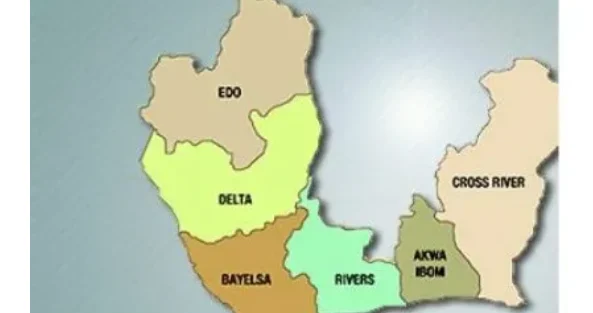
The BRACED Commission, a regional development body representing the six states of Nigeria’s South-South geopolitical zone—Bayelsa, Rivers, Akwa Ibom, Cross River, Edo, and Delta—has officially announced a transformative economic roadmap aimed at shifting the region away from its traditional reliance on raw resource extraction. Following a pivotal two-day investment symposium held in Port Harcourt, Rivers State, the commission declared its intent to leverage the region’s strategic maritime position and natural resource wealth to spearhead a new era of manufacturing, agricultural modernization, and blue economy development.
The symposium, which brought together heads of investment promotion agencies from member states, federal government representatives, and private sector leaders, marked a significant milestone in the commission’s efforts to foster regional integration. By establishing a technical working group tasked with creating a formal investment roadmap, the BRACED Commission intends to harmonize the economic policies of the six states to create a unified, attractive market for both domestic and international investors.
A Strategic Pivot from Resource Dependence to Value Addition
Historically, the South-South region has served as the primary energy tank for Nigeria, contributing the vast majority of the nation’s crude oil and gas exports. However, this model has long been criticized for failing to provide adequate local economic development, high-quality job creation, or long-term sustainability. The newly adopted strategy seeks to reverse this trend.
Mrs. Patience Ranami Abah, the Director General of the Bayelsa State Investment Promotion Agency, who has been tapped to lead the commission’s regional economic objectives, articulated the shift in a keynote presentation titled "Closing the Value Capture Gap." She emphasized that the region must move beyond being a mere source of wealth. "The South-South is currently Nigeria’s energy tank," Abah stated. "Our goal through economic integration is to become Africa’s industrial engine. We should no longer be content with being the source of wealth; we must be the site of its transformation."
This transition involves a deliberate focus on "value-added" industries. Instead of exporting raw commodities, the commission is encouraging the development of petrochemical plants, refining capacity, and secondary manufacturing sectors that process local raw materials into finished goods. This strategy aims to keep the economic value within the region, thereby stimulating the local economy and creating employment opportunities for the region’s burgeoning youth population.
The Blue Economy and Maritime Potential
A core pillar of the BRACED Commission’s new agenda is the "Blue Economy"—the sustainable use of ocean resources for economic growth, improved livelihoods, and jobs while preserving the health of ocean ecosystems. With the South-South region’s extensive coastline, deep-sea ports, and intricate network of waterways, the potential for maritime logistics, commercial fishing, and sustainable aquaculture is immense.
The commission views the region as the natural maritime gateway for West Africa. By improving infrastructure at ports in Rivers, Delta, and Akwa Ibom, the BRACED states aim to compete with major regional hubs. This vision requires significant investment in port modernization, inland water transport systems, and cold-chain logistics to support agricultural and fishery exports. The integration of these states into a single maritime zone is expected to reduce the cost of doing business and improve the efficiency of trade across the Gulf of Guinea.
Overcoming Structural Impediments: A Realistic Assessment
The symposium did not shy away from the harsh realities facing the region. The communique issued at the conclusion of the event candidly acknowledged the structural and systemic barriers that have hindered development for decades. These include persistent infrastructural deficits—specifically in power generation and transportation—as well as environmental challenges stemming from decades of oil exploration, governance deficiencies, and a business environment that is often perceived as hostile by private investors.
The commission’s admission of these challenges represents a departure from traditional political rhetoric. By identifying "unwelcoming business environments" as a key inhibitor, the BRACED states are signaling a commitment to policy reforms. This includes the harmonization of tax regimes across state lines, the streamlining of bureaucratic processes for business registration, and the creation of a unified regional investment portal.
Chronology of Regional Integration Efforts
The BRACED Commission has faced varying degrees of momentum since its inception. The acronym—Bayelsa, Rivers, Akwa Ibom, Cross River, Edo, and Delta—was coined to foster a "BRACED" approach to regional cooperation.
- Early 2010s: Formation of the commission to address common regional challenges such as security, infrastructure, and environmental degradation.
- Mid-2010s to 2020: Period of relative inactivity characterized by divergent state-level priorities and limited cross-border economic collaboration.
- 2023-2024: A renewed push by the investment promotion agencies of the six states to revitalize the commission, driven by the need to attract foreign direct investment (FDI) amid Nigeria’s broader economic reforms.
- October 2024: The two-day Port Harcourt symposium serves as the primary catalyst for the current strategic shift, establishing the technical working group and formalizing the commitment to a shared investment roadmap.
The Role of Private Sector Synergy
Dr. Billy Gilis-Harry, Chairman of the Board of Trustees for the Coalition of South-South Chambers of Commerce, Industry, Mines and Agriculture, praised the initiative as a "highway" to harness regional potential. The involvement of the private sector, including the National Economic Summit Group and federal ministries, is critical to the success of this roadmap.
The commission’s strategy relies heavily on the "crowding-in" of private capital. Public-private partnerships (PPPs) are expected to be the primary vehicle for developing large-scale infrastructure projects, such as regional industrial parks and power plants. By pooling their collective influence, the BRACED states hope to de-risk the investment environment, making the region a more attractive destination for international development partners and global venture capital.
Broader Economic Implications for Nigeria
The success of the BRACED initiative would have profound implications for the Nigerian national economy. Currently, the national economic landscape is heavily centralized, with most industrial activity concentrated in the Lagos-Ogun corridor. By diversifying the national industrial base to include a robust, manufacturing-driven South-South, the federal government could achieve more balanced regional development.
Furthermore, positioning the region as a gas-industrial hub aligns with Nigeria’s "Decade of Gas" policy. By utilizing the region’s vast natural gas reserves for domestic power generation and feedstock for fertilizer and petrochemical industries, the BRACED states could trigger a multiplier effect that benefits agriculture, manufacturing, and commerce simultaneously.
Challenges to Implementation
Despite the optimism expressed at the symposium, significant hurdles remain. The region’s history of insecurity and environmental disputes requires a sophisticated approach to conflict resolution and stakeholder management. Investors are often wary of long-term projects in regions with volatile social dynamics.
Moreover, the success of this regional integration depends on the political will of the six state governors to subordinate state-level interests to the broader regional roadmap. Historical instances of inter-state competition for investment have often undermined regional cooperation. The appointment of Mrs. Patience Ranami Abah to lead the regional objective is a test of whether the commission can maintain a unified front in the face of competing state interests.
Conclusion: A Path Toward Tangible Prosperity
The BRACED Commission’s new mandate is a clear recognition that the traditional model of resource extraction is reaching its limit. By focusing on manufacturing, the blue economy, and infrastructure-led growth, the South-South is attempting to reclaim its status as a vital engine of Nigerian prosperity.
The establishment of a technical working group to develop a concrete implementation strategy provides a mechanism for accountability. As the states move forward, the focus will likely shift to the delivery of "quick wins"—projects that demonstrate the viability of regional cooperation and restore investor confidence. Whether the BRACED Commission can evolve from a consultative body into an executive force capable of transforming the South-South remains the central question for the region’s future. If successful, it could provide a blueprint for other geopolitical zones in Nigeria to organize their own economic destinies, ultimately strengthening the national economy from the bottom up.

Related Posts

Jigawa boat accident death toll rises to six, 34 still missing

Kylian Mbappe becomes the FIFA World Cup all-time leading goalscorer after historic 2026 tournament performance