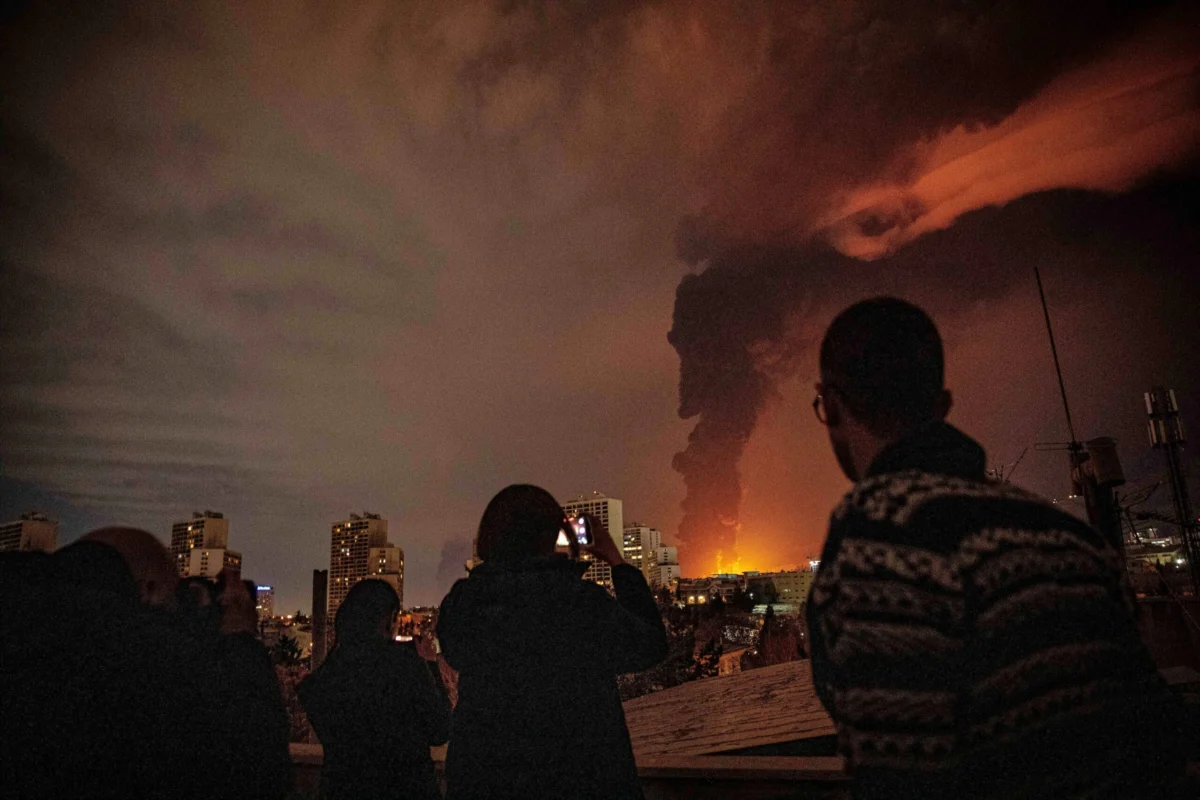
Kuwait Reports New Iranian Drone Attack and Fire at Mina Al-Ahmadi Refinery as Regional Tensions Escalate
Kuwait has reported a significant escalation in regional hostilities with a new drone attack targeting the critical Mina Al-Ahmadi oil refinery on Friday, which resulted in multiple fires across several units. This incident marks a second consecutive day of attacks on the facility, following a similar strike on Thursday that also ignited blazes. The renewed assault underscores the volatile security situation in the Middle East, with escalating military actions and rhetoric between Iran and its adversaries, including the United States and Israel.
Background of the Mina Al-Ahmadi Refinery and Previous Incidents
The Mina Al-Ahmadi refinery, located south of Kuwait City, is a cornerstone of Kuwait’s oil production and refining capacity. It is one of the largest and most complex refining facilities in the region, playing a crucial role in supplying both domestic energy needs and international markets with refined petroleum products. Its strategic importance makes it a potential target in any conflict involving regional powers.
The report of a second attack on consecutive days highlights a concerning pattern of deliberate targeting of energy infrastructure. While specific details regarding the type of drones used and the precise origin of the attack are still emerging, Kuwaiti authorities have pointed to Iran as the source. This assertion, if substantiated, would represent a significant escalation of Iran’s overt military actions beyond its borders and directly impacting a key ally of the United States.
The initial attack on Thursday, which also caused fires, suggests a sustained campaign rather than a singular event. The ability of drones to penetrate sophisticated air defenses and strike such a vital installation raises serious questions about regional security architectures and the effectiveness of current deterrents. The economic implications of such attacks are substantial, potentially disrupting global oil supplies and leading to price volatility in international energy markets.
US Military Claims Massive Strikes Against Iran Amidst Heightened Rhetoric
In parallel with the events in Kuwait, the United States military has been issuing increasingly frequent and substantial reports of military operations targeting Iranian forces and infrastructure. Since February 28th, following a joint US-Israeli offensive against Iran, American military spokespersons have been releasing daily or near-daily updates detailing the scale of these operations. As of the latest reports, the US claims to have struck over 7,800 Iranian targets, a significant increase from the approximately 1,000 targets reported on the first day of the conflict. A similar tally from Israeli forces indicates around 7,600 attacks conducted by the end of the previous week.
These figures, if accurate, represent an unprecedented scale of aerial bombardment and military engagement in the region. US military leadership has consistently characterized these operations as a "mortal blow" to Iran’s armed forces. Secretary of Defense Pete Hegseth stated last week during a press conference, "Never before has a military force as modern and capable as Iran’s been destroyed so rapidly, leaving it devastated and out of combat." This rhetoric suggests a comprehensive effort to neutralize Iran’s military capabilities.
However, a critical analysis of these claims reveals a potential disconnect between the stated objectives and the actual outcomes. The US has a history in the Middle East characterized by grand pronouncements and ambitious, often unmet, goals. While the sheer volume of reported strikes is undeniable, the long-term strategic impact on Iran’s ability to project power or retaliate remains a subject of intense scrutiny. The narrative of a swift and decisive victory often overshadows the complexities of protracted conflicts and the resilience of adversaries.
Netanyahu Perceives "Fissures" Within the Iranian Regime
Adding another layer to the escalating tensions, Israeli Prime Minister Benjamin Netanyahu has suggested that the Iranian regime is experiencing growing internal instability. Speaking to CNN on Thursday, Netanyahu indicated uncertainty surrounding the leadership of Iran’s supreme leader, stating, "I’m not sure who is running the country." This observation, if accurate, could suggest that the ongoing military pressure and internal dissent are beginning to erode the authority of the Iranian government.
The succession of Iran’s Supreme Leader has historically been a period of significant political maneuvering and potential vulnerability. Any perceived weakness or division within the highest echelons of power could embolden internal opposition and external adversaries alike. Netanyahu’s comments, made in the context of escalating regional conflict, could be interpreted as an attempt to capitalize on or highlight such perceived vulnerabilities.
Iranian National Football Team Remains Committed to World Cup Amidst Uncertainty
In a surprising development amidst the heightened military and political tensions, Iran’s national football team has confirmed its participation in the upcoming World Cup. This comes after initial reports suggested that the Iranian Minister of Sports was seriously considering withdrawing the team from the tournament. However, the Football Federation of the Islamic Republic of Iran (FFIRI) has now officially confirmed their presence.
Despite this confirmation, the team is reportedly negotiating with FIFA to relocate its matches to Mexico. The reasons for this potential relocation are not explicitly stated but are widely understood to be linked to the prevailing security concerns and the complex geopolitical climate. The decision to remain in the World Cup, even with the logistical challenges of relocating, underscores a desire by Iran to maintain a degree of normalcy and international engagement, even as it faces significant military pressure. This also raises questions about the impact of international sporting events on geopolitical narratives and the potential for sport to become a proxy battleground for political messaging.
Broader Implications and Analysis
The confluence of these events – a direct attack on Kuwait’s energy infrastructure, massive US military operations against Iran, and pronouncements of Iranian internal weakness – paints a grim picture of a region on a precipice. The renewed drone attack on the Mina Al-Ahmadi refinery has immediate economic implications, potentially impacting global oil prices and supply chains. It also raises serious concerns about the security of critical infrastructure across the Middle East and the effectiveness of existing defense mechanisms.
The scale of US military actions, as reported, suggests a strategy aimed at crippling Iran’s military capacity. However, the historical precedent of US interventions in the region indicates that achieving lasting strategic objectives is often more complex than initially projected. The emphasis on "grandiloquent rhetoric and unfulfilled goals" in US Middle East policy is a recurring theme, and the current situation warrants a cautious assessment of long-term outcomes.
Prime Minister Netanyahu’s comments on the internal state of the Iranian regime, while potentially strategic, also highlight the deep-seated animosity and suspicion between Israel and Iran. The perception of instability within Iran could lead to increased assertive actions from Israel, further escalating the conflict.
The decision of the Iranian football team to participate in the World Cup, while seemingly disconnected from the military conflict, offers a glimpse into the broader societal impact of these events. The potential relocation of matches to Mexico suggests the pervasive influence of security concerns on all aspects of Iranian life, even in the realm of international sports.
The coming days and weeks will be crucial in determining the trajectory of this escalating crisis. The international community is watching closely as diplomatic channels are tested and military actions continue to define the regional landscape. The potential for miscalculation or unintended escalation remains exceptionally high, with far-reaching consequences for global security and economic stability. The narrative of a swift and decisive victory, often favored by military powers, may prove to be an oversimplification in the face of a deeply entrenched and complex geopolitical struggle. The true impact of these events will be measured not just in the immediate military exchanges, but in the long-term stability and future of the Middle East.

Related Posts

The Electric Vehicle Battery Health Debate Emerges as Argentina’s EV Market Accelerates
President Donald Trump Confirms Secret Departure from Turkey Amidst Assassination Threat