
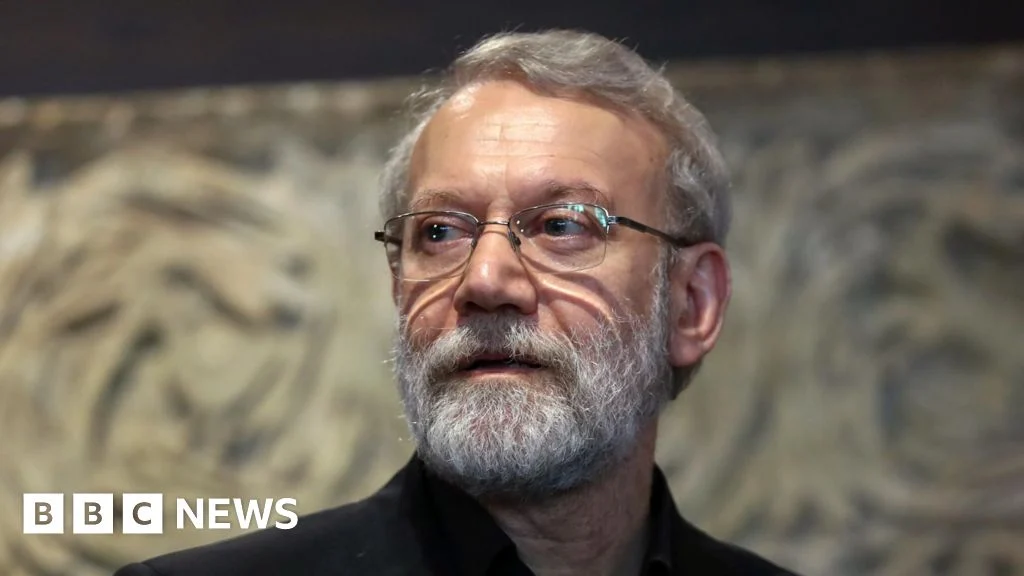
Israel Confirms Assassination of Top Security Official Ali Larijani and Basij Commander Gholamreza Soleimani in Escalating Regional Conflict
In a dramatic escalation of the ongoing regional conflict, Iran’s top security official, Ali Larijani, and the head of the powerful paramilitary Basij force, Gholamreza Soleimani, have been confirmed killed in Israeli air strikes. The assassinations, which also claimed the lives of Larijani’s son and several bodyguards, represent a significant blow to the Iranian leadership, coming just weeks after the death of Supreme Leader Ayatollah Ali Khamenei and plunging the Middle East further into an unprecedented state of war.
Defence Minister Israel Katz announced the deaths, stating, "Larijani and the Basij commander were eliminated last night and have joined Khamenei, the head of the annihilation programme, along with all those eliminated from the Axis of Evil in the depths of hell." This stark declaration underscores Israel’s assertive strategy in targeting key figures within the Iranian establishment, aiming to dismantle its command structure and strategic capabilities amidst the widening conflict.
Iranian authorities, through the Supreme National Security Council (SNSC), confirmed the fatalities early Wednesday local time. The SNSC statement, read on state television, declared that Larijani had "answered the call of God" after "a lifetime of struggle for the advancement of Iran and of the Islamic Revolution," confirming the deaths of Larijani, his son Morteza, an aide, and his bodyguards. The Revolutionary Guards later corroborated the death of Gholamreza Soleimani. These confirmations end a brief period of ambiguity, which saw messages purportedly from Larijani and Soleimani posted or read out on state media hours after the Israeli claims, potentially as a measure to sow doubt or manage internal reactions.
The Widening Gyre of Conflict: A Regional Quagmire
The current conflict ignited on 28 February of this year with concerted Israeli and US strikes that resulted in the death of Ayatollah Ali Khamenei. That event marked an unprecedented turning point, triggering a war that has rapidly metastasized across the Middle East. Iran has retaliated with a barrage of missiles and drones targeting Israel and Arab states hosting US military facilities, transforming the region into a volatile arena of direct and proxy confrontations.
The economic ramifications have been immediate and severe. Global oil prices have surged to record highs, with Iranian attacks forcing production stoppages in crucial Gulf states, including the UAE, and severely disrupting exports through the vital Strait of Hormuz waterway. This choke point, through which approximately 20% of the world’s petroleum and a third of all seaborne liquefied natural gas pass, is now a flashpoint of naval and aerial hostilities, threatening global energy security and supply chains. Analysts at the International Energy Agency have warned that prolonged disruption could trigger a global recession, as major economies grapple with inflationary pressures and supply uncertainties.
Ali Larijani: Architect of Repression, Pillar of the Regime
Ali Larijani’s assassination represents the most significant targeting of an Iranian official since Supreme Leader Khamenei’s death. The Israel Defense Forces (IDF) stated that "Following the elimination of Khamenei, Larijani consolidated his status as the de-facto leader of the Iranian regime and led the combat efforts against the State of Israel and countries across the region." This assessment highlights Larijani’s elevated importance in the power vacuum left by the Supreme Leader, making him a prime target for Israeli strategic operations.
Larijani’s career was long and multifaceted, deeply intertwined with the fabric of the Islamic Republic. A former commander in the Islamic Revolutionary Guard Corps (IRGC), he rose to national prominence as the head of Iran’s state broadcaster, IRIB, a position he held for a decade. His influence grew further when he became a security adviser to Khamenei in 2004, a role that gave him direct access and sway over the Supreme Leader’s inner circle. His diplomatic prowess was evident during his tenure as Iran’s chief nuclear negotiator with Western powers, where he navigated complex international relations concerning Iran’s controversial nuclear program. He also served as Speaker of Iran’s parliament, demonstrating his political dexterity and ability to command influence across different branches of government.
Initially a leader of the hardline "principlist" faction – staunchly committed to the ideological foundations of the Islamic Revolution – Larijani evolved in later years to be described as a "moderate conservative." This shift reflected a pragmatic approach to governance, though always within the parameters of the clerical establishment. His appointment as secretary of the Supreme National Security Council (SNSC) last August further cemented his position at the apex of Iran’s national security apparatus. The SNSC is the country’s highest decision-making body for security affairs, responsible for formulating defence, security, and foreign policy, making Larijani a central figure in Iran’s response to both internal and external challenges.
Crucially, Larijani is widely believed to have overseen the brutal crackdown by the Basij and other security forces on widespread protests that swept across Iran in December and January. These demonstrations, fueled by economic hardship, social restrictions, and political grievances, saw unprecedented levels of dissent. Human rights organizations reported that at least 6,508 protesters were killed, and more than 53,000 arrested, showcasing the regime’s uncompromising approach to internal opposition under Larijani’s strategic direction. His dual role as the late supreme leader’s representative on the SNSC and a close adviser positioned him as a critical strategist for the regime’s survival. Before the war, Khamenei had reportedly tasked Larijani with devising a comprehensive plan to ensure the Islamic Republic’s resilience against a major assault by Israel and the US, including contingency plans for the assassination of its leadership. This foresight, however, ultimately failed to prevent his own demise.
Gholamreza Soleimani and the Iron Fist of the Basij
The death of Gholamreza Soleimani, commander of the Basij Resistance Force, signifies a direct assault on the regime’s internal security architecture. The Basij, a volunteer militia with an estimated one million members, serves as a crucial instrument of state control, frequently deployed to suppress dissent and enforce ideological conformity on the streets of Iran. This force operates under the command of the powerful Islamic Revolutionary Guard Corps (IRGC), making Soleimani a vital link in Iran’s security chain.
The IDF explicitly cited Soleimani’s role in internal repression, stating, "During internal protests in Iran, particularly in recent periods as demonstrations intensified, Basij forces under Soleimani’s command led the main repression operations." The IDF also released video footage purporting to show one of several air strikes targeting Basij checkpoints across Tehran on Tuesday, suggesting a deliberate campaign to degrade the force’s operational capabilities and leadership. Local media in Iran had reported last week on earlier Israeli strikes on four checkpoints in the capital, resulting in the deaths of several security personnel, indicating a sustained effort to dismantle these key control points.
A Chronology of Escalation and Assassination
The current wave of assassinations forms part of a rapidly accelerating timeline:
- 28 February (Current Year): Israeli and US strikes commence, leading to the death of Supreme Leader Ayatollah Ali Khamenei and marking the official beginning of the current war.
- August (Previous Year): Ali Larijani is appointed Secretary of the Supreme National Security Council, consolidating his power.
- December-January (Current Year): Widespread anti-government protests are brutally suppressed under the alleged direction of Larijani and Soleimani.
- This Month (Current Year): A US submarine attack off the coast of Sri Lanka results in the deaths of 84 Iranian naval "warriors" aboard a warship, further inflaming tensions.
- Last Week (Current Year): Israeli strikes reportedly target Basij checkpoints in Tehran, killing several security personnel.
- Friday, March 13 (Current Year): Ali Larijani is last seen publicly at a pro-government Quds Day rally in Tehran, delivering a speech to supporters of the Islamic Republic.
- Tuesday, March 16 (Current Year): Israeli Defense Forces announce their air force killed Ali Larijani in a "precise strike" near Tehran. Later that day, Larijani’s social media accounts post an undated handwritten note praising the Iranian sailors killed off Sri Lanka, which state media claims was written on Tuesday. State TV also reads a similar message attributed to Soleimani, creating temporary confusion.
- Early Wednesday, March 17 (Current Year): Iran’s Supreme National Security Council officially confirms the deaths of Ali Larijani, his son Morteza, an aide, and bodyguards. The Revolutionary Guards subsequently confirm Gholamreza Soleimani’s death.
Regional and Global Reverberations
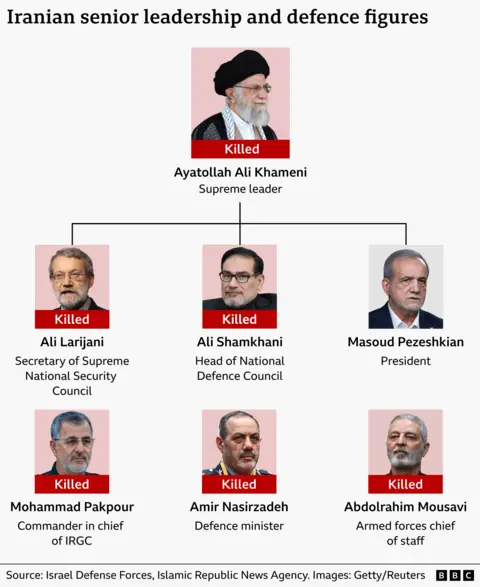
The assassinations are poised to have profound implications for Iran’s leadership, internal stability, and the trajectory of the regional conflict. While Mojtaba Khamenei, the late Supreme Leader’s son, was reportedly chosen as his successor, he has not been seen publicly or in any recent media since the start of the war, reportedly having been injured in the Israeli strike that killed his father. This absence has created a power vacuum at the very top, which Larijani, with his extensive experience and influential network, was widely seen as filling in a de-facto capacity. His removal further destabilizes the succession process and could lead to increased infighting among various factions within the clerical establishment and the IRGC.
The immediate aftermath has seen continued regional volatility. On Tuesday, sirens blared across Israel as Iranian forces launched several missile barrages. While Israel’s emergency services reported no casualties from these specific attacks, there were reports of fires from impacts. The conflict’s reach extended to the United Arab Emirates, where authorities confirmed that debris from an intercepted Iranian missile killed a Pakistani national in Abu Dhabi’s Bani Yas area. Furthermore, oil loading operations at the strategic port of Fujairah were partly halted after a third drone attack in four days, underscoring the severe and persistent threat to regional and global energy infrastructure.
The human cost of this escalating conflict continues to mount. According to the Iranian government, more than 1,300 people have been killed in Israeli and US strikes in Iran since the war began, including a significant number of non-combatants: 226 women and 204 children. In Israel, authorities report 12 fatalities from Iranian missile attacks. These figures paint a grim picture of widespread suffering and displacement, with humanitarian organizations expressing grave concerns about the welfare of civilian populations caught in the crossfire.
Internally, the news of Larijani and Soleimani’s deaths has evoked complex reactions within Iran. While official state media has predictably framed the deceased as martyrs, text messages sent to BBC Persian by Iranians opposed to the establishment revealed a starkly different sentiment. A man in his 30s from Tehran expressed a chilling welcome for the news, stating, "I think it was a very important step because the decision-making brains must be shut down." Another individual from Karaj echoed this sentiment, saying, "When they die, you might not believe it, but I get so happy because they’re criminals and have so much blood on their hands." These sentiments highlight the deep fissures within Iranian society and the profound animosity many feel towards the regime’s leadership, suggesting that even in times of external conflict, internal discontent remains a potent force.
The assassinations of Ali Larijani and Gholamreza Soleimani mark a pivotal moment in a conflict already characterized by unprecedented escalation. As the region grapples with the fallout, the international community watches with bated breath, concerned about the potential for further destabilization, uncontrolled retaliation, and the grim prospect of a protracted, devastating war with far-reaching global consequences. The immediate future of the Middle East hinges precariously on the next moves of the key belligerents, as the cycle of violence threatens to engulf the entire region.

Related Posts
Zambia on Edge: Opposition Leader Arrested Amid Allegations of Insurrection Plot and Election Tensions
Rescuers search for survivors of powerful Indonesia earthquake

