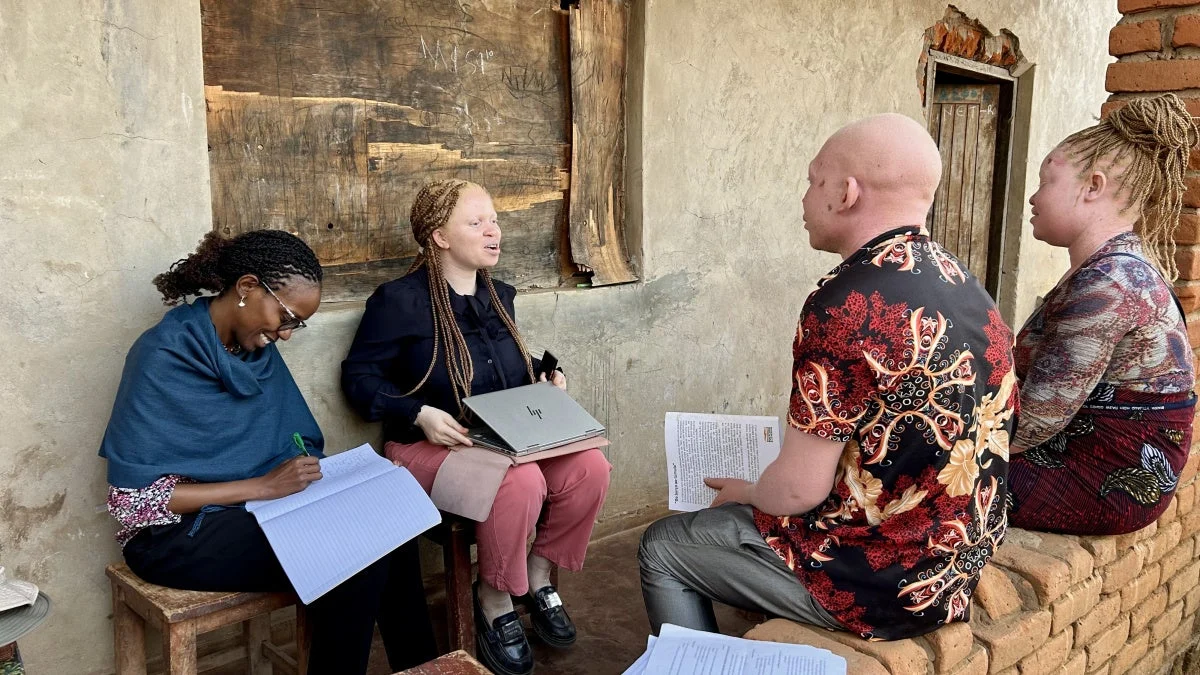
Beyond Awareness and Toward Action How Forum Theater is Redefining Disability Rights Advocacy for People with Albinism in Malawi
In the rural districts of Malawi, where the midday sun often beats down on dry earth and bustling local trading centers, a fundamental shift in human rights advocacy is taking root. For years, the standard approach to addressing the systemic violence and discrimination faced by people with albinism involved mobile outreach units, temporary tents, and loudspeaker-driven information sessions. While these programs were designed to educate the public, their effectiveness has increasingly come under scrutiny by experts and activists who argue that passive awareness is insufficient to dismantle deeply ingrained cultural myths and stop the cycle of ritualistic violence. In response to these limitations, a new methodology is emerging: the use of applied theater, specifically forum theater, to transform spectators into active participants in the fight for social justice.
The transition from traditional awareness campaigns to participatory advocacy marks a critical juncture in Malawi’s human rights landscape. For decades, people with albinism in the Southern African nation have lived under the shadow of fear, targeted for their body parts due to superstitious beliefs that they possess magical properties or bring wealth. Despite numerous government interventions and international outcries, the underlying social fabric that allows such stigma to persist has remained largely unchanged by top-down educational models. The introduction of forum theater represents a move toward a "shared act of critical reflection," where the community is no longer a passive recipient of information but a co-creator of solutions.
The Historical Context of Albinism in Malawi
To understand the necessity of this new advocacy model, one must examine the harrowing environment that necessitated its creation. Albinism, a genetic condition resulting in a lack of melanin in the skin, hair, and eyes, affects approximately 1 in 1,800 to 2,000 people in Malawi. This prevalence is significantly higher than in many other parts of the world, making the community a visible and often vulnerable minority.
The crisis reached a boiling point between 2014 and 2016, a period marked by a sharp escalation in ritual murders, abductions, and the desecration of graves. According to data from the Association of Persons with Albinism in Malawi (APAM) and various human rights monitors, over 170 cases of violence, including more than 20 murders, were recorded during this peak period. The violence was driven by a black market for body parts, fueled by the false promise that these items could be used in "charms" to ensure success in business or politics.
While the Malawian government responded with the 2018-2022 National Action Plan on Albinism (NAPA), which focused on protection, prevention, and prosecution, the social stigma remained a persistent barrier. Advocacy groups found that while people in rural areas could recite the fact that "people with albinism are human beings," their underlying behaviors and willingness to protect their neighbors did not always align with these statements. This "awareness-action gap" is what the new theater-based approach seeks to bridge.
The Limitations of Traditional Outreach Models
For years, the standard "tent and microphone" outreach program was the primary tool for NGOs and government agencies. These sessions typically involved a series of speeches, a question-and-answer period, and the distribution of brochures. However, theater practitioners and disability rights advocates have identified several critical flaws in this "banking" model of education.
First, these sessions are largely passive. Attendees gather, listen to experts speak from a position of authority, and then return to their daily lives. There is little opportunity for the community to grapple with their own prejudices or to simulate how they would react in a high-pressure situation, such as witnessing a kidnapping attempt or hearing a neighbor spread dangerous rumors.
Second, the "success" of these programs was often measured by attendance numbers rather than behavioral change. If 200 people showed up to a tent in a trading center, the outreach was deemed a victory. Yet, tracking the long-term impact of these sessions proved nearly impossible. Without a mechanism for follow-up or a way to turn verbal agreement into a tangible commitment, the information often evaporated once the organizers’ vehicles left the village.
The Methodology of Forum Theater
Applied theater, and specifically forum theater—a technique developed by Brazilian visionary Augusto Boal as part of his "Theater of the Oppressed"—offers a radical alternative. In this model, the line between the performer and the audience is blurred. The audience members become "spect-actors," who are empowered to stop the play and change the outcome of the narrative.
In the Malawian context, theater practitioners who are also disability rights advocates create short plays based on the real-life injustices faced by people with albinism. These plays do not offer easy answers; instead, they present "anti-models" of behavior. A scene might depict a family deciding whether to send their child with albinism to school amidst threats of violence, or a community leader turning a blind eye to a suspicious stranger in the village.
When the play reaches a moment of crisis or injustice, the "Joker" (a facilitator) pauses the action and asks the audience: "Does this have to happen? How can we change this?" This is where the transformation occurs. Community members are invited to literally step onto the stage, take the place of a character, and enact a different response. By physically practicing intervention, the community members are not just learning about rights; they are building the "muscle memory" of advocacy.
Data and Statistical Impact of Participatory Models
While quantitative data on theater-based advocacy is still being aggregated, early indicators suggest a higher rate of information retention and a greater sense of community ownership compared to traditional methods. In districts where participatory theater has been deployed, local "protection committees" have shown increased activity.
According to a 2022 assessment of community-led human rights initiatives in Southern Africa, programs that utilize "active participation" see a 40% higher rate of community-initiated reporting of crimes compared to areas relying solely on passive posters and radio ads. Furthermore, the use of forum theater allows advocates to record the specific solutions proposed by the audience. If a village decides that the best way to protect a child with albinism is to form a rotating "school walk" escort group, that solution is recorded as a tangible commitment by the community.
This data-driven approach allows advocates to move beyond anecdotal evidence. By documenting these commitments, organizations can conduct follow-up visits six months later to see if the escort group is still functioning, thereby creating a verifiable track record of social change.
Stakeholder Responses and Official Perspectives
The shift toward applied theater has garnered support from various sectors of Malawian society. Leaders within APAM have noted that theater allows for a more nuanced exploration of the intersectional challenges faced by people with albinism, such as the specific vulnerabilities of women and children or the lack of access to sun-protection creams and healthcare.
"We have seen that when people see our struggles portrayed in a way that they can touch and influence, the wall of ‘othering’ begins to crumble," says one advocate involved in the program. "It is no longer a lecture; it is a conversation among neighbors."
Government officials, while still focused on the legal aspects of the National Action Plan, have also begun to recognize the value of community-led social engineering. By empowering local leaders and villagers to solve problems internally, the burden on the state’s limited policing resources is reduced, and a more sustainable "bottom-up" security net is created.
Broader Implications and the Path Forward
The implications of this shift extend far beyond the borders of Malawi. Across Sub-Saharan Africa, from Tanzania to Mozambique, the "albinism crisis" remains a significant human rights challenge. The success of forum theater in Malawi provides a blueprint for other nations looking to move past the limitations of traditional advocacy.
Furthermore, this model challenges the global human rights community to rethink how "awareness" is conducted. It suggests that for any advocacy work to be sustainable, it must involve a shared act of critical reflection. It must move away from the "performance" of helping and toward the "practice" of empowerment.
As these theater practitioners pack up their props and leave the rural trading centers of Malawi, they are no longer just leaving behind a memory of a hot afternoon under a tent. They are leaving behind a community that has rehearsed the act of protection, a community that has looked at injustice and collectively decided on a different ending to the story. The true measure of this work will not be found in the applause at the end of a play, but in the long-term safety and inclusion of every person with albinism in the villages where these stories were told.

Related Posts

Human Rights Watch Calls for Investigation into Death of Detainee Following Removal from Najaf Hospital by Iraqi Drug Police

Human Rights Watch Urges UN Security Council to Extend Lebanon Peacekeeping Mission Amid Escalating Conflict and Humanitarian Crisis