
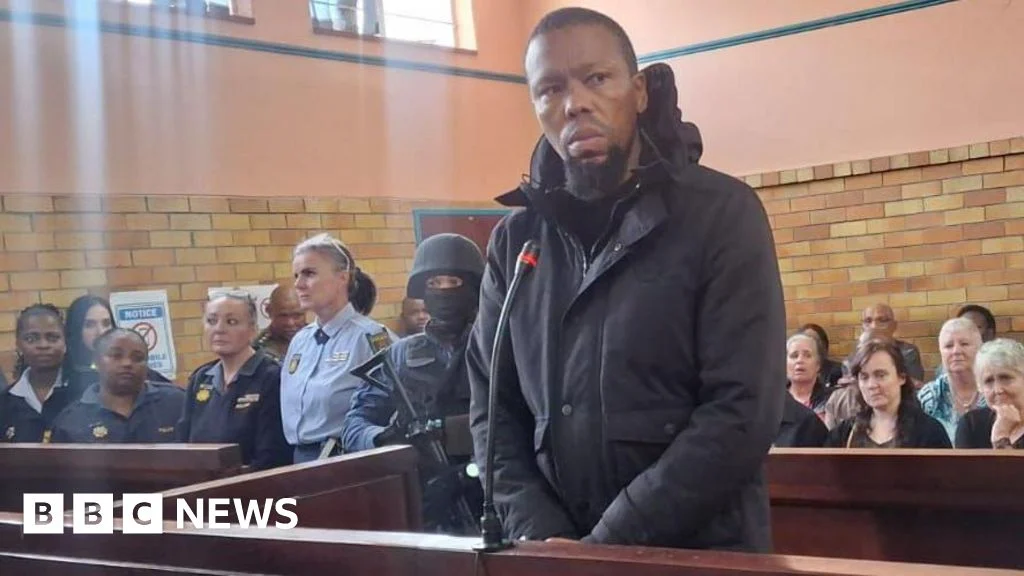
Whistleblower Murder Suspect is Former Elite Officer, South African Police Say
The arrest of a former elite police unit member, Matipandile Sotheni, on charges related to the murder of whistleblower Marius van der Merwe, has sent shockwaves through South Africa, highlighting the perilous risks faced by those who expose corruption within the state apparatus. Sotheni, 41, appeared in court accused of the cold-blooded killing of Van der Merwe in December last year, a murder allegedly committed in full view of the victim’s family. The case has ignited national outrage and intensified scrutiny on the integrity of law enforcement agencies and the effectiveness of whistleblower protection mechanisms in a country grappling with deep-seated corruption.
A Shocking Arrest in a High-Stakes Case
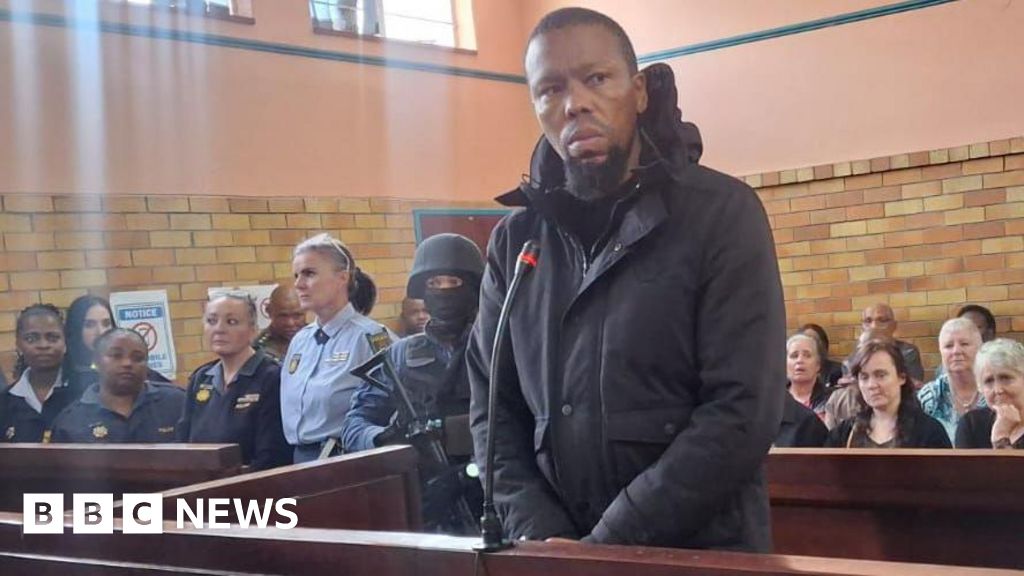
Matipandile Sotheni, whose background includes service in an elite police unit, was apprehended over the past weekend following an intensive investigation into Van der Merwe’s assassination. His court appearance marked a critical development in a case that has become emblematic of the dangers inherent in exposing alleged police brutality and corruption. Sotheni faces not only a murder charge for the killing of Van der Merwe but also charges of attempting to murder Van der Merwe’s wife and children, who were present during the horrific incident. While Sotheni has not yet commented on the charges, the gravity of the allegations underscores the high stakes involved for both the accused and the broader justice system. The proceedings have been adjourned, with a formal bail application set for March 25, during which further details regarding the prosecution’s case and Sotheni’s defence are expected to emerge.
The Slain Whistleblower: Marius van der Merwe’s Courageous Testimony
Marius van der Merwe, known publicly only as "Witness D" during his testimony, was a pivotal figure in the ongoing Madlanga commission of inquiry. His decision to come forward and provide evidence was an act of profound courage, given the sensitive nature of the information he possessed. Weeks before his murder, Van der Merwe had delivered damning testimony that implicated several police officials in the torture and murder of a robbery suspect. His account was instrumental in "blowing the lid" off what appeared to be widespread police corruption at a local level, leading directly to the suspension of several officers he had named.
Whistleblowers like Van der Merwe often operate under immense personal risk, and the anonymity afforded to "Witness D" through the Madlanga commission was intended to provide a layer of protection. However, his brutal murder tragically illustrates the severe limitations and vulnerabilities that remain, even with such safeguards in place. His testimony did not merely point to isolated incidents but painted a disturbing picture of systemic misconduct and abuse of power within parts of the South African Police Service (SAPS), resonishing with a public weary of corruption scandals.
The Madlanga Commission: Unveiling State Capture and Police Corruption
The Madlanga commission, established by President Cyril Ramaphosa, represents a critical component of South Africa’s broader efforts to combat corruption and restore faith in state institutions. Its mandate stemmed from explosive allegations made by a senior police officer, who claimed that organised crime groups had deeply infiltrated various levels of government. These allegations were so severe that they led to the suspension of South Africa’s Police Minister, Senzo Mchunu, who has vehemently denied any links to criminal gangs. In parallel, South Africa’s parliament has also launched its own investigation into these pervasive claims, signaling the multi-pronged institutional response to what is perceived as a significant threat to national security and democratic governance.
The commission’s work is vital in a country that has, in recent years, grappled with the devastating impact of state capture – a term used to describe the systematic corruption and manipulation of government institutions by private interests for personal gain. The testimony of individuals like Van der Merwe provides concrete evidence of how such grand corruption can manifest at the operational level, impacting ordinary citizens and eroding public trust in the very institutions designed to protect them. The ongoing nature of the Madlanga commission means that Van der Merwe’s insights, though tragically cut short, remain crucial to understanding the full extent of the challenges facing the SAPS and the wider government.
A Web of Deaths and Allegations: The Emmanuel Mbense Case
At the heart of Van der Merwe’s testimony was the chilling account of the alleged torture and murder of a robbery suspect, later identified as Emmanuel Mbense, in April 2022. Van der Merwe asserted that he was specifically ordered by local police chief Julius Mkhwanazi to dispose of Mbense’s body, an accusation that speaks volumes about the alleged complicity and abuse of authority at high levels within the local police force. Mkhwanazi has since been suspended over these accusations and denies any wrongdoing. Alarmingly, despite the severity of these allegations and the evidence presented, no arrests have yet been made in connection with Mbense’s death itself, highlighting the complexities and potential obstruction inherent in investigating crimes allegedly perpetrated by those in power.
The Mbense case is further complicated by a disturbing pattern of related deaths. According to police reports, three of the twelve individuals initially implicated in Mbense’s killing have also died. Two were reportedly shot dead, while a third died by suicide. This grim statistic raises profound questions about witness intimidation, the reach of criminal networks, and the safety of anyone associated with these investigations. The pattern suggests a concerted effort to silence those with knowledge of the alleged crimes, adding a layer of urgency and peril to the ongoing judicial processes.
The Suspects and the Investigation: Piecing Together the Crime
Brigadier Athlenda Mathe, a spokesperson for the South African Police Service, provided further details on the investigation into Van der Merwe’s murder. She identified Matipandile Sotheni as the alleged hitman, the individual believed to have pulled the trigger. Another suspect, Wiandre Pretorius, was identified as the driver of the vehicle used in the drive-by shooting that claimed Van der Merwe’s life. Tragically, Pretorius is also the suspect who died by suicide, adding to the macabre tally of deaths connected to this complex case. The vehicle used in the attack has since been seized by police, a crucial piece of forensic evidence. However, a key element of the investigation remains outstanding: the firearm believed to have been used in the murder, an AK-47, has yet to be recovered. The pursuit of this weapon is critical, as its discovery could provide further ballistic evidence and potentially link it to other crimes.
The investigation into Van der Merwe’s murder, while making significant progress with Sotheni’s arrest, is clearly far from over. The missing firearm, the alleged involvement of a former elite officer, and the intertwined deaths of other individuals connected to the underlying corruption case all point to a deeply entrenched network that the authorities are now attempting to unravel. The fact that Sotheni is a former member of an elite police unit adds another layer of complexity, raising questions about his training, potential access to resources, and possible connections within the broader security establishment.
The Perilous Path of Whistleblowers in South Africa
The murder of Marius van der Merwe serves as a stark reminder of the extreme dangers faced by whistleblowers in South Africa. Despite the existence of legal frameworks such as the Protected Disclosures Act, which is designed to safeguard individuals who expose wrongdoing, the practical realities often fall short. Whistleblowers frequently encounter severe retaliation, ranging from job loss and social ostracization to intimidation, harassment, and, in the most tragic instances, violence and death.
South Africa has a documented history of whistleblowers paying the ultimate price for their integrity. The chilling effect of such murders cannot be overstated; it instills fear in others who might otherwise come forward with crucial information, thereby hindering the fight against corruption and undermining efforts to promote transparency and accountability. Civil society organisations and anti-corruption advocates have long campaigned for stronger, more effective whistleblower protection mechanisms, including robust physical protection, psychological support, and legal assistance. The Van der Merwe case is likely to intensify these calls, urging the government to review and strengthen its witness protection programmes and ensure that those who expose wrongdoing are genuinely safe from reprisal. The perception that powerful individuals or organised crime can operate with impunity, even within state structures, is corrosive to democracy and public trust.
Official Responses and the Quest for Justice
In the wake of Sotheni’s arrest, official statements from the South African Police Service and the National Prosecuting Authority (NPA) have underscored their commitment to ensuring justice for Marius van der Merwe and his family. Authorities have reiterated their resolve to vigorously pursue all individuals involved in the murder, regardless of their past affiliations or positions. The NPA is expected to present a strong case, emphasizing the need to send a clear message that attacks on whistleblowers will not be tolerated.
Beyond the immediate legal proceedings, the broader implications for the SAPS are profound. The allegations of corruption, torture, and murder involving its members, and the subsequent targeting of a whistleblower, severely damage the institution’s credibility and public image. Police leadership faces immense pressure to demonstrate a genuine commitment to rooting out corrupt elements within its ranks and restoring the public’s confidence in its ability to uphold the law impartially. Civil society groups have been vocal, demanding transparency, accountability, and a thorough, uncompromised investigation. They advocate for systemic reforms that prevent such abuses of power and ensure that law enforcement agencies serve and protect all citizens, not just a select few.
Broader Implications for Governance and Public Trust
The unfolding events surrounding the murder of Marius van der Merwe and the arrest of Matipandile Sotheni carry significant implications for South African governance and public trust. The case serves as a critical test of the nation’s capacity to confront deep-seated corruption, particularly when it implicates individuals within its security apparatus. The ability of the justice system to secure convictions in such high-profile and sensitive cases is crucial for reinforcing the rule of law and demonstrating that no one is above it.
Furthermore, the ongoing parliamentary investigation into allegations of organised crime infiltration within the government gains renewed urgency in light of these developments. The Madlanga commission’s findings, coupled with the outcomes of the criminal trial, will undoubtedly shape public discourse on corruption and influence policy decisions aimed at strengthening institutional integrity. For South Africa, a nation still striving to consolidate its democratic gains and overcome the legacy of apartheid, the fight against corruption is not merely about prosecuting criminals; it is about safeguarding the foundational principles of justice, accountability, and the very fabric of its democratic institutions. The memory of Marius van der Merwe, the courageous whistleblower, will undoubtedly continue to inspire calls for a more just and transparent society, where those who speak truth to power are protected, not silenced.

Related Posts
Zambia on Edge: Opposition Leader Arrested Amid Allegations of Insurrection Plot and Election Tensions
Rescuers search for survivors of powerful Indonesia earthquake

