
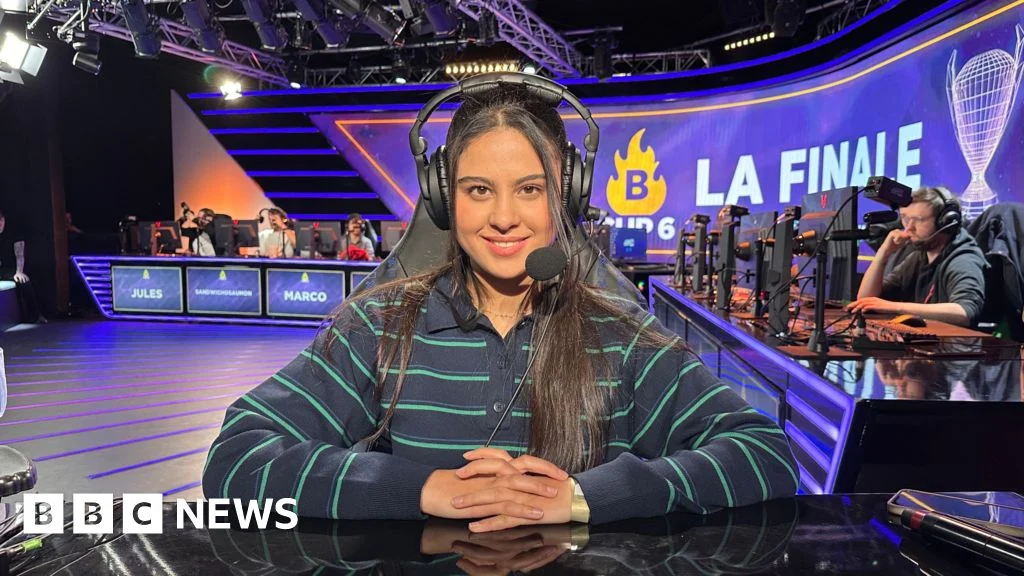
The Women Bringing Chess into the 21st Century with ‘Bullet’ Matches and Viral Videos
The ancient game of chess, long associated with hushed halls and protracted intellectual battles, is undergoing a dramatic transformation, spearheaded by a new generation of female innovators. These women are leveraging digital platforms and rapid-fire game formats to democratize chess, attracting millions of new players and viewers, and reshaping its image for the 21st century. At the forefront are figures like Woman Grandmaster Nemo Zhou and emerging streamer Sarah El Barbry, whose engaging online content and dynamic personalities are driving a global chess renaissance, making the game more accessible, exciting, and commercially viable than ever before.
The Digital Renaissance of Chess: From Tradition to Trend
For centuries, chess maintained an aura of exclusivity, often played in silent, serious environments with games stretching over many hours or even days. This traditional image, while revered, offered little to engage casual observers or younger audiences accustomed to fast-paced digital entertainment. However, the confluence of the global Covid-19 pandemic and the unexpected cultural phenomenon of Netflix’s The Queen’s Gambit in late 2020 ignited an unprecedented surge in interest, propelling chess into the mainstream consciousness. This "chess boom" created fertile ground for content creators who understood how to translate the game’s intricate beauty into compelling online experiences.
Key to this modernization is the proliferation of rapid chess formats. No longer confined to classical time controls where players might have hours per move, modern tournaments and online streams increasingly feature "rapid," "blitz," and "bullet" chess. These formats allocate significantly less time per player—ranging from 10 minutes for rapid, down to just 3 minutes for blitz, and an exhilarating 1 minute for bullet chess. The speed demands quick thinking, daring tactics, and often results in dramatic, error-prone finishes that are immensely entertaining to watch. To further heighten viewer engagement, top tournaments now employ heart rate monitors on players, visually conveying the intense psychological pressure and physical stress experienced during critical moments, a stark contrast to the stoic silence of old.
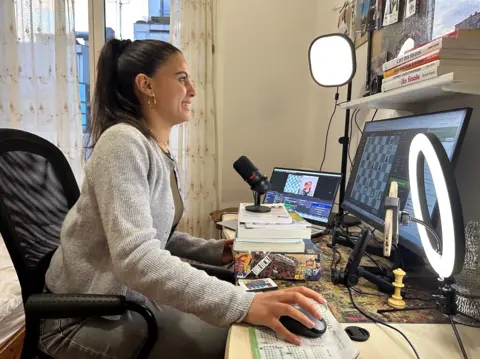
The integration of chess into the burgeoning world of esports further cements its contemporary relevance. Last year, chess made a landmark debut at the Esports World Cup in Riyadh, Saudi Arabia, one of the planet’s largest competitive gaming events. Its inclusion signaled a powerful recognition of chess’s competitive and entertainment value within the digital sports landscape. This year, the event is set to feature even more participants, underscoring the growing acceptance and popularity of chess as a legitimate esport. This strategic shift is vital in shedding chess’s antiquated perception as an "old man’s game," as noted by Woman International Master Fiona Steil-Antoni, a respected commentator and interviewer at international tournaments. "I think we needed a bit of a makeover," she asserts, "and we’re very much getting that."
The Streamer Economy: A New Path to Grandmaster Status
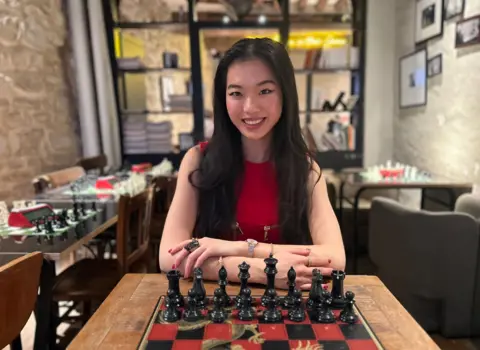
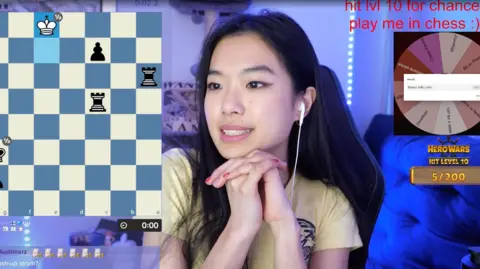
The digital transformation of chess has not only revitalized the game itself but also forged entirely new career paths for talented players, particularly women. Nemo Zhou, a Woman Grandmaster, exemplifies this shift. In 2020, during the initial Covid-19 lockdowns, Zhou, then a student of economics and mathematics at the University of Toronto, began streaming chess as a way to alleviate boredom and earn some income. Her timing was serendipitous; just months later, The Queen’s Gambit ignited a global fascination with chess, catapulting her channel into rapid growth. Recognizing the enduring nature of this boom, Zhou made the audacious decision to drop out of university and dedicate herself full-time to her burgeoning streaming career.
Five years on, the 26-year-old Zhou has amassed an impressive following of over two million across major platforms including Twitch, Instagram, YouTube, and TikTok. Her commitment is substantial, typically streaming five to six hours a day, at least five days a week, with peak viewership often occurring on weekends. Her content is diverse, featuring intense online matches, engaging chess puzzles, and even real-world challenges like taking on the renowned hustlers of New York’s Washington Square Park. This multifaceted approach, combining high-level play with relatable entertainment, has allowed her to build a loyal global community.
Zhou’s success has translated into a robust, multi-channel income stream. On YouTube, she profits from video views, advertising revenue, and lucrative brand deals. Instagram serves as a platform for sponsored posts, while Twitch, a cornerstone of live streaming, provides revenue through monthly subscriptions (starting around $5 in the US) and "bits," the platform’s in-app currency for donations. Dr. Nina Willment, an associate researcher at the University of York specializing in content creation, estimates that a creator with Zhou’s extensive reach could comfortably command a six-figure annual salary from these combined platforms. While Zhou refrains from disclosing her exact earnings, Dr. Willment’s assessment places her among the elite, noting that a following of over two million across platforms puts her in the top 1-2% of content creators globally. This highlights the immense earning potential at the pinnacle of the streaming world, transforming a traditional academic pursuit into a dynamic digital empire.
Sarah El Barbry: A Rising Star in the French Chess Scene
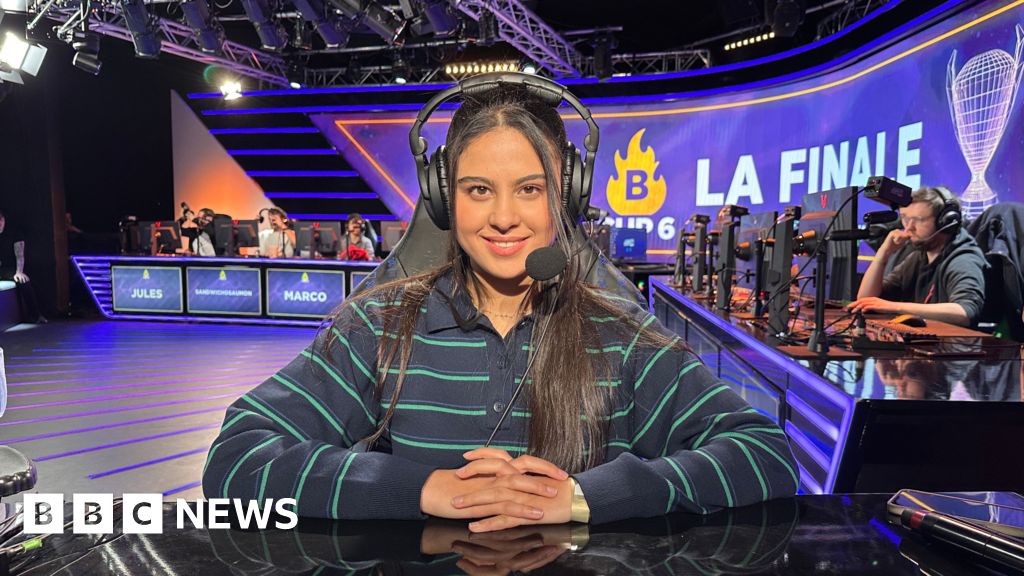
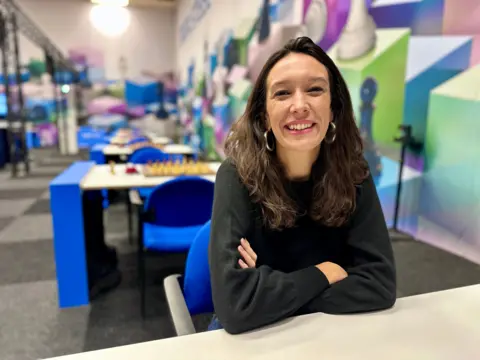
Following in the footsteps of established streamers like Nemo Zhou, Sarah El Barbry represents the next wave of chess content creators. The 24-year-old, of Egyptian and Moroccan heritage and raised in Paris, began creating chess content on TikTok in 2023. Observing a noticeable gap in the French-speaking streaming landscape for female chess players, she launched her own stream in 2024.
El Barbry’s content mirrors the engaging diversity of her predecessors. She showcases online chess matches, provides educational insights, and undertakes captivating in-person challenges, such as playing blindfolded – a demanding feat requiring players to visualize the entire board mentally. Her breakout moment arrived in November 2024 when a video featuring her executing a checkmate with only a King and Queen went massively viral, garnering an astonishing 28 million views and adding 10,000 new followers to her rapidly expanding audience. She now commands over 75,000 followers across her various platforms, demonstrating the power of compelling, shareable content.
The commitment required for this new career is immense. El Barbry candidly states, "Since I started, I’ve never stopped thinking about content creation. I work sometimes during the night from midnight to 3 am." This dedication underscores the entrepreneurial drive necessary to succeed in the competitive streaming landscape. However, the path to financial stability is often challenging. Initially, El Barbry earned a modest $117 (£87) per month from streaming before diversifying her efforts onto YouTube. While her income has grown significantly to around $1,700 (£1,300) per month, it still falls below France’s minimum wage, illustrating the precarious early stages of a streaming career. As Dr. Willment points out, the high-profile successes of top streamers "overshadows" the reality that "thousands, if not millions of people" struggle to gain traction and earn substantial income. Despite these hurdles, El Barbry, armed with a civil engineering degree and a master’s in business management, is giving herself a six-month window to establish her streaming career, with a corporate path as her backup plan. Her recent debut as a commentator at a major esports event in January highlights her versatility and ambition. "I feel that this year is going to be crazy," she reflects, "It’s going to be everything or nothing."
Challenging the Gender Divide: Progress and Persistent Gaps
The influx of women into chess streaming is having a tangible impact on the game’s long-standing gender imbalance. As of January 2026, data from Twitchmetrics, an online platform tracking viewer engagement, reveals that female-led channels accounted for approximately half of the top 20 most-watched chess streams on Twitch, excluding large corporate channels. This is a significant indicator of increased visibility and audience engagement for women in the online chess space.
Historically, chess has been a male-dominated pursuit, both in terms of participation and elite performance. While the streaming landscape shows promising signs of gender parity in viewership and content creation, the broader chess community, and especially its competitive echelons, still grapple with significant gender disparities. Most chess content creators and their audiences remain predominantly male. El Barbry estimates that her audience was initially 95% male, gradually shifting to about 85% male. She acknowledges this imbalance, stating, "I know I have more viewers because I’m a girl. I’m OK with that because, you know, it’s a part of the game." Zhou’s YouTube audience is similarly about 80% male, though her Instagram chess page surprisingly boasts a near 50-50 split, which she describes as "pretty crazy and pretty cool," suggesting that different platforms might attract varying demographics.
Beyond streaming, there is compelling evidence that the chess boom is translating into increased competitive participation by women and girls. The proportion of female players registered with the world chess federation Fide for the "standard" time control – the format for most competitive games – has risen from 10% in 2020 to 16.5% in 2026. This 65% increase over six years is a strong indicator of growing interest and engagement at a foundational level.
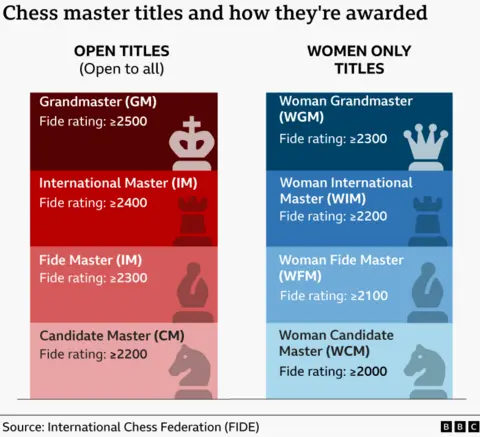
Despite these positive trends, the elite level of competitive chess remains largely dominated by men. Currently, there are no women in the top 100 Fide-ranked players globally, and only three women throughout history have ever achieved this feat. Studies examining this performance gap point to a complex interplay of factors, including lower overall participation rates among girls and women, a notable scarcity of female coaches and mentors, and playing environments that, historically and sometimes presently, can be unwelcoming or even hostile to women.
However, geographical data offers insights into potential solutions. In countries where chess is integrated into primary school curricula, participation gaps between genders are significantly smaller. For instance, in Mongolia, nearly 40% of Fide-registered players are female; in Sri Lanka, it’s 35%; and in Uganda, 30%. These figures suggest that early exposure, combined with a supportive and inclusive learning environment, can dramatically increase female engagement in chess. Fiona Steil-Antoni, reflecting on these changes, expresses cautious optimism, believing that the game will move closer to "some kind of equality in my lifetime."
Paving the Way: Elite Representation and Grassroots Growth
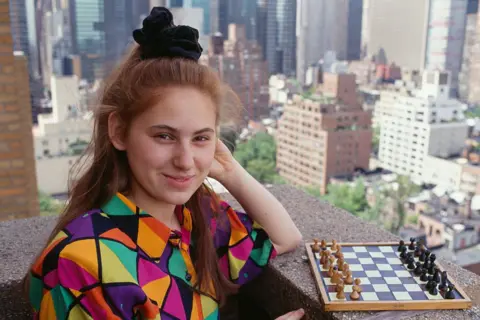
The historical benchmark for female achievement in chess is undeniably Judit Polgar. The Hungarian prodigy is the only woman in history to have consistently competed at the absolute elite level, achieving a peak ranking of eighth in the world. At just 15, she shattered Bobby Fischer’s world record, becoming the youngest grandmaster ever at the time. Polgar’s career served as a powerful testament to women’s intellectual capabilities in chess, inspiring generations. Her legacy, alongside the rising tide of female streamers and competitive players, underscores a broader cultural shift towards greater inclusion and recognition. The Fide statistics, while showing a significant climb in overall female participation, also highlight the continued journey towards achieving parity at the very top. Efforts to create more welcoming spaces, increase female mentorship, and promote chess education globally are crucial to nurturing the next generation of female grandmasters.
Beyond the Board: Future Trajectories and Cultural Impact
The careers of Nemo Zhou and Sarah El Barbry signal an evolving landscape for chess professionals, one that extends beyond the 64 squares. Zhou, with her established platform, is already diversifying her brand. She has branched out into lifestyle, travel, and fashion content, notably participating in Paris Fashion Week in October. Her ambition now includes signing with a modelling agency and reaching one million followers on her Instagram chess page, illustrating a strategic move towards becoming a broader media personality. This diversification reflects the entrepreneurial spirit of modern content creators, who often leverage their initial niche success to explore wider avenues of influence and commercial opportunity.
El Barbry, despite being in the earlier stages of her streaming journey, also embodies this forward-thinking approach. Her academic background in civil engineering and business management provides a robust safety net, yet her dedication to streaming is absolute. Her "everything or nothing" mentality for the coming year highlights the high-stakes, high-reward nature of the creator economy. Both women are not merely players or commentators; they are entrepreneurs, entertainers, and advocates, actively shaping how chess is perceived and consumed globally.
The impact of these women extends beyond their individual success stories. They are collectively contributing to a more vibrant, dynamic, and inclusive chess culture. By demonstrating that chess can be both intellectually stimulating and exhilaratingly entertaining, they are drawing in audiences who might never have considered the game before. Their presence on platforms like Twitch and TikTok breaks down traditional barriers, making chess feel contemporary and accessible, particularly for younger demographics and for women and girls who now see visible role models thriving in the community. Their journey underscores the profound power of digital media to not only popularize an ancient game but also to drive significant social and cultural change within its ecosystem.
This is part of the Global Women series from the BBC World Service, sharing untold and important stories from around the globe.

Related Posts

Zambia on Edge: Opposition Leader Arrested Amid Allegations of Insurrection Plot and Election Tensions

Rescuers search for survivors of powerful Indonesia earthquake

