
Deep-Sea Treasure Hunter Tommy Thompson Released After Decade in Prison, Missing Gold Coins Fuel Enduring Mystery
Tommy Thompson, the enigmatic deep-sea explorer who captivated the world with his discovery of the "Ship of Gold," the SS Central America, has been released from federal prison after a decade-long incarceration for civil contempt. Now 73, Thompson’s release, granted after a judge determined he was unlikely to ever disclose the whereabouts of 500 missing gold coins, marks a complex chapter in one of modern history’s most fascinating tales of sunken treasure, scientific ingenuity, and legal defiance. The 500 gold coins, believed to be worth millions, remain unaccounted for, leaving investors and legal authorities with an unresolved mystery that has spanned decades.
The Tragic Voyage of the SS Central America: A Historical Context
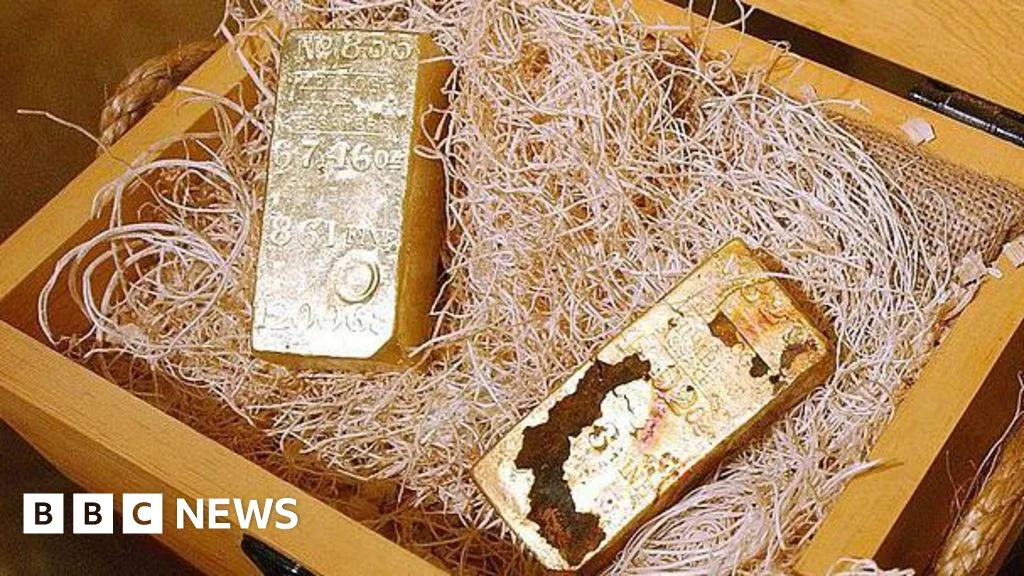
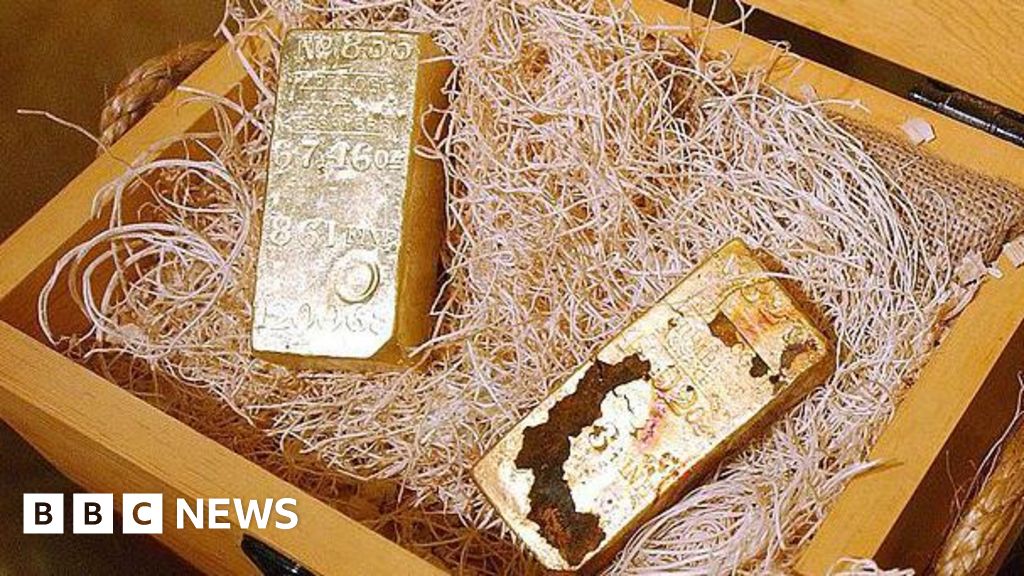
The story of the missing gold begins with the SS Central America, a magnificent side-wheel steamer that met its tragic end in September 1857. Built in 1853, the vessel was a vital link between the burgeoning gold fields of California and the financial centers of the East Coast. After traversing the Isthmus of Panama by rail, passengers and precious cargo from California would board the SS Central America in Colón (then Aspinwall) for the final leg of their journey to New York City. On September 3, 1857, the ship departed Havana, Cuba, bound for New York, carrying an estimated 578 passengers and crew, and a staggering 30,000 pounds of newly minted gold. This immense treasure, primarily in the form of gold ingots and newly minted $20 "Double Eagle" coins from the San Francisco Mint, was destined for banks on the East Coast, intended to shore up their reserves.
Four days into its voyage, the SS Central America encountered a ferocious hurricane off the coast of the Carolinas. For two days, the ship battled the relentless storm, which ultimately shredded its sails, extinguished its boilers, and left it adrift and taking on water. Despite heroic efforts by Captain William Lewis Herndon and his crew, the vessel succumbed to the sea on September 12, 1857, sinking to a depth of 7,000 feet. The disaster claimed the lives of 425 people, making it one of the deadliest maritime tragedies in American history. Beyond the devastating human cost, the loss of the SS Central America and its colossal gold cargo sent shockwaves through the American economy. The sudden disappearance of such a substantial portion of the nation’s gold supply contributed significantly to the financial Panic of 1857, triggering a severe economic depression that saw widespread bank failures, business collapses, and mass unemployment across the United States. The "Ship of Gold" became a legend, its resting place a tantalizing, yet seemingly unreachable, prize.
Tommy Thompson’s Groundbreaking Discovery and the Lure of Sunken Gold
For over a century, the SS Central America lay undisturbed at the bottom of the Atlantic, its immense treasure a subject of lore and speculation. It wasn’t until the late 20th century that advancements in deep-sea technology made its recovery a conceivable prospect. Enter Tommy Thompson, an oceanic engineer from the Battelle Memorial Institute in Columbus, Ohio. Driven by a blend of scientific curiosity and entrepreneurial ambition, Thompson dedicated years to developing revolutionary deep-sea exploration and recovery technologies. His Columbus-America Discovery Group pioneered the use of sophisticated sonar mapping, remotely operated vehicles (ROVs), and custom-built recovery tools designed to operate at extreme depths.
Recognizing the immense financial undertaking required for such a venture, Thompson secured funding from 161 private investors, raising $12.7 million (£9.4 million) with the promise of substantial returns upon the recovery and sale of the gold. After years of meticulous research, planning, and technological development, Thompson’s team finally located the wreck of the SS Central America in 1988, approximately 160 miles off the coast of South Carolina. The discovery was hailed as an unparalleled feat of engineering and exploration. Over subsequent expeditions, Thompson and his crew brought up thousands of gold bars and coins, a treasure trove that instantly captured global attention. The recovered artifacts offered an invaluable glimpse into 19th-century American life and coinage, with many pieces in remarkably preserved condition. Initial estimates placed the value of the recovered gold in the tens of millions, though later assessments would dramatically increase that figure.
The Unraveling: Investor Disputes and the Missing Fortune
The euphoria surrounding the discovery, however, soon gave way to bitter legal disputes. While Thompson and his team had successfully retrieved an extraordinary amount of gold, the promised returns to his investors failed to materialize. In 2000, a significant portion of the recovered gold was sold to a gold marketing group for approximately $50 million. However, the 161 investors, who had collectively funded the expedition, claimed they had not received any proceeds from the sale.
Thompson, through his legal representatives, maintained that the vast majority of the funds from the initial sale had been consumed by exorbitant legal fees stemming from salvage rights disputes and by bank loans taken out to finance the ambitious project. He further asserted that a substantial portion of the remaining gold, specifically the 500 gold coins that would become the central focus of his legal woes, had been placed into a trust located in Belize. This explanation, however, failed to satisfy the increasingly frustrated investors. They viewed Thompson’s actions as a deliberate obfuscation, accusing him of hoarding assets and reneging on his contractual obligations.
Chronology of Conflict: Lawsuits, Fugitive Status, and Capture
The simmering discontent among investors erupted into full-blown legal action in 2005, when they filed a lawsuit against Thompson, alleging fraud and breach of contract. This marked the beginning of a protracted legal battle that would ultimately lead to Thompson’s downfall.
- 1988: Thompson’s Columbus-America Discovery Group locates and begins recovery of gold from the SS Central America.
- 2000: A significant portion of the recovered gold is sold for approximately $50 million. Investors report receiving no returns.
- 2005: Investors file a lawsuit against Thompson, accusing him of defrauding them and demanding an accounting of the treasure and its proceeds.
- 2006-2012: Thompson faces multiple court orders demanding that he disclose the location of the remaining assets, particularly the 500 gold coins. He offers various explanations but consistently fails to comply fully.
- 2012: Facing a court appearance to provide sworn testimony regarding the missing gold, Thompson vanishes. He becomes a federal fugitive. Authorities issue a warrant for his arrest for criminal contempt.
- 2012-2015: Thompson evades capture for over two years. During this period, federal investigators meticulously track his movements and financial activities. It was later revealed that he and his associate, Alison Antekeier, lived in a hotel in Boca Raton, Florida, for two years, paying cash under false names and using only taxis and public transport to avoid leaving a traceable footprint.
- January 2015: U.S. Marshals finally apprehend Thompson and Antekeier at a hotel in Boca Raton.
- 2015: Thompson is charged with criminal contempt for failing to appear in court and subsequently jailed on a civil contempt charge for refusing to disclose the location of the 500 gold coins.
- 2015-2023: Thompson remains incarcerated for civil contempt. He repeatedly claims memory loss or that the coins were handed over to a trust, but provides no verifiable details. His legal team challenges his detention, citing his age and health, but the courts consistently rule that he holds the "keys to his own cell" by simply revealing the information.
- 2023: After nearly a decade, a federal judge agrees to end Thompson’s civil contempt sentence, concluding that further incarceration was unlikely to compel him to comply with the court order. The judge reasoned that Thompson had demonstrated an unyielding refusal to cooperate, making continued detention ineffective as a coercive measure.
- Late 2023/Early 2024: Thompson is formally released from prison.
A Decade Behind Bars: The Peculiar Nature of Civil Contempt
Thompson’s decade-long imprisonment for civil contempt highlights a unique aspect of the American legal system. Unlike criminal contempt, which punishes past misconduct, civil contempt aims to compel an individual to comply with a court order. The sentence is often indefinite, designed to last only until the individual fulfills their obligation. In Thompson’s case, that obligation was to reveal the location of the 500 missing gold coins. For years, judges reiterated that Thompson held the "keys to his own cell," implying that his release was entirely contingent on his cooperation.
Despite this, Thompson remained steadfast in his refusal to disclose the information. He variously claimed memory loss, asserted that the gold was already turned over to a trust in Belize, or suggested that his former associates were responsible. None of these explanations were ever substantiated to the satisfaction of the courts or the investors. His legal team argued that continued incarceration was punitive rather than coercive, especially given his advanced age and declining health. Ultimately, the judge’s decision to end his civil contempt sentence reflected a pragmatic acknowledgment of an impasse: the court had exhausted its coercive power, and Thompson was unlikely to ever yield.
The Unresolved Mystery: The Fate of the 500 Gold Coins
With Thompson’s release, the central mystery of the 500 missing gold coins from the SS Central America endures. These are not just any coins; they are likely 1857-S Double Eagles, minted in San Francisco during the peak of the California Gold Rush. Depending on their condition and rarity, individual coins can fetch tens or even hundreds of thousands of dollars at auction. The collective value of 500 such coins would easily run into millions, potentially tens of millions, making their disappearance a significant unresolved financial and legal matter.
The implications for the original 161 investors are profound. They poured millions into Thompson’s ambitious project, fueled by the promise of historic returns, only to be left empty-handed and entangled in decades of litigation. Their initial investment of $12.7 million has never been repaid, nor have they seen any profits from the recovered treasure. While some of the investors may have passed away during the long legal battle, their estates or surviving family members are still seeking redress. The questions remain: Are the coins still hidden? Were they sold discreetly? Or were Thompson’s explanations, however improbable, closer to the truth than investigators believed? Without Thompson’s cooperation, these questions are likely to remain unanswered.
Broader Implications and the Legacy of the "Ship of Gold"
The saga of Tommy Thompson and the SS Central America has far-reaching implications, touching upon the ethics of treasure hunting, the complexities of maritime law, and the limitations of the legal system.
- Investor Protection: The case serves as a stark cautionary tale for investors in high-risk ventures, particularly those involving speculative assets like sunken treasure. It underscores the critical need for robust legal agreements, stringent oversight, and transparency in managing investor funds and assets.
- Deep-Sea Salvage Law: The SS Central America case contributed to the evolution of deep-sea salvage law, highlighting the intricate legal frameworks governing ownership, recovery rights, and the division of spoils from historic wrecks in international waters. Balancing the interests of discoverers, investors, and historical preservationists remains a delicate act.
- Scientific and Historical Value: Beyond the financial drama, the SS Central America itself remains a site of immense scientific and historical importance. The artifacts recovered have provided invaluable insights into 19th-century maritime technology, economic history, and the daily lives of passengers and crew. Thompson’s initial groundbreaking work in deep-sea recovery paved the way for future explorations.
- The Allure of Treasure: The enduring fascination with sunken treasure, from ancient galleons to modern shipwrecks, is powerfully demonstrated by this case. It highlights the potential for immense wealth but also the perilous legal and ethical quagmires that can accompany such discoveries.
- Limits of Legal Coercion: Thompson’s steadfast refusal to comply with court orders, even under the duress of a decade in prison, illustrates the ultimate limits of civil contempt as a legal tool. When an individual is absolutely determined not to cooperate, the legal system eventually faces an intractable problem, forcing a reevaluation of whether continued detention serves its intended purpose.
Future Outlook
With Tommy Thompson now released, the immediate legal pressure on him concerning the 500 gold coins has abated, at least regarding the civil contempt charge. However, his legal troubles are not necessarily over. Civil judgments against him remain, and the investors could pursue further asset recovery efforts. There is also the possibility of new evidence emerging or new legal avenues being explored to locate the missing gold. Thompson, now in his mid-70s, faces an uncertain future, burdened by legal judgments and the enduring shadow of the "Ship of Gold."
The SS Central America will forever be remembered not just for its tragic sinking and the treasure it carried, but also for the complex human drama that unfolded in its wake. The story of Tommy Thompson, a brilliant engineer who achieved an impossible feat only to become embroiled in an inescapable legal quagmire, stands as a testament to the powerful, often perilous, allure of gold from the deep. The 500 missing coins remain a silent testament to a mystery that, for now, continues to defy resolution, adding another layer to the legend of the "Ship of Gold."

Related Posts

Zambia on Edge: Opposition Leader Arrested Amid Allegations of Insurrection Plot and Election Tensions

Rescuers search for survivors of powerful Indonesia earthquake

