European Parliament Urges Niger to Free Detained Ex-President
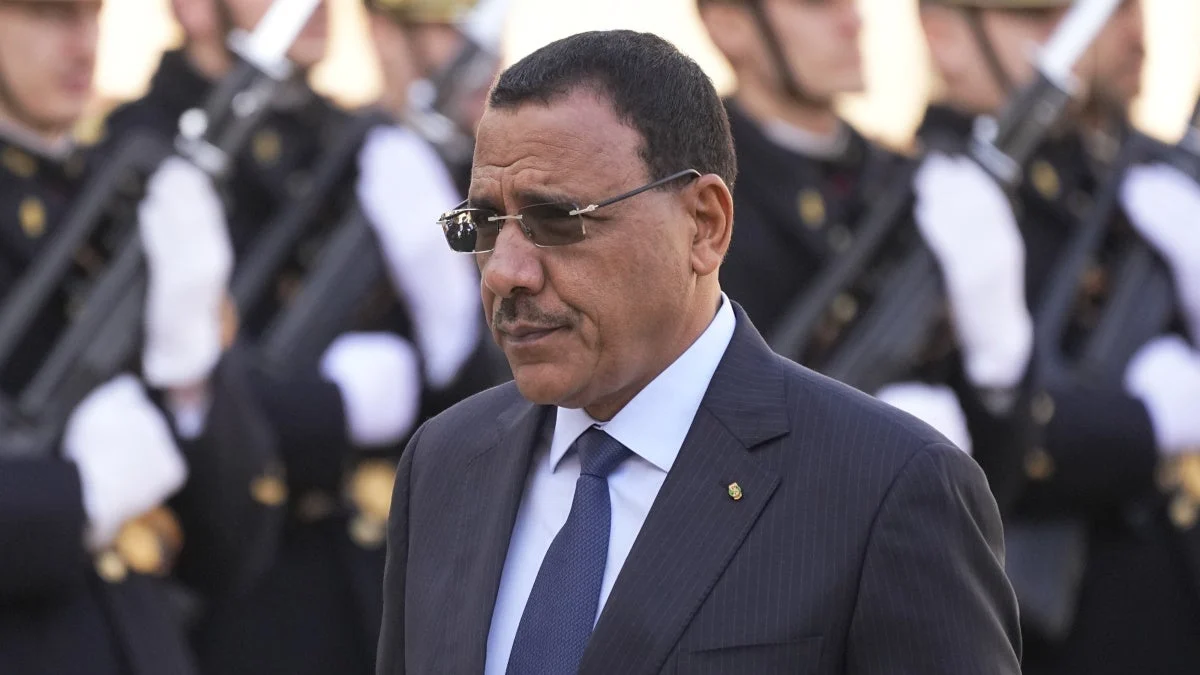
Over two-and-a-half years since the military coup that reshaped the geopolitical landscape of the Sahel, Niger’s ousted president, Mohamed Bazoum, remains in a state of legal limbo. Alongside his wife, Hadiza Bazoum, the former head of state has been held under house arrest in the presidential palace in Niamey without a clear legal basis, a situation that has drawn intensifying condemnation from the international community. The latest escalation in diplomatic pressure arrived on March 11, when the European Parliament adopted an urgent resolution demanding the immediate and unconditional release of the Bazoums and other political figures detained during and after the July 2023 power grab.
The resolution, passed with unanimous support in Strasbourg, characterizes the detention as "arbitrary" and a direct violation of both Niger’s domestic laws and international human rights obligations. However, the reaction from Niamey was swift and defiant. Niger’s Ministry of Foreign Affairs summoned the European Union’s representative to express its "indignation," accusing the European body of "unacceptable interference" in the country’s sovereign affairs. This diplomatic friction underscores the deepening chasm between the military junta, known as the National Council for the Safeguard of the Homeland (CNSP), and Western institutions that once viewed Niger as a cornerstone of stability in a volatile region.
A Timeline of Captivity and Legal Contention
The detention of Mohamed Bazoum began on July 26, 2023, when members of the presidential guard, led by General Abdourahamane Tchiani, moved against the democratically elected government. Since that day, the Bazoum family has been confined with limited access to the outside world, legal counsel, or medical care. The trajectory of their detention has been marked by a series of international legal rulings that the CNSP has consistently ignored.
In December 2023, the Court of Justice of the Economic Community of West African States (ECOWAS) delivered a landmark ruling. The court declared that the detention of Bazoum, his wife, and his son, Salem (who was later provisionally released and left for Togo in early 2024), was unlawful. The court ordered their immediate release and the restoration of constitutional order. The junta, however, dismissed the ruling, eventually leading to Niger’s announced withdrawal from ECOWAS alongside neighboring Mali and Burkina Faso.
By June 2024, the legal landscape shifted from detention to prosecution. A newly established State Court in Niamey—created by the junta to replace certain functions of the high courts—lifted Mohamed Bazoum’s presidential immunity. This move was widely criticized by human rights organizations, including Human Rights Watch, which noted that the proceedings fell far short of international standards for due process. The lifting of immunity cleared the way for the junta to pursue charges of "high treason" and "undermining national security" against the ousted president.
In February 2025, the United Nations Working Group on Arbitrary Detention released a comprehensive report concluding that the deprivation of liberty for Bazoum and his wife lacked any legal foundation. The group’s findings emphasized that the detention was motivated solely by Bazoum’s political status and his refusal to resign his office, thereby qualifying as a violation of the International Covenant on Civil and Political Rights.
The Systematic Erasure of Dissent
The case of Mohamed Bazoum is not an isolated incident but rather the centerpiece of a broader systemic crackdown on dissent within Niger. Since the coup, the CNSP has consolidated power by targeting the three pillars of a democratic society: the political opposition, independent media, and civil society activists.
According to human rights monitors, at least 30 high-ranking officials from the Bazoum administration have been detained since July 2023. Many of these individuals have been held for months without being brought before a judge or informed of the specific charges against them. The military authorities have defended these actions as necessary for national security and the "cleansing" of the state apparatus, yet critics argue they are intended to decapitate any potential political challenge to military rule.
The arrest of Moussa Tiangari in December 2024 serves as a poignant example of the shrinking space for civil society. Tiangari, a prominent human rights defender and a vocal critic of the junta’s domestic policies, remains in custody on what international observers describe as fabricated terrorism-related charges. His detention sent a chilling message to the activist community: that even peaceful criticism of the CNSP’s transition timeline or security strategies would be met with severe judicial retaliation.
Furthermore, the media landscape in Niger has faced unprecedented pressure. In October 2025, six journalists were arrested under a controversial cybercrime law that had been amended by the junta to include harsher penalties for "spreading false news" or "disturbing public order." These journalists remain in detention, highlighting the military’s use of legislative instruments to silence reporting that contradicts the official narrative of the "transition."
Regional Shifts and Geopolitical Realignments
The standoff over Bazoum’s detention is occurring within a larger context of geopolitical realignment in the Sahel. Under Bazoum, Niger was a key partner for France and the United States in counter-terrorism efforts against groups linked to Al-Qaeda and the Islamic State. Following the coup, the CNSP demanded the withdrawal of French troops and eventually ended military cooperation with the United States, citing a desire for "total sovereignty."
Niger has since pivoted toward the Alliance of Sahel States (AES), a mutual defense pact with Mali and Burkina Faso, both of which are also governed by military juntas. This bloc has increasingly sought security and economic partnerships with Russia, particularly through the Africa Corps (formerly the Wagner Group). The defiant response to the European Parliament’s resolution is consistent with this new foreign policy direction, which prioritizes "non-interference" and rejects the traditional influence of European powers.
However, this shift has come at a significant cost. Before the coup, Niger was one of the world’s largest recipients of international aid, which accounted for approximately 40% of its national budget. The suspension of much of this aid by the EU and other Western donors has exacerbated an already dire humanitarian situation. According to UN data, over 4 million people in Niger are in need of humanitarian assistance, and the country continues to grapple with high rates of food insecurity and internal displacement caused by the ongoing jihadist insurgency.
Legal and Ethical Implications of "High Treason" Charges
The junta’s intent to prosecute Bazoum for "high treason" is viewed by legal experts as a politically motivated attempt to legitimize his permanent removal from the political sphere. Under Nigerien law, high treason typically involves acts of espionage or collusion with a foreign power to provoke hostilities against the state. The CNSP has alleged that Bazoum’s communications with foreign leaders (including French President Emmanuel Macron) during the early hours of the coup constituted such collusion.
Human rights advocates argue that these charges are a perversion of the legal system. "The prosecution of a president for seeking international support to uphold the constitution he was elected to protect is a paradox that undermines the rule of law," stated a representative from a regional legal advocacy group. The lack of an independent judiciary under the current military administration further complicates the prospect of a fair trial, leading many to conclude that the legal proceedings are merely a "theatrical exercise" to justify arbitrary detention.
Conclusion: The Path Toward a Fragile Future
The European Parliament’s resolution serves as a reminder that while the world’s attention may shift to other global conflicts, the situation in Niger remains a critical concern for international law and regional stability. The continued detention of Mohamed Bazoum has become a symbol of the struggle between democratic legitimacy and the rising tide of military authoritarianism in West Africa.
For the military authorities in Niamey, the choice remains between continued isolation and a return to the international fold. While the CNSP maintains that its actions are supported by a population weary of previous government failures and foreign meddling, the suppression of media and the detention of activists suggest a government that is wary of its own citizens’ voices.
The international community, led by the EU and the UN, continues to advocate for a transition to civilian rule that begins with the restoration of basic human rights. As the two-and-a-half-year mark of Bazoum’s detention passes, the calls for his release are no longer just about the fate of one man, but about the precedent being set for the entire region. Without a commitment to due process and the release of those detained on politically motivated grounds, Niger’s path toward stability and prosperity remains fraught with uncertainty. The stalemate persists, leaving the ousted president and his wife as captives of a political transition that has yet to define its end or its ultimate purpose.

Related Posts

Human Rights Watch Calls for Investigation into Death of Detainee Following Removal from Najaf Hospital by Iraqi Drug Police
Human Rights Watch Urges UN Security Council to Extend Lebanon Peacekeeping Mission Amid Escalating Conflict and Humanitarian Crisis