Human Rights Watch Urges Vietnam to Release Political Prisoners Facing Critical Medical Emergencies
The international human rights community is intensifying its calls for the Vietnamese government to address a growing humanitarian crisis within its correctional facilities, specifically regarding the treatment of political dissidents with deteriorating health. Human Rights Watch (HRW) issued a comprehensive statement from Tokyo this week, demanding the immediate and unconditional release of several high-profile prisoners of conscience who are currently being denied essential medical care. The advocacy group underscored that the refusal to provide adequate healthcare to those unjustly imprisoned constitutes a secondary layer of punishment that violates both Vietnamese law and international human rights standards.
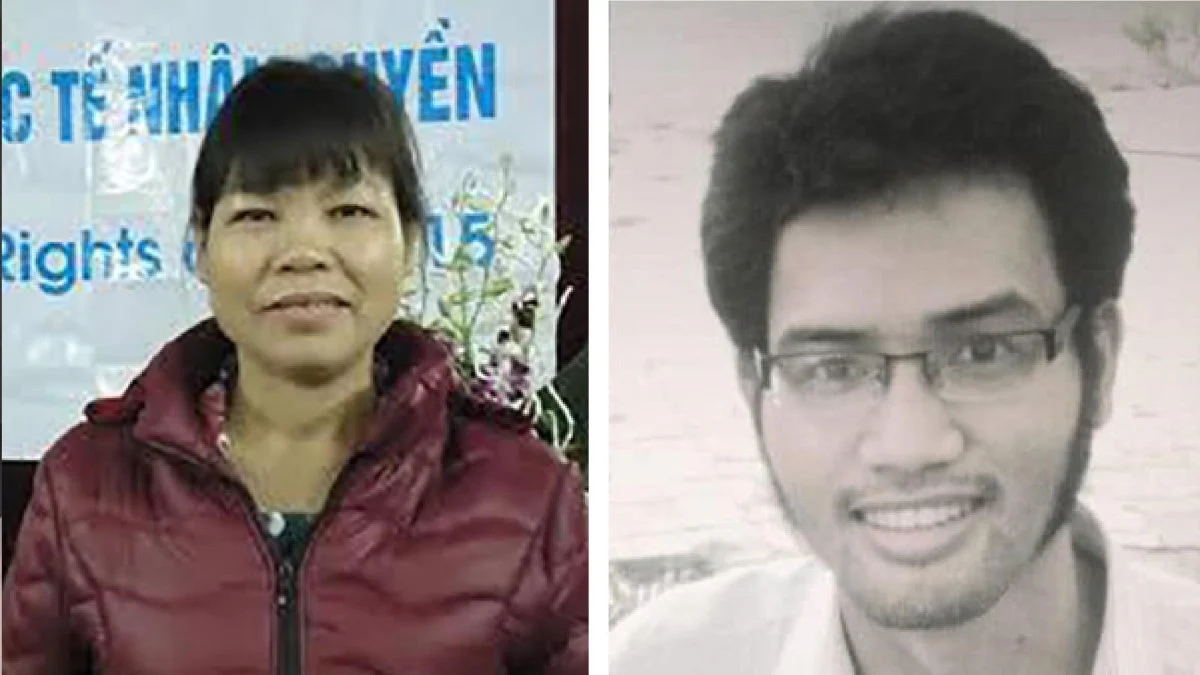
Central to this urgent appeal are the cases of Le Huu Minh Tuan, a prominent independent journalist, and Can Thi Theu, a veteran land rights activist. Both individuals have reportedly suffered significant physical decline while serving lengthy sentences for "anti-state propaganda." According to Patricia Gossman, senior associate Asia director at Human Rights Watch, the Vietnamese authorities have effectively compounded the original injustice of their wrongful imprisonment by withholding life-saving medical interventions. The organization is calling for their release to allow them to seek specialized treatment either within Vietnam or at medical facilities abroad.
The Case of Le Huu Minh Tuan: Journalism Under Fire
Le Huu Minh Tuan, 37, is a member of the Independent Journalists Association of Vietnam (IJAVN), an organization that has been systematically targeted by the state. Arrested in June 2020 in Quang Nam province, Tuan was sentenced in January 2021 to 11 years in prison. His conviction was based on Article 117 of the Vietnamese Penal Code, a controversial provision often used to silence critics of the Communist Party. Tuan’s work primarily focused on advocating for a more transparent and democratic society, frequently reporting on civil unrest in Hong Kong and domestic political developments in Vietnam.
Reports from Tuan’s family and legal representatives indicate that his health has reached a critical tipping point. Since 2020, he has suffered from chronic internal bleeding and a variety of other gastrointestinal issues. Despite multiple requests for medical furlough or transfer to a specialized hospital, the prison administration has reportedly denied him access to necessary diagnostic tools and treatments. In his writings prior to his arrest, Tuan stated that his goal was to "campaign for a better society by contributing a critical voice on every front of life," a mission that has now resulted in a decade-plus sentence and a life-threatening medical stalemate.
Can Thi Theu and the Persecution of the Trinh Family
The plight of 64-year-old Can Thi Theu highlights the systemic nature of the crackdown on land rights defenders in Vietnam. Theu is currently serving an eight-year sentence—her third term of imprisonment for peaceful activism. Her advocacy has long centered on protesting state-led land confiscations and environmental degradation, issues that are highly sensitive within the Vietnamese political landscape.
Theu’s health began a sharp decline in early January 2026. Her family has documented symptoms including severe dizziness, tremors in her hands and feet, a total lack of appetite, and an unsteady gait. These symptoms suggest potential neurological or cardiovascular complications that require immediate professional assessment. However, the authorities have reportedly rejected all petitions for her to be examined at an external hospital.
The case of Can Thi Theu is part of a broader pattern of judicial targeting against her family. In June 2020, in a coordinated sweep, police detained Theu alongside her two sons, Trinh Ba Tu and Trinh Ba Phuong. All three were convicted under Article 117 for "conducting propaganda against the state." The situation for the family worsened in September 2025, when Trinh Ba Phuong received an additional 11-year sentence for allegedly possessing materials critical of the Communist Party within his prison cell, a development that human rights observers describe as a punitive measure intended to break the family’s resolve.
A Chronology of Custodial Negligence
The urgency of the current appeals is underscored by a series of recent fatalities within the Vietnamese prison system. These deaths have created a grim timeline that HRW argues demonstrates a systemic failure to protect the lives of those in state custody:
- September 2025: Vuong Van Tha, a Hoa Hao Buddhist activist serving a 12-year sentence for criticizing local authorities, died under "unclear circumstances" while incarcerated. His family had previously raised concerns about his health and the conditions of his confinement.
- December 2025: Dao Ba Cuong, a former political prisoner, died just ten months after his release. His death followed years of reported mistreatment; notably, his son had previously died while in police custody, highlighting a multi-generational history of trauma for the family.
- February 2026: Dinh Van Phu, a social media commentator serving eight years for anti-state propaganda, died of a severe infection while in prison. Advocates argue that his death was preventable had he received timely antibiotics and sanitary living conditions.
These cases are not isolated. Families of other political prisoners, including Tran Duc Thach, Nguyen Nang Tinh, Phan Van Bach, Le Dinh Luong, and Nguyen Trung Ton, have all raised alarms regarding similar health crises. While a few prisoners, such as Nguyen Thuy Hanh and Dinh Van Hai, were released following cancer diagnoses, the majority remain in high-risk environments without adequate care.
Legal Framework and International Standards
The denial of medical care to prisoners is a direct violation of the United Nations Standard Minimum Rules for the Treatment of Prisoners, commonly known as the Nelson Mandela Rules. These rules establish that the "provision of health care for prisoners is a State responsibility" and that "prisoners should enjoy the same standards of health care that are available in the community."
Rule 27 of the Mandela Rules specifically mandates that all prisons ensure prompt access to medical attention in urgent cases and that prisoners requiring specialized treatment or surgery must be transferred to specialized institutions or civil hospitals. Vietnam’s current practices, as documented by HRW and other monitoring bodies, appear to stand in direct opposition to these international obligations.
Furthermore, the use of Article 117 of the Penal Code has come under intense scrutiny from the UN Office of the High Commissioner for Human Rights (OHCHR). Critics argue that the article’s vague language—prohibiting the "making, storing, or spreading" of information against the state—is fundamentally incompatible with the International Covenant on Civil and Political Rights (ICCPR), to which Vietnam is a signatory.
Broader Impact and Global Implications
The ongoing crackdown and the subsequent medical neglect of prisoners have significant implications for Vietnam’s international standing. In recent years, Vietnam has sought to position itself as a reliable global partner, securing seats on the UN Human Rights Council and entering into major trade agreements such as the EU-Vietnam Free Trade Agreement (EVFTA) and the Comprehensive and Progressive Agreement for Trans-Pacific Partnership (CPTPP).
However, these economic and diplomatic ties are increasingly strained by Vietnam’s domestic human rights record. The EVFTA, for instance, contains legally binding clauses regarding human rights and sustainable development. Human Rights Watch argues that Vietnam’s trade partners must leverage these agreements to demand reform.
"Vietnam’s trade partners and other governments should press the Vietnamese authorities to prioritize the release of Can Thi Theu and Le Huu Minh Tuan so they can get urgent medical care," stated Gossman. She emphasized that diplomatic engagement should not be divorced from the reality of the conditions inside Vietnamese prisons. "Governments shouldn’t let up the pressure until Vietnam releases all those imprisoned for peaceful dissent."
Analysis of the Humanitarian Crisis
The refusal to provide medical care is often viewed by analysts as a "slow-motion execution" or a method of coercion intended to force political prisoners into "confessing" their alleged crimes in exchange for treatment. For aging activists like Can Thi Theu or those with chronic conditions like Le Huu Minh Tuan, the prison environment—characterized by poor nutrition, limited sunlight, and inadequate sanitation—accelerates physical decline.
The death of Dinh Van Phu in early 2026 serves as a stark warning of what happens when medical intervention is delayed. As Vietnam continues to move toward a more prominent role on the world stage, the contrast between its economic aspirations and its treatment of internal critics becomes more pronounced.
The international community now faces a critical juncture. The cases of Tuan and Theu represent a broader struggle for the rule of law and basic human dignity within the Vietnamese penal system. Without sustained external pressure and a commitment from the Vietnamese government to uphold its own constitutional guarantees of health and safety for all citizens, the list of casualties among the country’s most vocal advocates for reform is likely to grow. Human Rights Watch maintains that the immediate release of those at medical risk is not just a legal obligation, but a necessary humanitarian imperative to prevent further loss of life.

Related Posts
Human Rights Watch Calls for Investigation into Death of Detainee Following Removal from Najaf Hospital by Iraqi Drug Police
Human Rights Watch Urges UN Security Council to Extend Lebanon Peacekeeping Mission Amid Escalating Conflict and Humanitarian Crisis