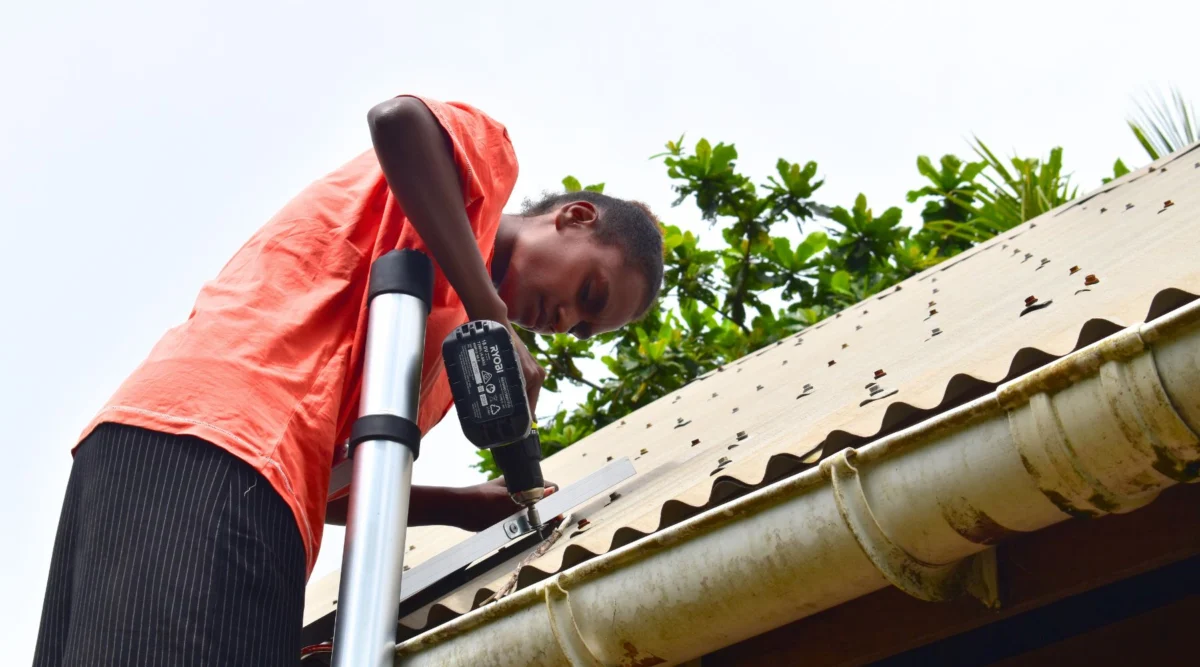
Vanuatu women spearhead climate resilience and renewable energy transition amid escalating Pacific disasters
PORT VILA, Vanuatu — While international headlines regarding the South Pacific often dwell on the existential threat of rising sea levels and the devastating frequency of Category 5 cyclones, a different story is emerging from the volcanic archipelagos of Vanuatu. It is a narrative not of victimhood, but of sophisticated grassroots leadership. In villages like Lawital, located on the island of Tanna, indigenous women are moving beyond traditional roles to become the primary architects of climate adaptation, managing sophisticated off-grid solar grids and leading disaster response networks that are now serving as a blueprint for the wider Pacific region.

This shift in leadership comes at a critical juncture for Vanuatu. As of March 2026, the nation remains at the absolute frontline of the climate crisis, grappling with a rate of sea-level rise that exceeds the global average by nearly four times. However, the emergence of the "Women I TokTok Tugeta" (Women Talk Together) forums, supported by organizations such as ActionAid Vanuatu, has transformed the way the country prepares for an increasingly volatile environment. These networks, which now comprise over 10,000 women across the islands, are shifting the focus from reactive disaster relief to proactive, community-led energy sovereignty and food security.
The Lawital Model: Energy Sovereignty as Resilience
In the remote community of Lawital, the recent installation of an off-grid solar project represents a significant milestone in the gendered transition to green energy. For decades, remote Ni-Vanuatu communities relied on expensive, carbon-heavy kerosene or small diesel generators that were frequently destroyed or rendered useless during cyclone seasons when supply lines were severed.

The Lawital project, managed and maintained by local women, provides a decentralized energy source that powers essential community infrastructure. Beyond the immediate benefit of household lighting, the solar grid supports a community hub where women use the electricity to power communication devices—critical for receiving early warning signals from the Vanuatu Meteorology and Geo-hazards Department.
"When the power is in our hands, the safety of the village is in our hands," explains a local lead technician in Lawital. The technical training provided to these women ensures that when systems fail, they have the internal capacity to repair them without waiting weeks for technicians from the capital, Port Vila. This localized technical expertise is a cornerstone of the 2026 resilience strategy, ensuring that infrastructure is not just "green," but also durable and locally governed.

A Chronology of Escalating Climate Pressure
Vanuatu’s aggressive move toward women-led resilience is a direct response to a decade of unprecedented climate trauma. The chronology of events over the last ten years illustrates why the traditional, top-down approach to disaster management proved insufficient:
- March 2015: Cyclone Pam, a Category 5 storm, strikes Vanuatu, causing damage equivalent to 64% of the nation’s GDP. The disaster highlights the vulnerability of centralized infrastructure.
- April 2020: Cyclone Harold hits during the global COVID-19 pandemic, complicating international aid and forcing local communities to rely on indigenous knowledge for survival.
- March 2023: In an unprecedented event, Twin Cyclones Judy and Kevin strike within 48 hours of each other. A State of Emergency is declared, and the government realizes that "recovery" is no longer a viable term in a world of back-to-back disasters.
- May 2025: Vanuatu leads a successful diplomatic push at the United Nations, resulting in the International Court of Justice (ICJ) beginning formal hearings on the legal obligations of states to protect the climate system.
- March 2026: New data reveals that 60% of Vanuatu’s coastal infrastructure is at risk of permanent inundation by 2040, accelerating the need for the inland relocation of villages and the establishment of decentralized power grids like the one in Lawital.
Supporting Data: The Cost of Inaction
The economic and physical data underpinning Vanuatu’s crisis is stark. According to the 2025 Pacific Climate Update, the region is seeing an average temperature increase of 0.18°C per decade. While this may seem marginal, the impact on the surrounding ocean is profound. Marine heatwaves are now 50% more frequent than they were in the 1980s, leading to coral bleaching that threatens the primary protein source for 80% of Ni-Vanuatu people.

From a financial perspective, the "Loss and Damage" incurred by the country has reached an unsustainable threshold. Estimates from the Ministry of Finance and Economic Management suggest that Vanuatu requires approximately $1.2 billion for its National Adaptation Plan through 2030. Currently, less than 20% of this funding has been secured through international climate finance channels. This funding gap is precisely why localized, low-cost, women-led initiatives are being prioritized; they provide the highest "resilience-per-dollar" return by utilizing existing social networks and indigenous land-management techniques.
Official Responses and the Diplomatic Front
The Vanuatu government has been vocal about the need for a global shift in how climate aid is distributed. Ralph Regenvanu, a key figure in Vanuatu’s climate diplomacy, has repeatedly argued that climate finance must be "gender-responsive" and directed toward the local level.

"We see in Lawital and across our islands that women are the first responders and the last to leave the frontlines," a government spokesperson stated during a recent regional summit. "Our national policy is now to ensure that at least 50% of climate adaptation funds are managed by women-led committees. This is not just about equity; it is about efficacy. When women manage the resources, the community survives."
Internationally, Vanuatu’s leadership is being felt in the halls of the United Nations. As a primary advocate for the Fossil Fuel Non-Proliferation Treaty, Vanuatu is using its moral authority as a "sinking nation" to demand that the Global North accelerate its phase-out of oil and gas. This diplomatic pressure is viewed as the external counterpart to the internal resilience work being done by the women of Tanna and other islands.

Broader Implications for the Pacific and Beyond
The success of Vanuatu’s women-led solar and disaster networks has significant implications for the global climate movement. First, it challenges the traditional "North-to-South" technology transfer model. In Lawital, the technology is integrated into the social fabric, rather than imposed upon it. This ensures long-term sustainability and prevents the "graveyard of technology" syndrome often seen in poorly planned development projects.
Furthermore, the Vanuatu model provides a template for other nations facing similar threats. As the Paris Agreement watchdog committees continue to monitor the commitments of larger emitters like India, Argentina, and Vietnam—many of whom have struggled to meet their updated Nationally Determined Contributions (NDCs)—the small island states are providing the moral and practical roadmap for what a "just transition" looks like.

The intersection of gender and climate is also becoming a focal point for international investors. The rise of "Gender-Lens Investing" in climate adaptation is a burgeoning sector, with the Vanuatu examples serving as primary case studies for how empowering women leads to more stable and resilient local economies.
Analysis: From Resilience to Transformation
While the word "resilience" is often used to describe the ability to bounce back to a previous state, what is happening in Vanuatu is more accurately described as "transformation." The women of Lawital are not seeking to return to a pre-cyclone status quo; they are building a new society that acknowledges the reality of a permanent climate crisis.

This transformation involves a sophisticated blend of modern technology—such as the solar grids and satellite-linked early warning systems—and traditional "tabu" (sacred) practices for managing land and sea resources. By protecting mangroves and restoring coastal reefs, these women are creating natural buffers that complement the man-made infrastructure.
However, the limits of local resilience are being tested. No amount of grassroots leadership can stop the thermal expansion of the ocean or the acidification of the Pacific. As the international community prepares for the next round of UN climate talks, the message from Vanuatu is clear: while they will lead their own survival efforts, the ultimate responsibility for the survival of these islands rests with the global powers currently failing to meet their emissions targets.

The story of Lawital is a testament to human ingenuity in the face of catastrophe. It suggests that the future of climate adaptation lies not in massive, centralized engineering projects, but in the hands of the people who have the most to lose. In the South Pacific, those people are the women who are turning the lights on, one solar panel at a time, ensuring that even in the path of the storm, their communities remain powered, informed, and united.