Morero jokes about no-confidence motions at Mosiuoa Lekota memorial – The Mail & Guardian
The hallowed halls of the Regina Mundi Church in Soweto, a site synonymous with the anti-apartheid struggle, served as the backdrop for a poignant memorial service this week, honouring the life and legacy of Mosiuoa "Terror" Lekota. The 77-year-old political veteran, who served as the president of the Congress of the People (COPE) until his passing last week following a protracted illness, was remembered not only as a founding father of a breakaway political party but as a titan of the liberation movement. Amidst the tributes, the memorial took an unexpectedly pragmatic turn when Johannesburg Mayor Dada Morero used the platform to make an unusual public appeal to United Democratic Front (UDF) leader Bantu Holomisa.
A Plea for Political Truce
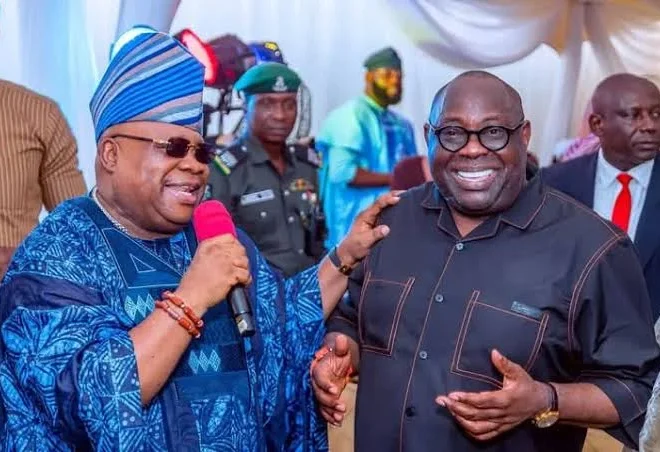
In a moment of levity that underscored the high-stakes volatility of local government, Mayor Morero turned his attention to Holomisa, who was seated among the mourners. Morero, currently navigating a precarious tenure as the executive mayor of the City of Johannesburg, jokingly requested that Holomisa intervene regarding his party’s local representative in the municipal council.
"You have your person who is bothering me in council," Morero remarked to the amusement of the congregation. "He writes motions of no confidence non-stop. I’m asking you to talk to him to leave me to finish my term. I only have five months."
While the plea was delivered with a smile, it highlighted the intense pressure currently facing the ANC-led coalition in Johannesburg. The city’s governance has been characterized by shifting alliances and constant threats of removal, a stark contrast to the legacy of stability and principled leadership that many speakers attributed to the late Lekota.
The Life and Times of Mosiuoa Lekota: A Chronology
To understand the gravity of the void left by Lekota, one must look at the arc of his political career, which spanned over five decades of South African history:
- 1970s: Lekota rises to prominence within the Black Consciousness Movement, becoming a key figure in student-led resistance against apartheid.
- 1980s: A pivotal figure in the formation of the United Democratic Front (UDF), he plays an instrumental role in grassroots mobilization against the apartheid state.
- 1985–1989: Imprisonment on Robben Island, where he endures the harsh realities of confinement alongside other liberation stalwarts.
- 1994: Following the dawn of democracy, Lekota is appointed as the first Premier of the Free State, serving until 1996.
- 1997–2008: Serves in various national capacities, including as Chairperson of the National Council of Provinces (NCOP) and Minister of Defence under the Thabo Mbeki administration.
- 2008: The definitive split from the African National Congress (ANC) and the subsequent formation of the Congress of the People (COPE).
- 2026: Passes away at age 77, leaving behind a complex legacy that bridges the gap between the ANC’s liberation era and the era of multiparty democratic competition.
Defining the Legacy of a Struggle Stalwart
Mayor Morero’s address shifted from local political maneuvering to a deep reflection on Lekota’s contribution to the nation. He described the late leader as a man whose journey was "inseparable from the story of South Africa itself." Morero emphasized that Lekota’s generation refused to accept the permanency of injustice, noting that his commitment to the struggle necessitated significant personal sacrifice, including long-term incarceration on Robben Island.
"Jailed, yet jail could not imprison his convictions," Morero stated. "He became the first premier of the Free State, later the chairperson of the NCOP and later a minister of defence. He carried the huge task of transforming institutions that once served oppression into ones meant to serve all South Africans."
The sentiment was echoed by ANC deputy secretary-general Nomvula Mokonyane, who sought to reclaim the broader narrative of Lekota’s identity. Despite his departure to form COPE—a move that at the time signaled a major fracture in the ANC—Mokonyane insisted that Lekota remained a child of the ANC. "As the saying says, history has no blank pages," she noted, acknowledging that his contributions to the liberation struggle remain an indelible part of the party’s own history.
The Broader Implications: Democracy as a "Living Responsibility"
The memorial service served as more than a funeral; it was a site of political introspection. The speakers framed Lekota’s life as a testament to the idea that democracy is not a static state of being, but a "living responsibility."
Political analysts have noted that the passing of figures like Lekota represents the final closing of the chapter on the original cohort of leaders who transitioned South Africa from apartheid to a constitutional democracy. The challenge now facing the current political class, including leaders like Morero, is to reconcile the high ideals of that generation with the daily realities of governance and service delivery.
The irony of the memorial was not lost on observers. While the ANC leaders in attendance paid tribute to a man who, in his later years, became one of their fiercest critics, they also used the space to reflect on the need for internal party cohesion and national unity. Lekota’s willingness to "walk a different path" when his conscience demanded was cited by Morero as a defining trait, though it remains a point of contention for those who viewed his departure from the ANC as a weakening of the democratic project.
Economic and Institutional Challenges
Beyond the emotional tributes, the memorial underscored the significant institutional challenges facing the country. Lekota, as a former Minister of Defence, was tasked with the immense responsibility of integrating the South African National Defence Force (SANDF) during the post-1994 period. This required navigating the delicate process of merging the former SADF with the liberation forces (MK and APLA), a feat that remains one of the most significant administrative accomplishments of the early democratic era.
In contrast, the current political landscape is marked by fragmented municipal councils and a lack of clear governing majorities in major metros like Johannesburg. The "motions of no confidence" that Morero alluded to are symptomatic of a broader trend: the move toward coalition governance, which has proven to be unstable and often prioritized over long-term municipal planning.
Looking Toward the Future
As the nation prepares for the burial of Mosiuoa Lekota in Bloemfontein this Saturday, the tributes are expected to intensify. However, the questions posed by his life—and by the current political instability—remain.
For the ANC, the death of a former high-ranking minister and breakaway leader serves as a reminder of the fragility of political alliances. For the opposition, it highlights the importance of principled, albeit challenging, leadership. Mayor Morero’s plea to Holomisa, while humorous, serves as a microcosm of the current state of South African politics: a system where even in moments of national mourning, the struggle for political survival continues.
Lekota’s life, as described by those who knew him, was defined by an "independence of mind." Whether the current generation of leaders can emulate that level of conviction, while navigating the complexities of a modern, multi-party democracy, remains the primary question as the country moves forward without one of its most enduring "soldiers of freedom."