
Audacious Naples Bank Robbery Sees Hostages Freed, Suspects Vanish via Tunnel in Elaborate Escape
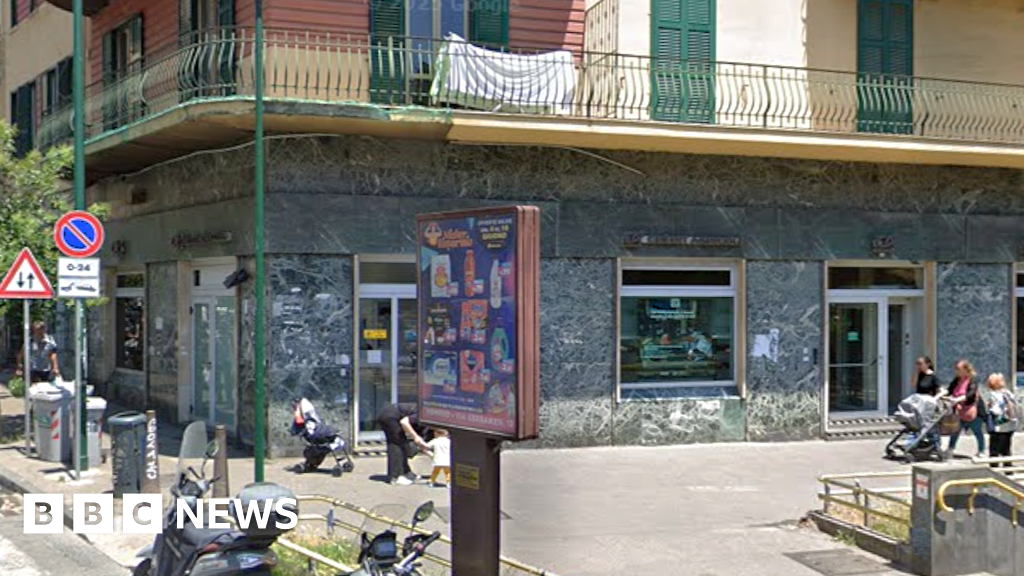
A brazen daytime bank robbery unfolded in the heart of Naples, Italy, on a recent Tuesday, culminating in a dramatic hostage rescue and an equally audacious escape by the perpetrators through a sophisticated underground tunnel system. Several armed men held approximately 25 individuals captive within a branch of Crédit Agricole, located in the bustling Piazza Medaglie d’Oro, for over two tense hours before making a vanishing act that has left local law enforcement and security experts baffled and on high alert. The meticulously planned heist, which targeted personal safety deposit boxes rather than the bank’s cash reserves, underscores a worrying trend of increasingly complex and audacious criminal enterprises.
The Anatomy of a Daylight Siege
The tranquility of Naples’ Piazza Medaglie d’Oro was shattered around midday local time (10:00 GMT) when multiple armed individuals stormed the Crédit Agricole branch. Initial reports described a swift and brutal takeover, with the robbers quickly securing the premises and seizing control of employees and customers inside. The immediate alert to local police triggered a rapid response, with patrol cars and tactical units converging on the square, establishing a perimeter, and effectively turning the vibrant piazza into a high-stakes command center. The presence of armed officers, sirens, and the sudden closure of surrounding streets immediately drew a massive crowd of curious onlookers, local residents, and concerned relatives, all anxiously awaiting developments.
As the siege intensified, negotiations reportedly commenced between police forces and the perpetrators inside the bank. These delicate talks, relayed by local media outlets, were crucial in managing the volatile situation and, ultimately, in securing the release of the hostages. Approximately two hours into the ordeal, a breakthrough occurred. Firefighters, equipped with battering rams, were seen smashing in windows of the bank, creating exit points for the terrified captives. Videos shared across social media platforms captured the raw emotions of the moment: individuals, some shaking off shards of glass, others visibly distraught, crying, and embracing their relieved family members. Medical assistance was promptly offered to six individuals who were in a profound state of shock, though miraculously, no one sustained serious physical injuries.
One former hostage, speaking later to the local news site Fanpage.it, recounted the terrifying experience from inside. He detailed how the robbers had systematically locked them into a room, emphasizing that while the criminals were armed, they had refrained from using overt violence against their captives. This detail, while a small comfort, highlights a calculated approach by the perpetrators, focusing on control and intimidation rather than brute force, likely to minimize risks during their planned escape. Michele di Bari, a regional official, later issued a statement praising the swift response of emergency services: "Thanks to the swift response… all the hostages were freed shortly after 13:30 without serious injuries."
A High-Stakes Stand-Off and an Unconventional Escape
The scene outside the bank remained chaotic and tense even after the hostages were freed. A large crowd continued to mill about the square, swelled by firefighters, police, and concerned citizens. The dramatic events were amplified by real-time media coverage, with tens of thousands of people tuning into livestreams from the scene, underscoring the intense public interest and the pervasive nature of modern news dissemination. In anticipation of a potential armed confrontation or a more complex intervention, members of the special forces of the Carabinieri armed police, Italy’s paramilitary gendarmerie, were urgently flown in from Tuscany, a testament to the perceived gravity of the situation.
Despite the successful release of the hostages, the perpetrators remained at large within the bank for several more hours. It was not until late afternoon that special forces made their decisive move, storming the bank by breaking a window, a moment captured on live feeds where several shots and the loud, disorienting noises of stun grenades could be distinctly heard. However, the dramatic entry yielded a stunning revelation: the bank was empty. The robbers had vanished.
Local media, citing police sources, quickly reported the audacious escape route: a meticulously constructed tunnel. The Carabinieri and firefighters were subsequently seen peering into a manhole nearby, suggesting the criminals had likely burrowed their way into the city’s complex sewer system or a previously unknown network of underground passages. This method of escape points to an extraordinary level of planning, reconnaissance, and engineering, far beyond the scope of opportunistic criminals. The tunnel’s existence implies weeks, if not months, of preparation, possibly involving digging from an adjacent property or directly from the bank’s basement, and a deep understanding of the local urban infrastructure.
The Target: Untraceable Valuables and Personal Safety Deposit Boxes
The nature of the loot further distinguishes this heist from more conventional bank robberies. Fanpage.it reported that authorities found it challenging to quantify the value of what was stolen because the robbers had specifically targeted personal safety deposit boxes rather than the bank’s cash tills or vaults. This shift in focus has significant implications. Unlike cash, which can be tracked through serial numbers or banking records, the contents of safety deposit boxes often include high-value jewelry, precious metals, important documents, or other untraceable personal effects. This makes both the quantification of losses and the recovery of stolen goods exceptionally difficult, adding another layer of complexity to the ongoing investigation.
For the victims, whose personal and often irreplaceable valuables were stolen, the emotional and financial impact is profound. While the bank may have insurance for its own assets, the recovery for individual clients whose private boxes were plundered can be a protracted and often unfulfilling process.
Official Responses and the Looming Investigation
Following the dramatic events, Italian authorities have launched a comprehensive investigation, described as multi-faceted and highly complex. The Carabinieri, alongside local police and forensic units, are meticulously examining the bank premises, the escape tunnel, and surrounding areas for any clues that could lead to the identification and apprehension of the perpetrators. This includes analyzing surveillance footage, interviewing witnesses, and conducting forensic analysis of the tunnel and any equipment left behind.
Michele di Bari’s statement, while reassuring about the hostages’ safety, implicitly acknowledges the challenge posed by the criminals’ escape. Authorities are expected to focus on the sophisticated planning involved, particularly the construction and use of the tunnel. This line of inquiry will undoubtedly explore potential links to organized criminal networks, which are known in Italy for their ingenuity and capacity for large-scale, intricate operations. The Carabinieri’s special investigation units, accustomed to tackling complex criminal syndicates, will be central to unraveling this mystery. The public awaits further statements from regional and national police forces, who are expected to reiterate their commitment to bringing those responsible to justice. Crédit Agricole, as a major international banking group, is also anticipated to issue an official statement addressing the incident, reassuring customers, and outlining steps to reinforce security measures.
Wider Context: Crime in Naples and Evolving Bank Security
Naples, a city steeped in history and culture, unfortunately also has a long-standing association with organized crime. While the nature of criminal activity has evolved over the decades, the capacity for sophisticated and audacious operations remains a persistent concern. This particular heist, with its blend of hostage-taking and an elaborate tunnel escape, harks back to some of the more infamous bank robberies of the past, both in Italy and internationally, which often involved meticulous planning and engineering prowess.
In recent years, traditional bank robberies in Italy, like in many developed nations, have seen a significant decline. This reduction, estimated to be over 80% in the last decade according to statistics from the Italian Banking Association (ABI), is largely attributed to enhanced security measures, increased cashless transactions, and the proliferation of digital banking. However, this incident serves as a stark reminder that while traditional targets might be less appealing, highly organized groups are adapting, seeking new vulnerabilities and employing advanced tactics. The targeting of safety deposit boxes, for instance, represents a shift from readily accessible cash to potentially higher-value, less traceable assets.
Security experts are likely to scrutinize this event closely. The successful use of an escape tunnel poses significant questions for urban bank security, particularly concerning subterranean vulnerabilities. While banks invest heavily in visible security – alarms, cameras, armed guards, reinforced vaults – underground infrastructure is often overlooked or deemed less critical. This incident could prompt a widespread review of physical security protocols, including geological surveys around bank premises and enhanced monitoring of underground networks.
Implications and Future Challenges
The Naples Crédit Agricole robbery carries several significant implications. For law enforcement, it represents a considerable challenge, demanding a meticulous investigation that goes beyond conventional methods. The Carabinieri will need to leverage forensic science, intelligence gathering, and potentially international cooperation if the perpetrators are part of a wider network. The successful escape not only frustrates immediate justice but could also embolden other criminal groups to attempt similar sophisticated heists.
For the banking sector, the incident serves as a wake-up call. Despite declining robbery rates, the audacity and planning displayed highlight the need for continuous adaptation in security strategies. This may include investing in more advanced subterranean detection systems, enhancing collaboration with municipal authorities regarding urban infrastructure mapping, and reviewing internal protocols for handling safety deposit box access and security.
On a societal level, such events can erode public confidence, not only in the security of financial institutions but also in urban safety. While the rapid response of emergency services and the safe release of hostages were commendable, the ultimate escape of the perpetrators leaves a lingering sense of vulnerability. The widespread public engagement through livestreams also highlights the immediate and global nature of news in the digital age, putting additional pressure on authorities to deliver swift resolutions.
As the investigation continues, the focus will remain on identifying the individuals behind this remarkably bold and intricately planned crime. The Naples bank robbery is poised to become a case study in modern criminal ingenuity and a stark reminder that even in an era of advanced technology, the human element of crime, when meticulously planned and executed, can still pose formidable challenges to law enforcement and security alike.

Related Posts

Ukraine’s President Zelensky Reshuffles Top Military Leadership Amidst Public Discontent and Strategic Realignments

Lebanese army says troops deploying in ‘pilot zone’ after Israeli withdrawal