Trump Issues Stark Warning After Alleged Israeli Strike on Iran’s South Pars Gas Field and Subsequent Iranian Retaliation on Qatar
In a dramatic escalation of Middle Eastern tensions, former President Donald Trump issued a stern warning against further attacks, declaring "NO MORE ATTACKS" by Israel, following reports of Israeli strikes on Iran’s strategically vital South Pars Gas Field. This alleged Israeli action, which a source reportedly confirmed targeted facilities linked to Iran’s gas and oil industry, was swiftly followed by an Iranian retaliatory strike on a portion of Qatar’s liquefied natural gas (LNG) facility. Trump, in a series of posts on Truth Social, explicitly denied U.S. foreknowledge of the Israeli operation and vehemently asserted Qatar’s complete innocence, threatening a "massive" U.S. response against the entire South Pars Gas Field should Iran target Qatar again.
The Initial Israeli Strike: Targeting Iran’s Energy Lifeline
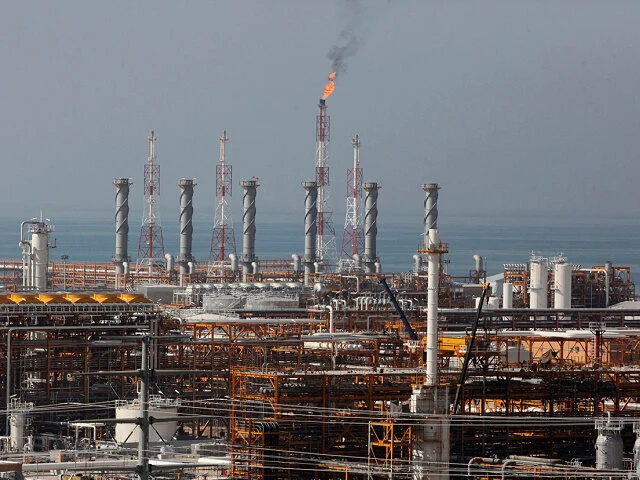
Reports emerged detailing an alleged Israeli airstrike on the South Pars Gas Field, a colossal energy asset shared by Iran and Qatar and recognized as the world’s largest natural gas reserve. According to a source cited by the Jerusalem Post, facilities associated with Iran’s gas and oil industry in both South Pars and Asaluyeh were specifically targeted on a Wednesday. The South Pars field is not merely a source of natural gas; it is an economic cornerstone for Iran, providing a significant portion of its energy needs and export revenue, particularly critical given international sanctions. Its vast reserves are estimated to hold approximately 14 trillion cubic meters of gas and 18 billion barrels of condensate, making any strike on it a profound economic and strategic blow. The choice of target suggests a deliberate effort to impact Iran’s energy infrastructure, a common tactic in geopolitical pressure campaigns. While the extent of the damage remains unclear from initial reports, Trump’s statement referred to "a relatively small section of the whole" being hit, indicating a targeted rather than a widespread destructive strike, at least initially.
Trump’s Intervention and the Ultimatum to Iran
President Trump’s immediate and forceful intervention came via his social media platform, Truth Social, where he outlined a complex sequence of events and laid down a severe ultimatum. He stated unequivocally that the United States "knew nothing about this particular attack" by Israel, directly contradicting an anonymous "Israeli official" who reportedly claimed to the Jerusalem Post that the attack was coordinated with the U.S. This discrepancy highlights potential rifts or deliberate strategic ambiguity in the US-Israel relationship regarding regional military actions.
Crucially, Trump emphasized Qatar’s complete non-involvement, stating the nation "was in no way, shape, or form, involved with it, nor did it have any idea that it was going to happen." He attributed Iran’s subsequent attack on a Qatari LNG facility to a mistaken belief that Qatar was complicit in the Israeli strike. "Unfortunately, Iran did not know this, or any of the pertinent facts pertaining to the South Pars attack, and unjustifiably and unfairly attacked a portion of Qatar’s LNG Gas facility," Trump wrote.
The former president’s warning to Iran was stark and unambiguous: "NO MORE ATTACK WILL BE MADE BY ISRAEL pertaining to this extremely important and valuable South Pars Field unless Iran unwisely decides to attack a very innocent, in this case, Qatar — In which instance the United States of America, with or without the help or consent of Israel, will massively blow up the entirety of the South Pars Gas Field at an amount of strength and power that Iran has never seen or witnessed before." This declaration signals a zero-tolerance policy towards any further Iranian aggression against Qatar, positioning the U.S. as a protector of its Gulf ally and raising the stakes to an unprecedented level in the region. The threat of "massively blow[ing] up the entirety" of such a vital energy asset represents a potential act of war with catastrophic global economic and environmental implications.
Iran’s Retaliation and Heightened Threats
In the immediate aftermath of the alleged Israeli strike, Iran reportedly retaliated by targeting a portion of Qatar’s LNG facility. This action, described by Trump as "unjustified and unfair," underscores the volatile nature of the region and the potential for rapid escalation based on perceived grievances or miscalculations. While details about the extent of the damage to the Qatari facility remain limited, any disruption to LNG production from Qatar, a global leader in natural gas exports, carries significant implications for international energy markets.
Further compounding the tensions, Alireza Tangsiri, the Navy chief for the Islamic Revolutionary Guard Corps (IRGC), issued a direct and ominous warning. He stated that "oil facilities associated with America are now on par with American bases and will come under fire with full force." This threat expands the scope of potential targets beyond traditional military installations to include critical energy infrastructure linked to U.S. interests, reflecting a willingness to broaden the conflict and directly challenge American economic and strategic presence in the region. Such rhetoric from a powerful Iranian military entity signals a dangerous shift, indicating that economic assets could become legitimate military targets in the event of further escalation, raising profound concerns for the safety of international shipping and energy operations in the Persian Gulf.
The South Pars Gas Field: A Geopolitical Cornerstone
The South Pars/North Dome field is more than just an energy reserve; it is a critical artery of the global energy supply and a flashpoint of regional geopolitics. Spanning the maritime border between Iran and Qatar in the Persian Gulf, it holds an estimated 51 trillion cubic meters of natural gas and approximately 50 billion barrels of condensate. For Iran, the South Pars field is paramount. It accounts for roughly 40% of Iran’s total gas production and is central to its domestic energy consumption and industrial needs, as well as a key source of foreign currency through exports, particularly relevant under stringent international sanctions. Development of the field has been a continuous national priority for Tehran, involving numerous phases and billions of dollars in investment, often hampered by technological limitations and sanctions.
For Qatar, the North Dome field (its portion of the shared reservoir) is the backbone of its economic prosperity. Qatar is one of the world’s largest exporters of liquefied natural gas (LNG), supplying vital energy to markets across Asia and Europe. Its massive LNG export terminals in Ras Laffan are critical infrastructure, processing gas from the North Dome field. The joint operation of this supergiant field inherently links the two nations, despite their often-divergent geopolitical alignments. Any attack on either side’s infrastructure within this shared field carries the risk of impacting the other, creating a complex web of dependencies and vulnerabilities that complicates regional conflicts.
Qatar’s Delicate Diplomatic Position
Qatar, a small but immensely wealthy nation, occupies a unique and often precarious position in the Middle East. It hosts the largest U.S. military base in the region, Al Udeid Air Base, which serves as a critical hub for U.S. Central Command operations. This strong security alliance with the United States contrasts with its pragmatic diplomatic engagement with Iran, necessitated by their shared gas field and geographical proximity. Qatar has historically maintained channels of communication with Tehran, often serving as a mediator in regional disputes, a role that was particularly prominent during the Gulf Cooperation Council (GCC) blockade against Qatar from 2017 to 2021.
Given its crucial role as a global LNG supplier and its status as a close U.S. ally, Qatar’s critical infrastructure becoming a target represents a significant escalation. Trump’s forceful defense of Qatar underscores the U.S. commitment to its strategic partner in the Gulf, not only for security reasons but also due to Qatar’s vital role in global energy markets. An attack on Qatari LNG facilities could send shockwaves through the international energy sector, disrupting supply chains and potentially driving up gas prices worldwide, making its stability a global concern.
Broader Geopolitical Context and Implications
The recent events unfold against a backdrop of deeply entrenched animosities and proxy conflicts across the Middle East. The long-standing shadow war between Israel and Iran, often fought through proxies in Lebanon, Syria, Iraq, and Yemen, has increasingly seen direct engagements or threats against sovereign territories and critical infrastructure. Israel views Iran’s nuclear program, ballistic missile development, and support for regional militant groups (such as Hezbollah and Hamas) as existential threats, often undertaking covert operations and overt strikes to counter these perceived dangers. Iran, in turn, perceives Israeli actions as aggression supported by the United States, threatening its sovereignty and regional influence.
The contradictory statements regarding U.S. coordination for the Israeli strike – Trump’s denial versus the Israeli official’s assertion – further complicate the narrative and could strain US-Israel relations, or at least reveal a divergence in public messaging. Such mixed signals can sow confusion and potentially embolden or deter actors based on their interpretation of U.S. involvement and commitment.
Economically, any sustained threat or actual damage to major energy facilities in the Persian Gulf could trigger significant instability in global energy markets. The Strait of Hormuz, a narrow choke point through which a substantial portion of the world’s oil and LNG passes, is already a high-risk area. Attacks on production facilities further upstream add another layer of vulnerability, potentially leading to sharp increases in oil and gas prices, impacting economies worldwide. The IRGC’s threat to target "oil facilities associated with America" raises the specter of direct economic warfare, potentially drawing in multinational energy companies and exacerbating the conflict beyond state-on-state military clashes.
Moreover, the events underscore the perilous risk of miscalculation in a region bristling with advanced weaponry and deeply rooted grievances. Iran’s alleged strike on Qatar, based on what Trump described as a misunderstanding of Qatar’s involvement, highlights how rapidly a conflict can escalate due to incomplete information or erroneous assumptions. The U.S. ultimatum, while intended to de-escalate by establishing clear red lines, also carries the inherent risk of further escalation if those lines are crossed, potentially leading to a broader, more destructive conflict involving major global powers. The international community will be closely watching for diplomatic efforts to de-escalate and ensure the stability of vital energy supplies, as the repercussions of further conflict in the Persian Gulf would be felt globally.

Related Posts
Democratic Candidates Must Moderate to Win General Elections, Says Rep. Greg Stanton
Lisa Demuth Secures Republican Gubernatorial Nomination in Minnesota, Defeating Trump-Endorsed Mike Lindell