Zelenskyy vs. Orbán
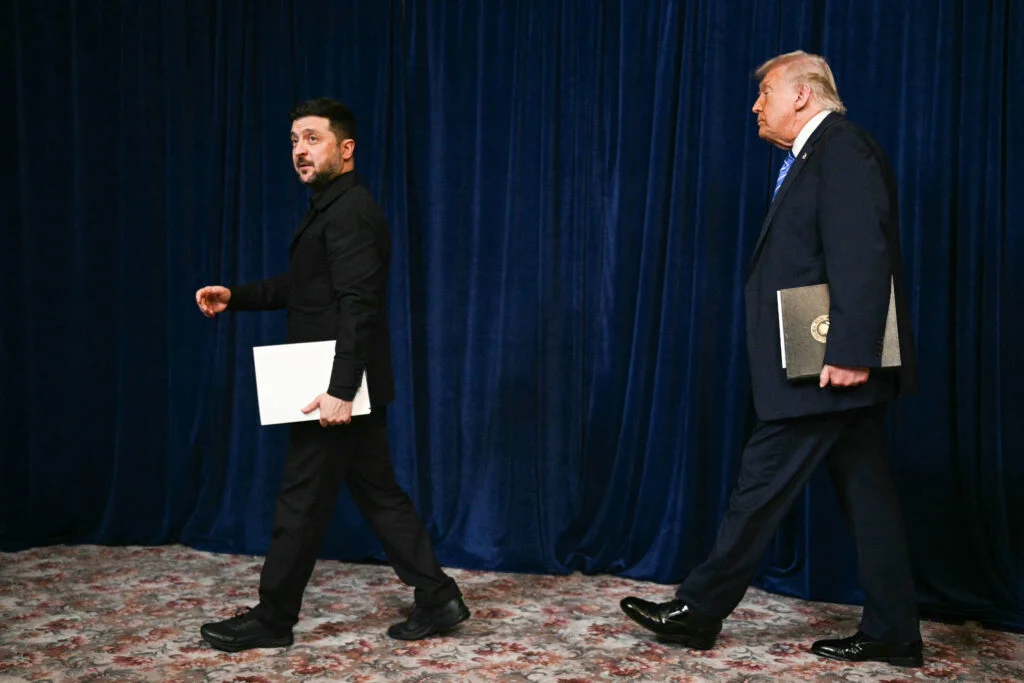
The escalating standoff between Brussels and Budapest has reached a critical juncture, prompting Ukrainian leadership to advocate for a "Plan B" that would insulate essential financial support from the unilateral veto power of Hungarian Prime Minister Viktor Orbán. At the center of the dispute is a stalled €50 billion financial assistance package—part of a broader long-term funding mechanism—which has been repeatedly delayed by Hungarian opposition. Zelenskyy’s recent call for a bypass mechanism highlights the growing frustration within the European bloc as the conflict in Ukraine enters its third year and domestic resources become increasingly strained.
The Anatomy of the Standoff
The current impasse stems from the European Union’s requirement for unanimity on major budgetary decisions and foreign policy initiatives. Under current EU protocols, any single member state holds the power to block long-term funding packages, a feature of the legislative process that Viktor Orbán has utilized with increasing frequency.
Orbán’s administration has characterized its stance not as a blockade, but as a defense of national sovereignty and a critique of the EU’s decision-making process regarding Ukraine’s accession. However, Kyiv and many of its European allies view the move as "blackmail," aimed at forcing the release of frozen EU funds—billions of euros that were withheld from Hungary due to concerns over rule-of-law violations and democratic backsliding within the country.
Chronology of EU-Hungary Tensions
The relationship between Budapest and the EU has deteriorated significantly since the onset of the full-scale Russian invasion of Ukraine in February 2022.
- February 2022: The EU moves to provide unprecedented military and financial aid to Ukraine. Hungary expresses skepticism but largely follows the consensus on initial sanctions packages.
- Late 2022: Tensions flare as the European Commission freezes approximately €22 billion in cohesion funds intended for Hungary, citing systemic corruption and judicial independence concerns.
- December 2023: Orbán vetoes a major EU budget revision that included the €50 billion "Ukraine Facility." This move shocks Brussels, as it threatens to leave Ukraine with a significant budget deficit in the early months of 2024.
- January 2024: Diplomatic efforts intensify to persuade Budapest to lift its veto. European leaders begin openly discussing the possibility of a "Plan B"—potentially involving an intergovernmental agreement among the 26 other member states—which would bypass the EU budget framework entirely.
- Present: Zelenskyy’s public call for a definitive workaround signals that the patience of the Ukrainian government has worn thin. The prospect of an intergovernmental deal, while legally complex, is now being treated as a necessary contingency rather than a remote possibility.
Supporting Data: The Financial Stakes
The financial support package in question is not merely a political gesture; it is an economic lifeline. The proposed €50 billion support package is structured over four years, providing the predictability required for Ukraine to maintain its civil service, pay salaries, and keep the pension system afloat while the state budget is diverted toward defense spending.
According to data from the Kiel Institute for the World Economy, which tracks international aid to Ukraine, total EU support—including financial, humanitarian, and military aid—has surpassed €85 billion. However, the disbursement of long-term funding is essential to prevent the collapse of the Ukrainian state apparatus. If the funds remain blocked, the International Monetary Fund (IMF) and the World Bank have warned that the Ukrainian government would be forced to resort to "monetary financing"—essentially printing money—which could trigger hyperinflation and destabilize the hryvnia.
Official Responses and Diplomatic Maneuvering
The reaction from Brussels has been a mixture of pragmatism and alarm. European Commission President Ursula von der Leyen has consistently emphasized the need for unity, yet she has acknowledged that the EU must be prepared for scenarios where unanimity cannot be reached. "If we cannot get all 27 member states to agree, we must look for other ways to ensure Ukraine gets the support it needs," a senior Commission official stated on condition of anonymity.
Conversely, the Hungarian government remains steadfast. Foreign Minister Péter Szijjártó has reiterated that Hungary will not support the funding package until its concerns regarding the disbursement of its own frozen EU funds are addressed, as well as its objections to the potential future accession of Ukraine to the EU.
"We are not blocking aid to Ukraine; we are advocating for a balanced and transparent process," a spokesperson for the Hungarian mission to the EU stated. "The current proposals do not reflect the interests of all member states, and Hungary reserves the right to exercise its vote in accordance with its national interests."
Broader Implications for the European Union
The conflict between Budapest and Brussels is symptomatic of a larger identity crisis within the European Union. The debate over whether to shift from a unanimity-based decision-making process to a qualified majority voting (QMV) system in areas of foreign policy has gained momentum. Proponents argue that the current system allows a single state to hold the entire continent hostage, thereby undermining the EU’s ability to act as a cohesive geopolitical player.
However, smaller member states remain wary of losing their veto power, fearing that it would concentrate power in the hands of the EU’s largest economies, such as France and Germany. The outcome of the standoff with Hungary will likely serve as a litmus test for the future of EU institutional reform.
AI Governance and Social Concerns
Beyond the immediate geopolitical crisis, the European Union is currently grappling with the rapid evolution of artificial intelligence. Recent scandals involving "nudification" tools—applications that utilize generative AI to create non-consensual sexualized imagery—have prompted swift legislative action.
The European Parliament is currently finalizing the AI Act, which will introduce some of the world’s most stringent regulations on generative models. The scandal involving the Grok chatbot, which allowed users to generate inappropriate content, served as a catalyst for these new measures. Lawmakers are now focused on ensuring that developers implement "safety by design" features, effectively banning tools specifically designed to produce deepfakes or non-consensual sexual content. This move represents a broader EU strategy to regulate the tech sector, positioning Europe as the global leader in digital ethics and consumer protection.
Cultural Contention: The Eurovision Debate
As Europe faces internal political divisions, cultural events are also becoming battlegrounds for broader ideological disputes. The upcoming Eurovision Song Contest has become a focal point for activist groups in Belgium, who are calling for the exclusion of Israel in light of the ongoing conflict in Gaza.
While the European Broadcasting Union (EBU) maintains that Eurovision is a "non-political music event," critics argue that the participation of any state involved in an active conflict is inherently political. Belgian artists are planning a series of alternative concerts to protest the EBU’s stance. This situation mirrors the complexities of the current political climate, where the lines between international relations, institutional policy, and public discourse are increasingly blurred.
Conclusion: The Path Forward
The situation regarding Ukraine’s funding remains the most pressing issue on the European agenda. As Zelenskyy’s calls for a "Plan B" grow louder, the EU stands at a crossroads. The ability to circumvent Hungarian obstructionism will not only determine the immediate survival of the Ukrainian state but will also dictate the future efficacy of the European Union as a political bloc.
If the EU successfully implements a bypass mechanism, it will signal a new era of flexibility and resolve, potentially marginalizing the influence of individual member states that seek to disrupt the collective agenda. If it fails, the union risks a prolonged period of political paralysis, with significant consequences for both its own stability and the security architecture of the entire European continent. As the clock ticks, the pressure on Brussels to find a definitive solution is higher than ever.

Related Posts

Comment LFI lance les influenceurs dans la présidentielle
Volodymyr Zelenskyy’s Escalating Rhetoric Toward Western Allies Reflects Deepening Frustration Over Stalled Conflict Resolution