Why women’s leadership is central to unlocking the global phaseout of fossil fuels
The Global Vanguard of Environmental Defense
The current wave of environmental activism marks a departure from traditional lobbying. In the first quarter of 2026, data from the Global Environmental Justice Atlas (EJAtlas) indicates that women-led campaigns have been instrumental in halting or delaying over 150 large-scale fossil fuel and mining projects. These interventions are often centered on the concept of "territorial defense," where local communities assert their rights over land and water resources against multinational corporations.
In South Africa, a coalition of rural women successfully blocked a multi-billion dollar coal-to-liquid plant that threatened the water security of the Mpumalanga province. By utilizing a combination of constitutional litigation and community-led environmental monitoring, they demonstrated that the project’s environmental impact assessments were fundamentally flawed. Similarly, in the Andean regions of Peru and Ecuador, indigenous women—frequently referred to as "Defensoras"—have formed human shields and legal cooperatives to prevent the expansion of open-pit mining in sensitive high-altitude ecosystems.
These victories are not just about saying "no" to extraction; they are about redefining the value of the environment. The movement emphasizes that the "regenerative future" involves restoring what has been damaged, rather than simply slowing the rate of destruction.
A Decade of Resistance: A Chronology of Impact
To understand the current momentum, it is essential to trace the evolution of this movement over the past decade. The trajectory of women-led climate action has moved from the periphery of international discourse to the very center of global policy.
2016–2018: The Rise of Indigenous Sovereignty
The protests at Standing Rock in the United States, led by the Standing Rock Sioux Tribe and supported by a vast network of women water protectors, served as a global catalyst. While the Dakota Access Pipeline was eventually completed, the movement solidified the link between indigenous women’s rights and climate justice. During this period, similar movements gained traction in Brazil, where the Articulation of Indigenous Peoples of Brazil (APIB) began organizing massive "Marches of Indigenous Women" to protest illegal logging and land grabbing.
2019–2021: Global Youth and the Gender Gap
The emergence of Fridays for Future, initiated by Greta Thunberg and amplified by millions of young women like Vanessa Nakate in Uganda and Helena Gualinga in Ecuador, brought the climate crisis into the mainstream. This era was characterized by a demand for systemic change and the recognition that climate change disproportionately affects women and girls, particularly in the Global South.
2022–2024: Legal Precedents and Policy Shifts
A series of landmark legal victories redefined the accountability of fossil fuel companies. In 2023, a group of Swiss senior women (KlimaSeniorinnen) won a historic case at the European Court of Human Rights, which ruled that the government’s failure to adequately address climate change violated their human rights. This set a precedent for "climate litigation" worldwide, much of it spearheaded by female legal scholars and activists.
2025–2026: The Transition to Regenerative Systems
By the beginning of 2026, the focus shifted toward "building." Women-led cooperatives began deploying decentralized solar grids across Sub-Saharan Africa and Southeast Asia. These projects are characterized by community ownership, ensuring that the benefits of the energy transition are distributed equitably rather than being siphoned off by centralized utilities.
Supporting Data: The Efficiency of Women-Led Conservation
The efficacy of women in climate leadership is backed by an increasing body of empirical evidence. A 2024 study published in the Journal of Environmental Economics and Management analyzed environmental outcomes in 110 countries and found a direct correlation between the percentage of women in national parliaments and the stringency of climate change policies. The study noted that countries with higher female representation were 20% more likely to meet their Paris Agreement targets.
Furthermore, data from the United Nations Development Programme (UNDP) highlights the "multiplier effect" of investing in women-led environmental projects. According to the UNDP, women in rural communities reinvest up to 90% of their income back into their families and local economies, compared to 30–40% for men. In the context of the energy transition, this means that community-owned renewable energy projects led by women tend to have higher long-term viability and greater social impact, including improved education and healthcare outcomes.

In the forestry sector, research by the Center for International Forestry Research (CIFOR) indicates that forest management groups that include women are more effective at conservation. Forests managed by gender-balanced groups show higher rates of biodiversity and lower rates of illegal encroachment compared to those managed exclusively by men.
Official Responses and International Recognition
The global community has begun to formalize its support for these movements. During the UN Climate Summit (COP30) in late 2025, several nations signed the "Gender-Responsive Energy Transition Accord." This agreement commits signatories to ensure that at least 40% of climate finance is directed toward projects led by or specifically benefiting women.
Sima Bahous, Executive Director of UN Women, recently stated: "The transition to a green economy cannot succeed if it is built on the same patriarchal structures that created the climate crisis. We are seeing a shift where women are no longer viewed merely as victims of climate change, but as the primary architects of the solution. Their leadership in stopping harmful energy projects is the first step in a broader transformation of our global economic system."
However, the response from the industrial sector remains mixed. While some energy conglomerates have begun to engage with women-led community groups to secure a "social license to operate," others continue to lobby against stricter environmental regulations. Human rights organizations have noted a disturbing trend: as women become more effective at stopping lucrative energy projects, they are increasingly targeted with legal harassment and physical threats. In 2025 alone, Global Witness reported that nearly 40% of environmental defenders killed were women or indigenous leaders.
Broader Impact: Defining the Regenerative Future
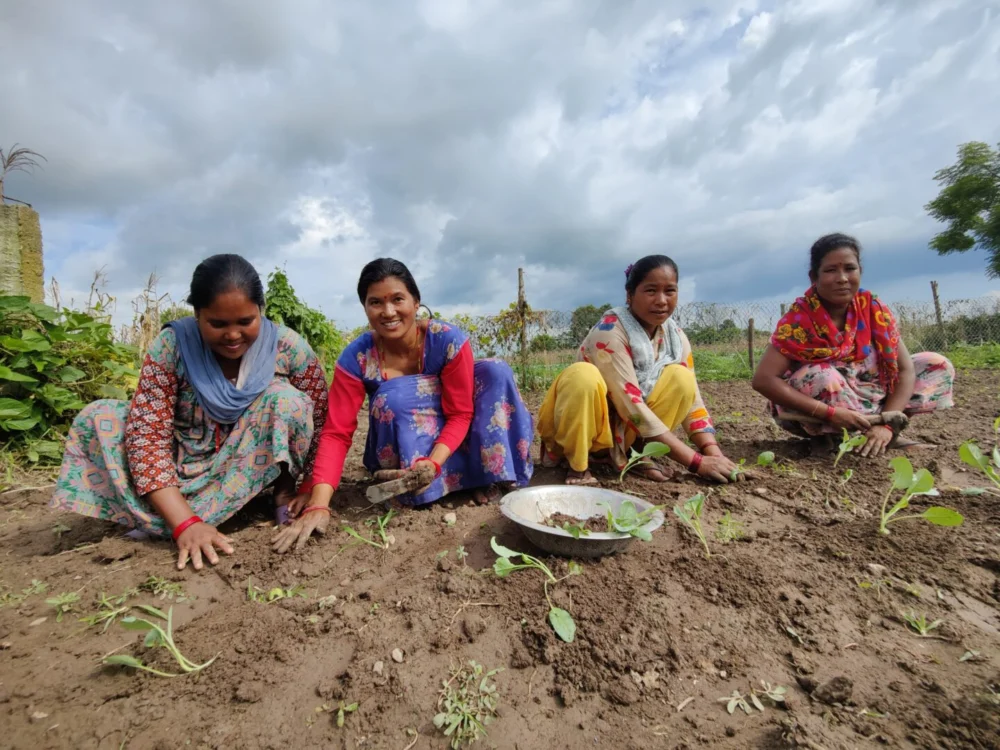
The concept of a "regenerative future" goes beyond the simple replacement of fossil fuels with renewables. It involves a holistic approach to land use, energy production, and social equity. This is perhaps most visible in the rise of agroecology—a farming method that restores soil health and biodiversity while providing food security.
In India, the Deccan Development Society, a grassroots organization of 5,000 Dalit women, has transformed degraded lands into productive organic farms. By rejecting chemical fertilizers and corporate-owned seeds, they have created a self-sustaining food system that is resilient to the heatwaves and erratic monsoons characteristic of the current climate era. This model is now being exported to other regions, proving that regenerative practices can be scaled effectively.
Moreover, the shift toward decentralized energy is breaking the monopoly of large-scale utilities. In the "Solar Mamas" program, which originated in India and has spread to over 90 countries, older women from rural villages are trained as solar engineers. They return to their communities to install and maintain solar systems, bringing light to areas that the national grid has ignored for decades. This not only reduces carbon emissions but also empowers women by placing them at the center of their community’s technological infrastructure.
Implications for the Future of Global Policy
The success of these movements suggests that the future of climate policy will be increasingly decentralized and legally rigorous. As women continue to win court cases and block harmful infrastructure, the financial risk associated with fossil fuel investments continues to rise. Insurance companies are already beginning to pull out of projects located in regions with strong, organized female resistance, citing "unpredictable social and legal liabilities."
The "regenerative future" being built today is one of resilience. By prioritizing the health of the ecosystem over short-term extraction, women-led movements are creating a blueprint for a world that can withstand the inevitable challenges of a warming planet. The transition is no longer just an environmental necessity; it is a social and economic revolution that is fundamentally rewriting the rules of how humanity interacts with the Earth.
As the world marks International Women’s Day in 2026, the evidence is clear: the most effective barrier against environmental destruction—and the most promising engine for a sustainable future—is the collective action of women. Their ability to bridge the gap between local needs and global imperatives is not just an asset to the climate movement; it is the core of its survival.

Related Posts

Lagos State Government Issues Urgent Flood Warning as 2026 Rainy Season Forecast Projects Intense Precipitation

Mediterranean Shipping Company signs 45-year agreement with Nigerdock to develop Snake Island Container Terminal