Tres gobernadores y el debate por quién tiene el mejor vino tinto: “Fue más fuerte que el cruce de Milei con Rocca”
The political landscape in Argentina, typically characterized by its sharp ideological divides and intense economic debates, recently witnessed a lighter, yet remarkably spirited, exchange among three provincial governors: Ignacio Torres of Chubut, Marcelo Orrego of San Juan, and Alfredo Cornejo of Mendoza. This convivial "clash of titans," as described by one observer, centered not on fiscal policy or national development, but on the highly competitive and regionally proud claim to the best Pinot Noir in Argentina. The discussion, which unfolded on the sidelines of the Council of the Americas event in New York, was described by Governor Torres as "stronger than the clash between President Milei and Paolo Rocca," highlighting its unexpected intensity and public engagement.
Governor Torres, representing the southern province of Chubut, boldly asserted his region’s dominance in the Pinot Noir arena. "Chubut has the best Pinot in America, it was clear in the debate, there was a vote and the province won," he declared to LA NACION. He humorously suggested a division of labor for the other participating provinces, stating, "We leave the Malbec to Mendoza and perhaps a Chardonnay to San Juan." This lighthearted territorial dispute underscores the deep connection between Argentine regional identity and its burgeoning wine industry, particularly its capacity to produce world-class red wines.
The Pinot Noir, a grape variety known for its delicate complexity and ability to reflect terroir, has found a particularly suitable home in several Argentine provinces. While Mendoza is globally renowned for its robust Malbec, other regions, including Patagonia (where Chubut is located) and the Cuyo region (encompassing Mendoza, San Juan, and San Luis), have increasingly distinguished themselves with sophisticated cool-climate varietals. The governors’ debate, therefore, taps into a genuine pride in the quality and diversity of Argentine viticulture, extending beyond the commonly recognized Malbec. This friendly rivalry serves as a testament to the growing sophistication and recognition of Argentine wines on the international stage, with producers actively engaging in showcasing their regional specialties.
Alignments and Disagreements: The Governors’ Stance Alongside Milei
Beyond the spirited wine discussion, the presence of these governors alongside President Javier Milei at the Argentina Week event in New York highlighted their varying degrees of alignment with the current national administration. The event itself, aimed at attracting foreign investment, provided a platform for both national and provincial leaders to present their regions as attractive destinations for capital.
A notable interaction occurred between President Milei and Gustavo Sáenz, the governor of Salta. The two leaders were observed sharing an embrace in a hallway of the JP Morgan building, shortly after Milei concluded his address to investors. This encounter, described by Milei as "It’s working" as he patted Sáenz’s back, signals a strong rapport between the President and the Salteño governor. Sáenz is widely considered one of the most steadfast allies of the Casa Rosada among the eleven governors who accompanied the President on this promotional tour. The warmth of the exchange was further amplified by the presence of Karina Milei, the Secretary General of the Presidency, who also approached to greet the governor. This suggests a fluid and mutually beneficial relationship, underpinned by shared political objectives.
Governor Sáenz has consistently expressed alignment with the libertarian government’s economic policies. In his public statements during the New York visit, he emphasized the importance of such international engagements for fostering connections and showcasing Argentina’s productive potential. "These types of meetings allow us to continue strengthening ties and showing the world the enormous productive potential of our country and our provinces," he stated, reflecting a shared vision with the national government’s agenda of integrating Argentina into global markets.
The Argentina Week initiative, launched in New York, aimed to present a unified front to international investors, showcasing a country eager for foreign capital and committed to economic reforms. The presence of a diverse group of governors, each representing distinct provincial interests and political leanings, underscored the complex dynamics of national governance in Argentina. While some, like Sáenz, demonstrated overt loyalty, others, like Torres, Orrego, and Cornejo, navigated their support for the national agenda while simultaneously advocating for their regional strengths and unique identities.
Revelations in Chats: Pablo Toviggino and the Pilar Mansion Transaction

In a separate development that casts a shadow over the promotional efforts abroad, a series of chat logs has surfaced, implicating Pablo Toviggino, the treasurer of the Argentine Football Association (AFA), in financial dealings related to a property transaction. LA NACION has gained access to these conversations, which suggest Toviggino played an active role in the management of checks and invoice payments for Malte SRL, a company that purchased a mansion in Pilar from former football star Carlos Tévez.
The chats reportedly reveal Toviggino’s involvement in overseeing financial operations, including ensuring timely payments for invoices issued to his partner, María Florencia Sartirana. Furthermore, these messages indicate Toviggino’s significant participation in the creation of invoices for intermediary companies that handled AFA funds collected internationally until December 2021. This suggests a potential entanglement of AFA finances with private business dealings, raising questions about transparency and fiduciary responsibility within the football association.
A particularly revealing exchange occurred in January 2021 between Toviggino and Juan Pablo Beacon, who at the time served as Toviggino’s confidant. The conversation centered on the management of Malte SRL. At this juncture, Beacon had not yet become a shareholder in the company. However, Carlos Bruno Seguel, an individual associated with other companies and responsible for transferring funds managed by Beacon’s legal firm, was already involved. It was within this legal firm that a video was recorded depicting the counting of $115,600, a measure reportedly implemented to prevent internal theft. The implications of these chat logs are significant, potentially opening avenues for further investigation into financial irregularities within the AFA and its related entities.
Adorni’s Expanding Influence: Oversight of State Expenditures
Manuel Adorni, the current Chief of Staff, has seen his role and influence within the Argentine government expand significantly. In a recent move, his signature has been incorporated into all budget expenditure authorizations for state entities, including the approval of National Treasury Contributions (ATN). These contributions are critical for the financial relationship between the national administration and the provinces, making Adorni’s oversight crucial for intergovernmental fiscal dynamics.

Sources within official circles, as reconstructed by LA NACION, indicate that this decision was finalized last week within the libertarian administration. The objective is to "grant" Adorni "greater control in management," a strategic move to centralize fiscal oversight under his purview. This delegation of authority underscores the administration’s commitment to tighter budgetary controls and a more centralized approach to public finance management. The ATNs, often a vital lifeline for provincial governments facing fiscal shortfalls, now fall under Adorni’s direct supervision, potentially reshaping the dynamics of federal-provincial financial relations.
Senate Sessions Postponed: Bullrich Faces Challenges with a Depleted Caucus
Patricia Bullrich, the head of the official bloc in the Senate, has been compelled to postpone legislative sessions scheduled for the current week until the following one. This decision stems from a lack of legislative projects ready for debate and, more significantly, a depletion of her caucus’s numbers, with a considerable portion of senators from her party and allied factions currently abroad.
Bullrich’s intention was to project an image of an active and functioning Senate by convening a session this Wednesday. The primary objectives were to allow military promotions to achieve parliamentary status and to process the nomination of Carlos Mahiques, a federal judge whose term is set to expire in November. Mahiques, who would be required to retire upon reaching the age of 75 unless granted a new Senate agreement, remains a key figure whose reappointment requires legislative approval. The absence of key senators, many of whom are accompanying President Milei on his international engagements, has created a logistical hurdle that necessitates the postponement of these critical legislative proceedings.
Adorni Justifies Wife’s Travel on Presidential Aircraft

Manuel Adorni, the Chief of Staff, has addressed the controversy surrounding his wife, Bettina Angeletti’s, presence on the presidential aircraft during the government’s delegation to New York for the "Argentina Week" event. Following a formal inquiry regarding her participation in the official trip, Adorni defended the decision in television interviews. "I am coming to work myself to the bone for a week in New York, I wanted her to accompany me," he stated, framing the trip as a necessary period of intense work and personal support.
The presence of Angeletti on the presidential plane, ARG-01, alongside the official delegation, including a photograph taken at the tomb of Rabbi Menachem Mendel Schneerson in Queens, prompted an information request from the opposition. This fueled speculation about the administration’s policy regarding the travel of officials’ family members on government aircraft. Adorni’s explanation attempts to frame the situation as a personal matter related to his demanding work schedule, seeking to preempt further political fallout from the incident.
Government’s Strategy Against "Fake News": Propaganda and Missteps
The Argentine government, under Javier Milei, has established the Official Response Office (ODRO) with the stated aim of actively debunking misinformation, identifying falsehoods, and exposing alleged operations by the media and the political establishment. However, an analysis of the ODRO’s first 49 tweets reveals a different reality. A significant portion of these messages, 19 out of 49, primarily function as propaganda for the libertarian administration, failing to directly refute or respond to specific claims. An additional 10 tweets engage in political criticism or challenge journalistic approaches, while another 10 tweets themselves contain information that could be considered misleading or deceptive.
This pattern suggests that the ODRO’s mandate may be diverging from its stated purpose of combating "fake news." Instead, it appears to be serving as a platform for disseminating the government’s narrative and engaging in political messaging, rather than solely focusing on factual corrections. This approach risks blurring the lines between official communication and partisan propaganda, potentially undermining the credibility of the office and its efforts to foster an informed public discourse. The administration’s strategy, therefore, appears to be a complex mix of attempting to control the narrative while simultaneously engaging in tactics that could be perceived as counterproductive to genuine transparency.

Pablo Toviggino to Testify in Court
Pablo Toviggino, the treasurer of the Argentine Football Association (AFA), is scheduled to appear in court on Wednesday at 11 AM. His testimony will take place within the context of a legal case concerning the alleged improper withholding of contributions from the AFA, the governing body of Argentine football. This legal proceeding adds another layer of scrutiny to the financial operations and governance of the AFA, particularly concerning the roles of its senior officials.
Milei’s Misconception: Confusing External Perceptions with Internal Realities
A critical observation regarding the current administration is the apparent disconnect between its outward presentation and the internal realities of governance. While the "Argentina Week" event in New York was orchestrated to impress international investors and project an image of economic stability and reform, a fundamental lack of clarity pervades the government’s own accounting of expenditures. No government agency has been able to provide a precise figure for the total cost of organizing the event, which was ostensibly designed to attract foreign capital.
Despite the opacity surrounding the event’s budget, it is evident that significant expenses were incurred, including the travel and accommodation for the Argentine delegation led by the President. The initiative, conceived by the Argentine Ambassador in Washington, Alec Oxenford, was an ambitious attempt to re-engage with the global financial community. However, the lack of transparency regarding the financial outlay for such a high-profile event raises concerns about fiscal accountability and the administration’s ability to manage public resources effectively, even as it seeks to attract foreign investment based on promises of fiscal responsibility. This internal disarray, juxtaposed with the polished external messaging, highlights a potential contradiction in the government’s approach to economic management and communication.

Government Appoints Gustavo Coria to Lead Veterans Commission
In a move to formalize leadership within a key veterans’ organization, the Argentine government has appointed Gustavo Coria as the executive director of the Commission for Malvinas War Veterans. This appointment signifies the administration’s attention to the affairs of veterans and its commitment to ensuring effective leadership within this important body. The Commission plays a crucial role in supporting and representing the interests of those who served in the Falklands War, and Coria’s leadership is expected to guide its future endeavors.
Milei Addresses Wall Street with Broadway Flair
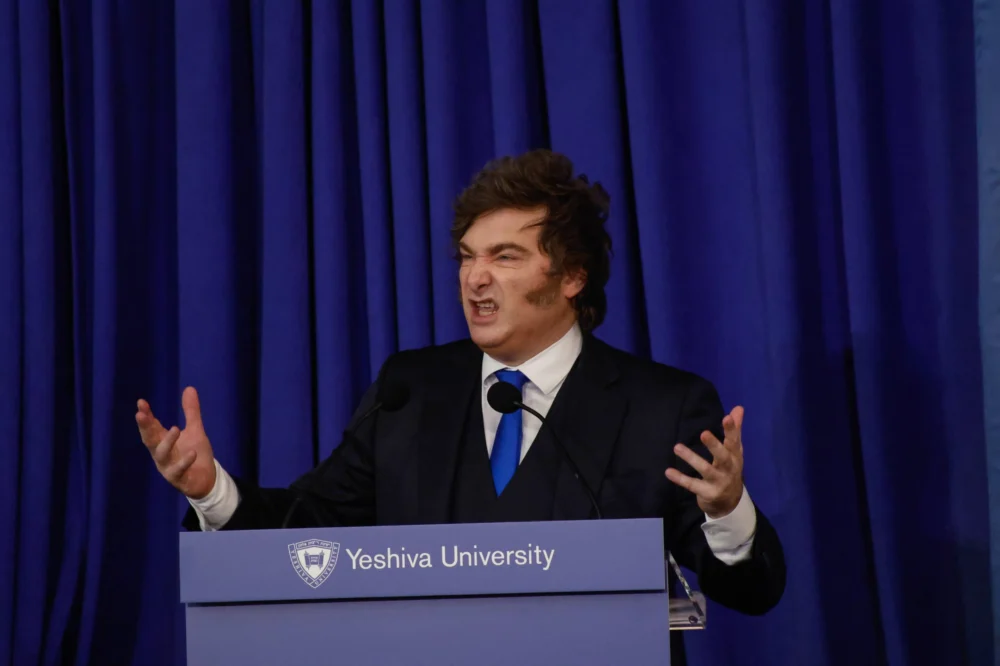
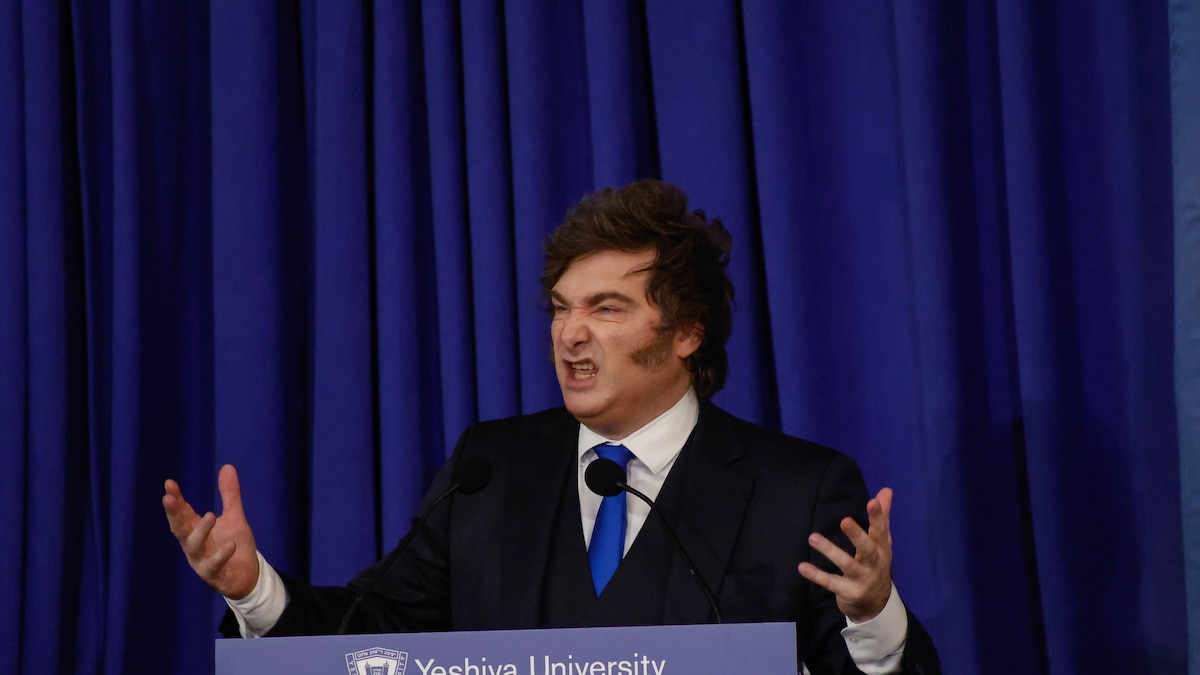
President Javier Milei’s address to Wall Street during the "Argentina Week" event in New York was characterized by a rhetorical style that drew comparisons to the theatricality of Broadway. His speech, delivered in English, aimed to project an image of decisive reform and a commitment to integrating Argentina into the global capitalist system. The President’s performance was part of a broader effort to reassure investors and signal a departure from what he has termed decades of "socialist stagnation."
The President’s address invoked themes of freedom, free markets, and a rejection of what he perceives as the failures of statism and protectionism. His delivery, often energetic and impassioned, sought to capture the attention of a sophisticated audience accustomed to direct and pragmatic communication. This stylistic choice, while potentially engaging, also reflects a broader trend within the Milei administration of employing bold and often unconventional communication strategies to convey its message and distinguish itself from previous political establishments. The performance aimed to be more than just an economic presentation; it was a theatrical declaration of a new Argentine era, designed to resonate with the global financial elite.

"Argentina Week" in New York: Global CEOs Applaud Milei’s Strategic Alliance with the U.S.
The "Argentina Week" event in New York, designed to attract foreign investment, has seen prominent global CEOs express optimism regarding Argentina’s current trajectory. These business leaders, participating in the launch of the event, specifically highlighted the strategic alliance that the administration of President Javier Milei is cultivating with the United States. This perceived alignment with U.S. economic and political interests is viewed as a positive development for Argentina’s integration into international markets and its appeal to foreign investors.
The CEOs’ positive assessments underscore the administration’s efforts to reposition Argentina on the global stage. The emphasis on a strategic partnership with the U.S. signals a desire to leverage diplomatic and economic ties to foster growth and stability. This approach, coupled with the government’s stated commitment to market-oriented reforms, appears to be resonating with key players in the global business community, suggesting that Argentina may be regaining some of its former allure as an investment destination. The "Argentina Week" initiative, therefore, represents a critical step in the government’s broader strategy to rebuild international confidence and attract the capital necessary for economic revitalization.
Bartolomé Abdala Denounces Vandalism and Criticizes Governor
Bartolomé Abdala, the provisional president of the Senate, has reported being the victim of a "violent act of vandalism" in the city of San Luis. He attributed the incident to a small group of "militants of hatred and confrontation." Abdala also extended his criticism to the provincial governor, suggesting a lack of sufficient security or political support in addressing such acts. This denunciation highlights the ongoing tensions and political polarization that persist at the provincial level, even as the national government seeks to project an image of unity and progress. The incident underscores the challenges of maintaining public order and fostering a climate of respectful political discourse in certain regions of Argentina.

Related Posts

Four Airmen Confirmed Dead and Two Missing Following KC-135 Stratotanker Crash During Combat Operations in Western Iraq
NATO Bolsters Turkish Air Defenses with Patriot Deployment in Malatya Following Iranian Missile Strikes