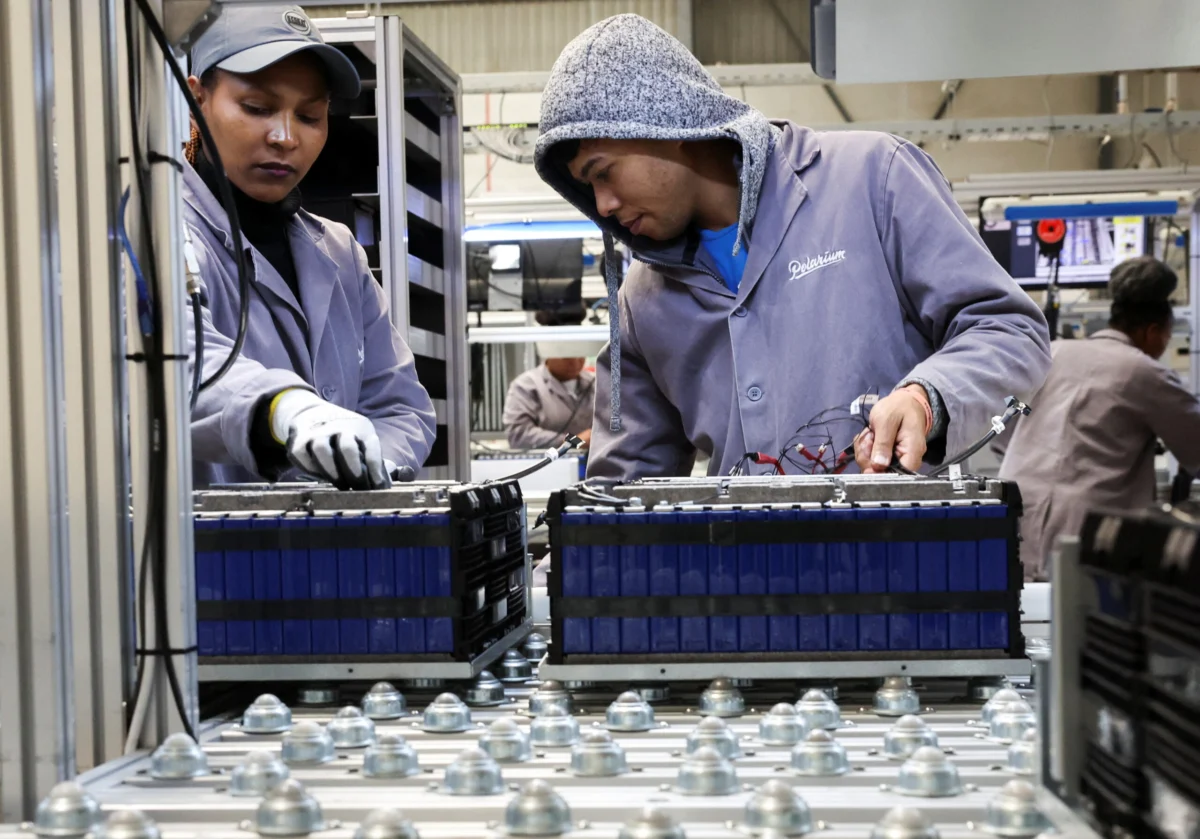
Restricting raw materials exports is well-intentioned but without other policies to foster domestic processing, they can backfire
The global transition toward a low-carbon economy has ignited an unprecedented scramble for critical minerals, prompting a wave of resource nationalism across the Global South. From the lithium fields of Zimbabwe to the nickel mines of Indonesia, governments are increasingly deploying export bans on raw ores to compel international mining conglomerates to invest in domestic refineries and processing plants. However, as the global energy landscape evolves in 2026, a growing body of economic data suggests that these restrictive trade measures, while aimed at capturing higher value within the supply chain, often result in unintended negative consequences when not supported by a robust ecosystem of industrial policy, infrastructure development, and stable governance.

The logic behind these bans is rooted in the desire to escape the "extractivist" model, where developing nations export low-value raw materials only to re-import high-value finished products. By restricting the export of unprocessed ore, nations hope to force the creation of a "downstream" industry—converting lithium ore into spodumene concentrate or battery-grade chemicals, and nickel ore into stainless steel or EV battery precursors. Yet, the transition from a mining hub to a processing powerhouse is fraught with structural hurdles that a simple export ban cannot solve.
The Rise of Mineral Protectionism: A Five-Year Chronology
The current trend of restricting raw material exports did not emerge in a vacuum. It is the result of a decade of fluctuating commodity prices and a realization that the "green revolution" depends entirely on minerals concentrated in a handful of geographies.

2020–2021: The Indonesian Blueprint
Indonesia successfully implemented a ban on raw nickel ore exports, which led to a massive influx of Chinese investment in domestic smelting. This success story became the primary catalyst for other nations. Indonesia’s nickel export value surged from approximately $3 billion in 2017 to nearly $30 billion by 2023, though critics point out that this came at a significant environmental cost and relied heavily on coal-powered energy.
2022: Zimbabwe’s Lithium Lockdown
In December 2022, Zimbabwe, home to some of Africa’s largest lithium deposits, banned the export of raw lithium ore. The government mandated that only concentrates could be exported, with the ultimate goal of producing battery-grade lithium carbonate locally. The move was designed to stop the smuggling of ore to neighboring countries and to ensure the state captured more than just the "pit-head" value of the mineral.

2023–2024: The African Wave
Following Zimbabwe’s lead, Namibia and Ghana introduced similar restrictions on unprocessed lithium and other critical minerals. During this period, the African Union began discussing a "Green Minerals Strategy," which encouraged member states to harmonize their export policies to prevent a "race to the bottom" where mining companies simply move to the neighbor with the laxest regulations.
2025: The Infrastructure Reality Check
By early 2025, the limitations of these bans began to surface. Several projects in sub-Saharan Africa stalled as investors cited a lack of reliable electricity—essential for high-heat smelting processes—and inadequate rail networks to transport processed goods. In Zimbabwe, the lithium concentrate output increased, but the leap to chemical-grade processing remained elusive due to a $3 billion infrastructure funding gap.

2026: Market Saturation and Policy Recalibration
Currently, in March 2026, the global market is seeing a bifurcated result. While some nations have successfully moved one step up the value chain, others are facing a decline in mining tax revenue as raw ore sits stockpiled and unmarketable, while new refinery investments remain frozen due to high capital costs and perceived sovereign risk.
Supporting Data: The Value-Addition Gap
The economic incentive for domestic processing is clear when looking at the price differentials. According to data from the International Energy Agency (IEA) and various commodity exchanges, the price of raw lithium ore is a small fraction of its processed counterparts.

- Raw Lithium Ore: $400 – $800 per tonne (depending on grade).
- Lithium Spodumene Concentrate (6%): $2,500 – $4,000 per tonne.
- Battery-Grade Lithium Carbonate: $15,000 – $30,000 per tonne.
For a country like Zimbabwe or Namibia, moving from raw ore to concentrate can increase the value of exports by 400% to 500%. Moving to battery-grade chemicals can increase that value by over 2,000%. However, the capital expenditure (CAPEX) required to build a lithium carbonate refinery is estimated at $500 million to $800 million, a sum that many junior mining companies cannot raise without significant state guarantees or off-take agreements from major EV manufacturers.
Furthermore, processing is energy-intensive. Producing one tonne of refined lithium requires approximately 10 to 15 megawatt-hours (MWh) of electricity. In regions where the grid is unstable or reliant on expensive diesel generators, the operational cost of domestic processing can exceed the "value added," making the final product uncompetitive on the global market compared to refined products from China or Australia.

Official Responses and Stakeholder Reactions
The international response to mineral export bans has been a mixture of diplomatic pressure and cautious support for industrialization.
The World Trade Organization (WTO) has seen an uptick in "request for consultations" regarding these bans. In a notable 2024 ruling, the WTO sided with the European Union in a dispute against Indonesia’s nickel ban, arguing that such restrictions violate Article XI of the General Agreement on Tariffs and Trade (GATT), which generally prohibits export quotas and bans. However, Indonesia has appealed, and many developing nations argue that the WTO rules are "relics of a colonial trade era" that prevent industrial development.

Within the mining industry, reactions are split. "The primary challenge isn’t the ban itself, but the timeline," said a representative from the Chamber of Mines in Zimbabwe. "If you ban exports before the refineries are built, you starve the mines of the cash flow they need to build those very refineries. It becomes a self-defeating cycle."
Conversely, some environmental and social justice groups have praised the bans. A spokesperson for the African Climate Foundation noted, "For too long, African soil has been devalued. These policies are about sovereignty. If the Global North wants our minerals for their ‘green’ cars, they must help us build the factories to process them."

The Risk of Backfiring: Why Bans Alone Fail
The central thesis of recent economic analysis is that export bans can backfire in three distinct ways if not accompanied by a broader policy suite:
-
Deterrence of Foreign Direct Investment (FDI):
Mining is a high-risk, long-term investment. Sudden changes in export rules can lead to "regulatory chill," where investors shift capital to more predictable jurisdictions like Canada, Australia, or Brazil. If a ban is perceived as a precursor to nationalization, FDI can dry up entirely, leaving mineral wealth stranded in the ground.
-
Smuggling and the Informal Economy:
In jurisdictions with porous borders, a ban on formal exports often leads to a surge in illegal artisanal mining and smuggling. This deprives the state of all tax revenue and often leads to worse environmental outcomes and human rights abuses, as the informal trade operates outside of government oversight. -
Technological Leapfrogging:
The global battery market is moving at a lightning pace. If a country withholds its lithium or cobalt for too long, it risks the market shifting toward alternative chemistries, such as sodium-ion or solid-state batteries, which do not require the same minerals. A "well-intentioned" ban today could result in a country holding a valueless asset tomorrow.
Broader Impact and Policy Implications
For a raw material export restriction to be successful, it must be part of a "holistic industrial strategy." This includes:
- Energy Security: Providing reliable, ideally renewable, energy to power refineries. Without green energy, the "green minerals" lose their market premium in Europe and North America due to carbon border adjustment taxes (like the EU’s CBAM).
- Infrastructure Corridors: Building the roads, ports, and railways necessary to move heavy refined products.
- Human Capital: Investing in technical and vocational training to ensure the local workforce can operate complex chemical processing plants.
- Regional Integration: Since individual countries may lack the scale to support a full battery supply chain, regional hubs—such as a Southern African lithium-cobalt-copper cluster—are more viable than isolated national efforts.
The transition to a clean energy future is not just a technological challenge; it is a geopolitical and economic one. Nations that possess the building blocks of this future are rightfully demanding a larger share of the prosperity. However, the lesson of 2026 is becoming clear: protectionism is a blunt instrument. To build a sustainable industry, governments must move beyond "thou shalt not export" to "here is why you should process here."

As the Paris Agreement targets loom and the demand for critical minerals is projected to quadruple by 2040, the stakes could not be higher. If mineral-rich nations fail to industrialize, they remain trapped in poverty. If they implement poorly planned bans that stall the global energy transition, the entire planet suffers. The middle path—collaborative investment in downstream processing—remains the only viable route to an equitable and successful global climate strategy.

Related Posts

Lagos State Government Issues Urgent Flood Warning as 2026 Rainy Season Forecast Projects Intense Precipitation

Mediterranean Shipping Company signs 45-year agreement with Nigerdock to develop Snake Island Container Terminal