President Trump Threatens Further Strikes on Iran’s Crucial Kharg Island Oil Hub, Calls for Allied Naval Deployment in Strait of Hormuz
In a significant escalation of rhetoric amidst ongoing regional tensions, former US President Donald Trump issued a stark warning of potential additional military action against Iran’s vital Kharg Island oil export terminal, while simultaneously urging international allies to deploy warships to secure the strategically critical Strait of Hormuz. The former president, reflecting on past interactions and potential future scenarios, asserted that previous American strikes had "totally demolished" a substantial portion of the island’s infrastructure. He further remarked, with a tone of casual severity, that the United States "may hit it a few more times just for fun," indicating a readiness for sustained pressure. These statements underscore a persistent hardline stance towards Tehran, even as Trump hinted at a willingness for negotiation, albeit under terms he deemed not yet satisfactory. The pronouncements reignite concerns over the stability of global energy markets and the precarious geopolitical balance in the Middle East.
Kharg Island: Iran’s Economic Lifeline Under Threat
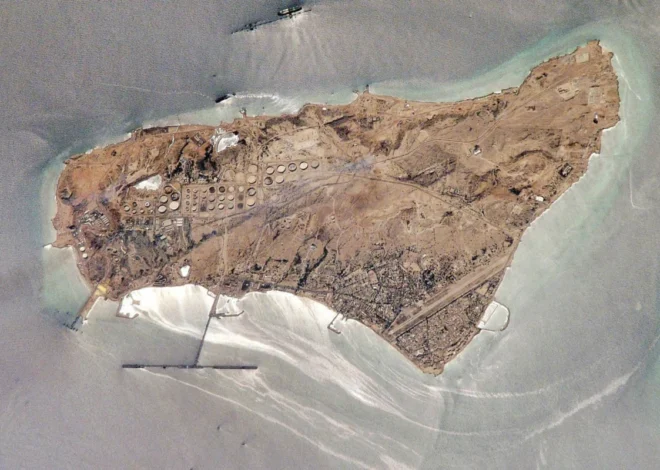
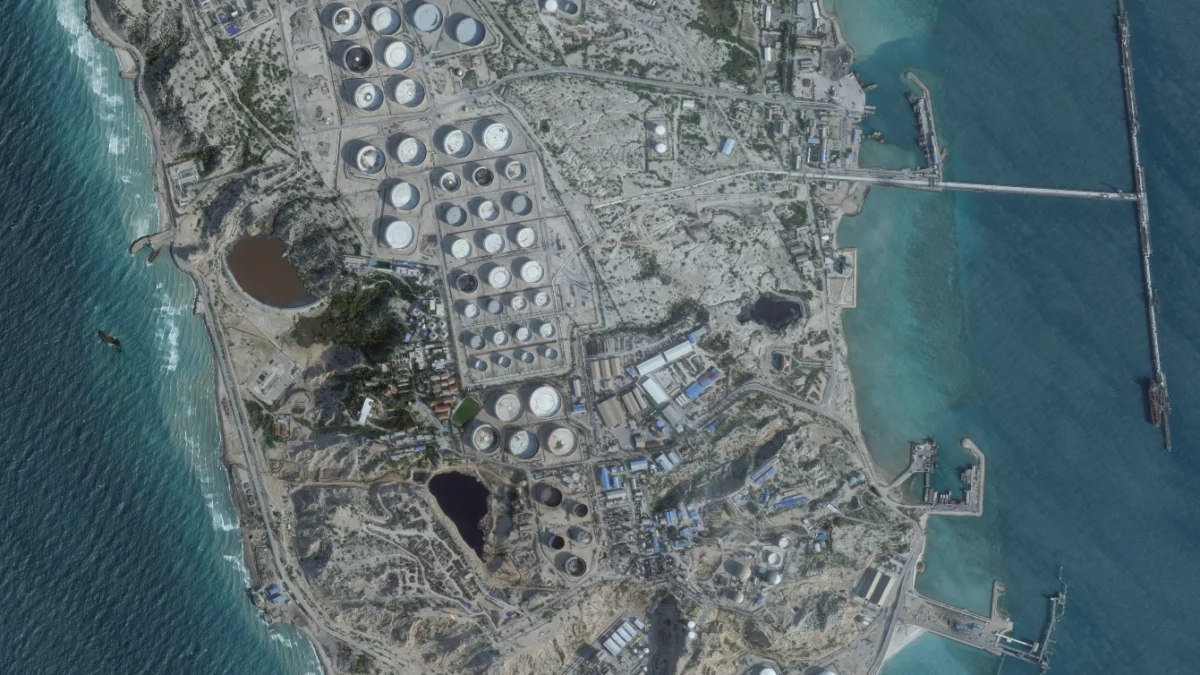
Kharg Island, situated in the Persian Gulf, serves as Iran’s primary crude oil export terminal, handling approximately 90% of the nation’s oil shipments. Its strategic importance cannot be overstated; it is the linchpin of Iran’s oil-dependent economy, a fact that makes it an obvious, albeit highly provocative, target in any conflict scenario. The island’s facilities include extensive storage tanks, loading jetties, and pipelines designed to accommodate supertankers, facilitating the flow of Iranian crude to international markets. Any significant disruption to operations at Kharg Island would have immediate and severe repercussions for Iran’s revenue streams, directly impacting its ability to fund state operations and regional activities. Economists and energy analysts have long highlighted the island’s vulnerability as a critical choke point for Iran’s economic survival, making threats against it particularly potent.
A satellite image dated 25 February 2026, obtained from Planet Labs PBC and distributed by Reuters, depicted an oil terminal at Kharg Island. While the image’s specific context relative to President Trump’s past claims of "demolition" requires further independent verification and analysis, it provides a contemporary visual reference point for the ongoing discussion surrounding the island’s operational status and resilience. Such imagery is routinely used by intelligence agencies and open-source investigators to monitor critical infrastructure and assess damage after reported strikes or natural disasters. The precise extent of any past damage or the island’s current operational capacity remains a subject of intense international scrutiny, particularly given the implications for global energy security.
The Strait of Hormuz: A Global Choke Point

Complementing the threats against Kharg Island, President Trump’s call for allied warships in the Strait of Hormuz re-emphasizes the waterway’s unparalleled importance to global commerce. The Strait, a narrow maritime chokepoint between the Persian Gulf and the Gulf of Oman, is through which an estimated 20% of the world’s total petroleum consumption, or about 21 million barrels per day, passes. This includes oil from Saudi Arabia, Iran, Iraq, Kuwait, Qatar, and the United Arab Emirates. Its strategic significance makes it a recurring flashpoint in regional tensions, with any disruption having immediate and far-reaching effects on international oil prices and supply chains.
The historical context of the Strait of Hormuz is replete with incidents, including tanker attacks, mine placements, and naval confrontations, particularly during periods of heightened US-Iran animosity. The presence of international naval forces, while intended to deter aggression and ensure freedom of navigation, can also inadvertently raise the risk of accidental encounters or miscalculations, further complicating the already volatile security landscape. President Trump’s directive for allied deployment reflects a continuation of a policy aimed at projecting strength and ensuring the unimpeded flow of oil, a key tenet of US foreign policy in the Gulf region.
Background of US-Iran Tensions: A Chronology of Escalation
The statements by President Trump are not isolated but rather form part of a protracted and often acrimonious history of US-Iran relations, which reached new levels of intensity during his presidency (2017-2021). A brief chronology helps contextualize these threats:
- May 2018: The Trump administration unilaterally withdrew the United States from the Joint Comprehensive Plan of Action (JCPOA), commonly known as the Iran nuclear deal. This move, which defied objections from European allies, marked the beginning of the "maximum pressure" campaign against Iran.
- November 2018: The US reimposed all sanctions lifted under the JCPOA and introduced new ones, targeting Iran’s oil exports, banking sector, and other critical industries. The stated goal was to force Iran to negotiate a more comprehensive deal that would also address its ballistic missile program and regional proxy activities.
- May-July 2019: A series of incidents in the Persian Gulf, including attacks on oil tankers and a Saudi oil pipeline, were attributed by the US and its allies to Iran. These events significantly ratcheted up tensions, leading to increased military deployments by the US.
- June 2019: Iran shot down a US military surveillance drone over the Strait of Hormuz, claiming it had violated Iranian airspace. President Trump reportedly approved retaliatory strikes but called them off at the last minute, citing potential casualties.
- January 2020: A US drone strike killed Qassem Soleimani, commander of the Quds Force of Iran’s Islamic Revolutionary Guard Corps, near Baghdad International Airport. Iran retaliated with ballistic missile strikes against Iraqi bases housing US troops, causing traumatic brain injuries to over 100 American service members.
- Throughout Trump’s Term: Consistent threats and counter-threats exchanged between Washington and Tehran, often involving warnings about military responses to any perceived Iranian aggression or attempts to disrupt oil flows. The "demolition" claims regarding Kharg Island would have likely emerged within this period of intense brinkmanship, possibly in response to specific Iranian actions or as a deterrent.
This timeline illustrates a pattern of tit-for-tat actions and verbal sparring that characterized the relationship, culminating in statements like those made by President Trump regarding Kharg Island and the Strait of Hormuz.
Official Reactions and International Implications

While President Trump’s statements reflect a past policy approach, their reiteration carries weight and sparks renewed debate. Official reactions to such pronouncements, both then and potentially now, typically follow predictable lines:
- Iranian Response: Iranian officials would almost certainly condemn any threats against its territory as a violation of sovereignty and international law. They would likely reiterate their capacity for defensive retaliation, emphasizing their readiness to protect their economic interests and national security. Past Iranian responses have often included vows to close the Strait of Hormuz if their oil exports are entirely cut off, though this threat has never been fully realized. They would likely dismiss claims of "demolished" infrastructure as propaganda, pointing to the continued operation of their oil facilities.
- Allied Reactions: Responses from US allies to calls for naval deployments in the Strait of Hormuz would likely vary. While some Gulf Arab states might express support for a stronger international presence to deter Iranian aggression, European allies, who have historically sought to preserve the JCPOA and de-escalate tensions, might express caution. They would likely emphasize the need for diplomatic solutions and multilateral efforts rather than unilateral military posturing, fearing further destabilization of an already volatile region.
- International Bodies: The United Nations and other international organizations would invariably issue calls for restraint, dialogue, and adherence to international law, stressing the imperative to avoid any actions that could lead to a broader conflict in a region critical to global stability and economic prosperity.
Economic and Geopolitical Implications
The implications of renewed threats against Kharg Island and increased militarization of the Strait of Hormuz are multifaceted and far-reaching:
- Global Oil Markets: Even the threat of disruption to Kharg Island or the Strait of Hormuz can send shockwaves through global oil markets. Futures prices typically react sharply to such geopolitical risks, leading to increased volatility. A sustained disruption could cause significant price spikes, impacting consumers worldwide and potentially triggering broader economic instability, especially in energy-importing nations. The prospect of Iran’s primary export terminal being severely compromised would remove a substantial amount of crude from the market, even if Iranian exports are already curtailed by sanctions.
- Regional Stability: Heightened military activity and aggressive rhetoric increase the risk of miscalculation or accidental escalation. The Persian Gulf is already a complex arena with numerous state and non-state actors. Any direct military confrontation between major powers would have catastrophic consequences for the region, potentially drawing in other nations and creating a humanitarian crisis. The existing proxy conflicts and rivalries could intensify, further destabilizing countries like Iraq, Yemen, and Syria.
- International Relations: Such threats underscore the persistent challenge of managing the US-Iran relationship and its impact on broader international diplomacy. The lack of a clear, stable framework for engagement continues to fuel uncertainty. Moreover, calls for allied naval deployments test the cohesion of international alliances, with some partners potentially reluctant to commit resources or be drawn into a conflict they perceive as avoidable through diplomatic means.
- Negotiation Prospects: President Trump’s comment that Iran "appeared ready to negotiate but the terms aren’t good enough yet" highlights a key dynamic: the interplay between pressure and diplomacy. While the "maximum pressure" campaign aimed to bring Iran to the negotiating table, critics argue it often hardened Tehran’s resolve and made genuine dialogue more difficult. The effectiveness of such a strategy in achieving a comprehensive and lasting resolution to the nuclear and regional issues remains a contentious point among foreign policy experts. Any future negotiations would be profoundly shaped by the legacy of past threats and the demonstrated capacity for military action.
The Role of Satellite Intelligence and Verification
The mention of a satellite image from 2026 showing the Kharg Island oil terminal underscores the critical role of open-source intelligence and satellite imagery in modern geopolitical analysis. Such imagery provides an objective, verifiable record of ground conditions, allowing for independent assessment of claims made by various parties. In the context of President Trump’s assertions of "demolished" infrastructure, contemporaneous or subsequent satellite imagery can either corroborate or refute the extent of reported damage. This ability to independently verify claims is crucial for maintaining transparency and informing international policy decisions, especially in high-stakes environments where propaganda and misinformation can proliferate. While the 2026 image itself requires further analysis to determine its specific relevance to the former President’s past claims, its existence emphasizes the ongoing scrutiny of Iran’s critical infrastructure.
In conclusion, President Trump’s statements regarding Kharg Island and the Strait of Hormuz serve as a potent reminder of the enduring volatility in US-Iran relations and the profound implications for global energy security and regional stability. While the context of these statements lies in a period of intense pressure during his presidency, their echoes continue to resonate, highlighting the precarious balance in one of the world’s most critical geopolitical theaters. The interplay of military threats, economic sanctions, and the elusive pursuit of diplomatic solutions continues to define this complex relationship, with the international community closely monitoring every development for its potential impact on global peace and prosperity.

Related Posts
UAE Air Defenses Intercept Ballistic Missiles and Drones Amid Escalating Regional Conflict
Live Blog Update | War on Iran: IRGC Claims Missile and Drone Attack on US Forces at Al-Dhafra Airbase, UAE